House Cleaning
House Cleaning in Webster Groves: A Practical Guide
A practical guide to choosing cleaning priorities, protecting sensitive finishes, and building a workable cleaning plan for your Webster Groves home.
Start House Cleaning in Webster Groves With a Surface-Specific Plan
The most useful starting point for house cleaning in Webster Groves is a room-by-room plan that identifies your finishes, your busiest spaces, and anything that needs special handling. For Prime Cleaning MO LLC, a standard or recurring-service quote includes the required initial deep clean. Standard or recurring cleaning becomes available afterward; it is not a one-time option or a service for first-time clients.
Start by naming three priorities, such as kitchen grease, bathroom buildup, and dust along bedroom trim. Then identify exceptions: a marble vanity, worn wood flooring, a loose cabinet handle, or a room that should remain untouched. These details are more useful than asking for “everything” without defining what that includes.
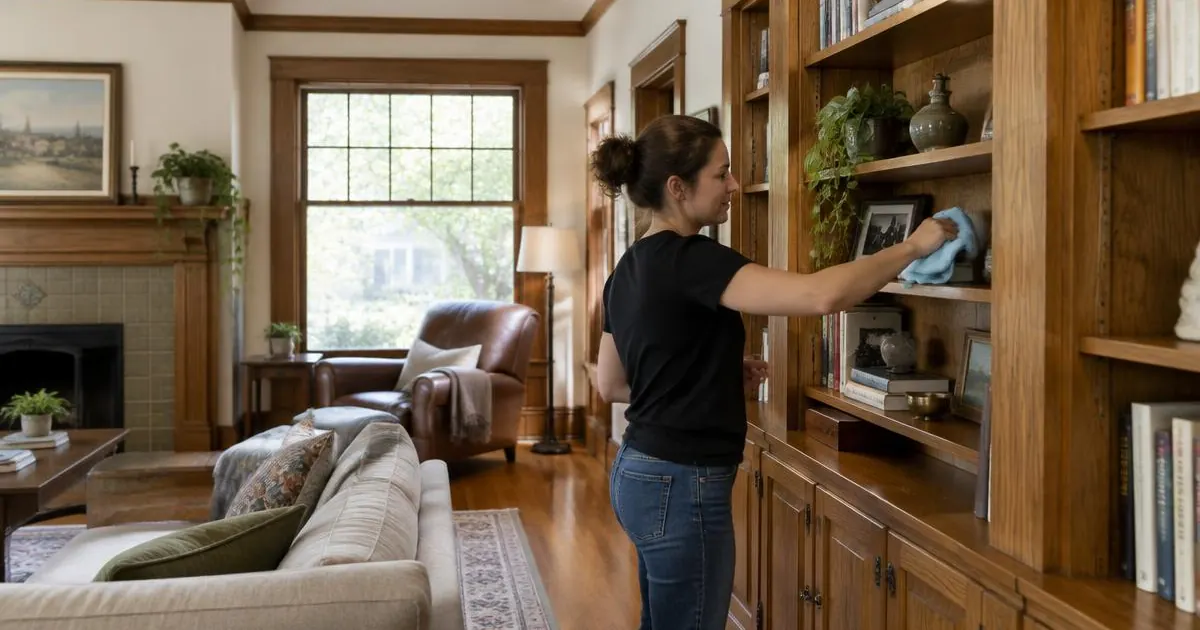
In an established home, appearance alone does not tell a cleaner how a surface should be treated. Painted woodwork, replacement stone counters, and older flooring can require different care within the same room. A good plan makes those differences explicit before products or tools come out.
Build a Home Profile Before Requesting a Quote
Gather the bedroom and bathroom counts, approximate square footage, and the areas you want cleaned. Note whether a finished basement, upstairs sitting room, or home office belongs in the scope. Include the current condition: light everyday soil is different from accumulated grease, heavy dust, or rooms that have been unused.
Next, explain how the household functions. Mention pets, work-from-home calls, sleeping schedules, fragrance preferences, and rooms where doors must stay closed. If someone needs uninterrupted access to a bathroom or desk, say so early rather than trying to reorganize the visit at the door.
Finally, clarify access and priorities. Identify the entrance to use, any parking constraints, and who can answer questions about uncertain surfaces. Avoid sending alarm codes or other sensitive access details in a general inquiry; arrange a suitable way to share them after service details are confirmed.
For example, “three bedrooms, two bathrooms, approximately this size, with an occupied office excluded” gives a clearer starting point than “a medium house.” Add photos of problem areas if requested, but do not assume photos replace a discussion of condition and scope.
Explore our house cleaning service and cleaning in Webster Groves, MO for property-specific information.
Protect Older Woodwork, Stone, and Other Sensitive Finishes
Separate ordinary soil from finish damage before choosing a cleaning method. A cloudy patch, peeling coating, or darkened floorboard may not be removable dirt. Point these areas out and ask for cautious treatment rather than stronger scrubbing.
Wood Floors and Painted Trim
Share manufacturer care instructions when available. For unknown finishes, request a conservative approach and a discreet compatibility test where appropriate. Avoid soaking wood floors or saturating trim joints. Loose paint, splintered edges, and open seams should be identified before wiping.
An older baseboard with scuffs may improve with gentle cleaning, but abrasion can also remove paint. Decide whether the goal is dust removal or mark removal, and accept that some marks need repair or repainting rather than more pressure.
Stone, Metal, and Specialty Surfaces
Identify marble and other acid-sensitive stone; do not use vinegar or acidic cleaners on marble. Follow manufacturer-safe care for counters, fixtures, coated glass, and appliance finishes. A product appropriate for one sink may be unsuitable for the adjacent faucet.
Keep separate cloths or tools for tasks that could transfer grit. If a cleaner encounters an unfamiliar stone, unsealed surface, or delicate decorative item, pausing for clarification is better than guessing. Set fragile or sentimental pieces aside before service when practical.
Choose the Right Scope Before Adding Extras
Use the initial deep clean to address accumulated soil and establish a starting point for future maintenance. Describe where buildup is concentrated and ask which tasks are included in the proposed scope. Do not assume that “deep” automatically means every interior space, every object, or restoration work.
For a deep clean, appliance interiors and inside cabinets are optional add-ons. If you want the refrigerator interior cleaned, request it explicitly and confirm how food should be handled. For inside cabinets, clarify which cabinets are included and whether you must empty them beforehand.
Interior windows are also an add-on for residential services. Specify the rooms and ask what is included around the glass, tracks, and sills rather than treating “windows” as one self-explanatory task.
An empty-home transition calls for a different discussion. Move-in/out cleaning includes inside and outside cabinets and appliances. If you are preparing to leave or occupy a home, state that purpose instead of assuming an occupied-home deep clean has the same scope. Detailed work may take more than one day; avoid planning around an unconfirmed completion time.
Prepare Rooms Without Doing the Cleaning Yourself
Preparation should improve access, not duplicate the cleaning. Clear dishes, paperwork, laundry, and loose toys from the surfaces you want addressed. Leave ordinary dust and soil for the cleaning work. If sorting everything is unrealistic, choose the rooms that matter most and explain which areas remain obstructed.
Secure medications, valuables, private documents, and small sentimental items. Put pets somewhere comfortable and separate from active work, with an agreed plan for doors and gates. Identify any unstable furniture, loose shelves, or broken fixtures that should not be touched.
For an appliance-interior add-on, confirm preparation before emptying anything. Refrigerator food needs suitable storage, and ovens must be safe to handle. For cabinet interiors, use labeled containers to keep contents organized if you are asked to clear them.
A practical example: if the kitchen counter is covered with mail and small appliances, clearing one continuous work area allows more useful cleaning than moving the same clutter from side to side. Agree on appliance handling rather than expecting cleaners to disconnect or relocate heavy equipment.
Keep Routine Cleaning Separate From Disinfection and Hazard Work
Cleaning removes soil; disinfection is a separate task used when appropriate. CDC guidance is to clean before disinfecting. If disinfection is needed, choose a surface-compatible product and follow its label. EPA guidance requires keeping the surface visibly wet for the full label contact time, not an assumed universal number of minutes.
Never mix cleaning products. Do not add bleach to another cleaner or layer products on a surface without following directions. Explain any product already applied to a problem area, and follow ventilation and handling instructions.
Renovation residue needs its own assessment. For post-construction inquiries, provide bedroom and bathroom counts and explain whether the issue is dust, debris, or both. Suspected lead, asbestos, silica, or biohazards require appropriate specialists and contractor assessment, not routine household cleaning. Do not ask a cleaner to vacuum or scrub unidentified renovation dust as an ordinary add-on.
Set Recurring Priorities Around How You Actually Live
After the initial deep clean, choose recurring priorities based on use rather than a generic room list. A busy kitchen, frequently used shower, and pet-frequented entry may need more attention than a guest bedroom. Discuss visit frequency in relation to occupancy, soil buildup, and how much maintenance you do between visits.
Distinguish repeat tasks from occasional detail work. Bathroom surfaces and accessible floors may stay central to the plan, while appliance interiors or interior windows need a separate scope discussion. Keep a short note of changing needs instead of silently expecting each visit to include new tasks.
Revisit the plan when routines change. A household member working from home, a new pet, or relatives staying upstairs can shift priorities. Confirm those changes before the next visit so the agreed work remains realistic.
Make the Final Conversation Specific
Before booking, summarize the rooms, surface concerns, requested add-ons, access arrangements, and three main priorities. Ask what needs clarification and what is outside the proposed scope. Keep a copy of that summary so everyone is working from the same expectations.
Prime Cleaning MO LLC serves the St. Louis metro. For a Webster Groves inquiry, provide the home details first and request a quote that includes the initial deep clean.
By Prime Cleaning MO Team.