House Cleaning
How to Prepare Your Home for a House Cleaner
You do not need to clean your house before a cleaner arrives. A little preparation makes surfaces accessible, reduces uncertainty, and helps the visit stay focused on the work you booked.
Understand what preparation is meant to accomplish
Preparing your home for a house cleaner is about access and communication, not doing the cleaning yourself. The goal is to make the surfaces in your agreed scope available and remove uncertainty about belongings, pets, and entry. You do not need to scrub bathrooms or mop floors before the appointment. Instead, spend your effort on decisions only your household can make, such as where private papers belong, which rooms should stay closed, and what a cleaner should avoid touching. Those choices allow the service to focus on cleaning rather than guessing.
Start by reviewing what you booked. Prime Cleaning MO LLC requires an initial deep clean before standard or recurring service begins, so preparation should match that first appointment rather than an imagined maintenance routine. Read the House Cleaning and Deep Cleaning pages if you need help distinguishing the service focus. If your home’s condition has changed since the original discussion, say so before arrival. A new pet, a room filled with stored belongings, or unfinished work can alter access and should not become a surprise discovered only after the visit starts.
Clear floors and make walking routes safe
Pick up clothing, toys, bags, loose cords, and other movable belongings from floors in the rooms being cleaned. Put them somewhere appropriate rather than relocating everything to another included room. A clear walking route helps the cleaner reach edges, move equipment, and work without stepping over household items. Check stairs and narrow hallways in particular. If something is heavy, unstable, or difficult for you to move safely, leave it alone and tell the company. Do not create a lifting hazard in an attempt to make every inch of flooring accessible.
Identify any floor areas that will remain blocked and agree on how they should be treated. General house cleaning should not be assumed to include moving heavy furniture, dismantling storage, or sorting the contents of boxes. Secure loose rugs or mention edges that curl up. Make sure doors can open into the rooms included in the visit. This is especially useful in smaller bedrooms and home offices where items behind a door may prevent full entry. Preparation is successful when the cleaner can navigate the agreed spaces safely, not when every possession has disappeared from view.
Explore our house cleaning service and cleaning in St. Louis, MO for property-specific information.
Make counters and bathroom surfaces accessible
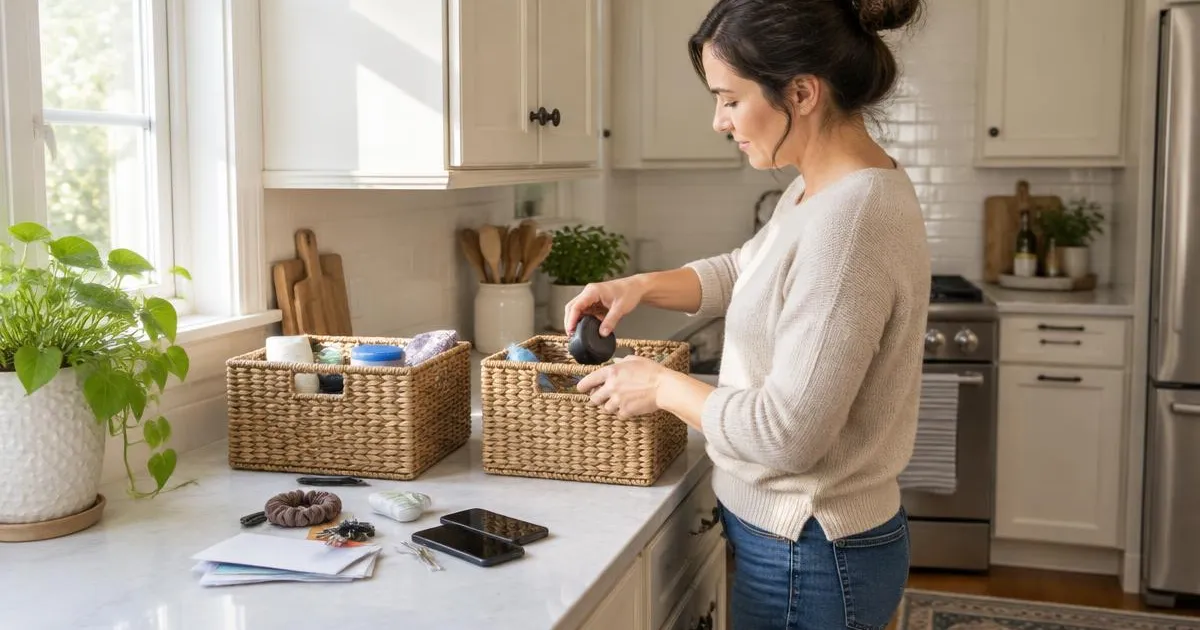
On kitchen counters, put away food, personal paperwork, and small items that you can reasonably store before the visit. Decide what should happen to dishes rather than assuming they are part of the cleaning scope. If the sink is full and dish handling has not been agreed, ask about expectations in advance. Clearing accessible worktops lets the cleaner focus on the actual surfaces instead of finding temporary homes for household belongings. It also reduces the chance that something important will be moved to a place you would not have chosen.
In bathrooms, gather personal toiletries, cosmetics, medication, and loose grooming items into suitable storage. Remove laundry from the floor and give the team access to the fixtures included in the scope. You do not need to polish mirrors or scrub the shower beforehand. If a fixture is broken, a drain has an ongoing problem, or a surface requires a specific care method, point it out. Those details matter more than making the room look presentable. Cleaning should not require the team to diagnose a plumbing issue or decide which personal products are safe to move.
Put away private, valuable, and fragile belongings
Store cash, jewelry, important documents, and medication in a secure location before the visit. Put away work materials containing confidential information and identify desks or shelves that must remain untouched. This is a sensible boundary-setting step for any service visit, not a statement about the people entering your home. You remain the best person to decide which belongings are sensitive and where they should be kept. Do not rely on a cleaner to recognize the significance of an unmarked envelope, an ordinary-looking collectible, or a document left among household papers.
Identify delicate surfaces before arrival
Fragile decorations deserve a similar review. Move easily damaged items yourself when practical, and flag delicate displays that should not be handled. Tell the company about loose shelves, unstable furniture, cracked glass, or surfaces with existing damage. If you have manufacturer care instructions for specialty finishes, provide them before work begins. A short written note can be helpful, but keep it consistent with the agreed scope. The purpose is to prevent accidental misunderstandings, not to create an extensive new set of tasks that has never been discussed or assessed.
Plan for pets and household members
Decide where pets will stay throughout the visit and tell the company before arrival. Even a friendly animal may become unsettled by equipment, unfamiliar movement, or doors opening and closing. Arrange secure separation where needed, provide an appropriate environment for the pet, and explain any doors or gates that must stay closed. Do not assume the cleaner will supervise an animal, manage an escape risk, or move a pet from room to room. If separation would block a room scheduled for cleaning, discuss how to sequence or adjust that part of the visit.
Household members also need a workable plan. If you will be home, choose a space where you can work, study, or relax without repeatedly occupying the room being cleaned. Coordinate meetings and calls if noise would be disruptive. Explain to children that equipment and cleaning supplies should not be touched. You do not necessarily need to leave the property, but repeatedly crossing a wet floor or moving belongings onto a just-cleared surface can interrupt progress. A simple room-by-room arrangement is often enough to let everyone use the home while respecting the scheduled work.
Confirm entry and practical arrangements
Review the arrival window, address details, parking information, and method of entry before the appointment. Apartment and condominium buildings may have access procedures that are not obvious from the street. Tell the company about gates, stairs, building contacts, or restrictions that affect the visit. Agree on a private way to share access information, and do not leave keys or codes in a publicly visible note. Identify a contact who can answer questions if entry is delayed or a room is unexpectedly locked. A cleaner should not have to improvise around unclear access permissions.
If a particular door sticks, an alarm needs special handling, or a lock must be secured in a certain way, explain that clearly. Confirm the expectations for utilities or facilities needed for the agreed work rather than assuming everything has already been discussed. Keep important instructions short and practical. A brief access plan is easier to follow than several conflicting messages from different household members. If circumstances change on the day, contact the company promptly through the agreed channel instead of relying on an unconfirmed note that may not be seen before arrival.
Choose priorities without expanding the appointment
Write down a few priority outcomes within the work you booked. You might emphasize the busiest bathroom, accessible kitchen surfaces, or pet hair on included floor areas. Share those priorities before the appointment when possible. They help the company understand what matters most, but they do not automatically add tasks or extend the scope. If you decide you want work that was not discussed, ask whether it can be assessed and added. Avoid presenting a long new checklist at the door and expecting it to fit into an unchanged plan.
Interior window cleaning is an add-on for residential house cleaning, so request it explicitly rather than placing it on a last-minute note. The same communication principle applies to other optional details: confirm the task and its boundaries before assuming it is covered. Mention rooms or surfaces that should be skipped as well. If a home office contains confidential material or a bedroom is being used for storage, a clear exclusion is more useful than vague instructions to be careful. The agreed scope should remain the shared reference throughout the visit.
Finish with a short check and a follow-up plan
Before arrival, walk through the included rooms once. Check that floors are reasonably clear, personal items are stored, pets have a secure plan, and entry instructions are ready. Resist turning this final check into a full cleaning session. If an area is still inaccessible, tell the company and clarify the limitation. If you discover a leak, broken fixture, or other condition that could affect safety or cleaning, report it promptly. An accurate update helps more than trying to conceal the problem or hoping it will not matter during the visit.
After service, compare the result with the agreed tasks rather than a different checklist found online. If something needs discussion, describe the location and concern clearly and use the company’s agreed communication channel. For future visits, note which preparation steps worked and which access instructions need improvement. Read the Recurring Cleaning page when planning maintenance after the required initial deep clean. To discuss preparation with Prime Cleaning MO LLC, call (314) 274-6907. A clear scope and a simple household routine make preparation repeatable without turning each appointment into a demanding project of its own.