House Cleaning
House Cleaning Affton: Bathroom Counts and Toiletry Clearance
A useful first-visit plan starts with more than a bathroom count. Explain the fixtures, clear personal products, and choose the right cleaning scope before booking.
house cleaning Affton: Bathroom Counts and Toiletry Clearance
Your first house cleaning Affton visit is easier to plan when the bathroom details are clear before anyone arrives. Two homes with two bathrooms can require very different work: one may have simple tub-and-shower combinations, while another has double vanities, separate showers, glass panels, and shelves crowded with products. Preparing does not mean cleaning everything yourself. It means describing what needs attention and making those surfaces accessible.
For Prime Cleaning MO LLC, start by sharing your bedroom count, bathroom count, current condition, and priorities. Explain whether your main concern is routine buildup, a bathroom that has gone unused, or residue following construction. Those situations should not be treated as interchangeable.
Use this guide to organize a realistic first-visit request. Your bathroom inventory, surface information, and decisions about personal toiletries help define the work, reduce assumptions, and keep the appointment focused on the areas that matter most to your household.
Count bathrooms, then describe the actual fixtures
Report full and half bathrooms separately, then describe what each contains. A half bathroom generally has a toilet and sink, but that label alone does not explain a large vanity, extensive shelving, or delicate finishes. For each room, note the number of sinks, toilets, tubs, and showers, plus accessible glass and surrounding surfaces.
Make a room-by-room fixture note
A useful description reads: “Hall bathroom: one sink, one toilet, tub-shower combination, curtain, and tile surround. Primary bathroom: two sinks, one toilet, separate tub, and glass-enclosed shower.” Add details such as a handheld showerhead or a freestanding tub with narrow clearance behind it. Say whether that space is reachable without moving anything.
Explain condition rather than guessing effort
Describe visible soap residue, mineral deposits, dusty ledges, or heavy product buildup. If one shower is rarely used but another serves several people, say so. Ask which accessible fixture surfaces are included and which conditions need discussion. An accurate inventory is more useful than calling every bathroom “average.”
Explore our house cleaning service and cleaning in Affton, MO for property-specific information.
Clear personal toiletries without precleaning the room
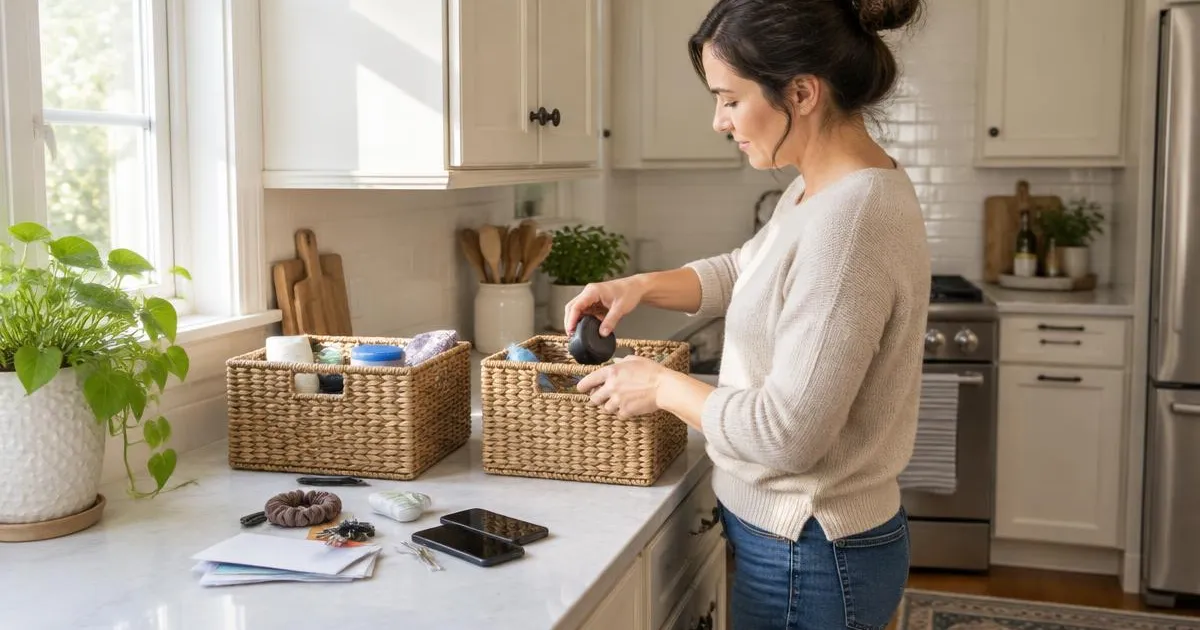
Remove toothbrushes, razors, contact-lens supplies, medicines, cosmetics, and loose jewelry from counters and other surfaces you want cleaned. Group daily-use products in a portable basket and store it somewhere outside the cleaning area. Empty the shower ledge of bottles, soap dishes, and personal tools rather than shifting everything onto the sink.
Keep each household member’s products together so putting them back is straightforward. Secure medications and private items in a location that is not part of the agreed cleaning scope. Do not assume the cleaner will decide which containers are empty, discard products, or reorganize a medicine cabinet.
You do not need to scrub the sink beforehand. The useful preparation is access. If mobility or another limitation makes clearing difficult, discuss that before booking. Ask whether limited item handling can be included and identify anything that must not be moved. A vanity covered in personal items and an empty vanity are different working conditions; neither should be a surprise.
Choose the service that matches your first visit
For an occupied home beginning ongoing service, Prime Cleaning MO LLC starts with an initial deep clean. Standard or recurring cleaning is available only afterward, not as a one-time or first-time service. The first standard or recurring quote includes that initial deep clean, so explain your starting condition rather than requesting maintenance-level work for accumulated buildup.
Deep cleaning does not automatically include appliance interiors or inside cabinets; those are optional add-ons. Clearing your bathroom counter also does not mean the vanity drawers will be emptied and cleaned. If you want cabinet interiors addressed, request that scope explicitly and ask how to prepare them.
Move-In/Move-Out cleaning includes inside and outside cabinets and appliances. Explain whether the property is empty and whether belongings remain in those areas. Interior windows are optional add-ons for house cleaning, including deep cleaning and Move-In/Move-Out service; Airbnb turnovers are the exception. Ask about the intended service rather than borrowing inclusions from a different cleaning category.
Flag materials, residue, and limits before cleaning
Tell the team about natural stone, specialty coatings, refinished tubs, newly installed fixtures, or surfaces with manufacturer-specific care instructions. Share those instructions when available. Manufacturer-safe surface care matters more than choosing the strongest product. Acids should be avoided on stone, and cleaners should never be mixed.
Describe residue without promising what it is or assuming it can be removed. For example, say “white buildup along the faucet base” rather than declaring that a particular treatment will fix it. Point out loose grout, peeling caulk, damaged finishes, and leaks so they are not mistaken for removable dirt. Cleaning does not include finish repairs.
For recently installed or refinished surfaces, follow the manufacturer’s cure times before cleaning; do not substitute a guessed waiting period. Disinfection should be used only when appropriate and with the full label contact time. Ask what can reasonably be addressed through cleaning and what requires a qualified trade professional instead.
Separate renovation dust from ordinary bathroom buildup
If a bathroom was renovated, say so during intake even if the rest of the home looks normal. Residential construction intake needs the bedroom count, bathroom count, and condition: debris, dust, or more. Explain which rooms were affected, whether construction is finished, and what materials or residue remain.
Heavy debris and hauling must be scoped separately. Do not assume a house-cleaning appointment includes removing tile piles, discarded fixtures, or construction packaging. Unknown or potentially hazardous dust calls for a stop and qualified contractor assessment before cleaning proceeds. Do not try to solve construction dust with a household vacuum. This service should not be treated as hazardous-material remediation.
Commercial post-construction is a separate intake path, not a residential estimate scaled up. Commercial and industrial cleaning, including commercial post-construction, requires a free in-person walkthrough before pricing. Provide the business name, approximate square footage, restroom count, preferred date/time window, and onsite contact. Hazardous work is not promised.
Make access and household priorities practical
Before the visit, explain entry arrangements, parking access, pets, and which rooms are off limits. Put away laundry around bathroom floors and remove loose objects from the tub or shower. Keep a clear route to each bathroom without stacking baskets in the doorway. Leave any item you cannot safely move in place and mention it.
Identify the bathroom your household most needs available and ask how access will be coordinated. If someone works from home or needs frequent bathroom access, discuss that constraint rather than assuming every room can remain usable throughout cleaning. Explain any doors that must stay closed or pets that need separation.
Rank priorities in plain language: “The shower glass and sink surrounds matter most; the guest bathroom is lightly used.” Priorities help guide a scope discussion but do not create extra inclusions. If the requested detailing goes beyond deep cleaning, it may take more than one day; confirm feasibility rather than assuming everything fits one visit.
Confirm the agreement and plan for later visits
Before booking, review the room and fixture inventory alongside the selected service. Ask: Are both sinks included? Is the separate tub listed? Are cabinet interiors requested as an add-on? Have I identified special surface instructions? Confirm any optional interior-window work and anything excluded because of access, damage, or uncertain residue.
At arrival, point out the priority bathrooms and explain any changes since intake. A newly discovered leak, fresh construction dust, or an uncleared vanity can affect what is appropriate to clean. Discuss those changes rather than expecting the original scope to cover a different situation.
Afterward, raise specific questions about agreed areas instead of treating every remaining mark as missed cleaning. Some marks reflect wear or damage. For future recurring visits after the initial deep clean, keep toiletry baskets ready and update the team when bathroom usage or fixtures change. Consistent preparation makes the ongoing scope easier to understand and maintain.