House Cleaning
House Cleaning Ballwin: Multiple Levels and Clear Routes
A useful first-visit plan maps every level, identifies rooms that need attention and gives the cleaning team workable routes through your home.
house cleaning Ballwin: Multiple Levels and Clear Routes
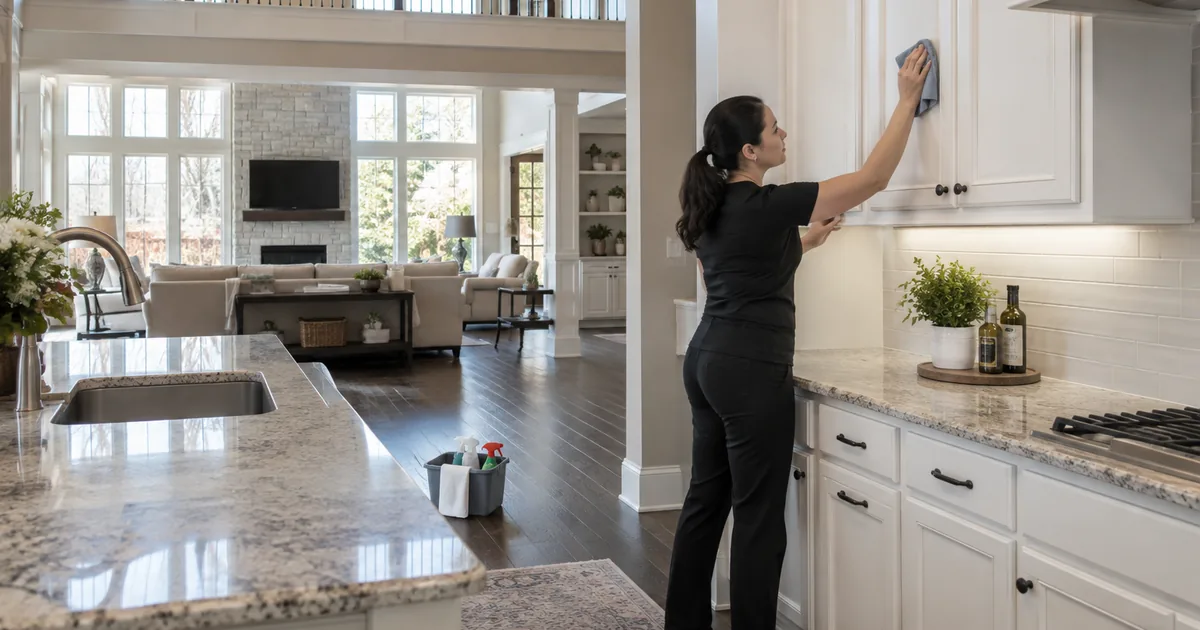
Preparing for house cleaning Ballwin starts with a practical question: can the team reach every agreed room and work there without moving through blocked spaces? In a multi-level home, bedroom and bathroom totals tell only part of the story. Stairs, split-level landings, basement doors and crowded hallways affect access. This guide from the Prime Cleaning MO Team explains how to prepare for a first visit with Prime Cleaning MO LLC by mapping rooms and usable routes rather than trying to pre-clean everything yourself.
Start with a simple floor-by-floor note. List the entry level, upstairs, lower level and any finished rooms reached through another space. Mark which areas belong in the visit, which should remain closed and where access needs discussion. Include your preferred entrance and any parking or entry instructions. The goal is a shared picture of the home, not a polished floor plan or an exhaustive task list.
Build a room inventory that reflects every level
Count bedrooms and bathrooms first, then describe the rooms those totals leave out. A downstairs den, upstairs loft or basement kitchenette can add meaningful work even when it is not called a bedroom. Identify half baths separately and mention bathrooms that are seldom used but still accumulate dust. For each level, note the floor surfaces, approximate room sizes and whether furniture limits access.
Use descriptions that support decisions: “Upstairs: three bedrooms, two bathrooms, carpeted hall; one bedroom excluded” is more useful than “typical two-story house.” Explain whether an excluded room may still be crossed to reach another included area. Do not assume the team can identify those boundaries on arrival.
Separate room counts from room use
A bedroom used for storage should still appear in the inventory, with its current use explained. If boxes cover most of the floor, ask whether the accessible portion can be cleaned or whether the room should be excluded. Identify home offices containing sensitive papers and playrooms with loose pieces that need gathering before surfaces become reachable.
Explore our house cleaning service and cleaning in Ballwin, MO for property-specific information.
Create usable routes from the entrance to each room
Walk the path the team will use, beginning at the agreed entrance. Can someone carrying supplies pass through the doorway, turn on the landing and reach each included room? Remove loose shoes, bags, cords and toys from that route. Keep stairs and landings free of stored items; do not solve a clutter problem by shifting everything onto the next level’s access path.
Check doors as well as floors. A bathroom door that opens only partway because of a laundry basket can make an otherwise clear room difficult to service. Mention narrow spiral stairs, steep basement access, loose handrails or damaged steps before the appointment. Do not attempt repairs for the cleaning visit; disclose the issue and discuss whether the area can be accessed.
Choose a staging area that stays out of the way
Set aside a spot for items you gather, preferably outside the cleaning scope. Avoid the entry landing or the hall connecting bathrooms. If no suitable space exists, describe the constraint when booking instead of expecting the team to relocate belongings repeatedly.
Match the first visit to the right cleaning service
For Prime Cleaning MO LLC, standard or recurring cleaning begins only after an initial deep clean. It is not a first-time or one-time service. The first standard or recurring quote includes that initial deep clean, so explain your starting condition rather than requesting maintenance-level work for accumulated buildup.
Deep-clean appliance interiors and inside cabinets are optional add-ons. Decide whether you want those areas addressed and ask about preparation before emptying anything. Interior windows are also optional for house-cleaning services, not automatically included. A move-in or move-out service includes inside and outside cabinets and appliances, making the service choice important when the home is changing occupants.
For example, an occupied upstairs with established buildup and a rarely used lower level needs a different conversation from an empty home after a move. Describe both levels honestly. If you want detailing beyond deep cleaning, discuss that separately; extensive detailing may take more than one day. Do not build your access arrangements around an assumed completion time.
Describe conditions without treating every dust problem alike
For ordinary household cleaning, explain where soil has accumulated and what access is available. Mention greasy kitchen surfaces, bathroom buildup, pet hair on stairs or dusty unused rooms. Photos can help show room layout and visible conditions, but they do not identify unknown substances or establish whether work is appropriate.
If construction occurred, residential intake needs the bedroom count, bathroom count and a clear description of condition: debris, dust or more. Identify affected levels and whether active work continues. Heavy debris and hauling must be scoped separately; they are not automatically part of cleaning.
Pause when the material is unknown
If dust or residue may be hazardous, stop and request assessment by a qualified contractor before cleaning proceeds. Do not disturb unknown material or use a household vacuum on construction dust. Cleaning is not an assessment of asbestos, lead, silica or mold, and it does not establish occupancy safety. Keep the affected route out of use while appropriate guidance is sought.
Make surfaces accessible without risking their finishes
Prepare by putting away personal items, securing valuables and gathering loose belongings from agreed work surfaces. You do not need to scrub before the team arrives. Instead, make the surfaces visible and flag delicate materials, recent installations or finishes with special care instructions. Tell the team if a counter is natural stone rather than expecting its material to be obvious.
For newly painted, sealed or installed surfaces, provide the manufacturer’s cleaning guidance and cure requirements. Follow those requirements rather than assuming that a surface that feels dry is ready for cleaning. If the product or finish is unknown, flag it for discussion instead of testing cleaners yourself.
Manufacturer-safe care matters throughout the visit: never mix cleaners, avoid acids on stone and disinfect only when appropriate, allowing the full label contact time. Cleaning does not include finish repairs. Point out scratches, worn coatings and damaged edges so expectations distinguish removable soil from an existing surface problem.
Coordinate people, pets and room priorities
A clear route can disappear quickly when a household remains active. Before the visit, decide where pets will stay and which rooms people need for work, rest or caregiving. Communicate those needs without assuming a particular room order. Ask how access can be coordinated, especially when the only route to a lower-level room passes through an occupied space.
Give priorities that are specific enough to guide a scope discussion. “The upstairs bathrooms and kitchen matter most; the basement guest room can be excluded” is actionable. “Do everything possible” leaves the team guessing. If access changes on the day, explain what changed and confirm any scope adjustments rather than expecting skipped areas to be replaced automatically.
Share practical instructions for locks, alarms and the agreed contact method privately. Keep a reachable contact available for questions about closed doors, unexpected conditions or uncertain surfaces. Never leave access information where passersby can read it, and identify rooms that must remain closed.
Confirm the scope before the team arrives
Review your notes once more: rooms by level, included and excluded spaces, bedroom and bathroom counts, surface concerns, optional add-ons and the usable route from the entrance. Confirm whether interior windows or deep-clean cabinet and appliance interiors were requested. Explain any changes since the original inquiry, including new clutter or work by another contractor.
If the inquiry concerns commercial or industrial premises rather than a residence, a different intake applies. Commercial and industrial cleaning, including commercial post-construction, requires a free in-person walkthrough before pricing. Provide the business name, approximate square footage, restroom count, preferred date and time window, and onsite contact. Hazardous work should never be assumed or promised.
For your residential appointment, finish with three questions: Which areas are included? What must I move or prepare? What conditions would require the team to pause and consult me? Those answers turn a room list into a workable first-visit plan while leaving room for conditions that cannot be confirmed beforehand.