House Cleaning
House Cleaning Brentwood: Fragile Objects and No-Touch Zones
A first cleaning visit goes more smoothly when delicate belongings, restricted areas, and service expectations are identified before work begins.
house cleaning Brentwood: Fragile Objects and No-Touch Zones
Preparing for house cleaning Brentwood is not about making your home spotless before help arrives. It is about giving the cleaner enough information to work around your belongings without guessing. For a first visit with Prime Cleaning MO LLC, start with the objects and spaces you do not want touched: an heirloom cabinet, an open craft project, a sensitive work desk, or a shelf of delicate collectibles.
Walk through the rooms you want cleaned and ask three questions: What can be moved? What must stay exactly where it is? What should not be cleaned at all? These answers are more useful than simply saying, “Be careful in this room.” A shelf can contain sturdy books beside an unstable ceramic piece, so instructions should identify the actual boundary.
Choose one person to communicate these decisions. If household members disagree about whether a collection can be handled, treat it as no-touch until everyone has agreed on an instruction.
Choose the Service Before You Start Preparing
Confirm the service type before making a room-by-room plan. Standard or recurring cleaning is available only after an initial deep clean, not as a one-time or first-time service. Your first standard/recurring quote includes that initial deep clean. Explain your priorities during intake, especially if access restrictions will leave certain surfaces untouched.
For deep cleaning, appliance interiors and inside cabinets are optional add-ons. Move-In/Move-Out cleaning includes inside and outside cabinets and appliances, so clarify whether belongings will remain inside and whether any compartments need restricted access. Interior windows are an optional add-on for these residential services, not an automatic inclusion; Airbnb turnovers are the exception to that optional-window rule.
Ask, “Does my requested work involve routine soil removal, or detailed attention around many individual objects?” Detailing beyond deep cleaning may take more than one day. A crowded display room and an empty bedroom create very different handling decisions, even when their floor areas are similar. Discuss that distinction before accepting a scope.
Explore our house cleaning service and cleaning in Brentwood, MO for property-specific information.
Make a Short, Specific No-Touch Map
Create a simple note organized by room, using visible locations instead of descriptions only you understand. “Living room, upper shelf beside doorway: do not touch shelf or contents” is clearer than “Avoid the special things.” Share the note before the visit and keep a copy available for the arrival conversation.
Separate Object Restrictions From Area Restrictions
An object restriction means one belonging stays untouched while accessible surrounding surfaces may be cleaned. An area restriction excludes the whole space. For example, if a model airplane has projecting wings, wiping beneath it could still disturb it. Designating the entire tabletop as no-touch may be the better choice.
Use Labels Without Creating New Surface Risks
Use freestanding notes or signs placed nearby rather than attaching adhesive to antiques, artwork, wallpaper, or delicate finishes. State whether a closed door means “do not enter” or simply “keep closed for pets.” Do not rely on a note hidden underneath the objects it is meant to protect.
Secure Fragile Objects Without Turning Preparation Into a Move
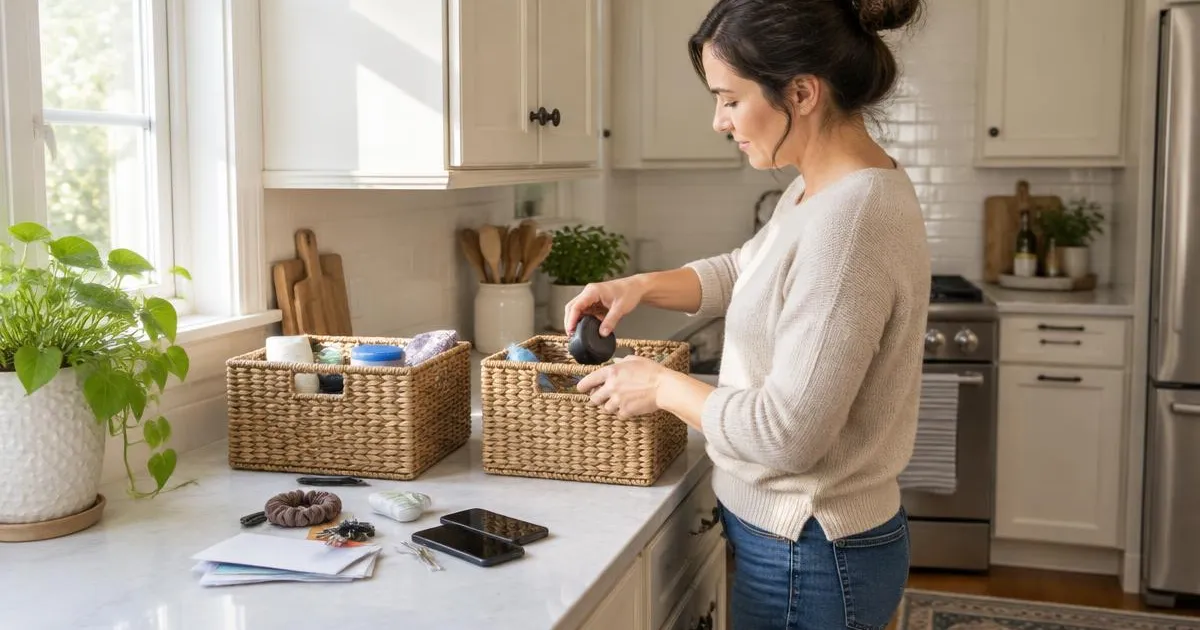
You do not need to empty every room. Focus on loose, unstable, valuable, or irreplaceable belongings that sit where cleaning would normally happen. Jewelry beside a sink, glass ornaments on a narrow ledge, and framed art leaning against furniture deserve attention before everyday clutter does. Put small valuables and private documents in a secure location you control.
If an item can be moved safely by you, place it somewhere outside the agreed cleaning area. Avoid piling delicate pieces into a basket or shifting them onto another surface that also needs cleaning. For a large or awkward object, leave it in place and define a no-touch boundary instead of attempting a risky relocation.
Tell the team about concealed instability: a loose shelf bracket, an unfastened mirror, or a lamp with a damaged base. Cleaning should not become an improvised repair task. If handling a surface could dislodge something, exclude that surface until the underlying problem has been addressed.
Give Surface-Care Instructions That Can Be Followed
Describe unfamiliar materials and finishes during intake. A countertop that looks like manufactured quartz might be natural stone; a painted cabinet may have a newly applied finish. Provide manufacturer care instructions when available and identify surfaces whose finish or material is unknown. When compatibility cannot be established, discuss leaving the surface untouched rather than experimenting.
Flag Fresh Finishes and Delicate Materials
For newly painted walls, refinished wood, sealed stone, or recently installed surfaces, follow the manufacturer's cure times and cleaning guidance. Do not substitute a guessed waiting period. Explain whether instructions prohibit moisture, friction, particular products, or moving items across the finish. Avoid acids on stone.
Distinguish Cleaning From Disinfection
Disinfection is not necessary for every decorative surface. Use it only when appropriate for the material and situation, with the full product-label contact time. Never mix cleaners. If a household member has product sensitivities, communicate the concern before the visit so product compatibility and workable restrictions can be discussed without promising a particular health outcome.
Prepare Access, Pets, and Active Household Spaces
Clear a practical path through the agreed rooms, especially around fragile furniture and floor-level displays. Pick up charging cables, toys, and clothing where you can do so safely. This is access preparation, not a request to pre-clean. Leave heavy furniture in place and discuss any expectations about moving items rather than assuming they can be shifted.
Arrange a secure location for pets away from entry routes and cleaning activity. Explain which doors must stay closed and who will manage an animal if access is needed. For children’s projects, puzzles, or hobby equipment, choose either a protected storage spot or a clearly excluded work surface.
If you work from home, identify calls or rooms that require privacy. Ask whether the room order can accommodate those restrictions before the appointment. Provide entry instructions through the agreed communication channel, and identify who can answer questions. Avoid leaving sensitive access details on a visible note beside the front door.
Flag Renovation Dust Before Treating It as Ordinary Housekeeping
Recent renovation changes the intake conversation. For residential construction cleaning, provide bedroom and bathroom counts and describe the condition: debris, dust, or more extensive cleanup needs. Explain what work occurred and where residue is present. Heavy debris and hauling must be scoped separately rather than folded into a household cleaning request.
If dust is unknown or potentially hazardous, stop and request assessment by a qualified contractor before cleaning proceeds. Do not disturb it or use a household vacuum on construction dust. This service should not be treated as asbestos, lead, silica, or mold remediation, hazardous waste removal, duct cleaning, or finish repair. Cleaning also cannot establish guaranteed occupancy safety or promise dust-free results.
If the property is actually a business or commercial project, say so during intake. Commercial/industrial cleaning and commercial post-construction require a free in-person walkthrough before pricing. Provide the business name, approximate square footage, restroom count, preferred date/time window, and onsite contact; hazardous work is not promised.
Confirm Boundaries at Arrival and Review Them Afterwards
At arrival, review the few instructions most likely to prevent misunderstandings. Point out no-touch zones, fragile items remaining in place, surface restrictions, and your highest-priority accessible areas. Ask the cleaner to confirm what each boundary means. “Leave the desk alone” should not require guessing whether that includes its legs, nearby floor, or only the desktop.
Agree on a simple decision rule for surprises: if an object appears unstable, a material is uncertain, or an instruction conflicts with the requested work, pause that task and ask. When you will be unavailable, specify that uncertain areas should remain untouched rather than giving open-ended permission.
After the visit, review accessible areas against the agreed scope, not an imagined universal checklist. A dusty excluded shelf is different from an overlooked included surface. Update the notes for future visits as projects finish or belongings move. Consistent boundaries help recurring service remain practical without turning every appointment into a new set of guesses.