House Cleaning
House Cleaning Mehlville: Cleaning Around Work-From-Home Rooms
A practical first-visit plan for an occupied Mehlville home, with room priorities, work-from-home boundaries, access instructions, and clear service choices.
house cleaning Mehlville: Cleaning Around Work-From-Home Rooms
Your first cleaning visit should fit the way your home functions, especially when someone works there all day. When arranging house cleaning Mehlville residents can make the visit easier by explaining which rooms stay occupied, when calls happen, and what needs attention first. Prime Cleaning MO LLC needs that practical context alongside the cleaning scope. The goal is to agree on a workable route through your home rather than leave room access and interruptions to chance.
Start with three questions: Who will be home? Which spaces must remain available? What would make the visit most useful? A home with an active office, a sleeping child, and one bathroom needs a different plan from an empty house. Give each restricted space an access window or mark it unavailable. Decide whether a closed door means “please knock” or “do not enter,” and share that rule before arrival. Mention pets and household members who may not expect someone entering their rooms.
Choose the right first-visit scope before discussing extras
For standard or recurring service, the first quote includes an initial deep clean. Standard maintenance cleaning begins only after that deep clean; it is not a one-time or first-time service. Explain your ongoing needs, but also describe the current buildup so the starting scope is realistic. Kitchens used throughout the workday, frequently occupied bathrooms, and floors beneath office chairs deserve specific discussion.
Deep-clean appliance interiors and inside cabinets are optional add-ons, not automatic inclusions. Interior windows are also optional for this residential visit. If you want those tasks, identify the appliances, cabinets, or windows and ask what preparation is needed. Move-In/Move-Out service includes inside and outside cabinets and appliances, but that is a different scope from cleaning a lived-in home around your work schedule.
For example, greasy cabinet fronts and a cluttered refrigerator interior are two separate requests. Describe both rather than assuming one includes the other. Detailing beyond a deep clean may take more than one day, so prioritize openly instead of relying on an assumed finish time.
Explore our house cleaning service and cleaning in Mehlville, MO for property-specific information.
Create a work-from-home plan that protects your availability
A useful work plan identifies quiet periods, accessible rooms, and the person who can answer questions. Share scheduled calls before the visit, then confirm whether the requested sequence is workable. Cleaning can create noise, so avoid treating a nearby closed office door as a promise of silence.
Separate call windows from room-access windows
Write down when your office can be entered, not just when meetings begin. You might request office cleaning before your first call, then use another room while that space is addressed. If your calendar changes frequently, designate the office as unavailable and discuss how that changes the scope. Do not assume the team can wait indefinitely for a meeting to end.
Choose one communication channel
Name one household contact and specify whether a text or a knock is preferable. Keep the agreed channel available during access transitions. Before a long presentation, settle questions about doors, pets, bathrooms, and excluded surfaces. This reduces the need for interruptions when you cannot respond.
Prepare occupied rooms without doing the cleaning yourself
Preparation means making agreed surfaces reachable, not scrubbing before help arrives. Gather loose clothing, dishes, toys, and charging cables from the areas you want cleaned. Put confidential paperwork, medication, cash, and fragile personal items somewhere secure. Keep laptops and monitors stable, and identify equipment that should not be moved, unplugged, or treated.
For an occupied bedroom, decide whether bedding, bedside items, and the floor around the bed will be accessible. For a shared office, ask everyone to clear their own work area. A closed drawer is a better place for private documents than a stack labeled “important” on a desk scheduled for cleaning.
If clutter cannot be cleared, describe it honestly and set a smaller reachable area. For example, request accessible floors and exposed surfaces while excluding a craft table covered with an active project. Ask before expecting furniture to be moved. Clear walking routes and disclose anything unstable rather than leaving the team to discover access problems while carrying supplies.
Keep bathrooms, kitchens, and pet routines workable
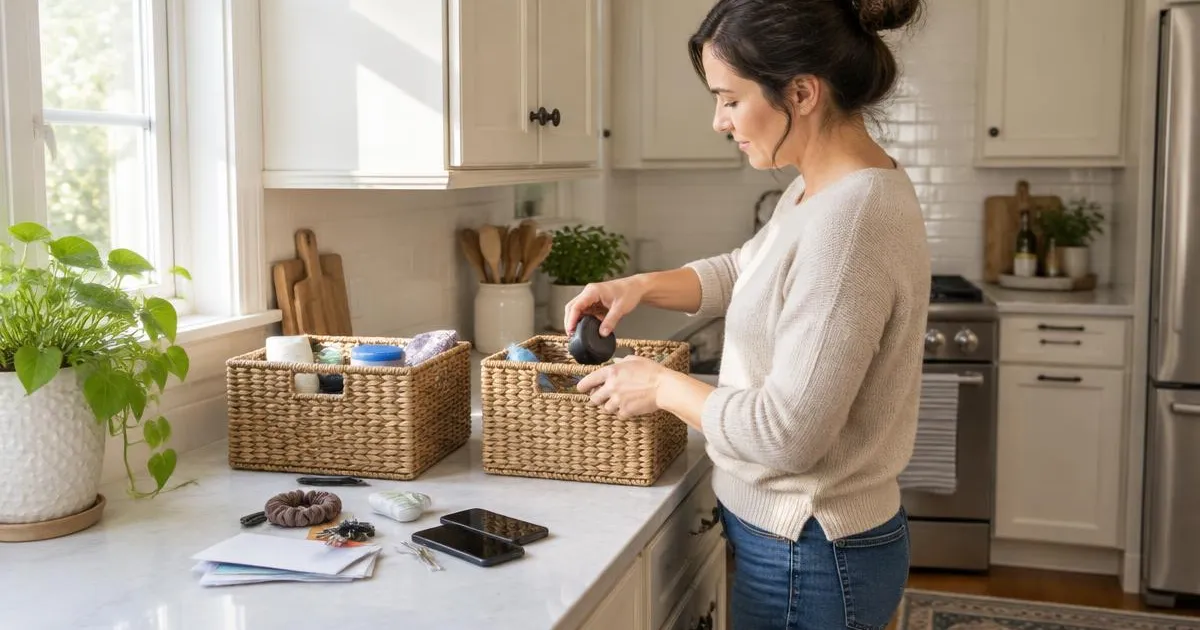
An occupied home still needs to function during cleaning. If there is only one bathroom, agree on access before work begins and mention any household member who needs frequent use. With multiple bathrooms, ask whether one can remain available while another is cleaned. Keep personal toiletries together so counters and fixtures are reachable without sorting private belongings.
Plan meals around kitchen access rather than preparing food on surfaces being cleaned. Finish breakfast dishes or identify them as a scope question, and tell the team if you need the sink at a particular point. If an appliance-interior add-on is booked, ask how food, racks, or stored items should be handled before arrival.
Secure pets in an agreed space that will not need cleaning during that portion of the visit. Explain door-dashing risks and avoid moving a pet between rooms without notifying the contact person. Tell other household members the plan, too; a helpful room sequence can unravel if someone unexpectedly occupies the next space.
Flag sensitive finishes and separate construction concerns
Share manufacturer care instructions for stone, specialty flooring, coated fixtures, and newly installed finishes. Surface care should follow those instructions, including cure times; a surface that looks dry may not be ready for cleaning. Avoid acids on stone and never mix cleaners. Disinfection should be used only when appropriate, with the full label contact time, rather than treated as an automatic step on every surface.
If recent remodeling is part of the request, residential construction intake needs the number of bedrooms and bathrooms plus the condition: debris, dust, or more. Identify affected rooms and whether work is still active. Heavy debris and hauling must be scoped separately, not folded into routine house cleaning.
Unknown or potentially hazardous dust is a stop point: request assessment by a qualified contractor before cleaning proceeds in the affected area. Do not use a household vacuum to tackle construction dust. An occupied office beside a renovation should not be treated as ordinary settled dust without first clarifying what the material is.
Send booking details that prevent scope surprises
Give Prime Cleaning MO LLC your address, bedroom and bathroom counts, current condition, requested service, occupied-room restrictions, and preferred date/time window. Add access instructions and the best contact number. Explain parking or entry limitations without sharing unnecessary security details. If photos are requested, show the relevant surfaces while keeping private documents and screens out of view.
Use concrete priorities: “The kitchen and bathrooms matter most; the office is unavailable during calls.” Ask which requests belong in the base scope and which require add-ons. Confirm what happens if a room remains inaccessible, and whether any requested task needs additional discussion before the visit.
A home office within a residential booking should not blur into a separate business-site request. Commercial/industrial cleaning and commercial post-construction require a free in-person walkthrough before pricing. For those inquiries, provide the business name, approximate square footage, restroom count, date/time window, and onsite contact. Hazardous work should never be assumed to be included in either residential or commercial cleaning.
Use a short arrival check and a practical handoff
At arrival, confirm the priorities, occupied rooms, quiet-period requests, pet location, and communication method. Point out sensitive finishes and anything that must stay untouched. Keep this check focused on decisions already discussed rather than introducing several major add-ons at the door. If something has changed, ask how it affects the agreed work before proceeding.
During the visit, keep access predictable. If you leave the office early or need the kitchen unexpectedly, notify the agreed contact rather than redirecting tasks independently. A sequence can sometimes change, but remaining access and scope still need confirmation.
At handoff, review the priority areas and ask about anything that could not be reached or completed within the agreed scope. Note preparation changes that would help next time, such as clearing a desk earlier or moving calls to another room. If you want recurring service after the initial deep clean, use those observations to set a workable routine instead of assuming every future visit must follow the first visit’s arrangement.