House Cleaning
House Cleaning Richmond Heights: One Contact for Visit Priorities
A smoother first cleaning starts with one person coordinating priorities, access, and exceptions. Here is how to prepare without doing the cleaning yourself.
house cleaning Richmond Heights: One Contact for Visit Priorities
Your search for house cleaning Richmond Heights services should lead to more than a date on the calendar. A useful first visit starts with clear decisions about what needs attention, what should remain untouched, and who can answer questions. When several household members give different instructions, even a straightforward cleaning can become confusing. Choosing one contact helps Prime Cleaning MO LLC understand your priorities without sorting through conflicting requests.
That contact does not need to supervise every task or stay beside the cleaning team. Their role is to consolidate household preferences, confirm the agreed scope, and handle exceptions. Before requesting a quote, walk through your home and note the rooms involved, current conditions, and any access limitations. Separate what you want cleaned from what needs organizing, repairing, or specialist assessment. This distinction helps establish a practical first-visit plan rather than a wish list with uncertain boundaries.
Choose one contact and define their authority
Pick someone who knows the home and can make decisions during the appointment window. Provide their name and preferred contact method through the booking process. If that person will be unavailable, name one backup and explain when the backup should be contacted. Avoid having several people independently send additions or exclusions.
The contact should collect input from everyone before the visit. Ask which spaces matter most, whether anyone will be working or sleeping at home, and which belongings should not be moved. Resolve competing requests in advance: if one person wants an office cleaned while another has confidential papers spread across the desk, agree on accessible floors only or exclude the room.
Set limits on what the contact can approve. Can they authorize an optional add-on after its scope and pricing are confirmed, or must changes wait? Give a default instruction for unanswered questions, such as leaving an uncertain surface untouched and reporting it instead of making assumptions.
Explore our house cleaning service and cleaning in Richmond Heights, MO for property-specific information.
Match the first appointment to the right service
Describe the result you need rather than relying only on a service label. An occupied home needing accumulated buildup addressed has different requirements from an empty property changing occupants. Your contact should confirm the selected service and any additions before the visit.
Occupied homes and recurring plans
Standard or recurring cleaning is available only after an initial deep clean; it is not a one-time or first-time service. The first standard or recurring quote includes that initial deep clean. Explain current buildup and accessible rooms so the starting scope reflects the home as it is, not only the condition you hope to maintain.
With deep cleaning, appliance interiors and inside cabinets are optional add-ons. Request them explicitly rather than assuming an exterior cleaning includes everything behind a door.
Move-related cleaning and windows
Move-In/Move-Out cleaning includes inside and outside cabinets and appliances. Confirm whether these spaces will be empty and accessible. Interior windows are optional add-ons for residential services discussed here, not automatic inclusions. More extensive detailing beyond deep cleaning may take more than one day; discuss the scope before coordinating other appointments around it.
Turn household preferences into ranked priorities
Create a short list with three categories: agreed priorities, optional requests, and exclusions. Priorities help communicate what matters within the booked service; they do not automatically expand its scope. Instead of saying “focus on everything,” identify a concern such as buildup around bathroom fixtures or crumbs and residue on accessible kitchen surfaces.
A useful decision example is a home office with a meeting during the visit. Your contact can request that the room be addressed while available, or exclude it if access cannot be coordinated. Another example is a cabinet containing fragile keepsakes: specify exterior cleaning only unless an appropriate interior service and preparation have been agreed.
Ask scope questions before booking: Which rooms and bathrooms are included? Are any spaces inaccessible? Does a requested task belong to the selected service or require an add-on? If the scope needs adjustment, which request should be discussed first? Keep the final version in one message so older instructions do not compete with newer ones.
Prepare access without doing the cleaning yourself
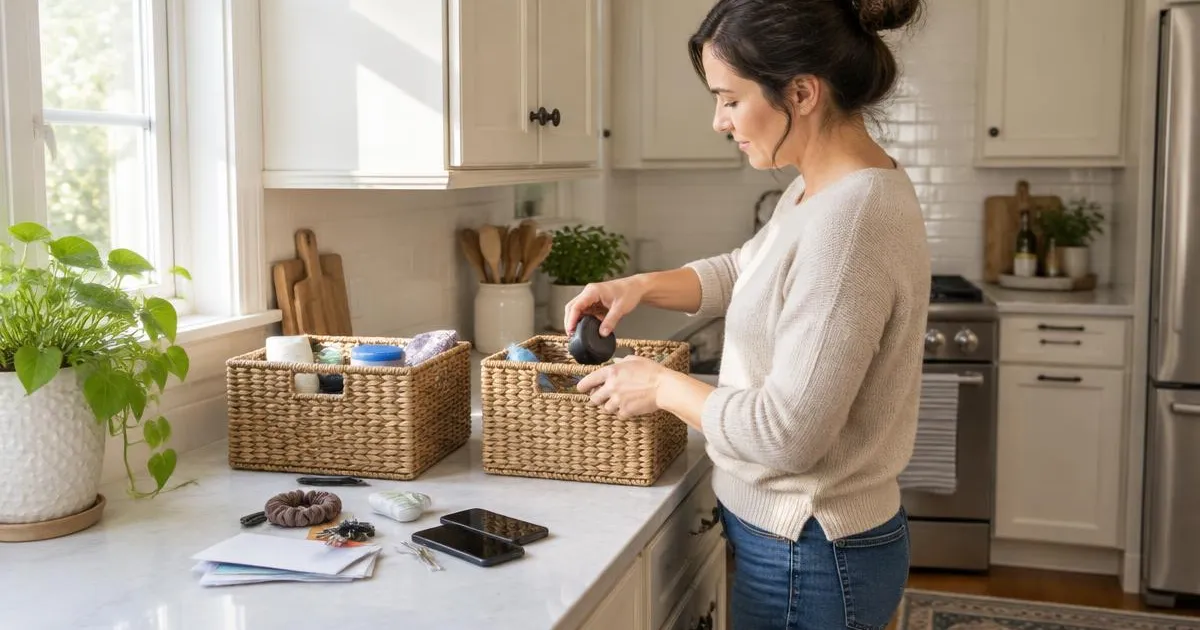
You do not need to clean the home before a cleaning visit. Focus instead on making agreed surfaces reachable. Put away loose clothing, paperwork, medications, and small valuables. Clear a path through each included room and decide where displaced everyday items belong. Cleaning and sorting personal possessions are different tasks; a crowded counter may limit the surface that can be addressed.
Have your contact confirm entry arrangements, parking or building access restrictions, and any rooms that must remain closed. Share sensitive entry information only through the agreed communication method, not on a note visible outside. If building management controls access, resolve that requirement before the appointment.
Arrange a secure, comfortable place for pets away from active work areas and tell the contact about doors that must stay shut. Keep children away from cleaning products and equipment. If an appliance interior add-on is booked, ask what emptying or preparation is needed rather than assuming the team will sort food or belongings.
Record surface-care limits and visit exceptions
An exception is anything that changes how an otherwise agreed task should be approached. Examples include a loose cabinet handle, recently finished flooring, delicate stone, or a shelf that cannot safely support moved objects. Tell the contact about these conditions before work starts. Cleaning does not include finish repairs, and a damaged surface should not be treated as ordinary buildup.
Share manufacturer care instructions for specialty materials when available. Newly installed, sealed, painted, or refinished surfaces must follow manufacturer cure times; do not substitute a guessed waiting period. If suitability is unclear, leave the area out until appropriate guidance is available. Surface care should be manufacturer-safe, with acids avoided on stone and cleaners never mixed.
Disinfection should be used only when appropriate and must allow the full product-label contact time. Ask household members to leave product decisions with the agreed cleaning plan rather than applying another chemical just before the visit. The contact should flag any recent product use that could affect safe surface care.
Separate ordinary buildup from construction conditions
If renovation work has occurred, identify it during intake rather than describing everything as routine dust. For residential construction cleaning, provide the number of bedrooms and bathrooms and explain the condition: debris, dust, or more. Note where work occurred, whether contractors are still active, and which areas are ready for cleaning.
Heavy debris and hauling must be scoped separately. Do not assume a house-cleaning appointment includes removing construction materials or dealing with unidentified residues. If dust is unknown or potentially hazardous, stop cleaning in that area and request assessment by a qualified contractor before proceeding. Do not use a household vacuum for construction dust.
For example, light visible dust after documented work is a different intake discussion from piles of broken material or unexplained powder near disturbed older surfaces. Your contact should report those differences without guessing what the material contains. Cleaning is not asbestos, lead, silica, or mold remediation, and the visit should not be treated as a guarantee of occupancy safety.
Confirm the plan and close the communication loop
Before the visit, have the designated contact send one final summary: selected service, included rooms, ranked priorities, approved add-ons, exclusions, access arrangements, and the backup contact. Include any newly changed condition, such as a room becoming unavailable or a contractor returning. Ask Prime Cleaning MO LLC to confirm scope changes rather than assuming a message automatically adds work.
During the visit, route questions through that person. If an unexpected issue appears, the useful response is a decision: proceed within the agreed scope, leave the affected area untouched, or discuss a separately scoped task. This keeps a minor exception from becoming competing instructions.
Afterward, the contact can gather household feedback into one specific message. Name the room and concern instead of sending several vague comments. For future recurring visits following the initial deep clean, update the same priorities and exception list as household needs change. Keep unresolved limitations visible so they are not mistaken for approved tasks next time.