House Cleaning
House Cleaning St. Louis: Choosing First-Visit Priorities
Your first cleaning visit should not require a cleaning marathon beforehand. A few clear priorities, accessible surfaces, and an accurate scope help you prepare without doing the cleaner’s work.
house cleaning St. Louis: Choosing First-Visit Priorities
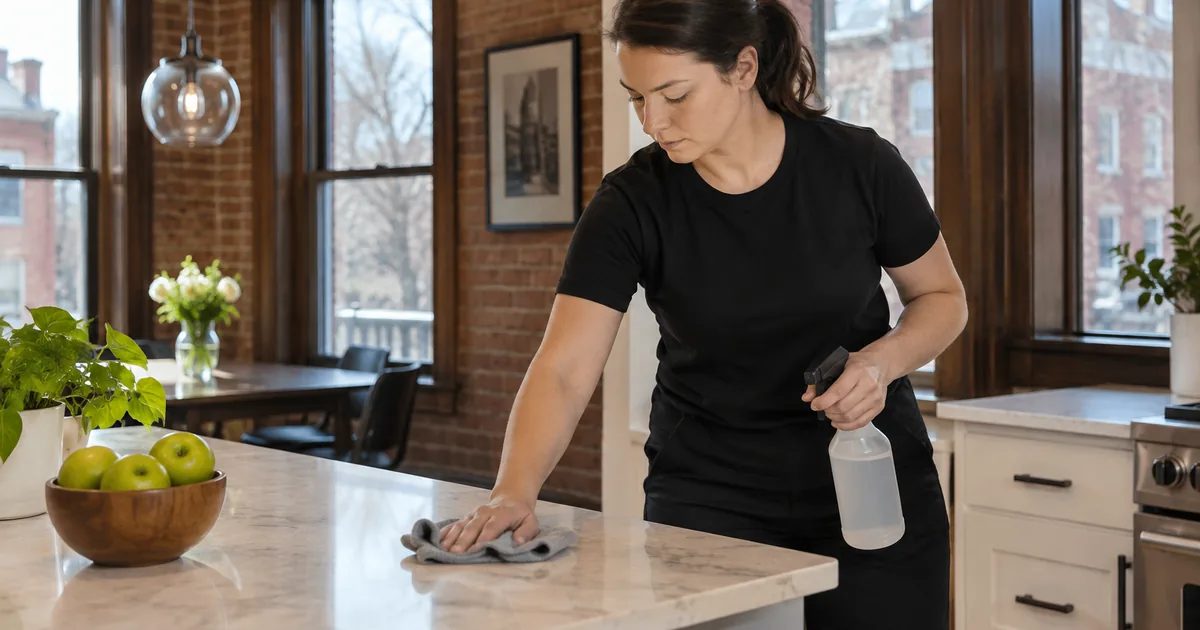
Preparing for your first house cleaning St. Louis appointment should mean making decisions, not scrubbing the home before someone arrives. The useful work happens when you explain what needs attention, identify anything that needs special care, and make the agreed areas accessible. You do not need to polish fixtures or wash floors to make the visit worthwhile.
For your first visit with Prime Cleaning MO LLC, start with this question: What would make the biggest difference when I walk back into this home? Perhaps it is a usable kitchen, bathrooms that need thorough attention, or less visible dust in shared rooms. Those answers help define priorities without turning preparation into another cleaning project.
A helpful distinction is access versus appearance. Moving a pile of mail off the dining table creates access; wiping that table beforehand duplicates cleaning work. Prepare enough to reveal the surfaces you want addressed, then leave the cleaning itself for the agreed service.
Choose the service before making your preparation list
The first decision is whether you need an initial deep clean, a move-related service, or a different scope. Standard and recurring cleaning begin only after an initial deep clean; they are not first-time or one-time service options. Your first standard or recurring quote includes that initial deep clean.
Describe the home's current condition rather than choosing a service solely by its name. Mention accumulated bathroom buildup, kitchen grease, pet hair, unused rooms, or areas that have not been cleaned recently. Accurate details help separate ordinary cleaning needs from work requiring additional discussion.
Match optional work to the right service
With deep cleaning, appliance interiors and inside cabinets are optional add-ons. Move-In/Move-Out cleaning includes inside and outside cabinets and appliances. Interior windows are an optional add-on for these residential services, not an automatic inclusion. Ask specifically about refrigerator contents, cabinet contents, and access requirements before preparing those areas. Detailing beyond deep-clean scope may take more than one day, so disclose unusually intensive needs early.
Explore our house cleaning service and cleaning in St. Louis, MO for property-specific information.
Turn a long wish list into clear priorities
Write a short priority note rather than a room-by-room essay. Name the areas that matter most, the particular concerns within them, and any rooms that should be skipped. Priorities guide the conversation, but they do not automatically expand the quoted scope. Confirm requested work before the appointment.
Separate essentials from requests to discuss
An essential might be attention to bathroom fixtures and accessible kitchen surfaces. A request to discuss might be cleaning inside the oven or washing interior windows. A boundary might be leaving a home office untouched. Separating these categories makes it easier to understand what is included and what needs an add-on.
Use a decision example
Suppose your main concern is a greasy kitchen, but several bedrooms also need attention. Say which concern matters most and ask whether the proposed scope addresses both. If it does not, discuss adjusting the service rather than assuming the cleaner can substitute unquoted appliance-interior work for a bedroom.
Clear access without reorganizing your whole home
Begin with the paths someone will use to enter and move between agreed cleaning areas. Pick up loose clothing, cords, toys, and other floor obstacles where practical. Gather scattered personal items into a designated container, but do not create unstable piles or block another room's doorway.
Next, look at the surfaces you want cleaned. Put away toothbrushes, cosmetics, loose paperwork, and food where possible. You do not have to empty every shelf or dismantle a display. If a surface is densely arranged, ask whether items will be moved or whether that area should remain outside the agreed scope.
Secure cash, jewelry, medications, private documents, and fragile keepsakes yourself. Point out anything that should not be touched. If you cannot clear a particular area, say so beforehand; the accessible portion may need to be discussed separately. Avoid moving heavy furniture or appliances just to prepare. Ask about access limitations instead of risking injury or damage.
Plan entry, pets, and household routines
Confirm how the team will enter, who can answer questions, and how the home will be secured afterward. Provide any relevant parking or building-entry instructions directly through the agreed communication channel. If access depends on a concierge, gate, or another household member, resolve that arrangement before the visit.
Pets need a plan that prevents unexpected contact or escape. Explain where they will stay and whether any doors must remain closed. Do not assume the team can supervise animals while cleaning. Likewise, arrange children's activities away from active work areas and cleaning products.
If you work from home, identify calls, occupied rooms, or access restrictions that could affect the work. Ask whether a room sequence can accommodate those needs rather than assuming it will. Confirm that necessary utilities will be available, and identify a household contact who can clarify an unexpected surface concern or scope question without leaving the team to guess.
Flag delicate materials and recent installation work
Point out natural stone, unusual finishes, delicate fixtures, and surfaces with manufacturer-specific care instructions. Share available product information rather than requesting a stronger cleaner for every stubborn mark. Manufacturer-safe care matters more than aggressive treatment, and acids should be avoided on stone.
Tell the team about recently painted walls, newly sealed counters, fresh grout, or installed flooring. Cleaning must follow the manufacturer's cure times and care directions, not an assumed waiting period. If the material or required waiting period is unclear, obtain guidance from the installer or manufacturer before scheduling that surface for cleaning.
Never mix cleaners while preparing, and avoid leaving treatment products soaking on surfaces for the team to discover. Disinfection should be used only when appropriate and with the full label contact time. A remaining mark may be wear, discoloration, or damage rather than removable dirt; cleaning does not include finish repairs. Discuss uncertain spots without expecting abrasive treatment or a promised correction.
Separate renovation dust from ordinary household cleaning
If work has recently been completed, say so during intake. Residential construction cleaning intake needs the bedroom count, bathroom count, and a clear description of the condition: debris, dust, or more. Explain which rooms were affected and whether contractors are still working. Do not describe construction residue simply as a dusty house.
Heavy debris and hauling must be scoped separately. If dust is unknown or potentially hazardous, stop and request assessment by a qualified contractor before cleaning proceeds. Do not sweep it around or use a household vacuum for construction dust. This service should not be understood as hazardous-material remediation.
Commercial construction is a separate process: a free in-person walkthrough is required before pricing. Provide the business name, approximate square footage, restroom count, requested date/time window, and onsite contact. Commercial and industrial cleaning also require that walkthrough before pricing. A residential appointment is not a substitute for evaluating commercial conditions, and hazardous work is not promised.
Finish with a short confirmation, not a cleaning marathon
Before the visit, review the essentials: service type, included areas, optional add-ons, access arrangements, and your top priorities. Confirm any rooms excluded from cleaning and any belongings or materials that must remain untouched. If conditions have changed since the quote, communicate the change rather than waiting until arrival.
Ask practical scope questions: Will occupied cabinets remain untouched? Is the oven interior included in this quote? How should I prepare the rooms that cannot be cleared? These questions prevent more confusion than a last-minute effort to make every room look tidy.
After the initial deep clean, discuss recurring service if ongoing maintenance fits your needs. Explain which areas accumulate mess fastest and whether household routines affect access. The goal is a workable cleaning arrangement, not an immaculate home before every visit. Your preparation is complete when the team can access the agreed areas and understand your priorities; you do not need to do the cleaning first.