House Cleaning
House Cleaning University City: Shared Household Permissions
A smoother first cleaning starts with agreement about shared rooms, private belongings, and what cleaners may move. Use this guide to prepare your household and define the right scope.
house cleaning University City: Shared Household Permissions
A search for house cleaning University City services often starts with dusty shelves or bathrooms that need attention. But preparing for a first visit also means deciding who can authorize access, which belongings may be moved, and what other household members consider private. Before Prime Cleaning MO LLC arrives, a short household conversation can turn assumptions into clear instructions. The goal is not to make your home look untouched by daily life; it is to make the agreed cleaning work possible without crossing personal boundaries.
Start by naming everyone affected: partners, roommates, adult children, relatives, or anyone using a separate bedroom or office. Ask which shared areas everyone agrees to have cleaned and which private areas require individual permission. Paying for the service does not necessarily mean you should authorize handling someone else’s possessions. If agreement is missing, leave that room or task out until the people involved decide. Keep the final instructions together so nobody has to interpret several competing messages on arrival.
Create a simple room-by-room permission plan
Walk through the home together and assign each room a practical instruction: clean accessible surfaces, clean around belongings, or do not enter. Then identify exceptions within otherwise approved rooms. A living room might be available while a display cabinet stays closed. A shared bathroom might be approved while one person’s toiletries must remain exactly where they are. These distinctions are more useful than a general instruction to be careful.
Separate room access from permission to handle belongings
Being allowed into a bedroom does not automatically mean being allowed to open drawers, sort papers, or move collectibles. Write down any handling permissions separately. For example: “Clean the exposed dresser top, but leave the jewelry tray untouched.” If items block an area and no handling permission exists, ask whether the accessible portion can be cleaned instead.
Choose one household contact
Pick someone authorized to answer scope questions during the visit. That person should communicate the household’s agreed decisions, not override another resident’s private boundaries. If that contact cannot be reached, establish which uncertain tasks should be skipped rather than guessed.
Explore our house cleaning service and cleaning in University City, MO for property-specific information.
Give personal belongings a clear handling rule
Decide what may be lifted, what must stay in place, and what should be put away before arrival. Small everyday objects can still carry significant personal meaning. A stack of envelopes may be an active filing system; an empty-looking container may hold craft supplies. Avoid instructions such as “organize everything” unless you have discussed the specific task and confirmed whether it belongs in the service scope.
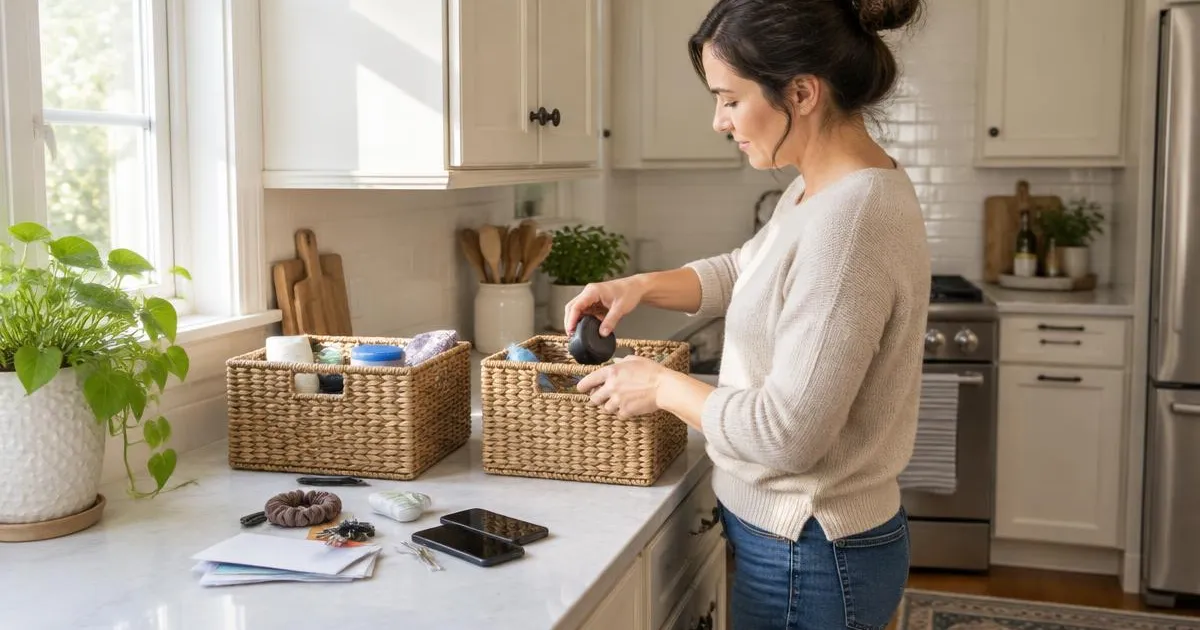
Use a designated basket or shelf for belongings you will relocate yourself. Keep each person’s items separate rather than combining everything into one household pile. Put medications, cash, identification, confidential papers, and intimate belongings somewhere you control. This is about preserving privacy and avoiding unnecessary handling, not judging how anyone keeps their home.
Agree on disposal permissions too. A useful rule is to identify the bins whose contents may be emptied and to leave loose papers, bags, boxes, and containers alone unless specifically authorized. Ask: Is this rubbish, recycling, storage, or something someone intends to keep? When the answer is unclear, keep it out of the disposal scope.
Choose the service before making a task list
For Prime Cleaning MO LLC, standard or recurring cleaning begins only after an initial deep clean. It is not a one-time or first-time service. The first standard or recurring quote includes that initial deep clean, so discuss both the starting condition and your intended maintenance needs. A household wanting ongoing kitchen and bathroom care should still describe the buildup present now.
A deep clean does not automatically include appliance interiors or inside cabinets; those are optional add-ons. Adding either task also requires permission to access the relevant appliance or storage space. Ask who will remove food, dishes, or personal items if access is needed, and confirm that arrangement before the visit.
Move-In/Move-Out cleaning includes inside and outside cabinets and appliances. Even then, tell the team about occupied rooms or belongings that remain. Interior windows are an optional add-on for these house-cleaning services, not an automatic inclusion. Describe priorities rather than assuming a universal checklist, and flag intensive detailing early because work beyond a deep clean may take more than one day.
Resolve disagreements before the cleaning team arrives
Households do not need identical cleanliness preferences to prepare successfully. They do need a shared answer about access and handling. If one roommate wants a desk cleaned and another owns everything on it, the owner’s instructions should guide what happens to those belongings. The practical solution may be to clean the floor and leave the desk alone.
Use three questions to settle uncertain areas: Who uses this space? Who owns the objects here? What can be cleaned without moving or exposing those objects? For a shared kitchen cabinet, everyone may agree to clean the exterior while postponing an interior add-on until food and dishes can be removed. That is a workable boundary, not a failed preparation step.
Write down unresolved areas as exclusions. Do not ask the cleaning team to mediate a dispute or determine ownership during the visit. If someone changes their mind, have the household contact communicate the revised instruction before work begins in that area. Changes that expand the agreed work need a scope discussion rather than an assumption that they can be accommodated.
Prepare access without hiding the home’s condition
Clear walking routes and the surfaces you want cleaned by relocating your own belongings. You do not need to pre-clean every room, but moving laundry off a bathroom floor or dishes away from a work surface makes the intended work easier to define. If clutter cannot be moved, say so in advance and ask about cleaning accessible areas only.
Confirm entry arrangements, parking or building access instructions, and which doors must remain closed. Discuss pets and arrange a suitable separate space when needed. Tell household members which rooms will be in use so someone working from home is not surprised by the visit. Access instructions should be shared only through the agreed communication method.
Also identify sensitive materials, recently installed finishes, and manufacturer care instructions. Surface care should be manufacturer-safe; never mix cleaners or use acids on stone. Disinfection should be used only when appropriate and with the full label contact time. For newly painted or sealed surfaces, follow the manufacturer’s cure requirements rather than assuming they are ready because they feel dry.
Flag construction dust and nonresidential requests early
A recent renovation changes the intake conversation. For residential construction cleaning, provide the bedroom count, bathroom count, and whether the condition involves debris, dust, or more. Explain which rooms were affected and whether ordinary household belongings are mixed into the work area. Heavy debris and hauling must be scoped separately; do not assume they are included with surface cleaning.
If dust is unknown or potentially hazardous, stop and request assessment by a qualified contractor before cleaning proceeds. Do not attempt to resolve uncertain construction dust with a household vacuum. This service should not be treated as hazardous-material remediation, duct cleaning, or finish repair, and cleaning does not establish occupancy safety.
If the request is actually for commercial or industrial premises, or commercial post-construction work, a free in-person walkthrough is required before pricing. Supply the business name, approximate square footage, restroom count, preferred date and time window, and onsite contact. Explain access permissions and any restricted business areas too. Hazardous work should never be assumed or promised as part of that request.
Confirm the plan and review it together afterward
Before the visit, send one concise summary: requested service, priority rooms, excluded spaces, belongings that must not be touched, approved add-ons, and the household contact. Include relevant access and surface-care information. Ask the team to confirm unclear scope points rather than relying on a note hidden somewhere inside the home.
At arrival, point out any changes and distinguish priorities from additional requests. For example, “Please prioritize the shared bathroom within our agreed scope” is different from asking to add an appliance interior. If a surface cannot be reached without moving protected belongings, discuss whether to leave it untouched.
Afterward, review the experience with the people who share the home. Were any boundaries unclear? Should someone relocate more items next time? Update the written plan before scheduling ongoing service. A useful first visit establishes not only cleaning preferences but also a repeatable way to respect everyone’s space.