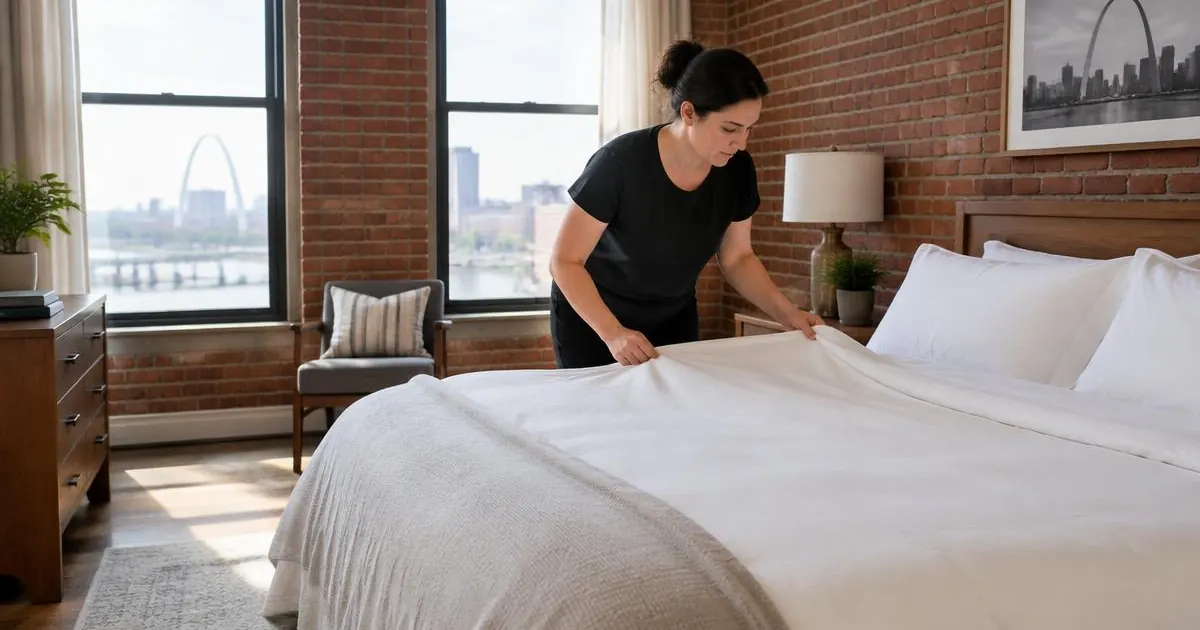
Airbnb/Vacation Rental
Vacation Rental Cleaning St. Charles: Keeping Clean and Used Linens Separate
A useful turnover plan keeps clean bedding and towels protected from used laundry. Define storage zones, laundry responsibilities, and host decisions before service.
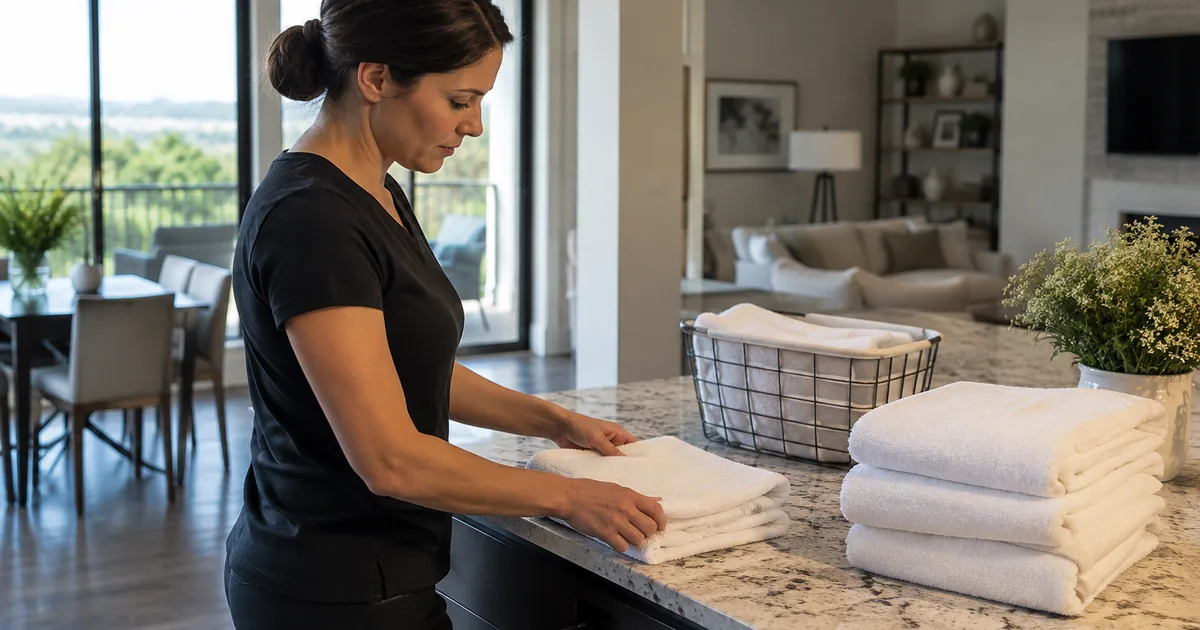
vacation rental cleaning St. Charles: Keeping Clean and Used Linens Separate
A dependable vacation rental cleaning St. Charles plan starts with a question that is easy to overlook: where do clean linens stay while used bedding and towels move through the property? If both share a shelf, cart, or sorting surface, a tidy room can hide a poor handoff. For hosts arranging service with Prime Cleaning MO LLC, separating those paths should shape the scope from the first conversation.
This guide focuses on that separation, not simply making beds look finished. A workable arrangement gives used laundry a defined destination, protects clean inventory, and identifies who resolves shortages. It also tells the next person entering the property what is ready and what still needs attention.
Start by tracing one sheet from the bed to washing, drying, storage, and reuse. Wherever it crosses clean stock, change the route or handling method. That small exercise often reveals more than a general instruction to leave everything guest-ready.
Make the intake describe the linen workload
Provide the number of bedrooms, bathrooms, square footage, approximate bookings, and whether laundry is needed. Then explain the beds themselves: sizes, sofa beds, and any sleeping spaces that guests use only occasionally. Booking frequency helps frame the workload, but it does not establish laundry capacity or guarantee a particular turnaround.
Describe available washers and dryers, their usable capacity, drying restrictions, and whether any machines are shared. Identify who supplies detergent and where laundry products can be stored away from clean fabric. If laundry happens elsewhere, confirm who transports it, which containers are used, and how clean items return.
Ask specific scope questions: Will used linens be collected only, washed onsite, or replaced from existing stock? Who folds and stores finished loads? Are towels handled differently from bedding? These responsibilities need agreement rather than assumption. For example, a property with several large beds and limited drying capacity may need a different linen arrangement than its bathroom count initially suggests.
Explore our airbnb/vacation rental service and cleaning in St. Charles, MO for property-specific information.
Create separate storage zones that people can follow
Choose a clean-linen location that stays dry and protected from splashes, cleaning products, and guest laundry. A dedicated closed cabinet can work; a shared closet needs clearly separated shelves or containers. Label locations by bed size and towel type so people do not repeatedly unfold pieces to identify them.
Give used linens their own washable hamper or suitable bag, away from clean stock. Do not use the clean-linen shelf as a temporary sorting station. If space is tight, separate closed containers are more useful than an imaginary boundary on a single open shelf.
Keep transport equipment separate too. A basket used to collect used towels should not immediately carry freshly dried sheets without appropriate cleaning and drying. Confirm who maintains containers and storage surfaces. If guests can enter the supply closet, consider an owner-controlled section with agreed access. The goal is a physical system that remains understandable even when someone unfamiliar with the property handles the handoff.
Decide how laundry moves without crossing clean stock
Agree on the laundry route before work begins. Used items should move directly from sleeping and bathing areas to their designated collection point, rather than resting on clean beds or supply shelves.
When laundry stays onsite
Confirm whether the available machines can support the expected loads within the scheduled service window. Follow fabric care instructions and machine guidance; do not overload equipment to force the plan. Keep clean folding space separate from collection space, and store linens only when fully dry. If a load remains unfinished, the handoff should identify its status and the person responsible for completing it.
When laundry leaves the property
Agree on pickup, return, transport containers, and storage access. Clean returns should arrive protected and go directly into the clean zone. For example, if used laundry leaves in reusable bags, decide how those bags are cleaned before carrying clean stock. Offsite processing and transportation are scope items to discuss, not automatic parts of a turnover.
Size linen inventory around beds and actual capacity
Build an inventory by usable bed setup rather than a generic spare-set rule. Record sheet sizes, pillowcases, duvet covers or other bedding, and the towel arrangement intended for each stay. Then compare expected use with how much laundry can realistically be washed, dried, and returned between bookings.
Suggest reserve stock based on the beds and actual laundry capacity. A slow-drying bedding item may justify a different reserve decision from a quick-drying sheet. Keep questionable items separate from ready stock until the host decides whether to rewash, repair, or replace them; a folded item is not necessarily usable inventory.
Confirm whether inventory counting and shortage reports are part of the requested service. Restocking also needs boundaries: which supplies, what target levels, where replacements are stored, and who purchases them. A useful decision example is discovering the correct fitted sheet is missing: notify the agreed contact rather than quietly substituting an unsuitable size or taking bedding from an unauthorized storage area.
Connect linen handling to the cleaning sequence
The cleaning sequence should protect the clean zone, not treat it as another staging surface. Agree where supplies and equipment can sit so they do not occupy linen shelves or the space used to fold clean fabric.
Separate used-linen collection from bed setup
Collect used bedding before preparing the sleeping space, then keep clean replacements protected until surrounding cleaning is finished. Clean hands and appropriate glove changes help avoid transferring soil from bathrooms or used laundry to fresh textiles. Follow manufacturer-safe surface care, never mix cleaners, and avoid acids on stone. Disinfect only when appropriate, allowing the full label contact time.
Give storage maintenance its own scope
Confirm whether wiping linen shelves or cleaning empty storage containers is requested and accessible. Turnovers address agreed between-stay needs; periodic deep cleaning addresses accumulated buildup and less frequent tasks. A deep clean is not automatically required before Airbnb turnover service. For a separately booked deep clean, appliance interiors and inside cabinets are optional add-ons, including any proposed interior work in a linen cabinet.
Set access, schedule, and exception rules in advance
The host must confirm lawful access and provide authorized entry instructions, including access to any locked linen storage. Discuss checkout, the requested service window, expected arrival, and who can approve changes. These details help assess feasibility; they are not a promise of same-day completion. Explain any restrictions affecting laundry machines, parking access, or supply rooms.
Decide what happens when the normal linen route is blocked. If guests leave belongings on a bed or in a supply cupboard, do not handle them without permission. The host should provide instructions or arrange their removal. If a machine fails, identify who chooses between available clean stock, alternative laundry arrangements, or a revised schedule.
Pests, suspected mold, bodily fluids, or other potentially hazardous conditions require a separate conversation, not an assumption that routine turnover service covers treatment. Keep affected items out of ready inventory without promising remediation. Establish who receives the concern and who determines an appropriate next step before the next guest handoff.
Close the handoff with clear linen status
Agree on a short handoff format that distinguishes completed tasks from unresolved decisions. Useful fields include beds prepared, clean stock location, laundry still in progress, items held out of use, and shortages requiring host action. Reports and linen counts should be confirmed as part of the scope rather than assumed to accompany every visit.
Discuss whether damage photos are requested, what they should show, and how they will be shared. Avoid capturing guest belongings or personal information unnecessarily. A photo of an empty shelf can document a shortage; it cannot prove that every stored textile is clean, dry, or correctly sized.
Before booking with Prime Cleaning MO LLC, review the separation plan alongside laundry, restocking, inventory, schedule, and handoff responsibilities. Ask one final practical question: could an authorized person entering later identify clean stock without opening used-laundry bags or guessing? If not, improve the labels or layout before relying on the system for another stay.