Airbnb/Vacation Rental
Airbnb Turnover Checklist for St. Louis Hosts
A reliable turnover is a timed reset with clear priorities, not simply a quick clean. This St. Louis host checklist explains how to coordinate laundry, inspect the property, and verify guest readiness before check-in.

Plan the turnover around a real access window
An Airbnb turnover checklist for St. Louis hosts should begin with the time the property actually becomes available. Checkout and check-in times create a theoretical window, but late departures, parking access, and building entry rules can shorten it. Share the reservation schedule with the cleaning team and confirm how changes will be communicated. A calendar entry is not enough if the cleaner cannot get through the door.
Record the property address, unit number, approved parking location, entry method, and a backup contact. Keep access codes in a private channel, and identify who changes guest codes between reservations. Include any building restrictions on elevators, service entrances, trash rooms, or quiet hours. Instructions should work for someone arriving while the host is unavailable.
Distinguish cleaning from property management before the first booking. Decide who reports damage, replaces missing inventory, purchases supplies, and approves unexpected work. The Airbnb Turnover Cleaning page is a useful starting point for discussing a service checklist. The host remains responsible for making sure the requested scope matches the listing and the available time. A realistic schedule protects both the incoming guest experience and the team doing the reset.
Inspect first and separate problems from routine work
Begin with a brief arrival inspection before moving belongings or stripping beds. Check for left-behind items, visible damage, unusual odors, and maintenance issues such as leaking fixtures or a refrigerator that is not cooling. Report concerns promptly through the agreed channel. A turnover team should not decide on its own whether an item should be discarded or whether damage merits a guest charge.
Use photos only under an agreed policy that respects guest privacy. Avoid capturing personal documents or publishing security details in routine messages. Identify a storage location and labeling procedure for forgotten belongings so they do not get mixed into trash or clean supplies. If the property is still occupied, contact the host rather than entering into a dispute with departing guests.
Remove routine waste and collect used textiles after the initial inspection, keeping dirty laundry separate from clean stock. Look inside accessible bins and check for spills beneath liners. Unusual contamination, pest activity, or unsafe debris should trigger a stop-and-report process rather than an improvised cleanup. Early triage gives the host a chance to arrange help or adjust arrival plans before the turnover window is almost over.
Explore our airbnb/vacation rental service and cleaning in St. Louis, MO for property-specific information.
Start laundry early and protect clean linen stock
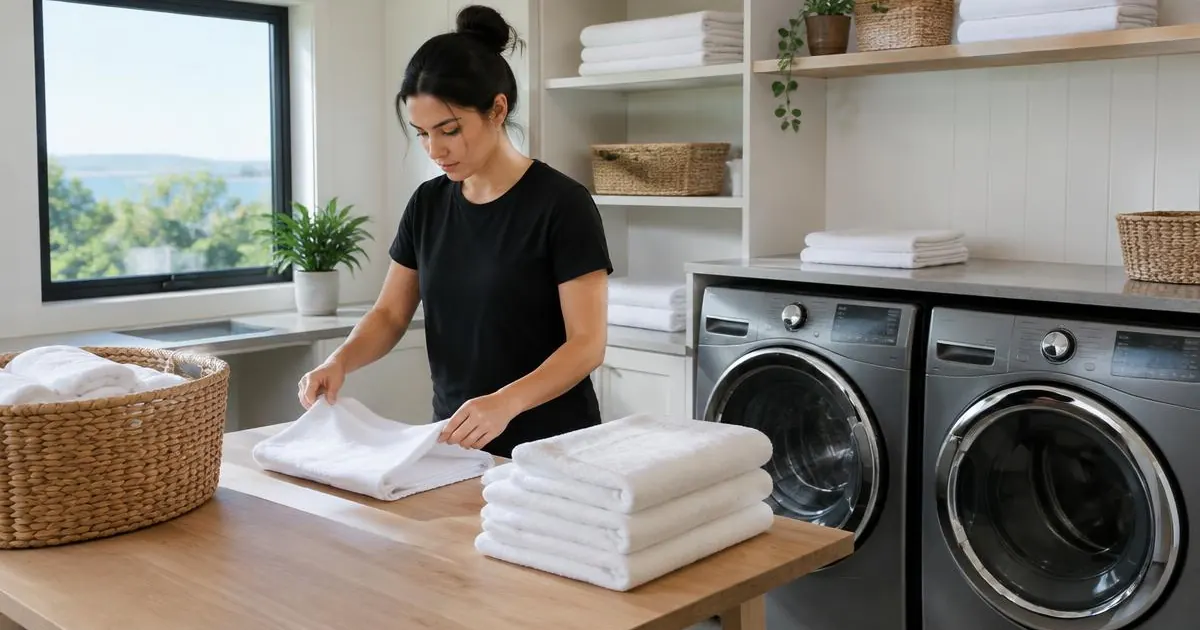
Laundry often determines whether a turnover finishes on time. Count beds, towel sets, bath mats, kitchen textiles, and any extra bedding before choosing an on-site or off-site process. Start approved loads early enough to allow full washing and drying cycles. Do not overfill machines or shorten cycles merely to fit a tight calendar; laundry needs to follow textile and equipment instructions.
Maintain enough clean inventory to prepare the property when a load takes longer than expected. Store clean sheets and towels in a dry, designated area away from used linens and cleaning chemicals. Mark sizes or shelf locations so team members do not waste time opening every set. Check textiles for visible stains, damage, and lingering moisture before putting them into service.
The Linen & Laundry Service page can help hosts discuss washing, handling, and stock arrangements. Confirm what the actual service includes rather than assuming laundry automatically covers replacement purchases or off-site transport. Decide who retires worn items and who replenishes backup sets. A simple inventory record is useful when multiple cleaners rotate through the property, because a tidy closet can still be missing the particular fitted sheet needed for the next reservation.
Reset bathrooms with a consistent room sequence
In each bathroom, remove used towels and routine waste, then work through mirrors, accessible surfaces, fixtures, the toilet, and floors using suitable products and separate tools. Pay attention to faucet bases, soap residue, shower edges, and hair near drains. Follow product directions and material care instructions; a harsh product or abrasive pad can damage a finish even during a rushed turnover.
Check that the toilet flushes, the faucet operates, and the shower area drains without an obvious problem. These are practical observations, not a substitute for a plumbing inspection. Notify the host about leaks, unstable fixtures, persistent odors, or damaged seals rather than hiding the issue with fragrance. A cleaning team should not attempt repairs outside its agreed role.
Restock the specific quantities the host has approved: toilet paper, soap, towels, and any other listed amenities. Keep backup stock separate from guest-facing presentation so an entire supply reserve is not accidentally left out. Finish by checking that clean towels are dry, mirrors are free of obvious streaks, and the floor is safe to walk on. Use the same sequence in every bathroom to reduce forgotten tasks when the property has several.
Check the kitchen beyond the visible countertop
A kitchen can look ready while crumbs, food residue, or dirty dishes remain out of sight. Follow the agreed checklist for the sink, countertops, stovetop, microwave, refrigerator, cabinet fronts, and accessible appliance surfaces. Check guest-use dishes and utensils for visible soil before putting them away. Run and unload the dishwasher within the available schedule if that task is included.
Clarify the host’s policy for leftover food, unopened items, and pantry staples. Do not treat everything in the refrigerator as automatically disposable, especially when owner supplies share the space. Remove guest leftovers according to the written policy, clean spills, and report cooling problems. Heavy oven buildup or neglected appliance interiors may require more work than a routine turnover allows, so address that possibility in advance.
Reset coffee equipment according to its care instructions, empty appropriate waste containers, and replace approved consumables. Keep cleaning products away from food and guest-use dishes. After surfaces are complete, inspect the cabinet handles, dining table, chair seats, and floor around eating areas. These spots collect touch marks and crumbs even when guests have not cooked a full meal. Finish with an inventory check for the items the listing promises, without implying that cleaning staff purchase replacements automatically.
Prepare bedrooms and living areas for actual use
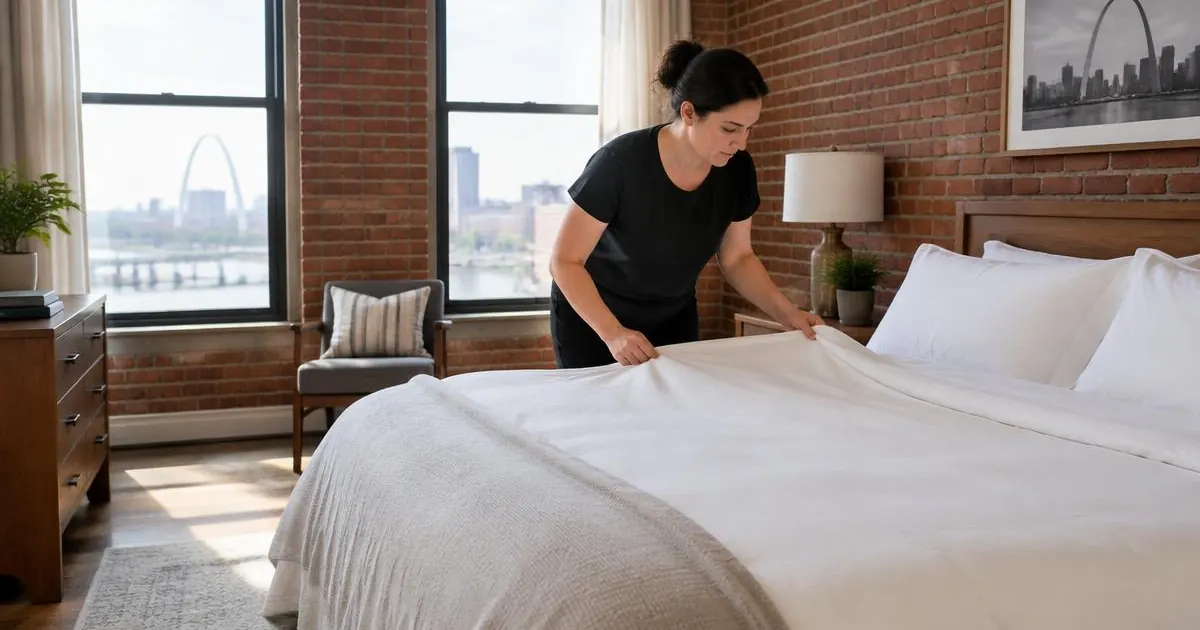
Make beds only with inspected, fully dry linens. Follow the host’s preferred arrangement so guests can easily identify sleeping spaces and available bedding. Check around and beneath accessible bed edges for visible debris or forgotten belongings without moving heavy furniture beyond the agreed scope. Mattress protectors, pillows, and blankets also need a clear inspection and laundering plan; fresh sheets alone do not address every textile.
In living areas, dust accessible surfaces, check seating for crumbs or hair, and clean floors using methods suited to the material. Return furniture and approved decorative items to the agreed layout. Verify remote controls and guest information are present, but avoid changing device settings unless the host has provided instructions. Report broken lamps or damaged furniture rather than treating them as minor presentation issues.
Interior window cleaning is included in Airbnb turnovers; confirm which panes are safely accessible and how unusual access conditions will be handled. Exterior windows and difficult-access glass should not be assumed to be part of that statement. Check glass for obvious fingerprints and keep cords and cleaning equipment out of guest spaces. A finished room should be usable, not merely arranged for a photograph from one favorable angle.
Verify guest readiness with a separate final pass
After cleaning, walk through the property as though arriving with luggage. Confirm that the entrance is accessible, the agreed lights are set, and no supplies or used textiles remain in guest areas. Check that beds are ready, bathrooms are stocked, and waste has reached the correct disposal location. Look behind open doors and along room edges where an unfinished task can be easy to miss.
Use an agreed checklist for basic operational observations, such as a present remote, an appliance displaying power, or a reported thermostat issue. Do not turn a turnover into an unqualified safety inspection. The host should maintain a separate program for alarms, safety equipment, and property maintenance, following applicable requirements and manufacturer instructions. Cleaners can report concerns without certifying that the property is safe.
Send a concise completion update with exceptions clearly identified. If supplies are low, name the item and approximate remaining stock rather than writing only that restocking is needed. If a task could not be completed, say why and who was notified. Completion photos, when agreed, should document the property without exposing access codes or private guest information. A clear handoff gives the host time to address issues before arrival.
Build a repeatable hosting routine in St. Louis
Local scheduling matters when traffic, neighborhood parking, or a building’s entry rules affect access. Provide practical directions for the specific property rather than expecting the team to improvise around downtown garages or restricted curb space. Share anticipated booking changes early, and establish what happens when a late checkout collides with the next arrival. Do not promise guests an early check-in until readiness has been confirmed.
Review the checklist after unusual stays, maintenance work, or changes to occupancy. A new sleeper sofa, extra bathroom amenity, or added pet allowance changes the work even if the property’s square footage stays the same. Keep the approved scope and linen inventory current. Prime Cleaning MO LLC requires an initial deep clean before standard or recurring service; discuss how the starting condition and requested turnover arrangement will be scoped rather than treating a neglected property as a routine reset.
Confirm the next step
Use the Quote page or call (314) 274-6907 to discuss the property, bed count, bathroom count, laundry arrangement, and turnover window. The Airbnb Turnover Cleaning and Linen & Laundry Service pages provide useful names for the main parts of that conversation. A reliable turnover depends on an agreed process, adequate supplies, and timely communication—not an assumption that every possible hosting task fits into a cleaning visit.