Junk Removal
Decluttering Before Junk Removal in Webster Groves
You do not need to move every heavy item before removal. Make clear decisions, protect belongings you are keeping, and identify access or material concerns before requesting a quote.
Start with decisions, not heavy lifting
Before arranging junk removal in Webster Groves, identify what can leave, protect what must stay, and explain how the removal team can reach each item. You do not need to drag a sofa downstairs or empty an entire basement to prepare. Clear decisions and accurate access information are more useful than a crowded pile beside the door.
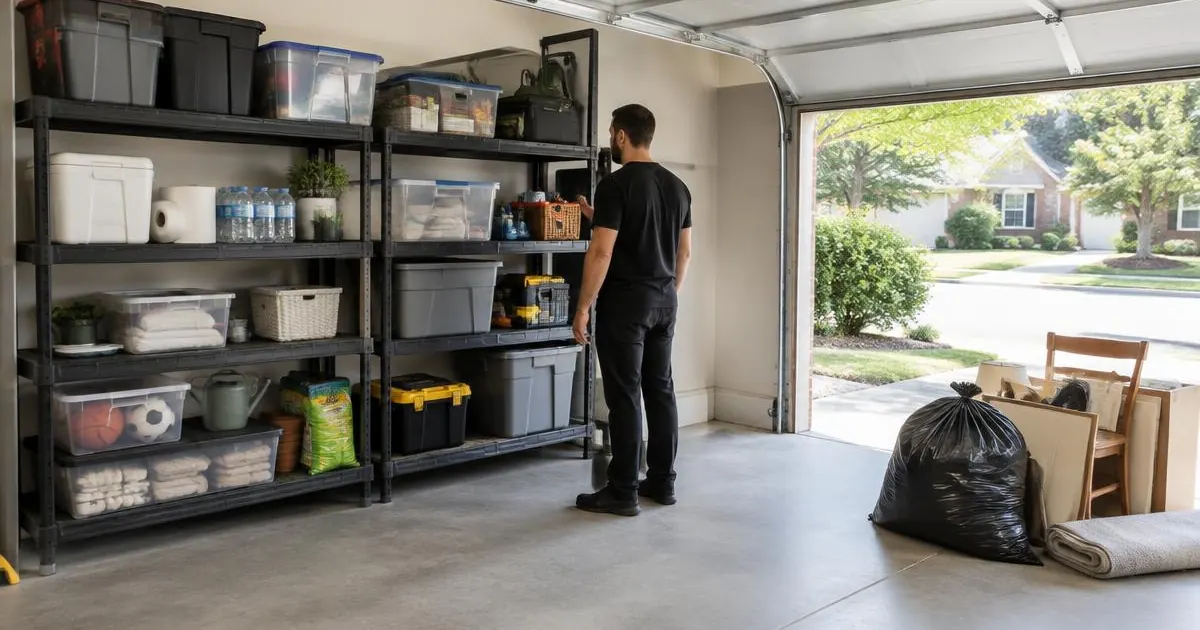
Begin with one manageable area, such as a hallway closet or one basement shelving unit. Create separate places for keep, remove, donate, and undecided items. Use written labels rather than color alone, and keep removal items away from belongings that look similar but are staying.
If several people own items in the home, agree that only the owner or an authorized decision-maker can approve removal. An unresolved box should remain in the undecided area, not become junk because someone wants the room finished.
Build an inventory for junk removal in Webster Groves
Walk through each affected room before requesting a quote. Record large items individually, then describe smaller contents in practical groups: bagged clothing, boxed books, loose shelving, or mixed household belongings. Avoid descriptions such as “just a little stuff,” which do not explain handling needs.
Take a wide photo showing the room and closer photos of bulky objects. Note whether furniture is assembled, whether drawers contain belongings, and whether anything is damaged or unstable. Disclose unusually heavy items rather than assuming ordinary furniture handling will apply.
For example, “wood desk in upstairs bedroom, contents removed, narrow stair turn” is more useful than “one desk.” Ask the provider which items it accepts, what preparation it requires, and how changes to the inventory affect the quote. Do not assume every material can travel together or that a photographed item has automatically been approved.
Explore our junk removal service and cleaning in Webster Groves, MO for property-specific information.
Separate sentimental decisions from disposal decisions
Sentimental sorting often stalls when every object becomes a decision about a person or an entire period of life. Make the question smaller: which items best preserve the memory, and where will those items live? Keep a defined memory box or display space rather than an undefined promise to organize everything later.
Use a temporary hold box
Place uncertain letters, photographs, handmade objects, and family keepsakes in a clearly marked hold box. Give it a specific review date and store it outside the removal area. This separates emotional decisions from the practical work of clearing broken furniture or unwanted packaging.
For shared family belongings, send photographs to the relevant people and ask for an explicit answer. Silence is not permission to discard someone else's property.
Preserve meaning without keeping every duplicate
If you have several similar keepsakes, consider retaining one representative piece and photographing the others before deciding. A photograph can help preserve context, but it is not a substitute for consent. Do not discard original documents, valuable collections, or disputed belongings simply because someone has photographed them.
Protect private information and separate special materials
Check drawers, coat pockets, storage bins, and envelopes before approving their contents for removal. Set aside identification, financial records, keys, medication, photographs, and small valuables. Keep sensitive papers in a closed container for a separate secure-destruction process.
For computers, phones, and storage drives, back up needed files and use the device manufacturer's data-erasure guidance. Signing out of an account or deleting visible files may not remove stored information. If you cannot verify that a device has been cleared, keep it until you can obtain appropriate help.
Separate batteries, paint, solvents, pesticides, fluorescent lamps, and unknown liquids from ordinary household discards. Leave containers closed and retain their labels. Ask about acceptance and check current local disposal guidance rather than putting questionable materials into opaque bags.
Stop sorting if you encounter suspected asbestos-containing material, lead-contaminated debris, silica dust, or biohazards. These require appropriate specialists and contractor assessment, not routine cleaning or an assumption that a junk-removal load can include them.
Set lifting limits before anyone gets hurt
Your preparation job is to identify and organize, not prove that you can move everything. Leave bulky, awkward, or unusually heavy objects in place and describe them when requesting service. There is no single safe weight limit that fits every person, object, and staircase.
Do not test an item's weight by tugging it toward a stair edge. Avoid handling furniture with broken legs, cracked glass, loose panels, or shifting contents. Photograph the problem from a safe position and tell the provider what you observed.
Pack only what you can handle comfortably. A small box of books may be easier to manage than a large carton that becomes too heavy once filled. Use sound containers, secure their bottoms, and identify fragile contents.
Keep children and pets away from sorting and movement routes. If an appliance is connected to gas, water, or a hardwired electrical supply, ask what qualified disconnection is needed before removal. Do not improvise that step.
Plan access from the item to the vehicle
Trace the actual route each bulky object would need to travel. Note door openings, stair turns, low ceilings, uneven steps, and tight landings. Measure narrow points if you can do so safely, but let the removal provider assess handling feasibility.
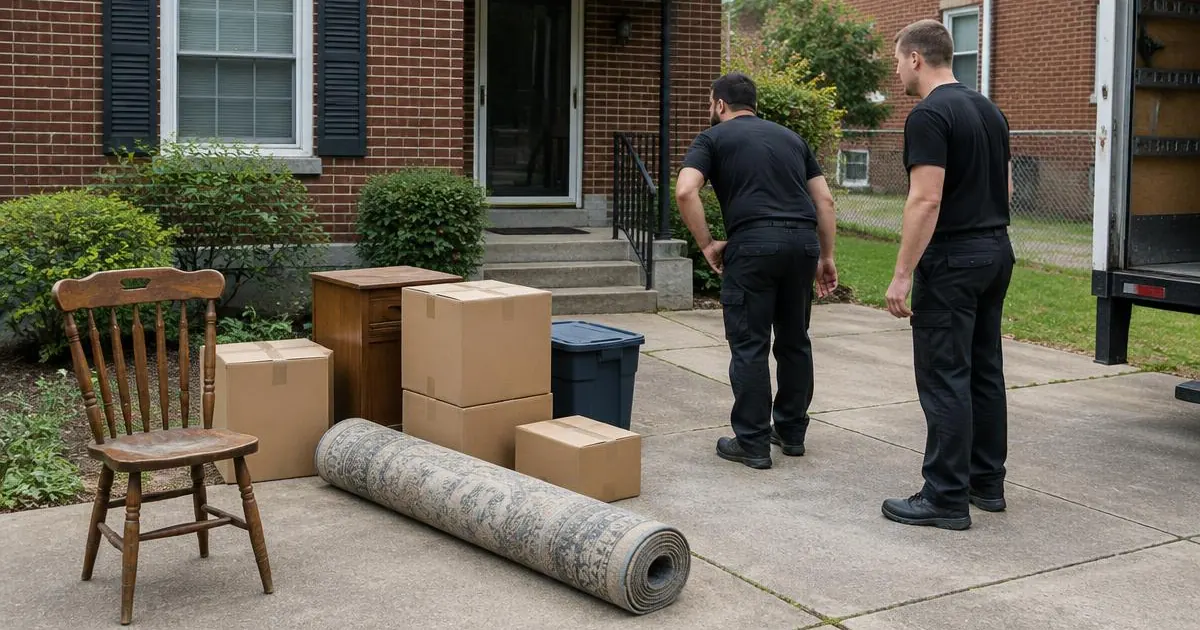
In a Webster Groves home with a basement stairway and side entrance, the closest exterior door may not offer the easiest route. Explain both options, including gates, fences, and any obstacles between the house and the loading location. Do not move heavy items outside merely to make the address easier to service.
Ask where a vehicle can legally and practically stop. Confirm property permissions when a shared drive or another person's space is involved; do not promise reserved curb access you cannot control.
Remove small trip hazards from the agreed route, keep exits clear, and point out surfaces that need protection. Ask the provider how it handles floor and doorway protection instead of laying loose plastic or unsecured coverings that could create a slipping hazard.
Keep donation plans separate from the removal pile
Donation is a useful option only when the receiving organization accepts the item and you have a workable delivery or collection plan. Check current requirements before setting aside upholstered furniture, mattresses, electronics, or large quantities of household goods.
Keep accepted donations in a distinct area with the destination noted. If a donation decision is still pending, leave the item out of the authorized removal inventory. Do not assume the removal provider will sort donations, choose recipients, or guarantee reuse.
Consider a practical example: you are clearing a guest room containing a usable dresser, a broken chair, and family photo albums. Confirm a destination for the dresser, identify the chair for removal after acceptance is verified, and move the albums into protected storage. If the dresser's destination falls through, decide whether to keep it or request a revised removal scope rather than quietly adding it to the load.
Confirm the scope, then plan cleaning
Before work begins, review the inventory with the provider and physically point out what stays. Clarify ambiguous items, such as a rug beneath furniture or boxes beside a removal pile. Confirm access, accepted materials, and any changed scope before approving removal.
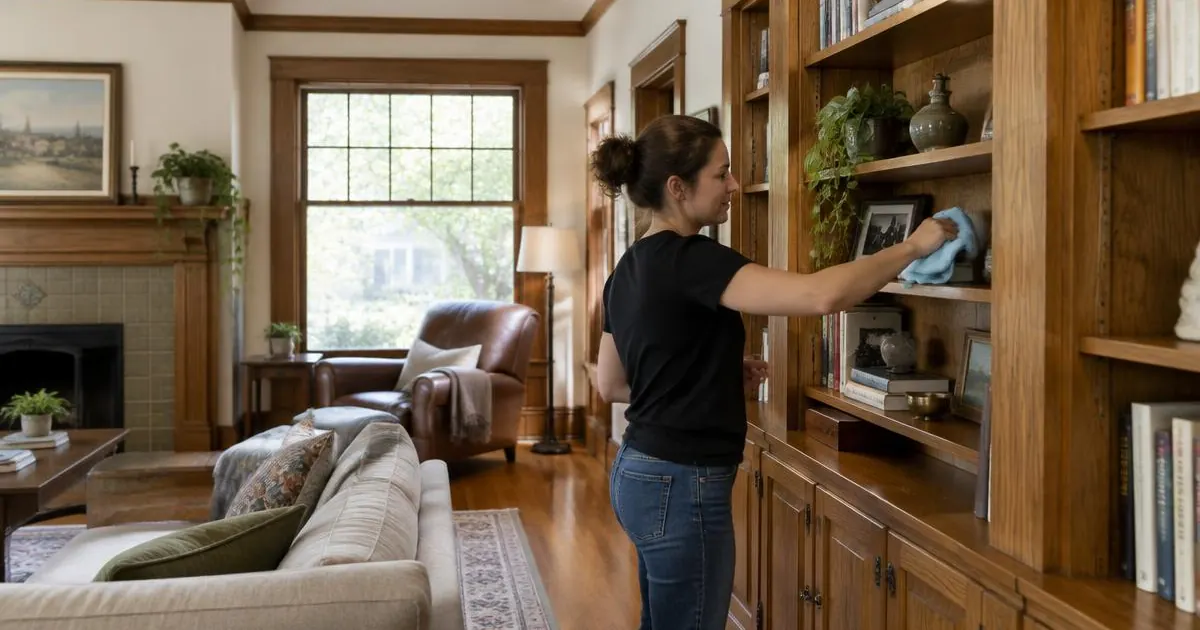
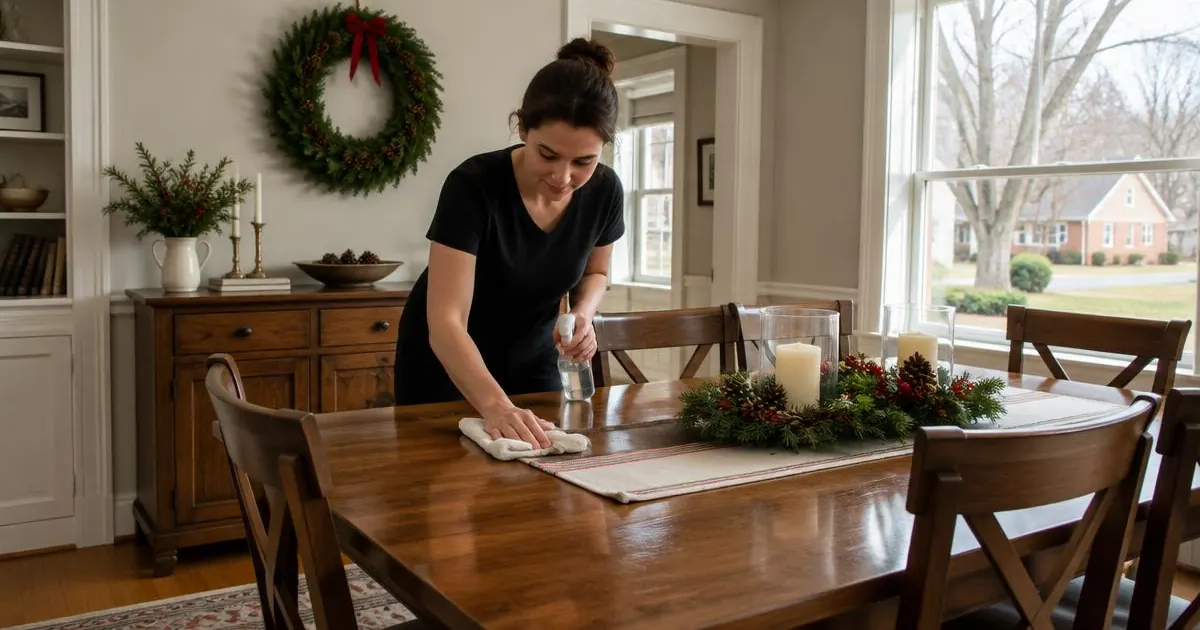
Clearing contents and cleaning surfaces are separate tasks. Once unwanted items are gone, inspect newly exposed floors and walls before choosing the next step. Photograph damage or unfamiliar residue rather than scrubbing it without knowing what it is.
For cleaning with Prime Cleaning MO LLC in the St. Louis metro, the first cleaning quote includes an initial deep clean. Standard recurring cleaning is available only after that initial deep clean, not as a one-time or first-time service. Appliance interiors and inside cabinets are optional deep-clean add-ons; interior windows are also an available add-on.
Use manufacturer-safe surface care, never mix cleaners, and avoid acids on marble. If disinfection is appropriate, CDC guidance is to clean first; follow EPA guidance to keep the surface visibly wet for the product's full label contact time. Detailed cleaning may take more than one day.
Written by the Prime Cleaning MO Team.