Deep Cleaning
Deep Cleaning in Richmond Heights: Scope and Add-On Questions
A useful deep-cleaning plan starts with building access and clear boundaries. Learn what to ask about appliance interiors, cabinets, surface care, and follow-up service.
Start your deep cleaning Richmond Heights plan with scope
When planning deep cleaning Richmond Heights service, decide which rooms need attention and which interiors you want included before discussing entry instructions. A kitchen with clear counters but heavily used appliances presents different needs from a furnished apartment with crowded shelves. Prime Cleaning MO LLC can use those distinctions to discuss your requested scope rather than relying on the phrase “clean everything.”
Begin with three lists: rooms to clean, concerns you want assessed, and areas that should remain untouched. Identify buildup around fixtures, accessible floor edges, or surfaces obscured by belongings. Describe visible conditions without guessing their cause. A dark mark, for example, should not automatically be described as something ordinary cleaning can remove.
Ask what the proposed deep clean covers in each room and which tasks require separate approval. Appliance interiors and inside cabinets are optional add-ons for deep cleaning, not automatic inclusions. This distinction matters especially when your main reason for booking is an oven interior or shelves hidden behind cabinet doors.
Arrange building entry before the appointment
Building access deserves its own plan, particularly when a locked lobby, shared elevator, or managed parking area separates the entrance from your unit. Ask your property manager whether outside cleaning providers need advance registration or particular entry instructions. Confirm building requirements before finalizing arrangements rather than assuming a resident’s usual access method will work.
Provide the full address, unit number, correct entrance, and a working arrival contact. Explain where permitted parking is located and whether unloading has restrictions. If a service elevator must be reserved, arrange it through the building and share the confirmed instructions. Mention stairs or long interior corridors that affect carrying supplies.
Choose a secure way to handle keys or temporary access codes, and clarify how the property should be locked afterward. Do not leave sensitive access information in a public message. If you will be unavailable, designate someone authorized to resolve an entry problem or answer a scope question without changing your priorities unexpectedly.
Explore our deep cleaning service and cleaning in Richmond Heights, MO for property-specific information.
Choose appliance and cabinet interiors deliberately
Optional interiors are easier to quote when you identify each item rather than requesting “the kitchen.” Name the oven, refrigerator, or particular cabinets you want considered, and describe their condition. Confirm these add-ons before the visit so the work can be planned around access, contents, and safe cleaning methods.
Appliance interiors: identify contents and restrictions
For a refrigerator interior add-on, ask who will remove food and where temperature-sensitive items will stay during cleaning. For an oven, disclose residue and any known operating problems. Share manufacturer instructions when available. Do not assume appliance moving, disassembly, repair, or inaccessible areas behind equipment are part of interior cleaning. Ask which removable parts can safely be handled.
Inside cabinets: define exactly which storage areas
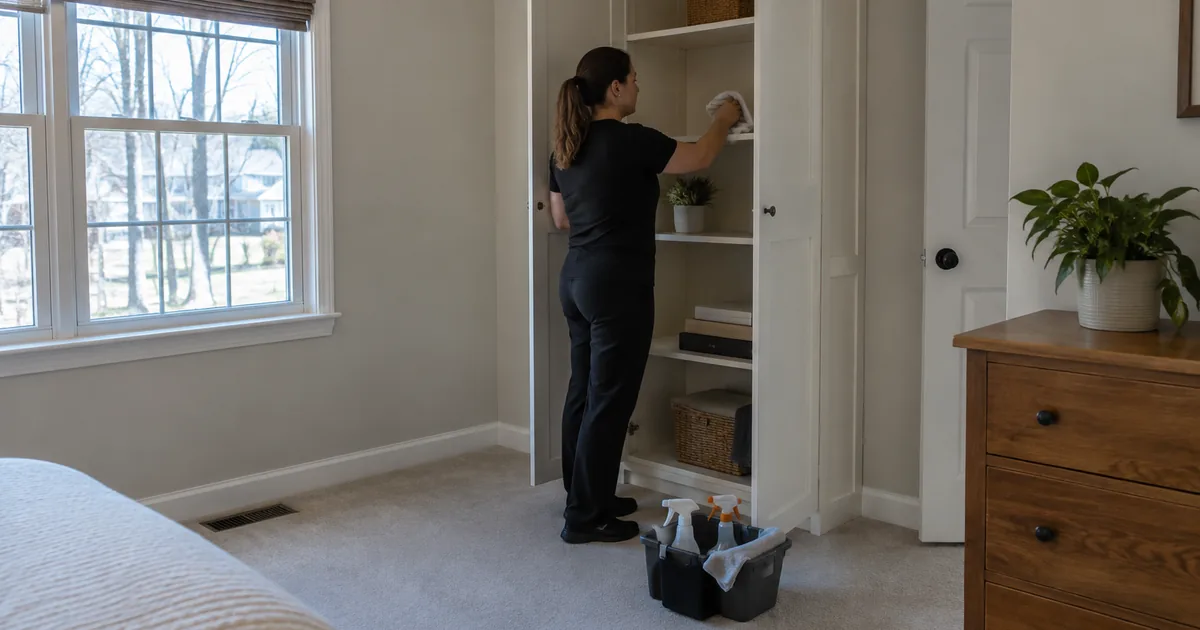
Specify whether you mean every kitchen cabinet, only lower cabinets, bathroom vanities, or selected drawers. Ask whether those spaces must be empty before arrival. Set aside dishes, toiletries, medications, and fragile items yourself unless another arrangement is confirmed. If only two cabinets are emptied, make that boundary explicit so the request is not mistaken for all cabinet interiors.
Match the service to occupancy and future plans
Choose the service based on how the property is being used, not simply how dirty it appears. For an occupied home needing detailed attention, discuss deep cleaning and any optional interiors separately. For a move-in or move-out, the scope includes inside and outside cabinets and appliances. Share whether the space will actually be empty and whether utilities will remain available.
Standard or recurring cleaning is available only after an initial deep clean; it is not a first-time or one-time service. The first standard or recurring quote includes that initial deep clean. If you want ongoing upkeep, explain your priorities now while keeping the initial appointment distinct from later maintenance visits.
Interior windows are optional for all services except Airbnb turnovers. Ask about them explicitly when planning a deep clean, rather than treating glass throughout the property as included. If your property is used for short-term stays, clarify the correct service instead of assuming turnover work offers the same optional window arrangement.
Prepare rooms without creating extra handling
Preparation should make agreed surfaces accessible, not require you to perform the cleaning you are booking. Remove loose paperwork from counters, put away valuables, and clear a practical route through each room. Identify items that must not be moved. Tell the team about unstable furniture, loose fixtures, or damaged finishes before work begins.
Decide how pets will be kept safely separated from entry doors and active work areas. If someone will be working from home, identify the room they need and discuss room order. Share any restrictions on water use or electrical outlets that could affect the agreed tasks; do not assume these details will be obvious.
For optional cabinet interiors, label the storage areas included and clear them according to the confirmed arrangement. For appliance interiors, follow the agreed preparation instructions rather than starting a self-cleaning cycle or unplugging equipment without discussion. If preparation is incomplete, contact Prime Cleaning MO LLC to clarify what remains feasible within the requested scope.
Set surface-care boundaries and realistic priorities
Point out natural stone, specialty finishes, delicate hardware, and any surfaces with manufacturer-specific care requirements. Manufacturer-safe surface care means selecting products and methods suited to the material, not applying one strong cleaner everywhere. Avoid acids on stone, and never mix cleaners. Tell the team if you have recently applied a product whose residue may remain.
Disinfection should be used only when appropriate, with a suitable product and its full label contact time. It is different from removing visible soil, and it should not be described as an automatic treatment for every surface. If you have a particular concern, explain it so the appropriate boundaries can be discussed.
Distinguish removable buildup from worn coatings, scratches, staining, or damaged seals. Cleaning is not restoration, and an unfamiliar mark may need assessment rather than an outcome promise. If your request involves intensive detailing beyond deep cleaning, the work may take more than one day. Identify your highest-priority areas instead of assuming every detail can fit one visit.
Give enough information for the right quoting process
For a residential inquiry, share the property type, approximate size, room and bathroom counts, occupancy, condition, requested date window, and access restrictions. Include your interior add-on list. Photos can help explain buildup or crowded spaces, but avoid including personal documents or access codes. Ask what further information is needed rather than treating photos as a substitute for scope confirmation.
Commercial, industrial, and commercial post-construction requests require a free in-person walkthrough before pricing. Provide the business name, approximate square footage, restroom count, preferred date and time window, and onsite contact. These details help organize the visit; they do not replace the walkthrough or establish a price.
During that walkthrough, identify restricted areas, operating hours, active work zones, and any known safety concerns. Do not assume hazardous work is available. Hazardous waste handling and mold removal should not be promised as ordinary cleaning tasks. If you are unsure whether a request falls outside routine cleaning, describe the concern before arranging access.
Confirm the plan in writing before work begins
Review the agreed service, rooms, optional interiors, window request, and exclusions together. Make sure the building entry plan includes someone reachable during arrival. Confirm which spaces will be empty, which belongings remain in place, and how doors should be secured afterward. Written confirmation is especially useful when a resident, property manager, and booking contact are different people.
Use a concrete decision example: if your priority is refrigerator shelves and empty pantry cabinets, name both interior add-ons and prepare those spaces. If your priority is accessible bathroom and kitchen surfaces, ask about those tasks first instead of adding interiors you do not need. Neither choice should depend on an assumed universal checklist.
Before the appointment ends, ask how to raise questions about the agreed work and how any uncompleted or inaccessible areas will be documented. For future recurring service, confirm the maintenance scope separately. A clear initial plan gives both you and Prime Cleaning MO LLC a practical reference without promising identical needs at every visit.