Deep Cleaning
Deep Cleaning in St. Charles: Scope and Add-On Questions
A useful deep-cleaning plan starts with your priorities, not assumptions. Learn what to write down, which extras to request, and how to clarify the visit.
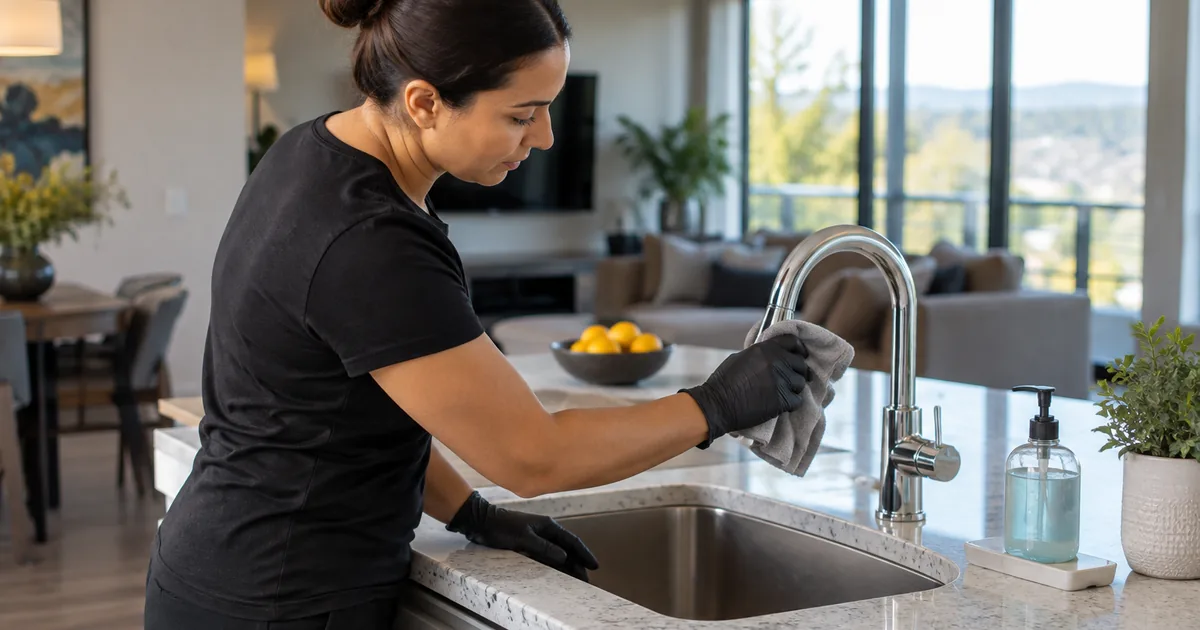
Start your deep cleaning St. Charles plan on paper
Before booking deep cleaning St. Charles, write down what you want the visit to accomplish. A useful priority list identifies rooms, specific buildup, access limitations, and optional tasks. It gives Prime Cleaning MO LLC something more practical than “clean everything” and helps you compare the proposed scope with what matters in your home.
Start by walking through the property with a notebook. Record visible conditions without trying to diagnose them: grease near cooking surfaces, soap residue around fixtures, or dust along accessible trim. Separate cleaning concerns from damage, staining, or worn finishes. Cleaning cannot be assumed to reverse those conditions.
Next, choose three outcomes that would make the biggest difference. Perhaps you want bathroom buildup addressed, kitchen surfaces cleaned carefully, and neglected edges reached. Put these first. A written ranking helps guide the scope discussion; it does not mean every listed task is automatically included.
Use a simple priority-list format
For each item, write: room, exact task, observed condition, priority, and access note. “Kitchen: grease on backsplash; high priority; stone surface” is more useful than “kitchen needs attention.”
Turn room names into specific scope questions
A room name is not a cleaning specification. “Bathroom” might mean fixtures and floors to one person, but detailed attention to shower tracks and reachable trim to another. Ask which surfaces and tasks are included in the proposed deep clean, then compare that answer with your written list.
Use questions that can receive clear answers: Will accessible baseboards receive attention? Are door frames part of the quoted scope? How will grease on the backsplash be approached? Does the visit include the shower tracks I photographed? Avoid treating any example list as a complete, universal checklist.
Describe conditions that may change the work involved. A lightly used guest bathroom differs from a shower with substantial accumulated residue. Clear photographs can support a residential scope conversation, although they may not reveal every condition. Ask how newly discovered work would be discussed before changes are authorized.
Keep the agreed scope beside your priorities so requested tasks and confirmed tasks remain distinguishable.
Explore our deep cleaning service and cleaning in St. Charles, MO for property-specific information.
Separate deep-clean tasks from optional add-ons
For deep cleaning, appliance interiors and inside cabinets are optional add-ons. Do not assume the refrigerator interior, oven interior, or cabinet shelves are covered simply because the kitchen is included. Name each requested interior separately and ask for it to appear in the written scope.
Interior windows are also optional for deep cleaning. That option applies across services except Airbnb turnovers; do not carry an interior-window add-on assumption into an Airbnb turnover request. Ask what window surfaces and accessible areas an agreed interior-window task covers rather than assuming tracks, screens, and every component are included.
Choose extras by the problem you want solved
If cooking grease is your main concern, prioritize the agreed kitchen surface work before adding unrelated interiors. If crumbs inside drawers bother you most, request that interior work explicitly and ask how emptying requirements apply. For a refrigerator, discuss food removal, shelving, and appliance condition beforehand. A useful add-on solves a named problem; it should not be a vague request to make the visit “more thorough.”
Match the service to occupancy and future needs
An occupied-home deep clean and a move-related clean should not be treated as interchangeable. Move-In/Move-Out cleaning includes inside and outside cabinets and appliances. If you are preparing an empty property for a new occupant, identify that situation when requesting service so the scope reflects the correct service.
Standard/recurring cleaning is available only after an initial deep clean. It is not a one-time or first-time service. The first standard/recurring quote includes that initial deep clean, so review both the starting scope and the ongoing maintenance scope rather than comparing only a later recurring visit.
For example, someone staying in their home who wants occasional intensive attention should discuss deep cleaning, not assume they can book a one-time standard clean. Someone planning regular maintenance should identify present buildup before discussing the recurring arrangement. In either case, ask which priorities belong to the initial work and which tasks will be maintained afterward.
Prepare access without doing the cleaning yourself
Preparation should make agreed surfaces accessible, not require you to perform the cleaning first. Put away paperwork, secure valuables, and identify fragile items. Ask how to handle personal belongings on counters and floors rather than assuming the team will sort or organize them.
Mark anything that should not be moved or treated. Examples include a loose cabinet hinge, an unstable shelf, or a fixture with a damaged finish. If you request an appliance-interior or cabinet-interior add-on, confirm what must be emptied and who is responsible. Do not assume heavy appliances or furniture will be moved.
Share entry instructions, parking or building-access restrictions, pet arrangements, and any rooms that are off limits. For your St. Charles property, practical access details are more useful than a generic neighborhood description. Keep the priority list available in one place, and designate one person to answer scope questions if you will not be present.
Document materials and safe-care boundaries
Add surface information to your priority list wherever it matters. Identify natural stone, specialty finishes, appliance coatings, and any available manufacturer care instructions. If you do not know a material, say so. Manufacturer-safe surface care starts with recognizing uncertainty rather than applying the strongest available product.
Never mix cleaners, and avoid acids on stone. Let the team know if you recently applied a product to a surface, particularly where residue may remain. Disinfection should be used only when appropriate, with a suitable product and the full label contact time; it is not a substitute for removing soil.
Point out persistent discoloration without assuming it can be removed. Cleaning should not be presented as restoration, mold removal, or hazardous waste handling. If the concern appears to require specialist assessment, keep that separate from the cleaning scope. Ask what can be safely addressed and what should remain untouched.
Resolve larger-scope work before discussing pricing
Some requests extend beyond a residential deep clean. For commercial/industrial cleaning and commercial post-construction cleaning, a free in-person walkthrough is required before pricing. Photos or a written list can support that discussion, but they do not replace the walkthrough.
Provide the business name, approximate square footage, restroom count, preferred date/time window, and onsite contact. Also describe the space’s use, access restrictions, and visible conditions. These details help frame the visit without implying that hazardous work will be accepted or performed.
For residential work, flag requests for intensive detailing that go beyond deep cleaning. Detailing beyond a deep clean may take more than one day. Do not build plans around an assumed single visit when substantial additional detail work is involved.
Ask whether the request fits the proposed service, needs a different scope, or contains tasks that cannot be accepted. Resolve those boundaries before relying on a price or making access arrangements.
Finish with a written agreement and review plan
Before the visit, turn your notes into a short confirmation: service type, highest priorities, included tasks, approved add-ons, excluded areas, and preparation responsibilities. Ask how any scope change will be communicated and approved. This keeps a new request from becoming an unspoken expectation.
Use two columns if helpful: “requested” and “confirmed.” A cabinet-interior request should remain unconfirmed until it is included as a deep-clean add-on. For Move-In/Move-Out, confirm access to the cabinet and appliance interiors already included in that service. Service choice changes how the same task is handled.
At the end, review the agreed priorities rather than searching for an imaginary universal checklist. Note any inaccessible areas, material limitations, or follow-up questions. Keep the document for future planning with Prime Cleaning MO LLC. A clear record helps you distinguish a missed agreed task from work that was never part of the visit.