Deep Cleaning
Kitchen Deep Cleaning in Clayton: Safe Steps
Start with surface identification, then work from upper cabinets to food-preparation areas and floors. Learn what to clean, what to avoid, and which interior tasks to request separately.
Start Kitchen Deep Cleaning in Clayton With a Surface Check
For kitchen deep cleaning in Clayton, begin by identifying each surface, clearing food and utensils, and choosing compatible cleaners. Then work from higher surfaces downward, remove grease before addressing any disinfection needs, and finish with the floor. Decide before starting whether appliance interiors and cabinet interiors belong in the project; they require separate preparation and are optional add-ons to a professional deep clean.
Make a quick inventory: countertop material, cabinet finish, backsplash, appliance finishes, and flooring. Check manufacturer instructions or installation records rather than guessing from appearance. A marble-look counter might be natural stone, engineered material, or laminate, each with different care requirements.
If the material remains uncertain, avoid aggressive products and abrasive pads. Test a manufacturer-compatible cleaner in an inconspicuous spot, let it dry, and inspect for discoloration or dulling before continuing. Stop if a finish becomes tacky or transfers to the cloth.
Prepare the Room Before Opening a Bottle
First, put away food and move dishes, cutting boards, and small appliances out of the working area. Keep refrigerator contents chilled if its interior will be cleaned. Do not empty it until you have a suitable place for perishables.
Next, separate your supplies by task. Reserve clean cloths for food-preparation surfaces, different cloths for greasy appliance areas, and another set for the floor. Replace or launder dirty cloths rather than spreading residue across the room.
Read product labels, arrange ventilation as directed, and keep children and pets away from wet surfaces and supplies. Never mix cleaners, including bleach with vinegar, ammonia, or other cleaning products. Keep products in their labeled containers.
Finally, check access. Use a stable step stool for reachable upper cabinets, never a chair or countertop. Leave heavy appliance movement and inaccessible areas out of the plan unless safe access has been arranged.
Explore our deep cleaning service and cleaning in Clayton, MO for property-specific information.
Choose Care by Material, Not by Stain Alone
The strongest cleaner is not necessarily the right cleaner. Start with the least aggressive method approved for the surface, use controlled moisture, and give compatible products only the dwell time their instructions allow.
Stone, Tile, and Countertop Seams
For marble, avoid acidic cleaners, including vinegar and lemon-based DIY mixtures; they can etch the surface. Use care instructions specific to your stone. Do not assume a product suitable for granite is suitable for every natural stone.
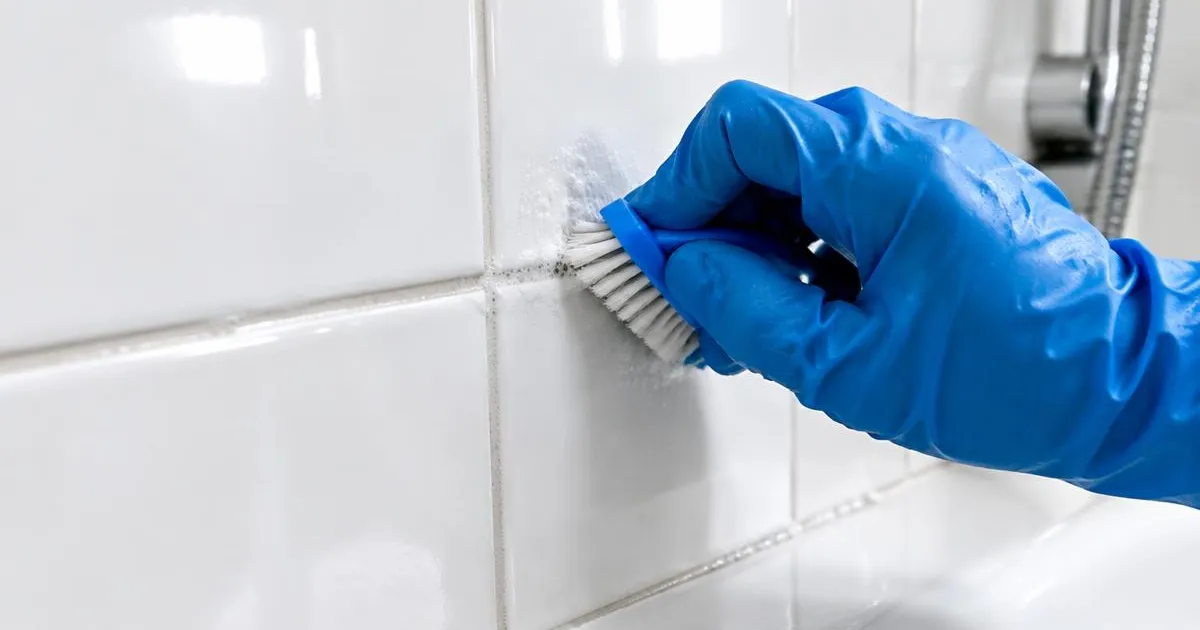
On laminate or engineered countertops, pay attention to seams, edges, and damaged areas. Apply cleaner to a cloth when appropriate instead of flooding the counter. For tile, confirm compatibility with both tile and grout; a glossy tile face and its grout joints may need different handling.
Cabinet Finishes and Appliance Exteriors
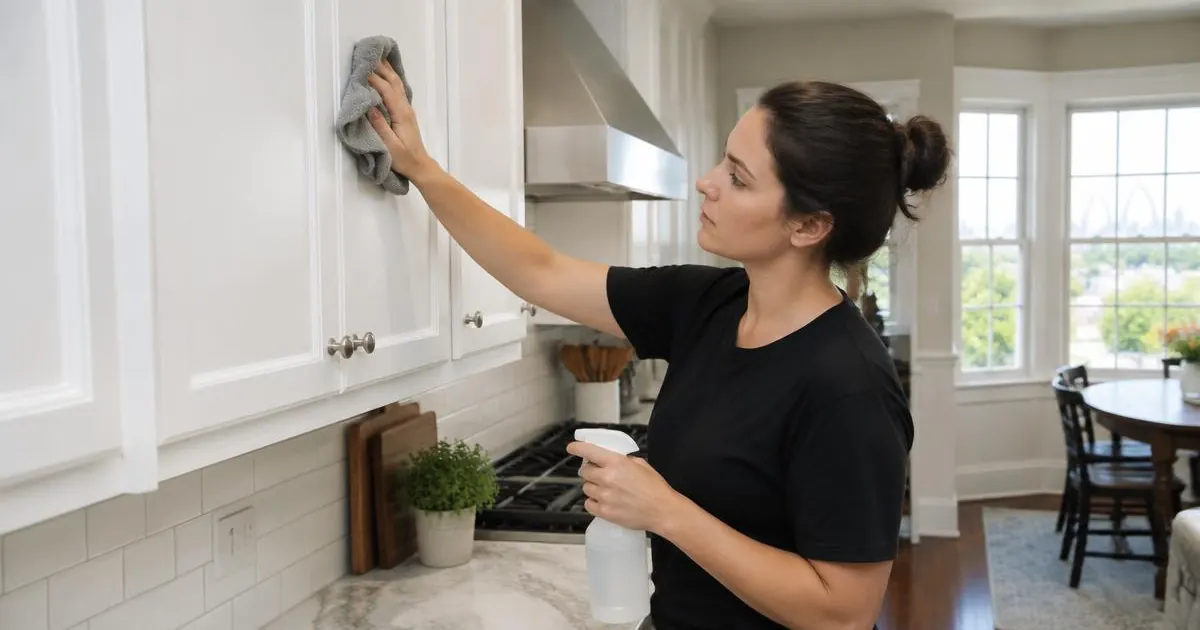
Clean painted or finished-wood cabinet fronts with a compatible product and a lightly damp cloth, then dry them. Avoid soaking hinges, panel joints, and lower edges where moisture can collect. If paint is peeling, do not scrub the loose area.
For stainless steel, follow the appliance maker's instructions and wipe with the grain when directed. Avoid abrasive tools. A fingerprint-resistant coating may need different care from uncoated steel, so do not select a polish solely because the surface looks metallic.
Remove Grease From High Surfaces Downward
Begin with accessible upper ledges and cabinet tops, using a method suited to the finish. Remove loose dust first so it does not become a greasy paste. Then work through upper cabinet fronts, the hood exterior, backsplash, and lower fronts.
For sticky cooking residue, apply a compatible degreaser according to its label, allow the directed dwell time, and wipe away the loosened soil. Repeat gently if needed rather than immediately switching to a harsher chemical or abrasive pad. Do not let cleaner dry on a surface unless instructed.
Treat hood filters as a separate decision. Check whether the filter is washable, dishwasher-safe, or replaceable. Do not immerse electrical components or assume every metal-looking filter tolerates the same treatment.
At the cooktop, let surfaces cool and follow the manufacturer's directions for grates, burners, or glass. Do not pry at stuck deposits with an improvised blade. Avoid spraying controls, ignition points, outlets, or appliance vents.
Clean Food Zones Before Considering Disinfection
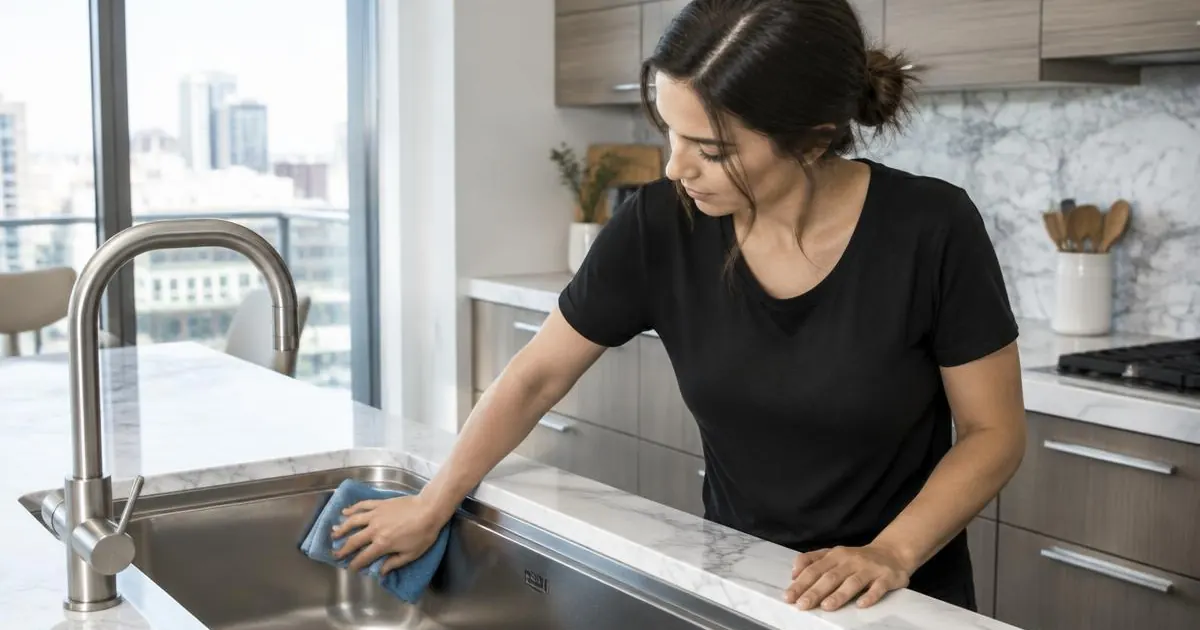
Once overhead work is finished, clean counters, the sink, faucet handles, and frequently touched handles. Remove crumbs and visible residue first, then wash or wipe with a surface-compatible cleaner. Use fresh cloths for the final pass over food-preparation areas.
CDC guidance distinguishes cleaning from disinfection: clean first, then disinfect when appropriate. Routine dirt removal and a situation involving raw-meat contamination are different tasks. Select any disinfectant for its labeled use and the surface involved, rather than applying it throughout the kitchen by default.
EPA guidance emphasizes keeping the surface visibly wet for the product's full label contact time. There is no universal number of minutes. Follow all label directions, including any required rinse for food-contact surfaces, before returning food or utensils.
For example, after a raw-chicken spill, remove the spill and clean the affected area before using a suitable disinfectant as directed. Do not merely mist the area and immediately wipe it dry.
Choose Appliance and Cabinet Interior Add-Ons Deliberately
With Prime Cleaning MO LLC, appliance interiors and inside cabinets are optional add-ons to a deep clean. Name the spaces you want addressed when requesting the quote; saying “the whole kitchen” can leave important scope questions unresolved.
Match Interior Work to the Actual Problem
If the main issue is greasy cabinet fronts and backsplash residue, discuss that focus without automatically adding every interior. If pantry shelves have sticky spills or the oven has baked-on residue, request those interiors specifically and describe the condition.
For refrigerator work, agree on food removal and shelf handling. Let cold glass components reach a suitable temperature before washing them according to the manufacturer's instructions; sudden temperature changes can cause damage. For ovens, identify the model and any special liner or self-cleaning restrictions.
Prepare Storage Areas and Clarify Service Differences
Confirm who will empty cabinets, remove shelf liners, and put belongings back. Separate fragile items and explain any loose hinges or damaged shelving. Do not assume contents will be sorted, discarded, or reorganized.
Move-in/out cleaning includes inside and outside cabinets and appliances, unlike the optional interior add-ons for deep cleaning. Interior windows are another available add-on for residential deep cleaning; request them explicitly rather than assuming kitchen glass is included.
Finish Low, Inspect, and Know When to Stop
After counters and appliance exteriors are finished, address lower edges and accessible baseboards, then remove loose floor debris. Mop with a product approved for the flooring, limiting moisture around wood, seams, and cabinet bases. Keep the area clear until dry.
Inspect from several angles in daylight. Check cabinet handles for remaining tackiness, backsplash edges for residue, and counter seams for trapped moisture. Distinguish remaining dirt from wear: scratches, etched stone, and damaged finishes will not necessarily improve with more cleaning.
If the kitchen follows renovation work, describe whether there is dust, debris, or both, and provide bedroom and bathroom counts when requesting post-construction service. Suspected lead, asbestos, silica, or biohazards require appropriate specialists and contractor assessment, not routine cleaning. Do not dry-sweep unidentified construction dust.
Request a Clayton Quote With a Clear Scope
For a Clayton kitchen project, tell Prime Cleaning MO LLC about the surfaces, grease buildup, access limitations, and requested interiors. Mention whether you want kitchen-focused work or a broader residential deep clean. Photos can help explain conditions, but they do not replace identifying materials or confirming scope.
For extensive buildup across multiple rooms, ask whether complete house detailing better fits the project. Detailing may take more than one day; avoid planning around an assumed fixed completion time.
A standard or recurring-service quote includes the required initial deep clean. Standard/recurring cleaning is available only afterward, not as a one-time service or for first-time clients. Confirm the initial scope before discussing maintenance visits.
By Prime Cleaning MO Team. Prime Cleaning MO LLC serves the St. Louis metro.