Move-In/Move-Out
Move-Out Cleaning Checklist for St. Louis Renters
A practical room-by-room plan for cleaning an empty rental, checking lease instructions, and documenting its condition before returning the keys.
Start With the Lease, Then Clean an Empty Property
The most useful move-out cleaning checklist for St. Louis renters starts with three actions: read your lease and move-out instructions, remove your belongings, and clean from high surfaces down to floors. Finish by photographing the empty rental and following the property manager’s key-return process. Cleaning cannot guarantee a deposit refund; condition, damage, lease terms, and other factors may affect the outcome.
By Prime Cleaning MO Team.
Before buying supplies, make a room-by-room list of required tasks. Separate cleaning from repairs and administrative steps. A dirty refrigerator shelf needs cleaning; a cracked shelf needs documentation and a conversation with management. Returning parking passes belongs on your handoff list, not your cleaning list.
Ask management to clarify vague instructions such as “professionally cleaned” or “ready for occupancy.” Request written confirmation of any required receipts, carpet service, appliance expectations, or inspection arrangements rather than assuming one general cleaning covers everything.
Build Your Move-Out Cleaning Checklist for St. Louis Renters
Walk through the rental with your lease checklist and original move-in photos. Include closets, storage areas, laundry spaces, and any private porch or balcony covered by your agreement. In a St. Louis flat with shared stairs, clarify which areas are your responsibility instead of automatically cleaning communal spaces.
Give each task a status: required, needs clarification, or outside routine cleaning. For example, crumbs inside kitchen drawers are a cleaning task. A ceiling stain needs reporting, not repeated scrubbing. Abandoned furniture needs removal arrangements before floors can be cleaned properly.
Resolve Unclear Requirements Before Cleaning
Send focused questions: Must nail holes remain untouched? Is carpet cleaning required separately? Should the refrigerator stay running? Are window interiors included in the move-out instructions? Keep the replies with your lease documents so you can refer to the agreed expectations.
Choose DIY, Professional Help, or a Split Approach
DIY may suit an empty rental with manageable soil and accessible surfaces. Consider help when appliance buildup, numerous cabinets, or several bathrooms exceed your capacity. If splitting the work, assign specific tasks so oven cleaning or closet floors do not fall between responsibilities.
Explore our move-in/move-out service and cleaning in St. Louis, MO for property-specific information.
Sequence the Work Around Moving Day
While packing, empty and wipe closets or cabinets you no longer need. Keep essential cleaning supplies separate from moving boxes: compatible cleaners, cloths, gloves, a vacuum, a mop, and trash bags. Read product labels before use, and keep utilities available as permitted and needed for the work.
Once belongings are out, remove loose trash and inspect every drawer. Dust reachable high surfaces first, then clean cabinets, fixtures, appliances, and lower surfaces. Vacuum and mop last, working toward the exit so you do not repeatedly cross finished floors.
Coordinate cleaning after movers and any authorized repair work. If you clean before furniture removal, expect to revisit exposed dust, scuffs, and tracked-in debris. Avoid scheduling the handoff so tightly that unfinished detailing has nowhere to go; detailed cleaning may take more than one day.
Keep a clear route through the property. Do not balance on counters or use furniture as a ladder. Leave inaccessible fixtures or heavy appliance movement for a separately agreed, safe approach.
Clean the Kitchen Inside and Out
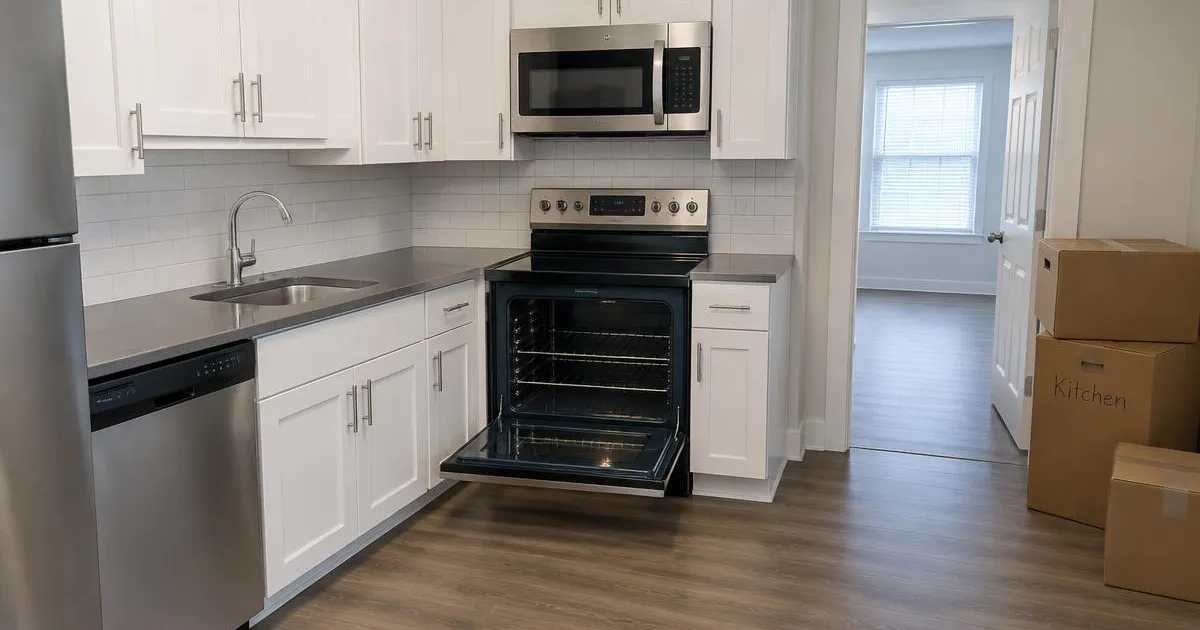
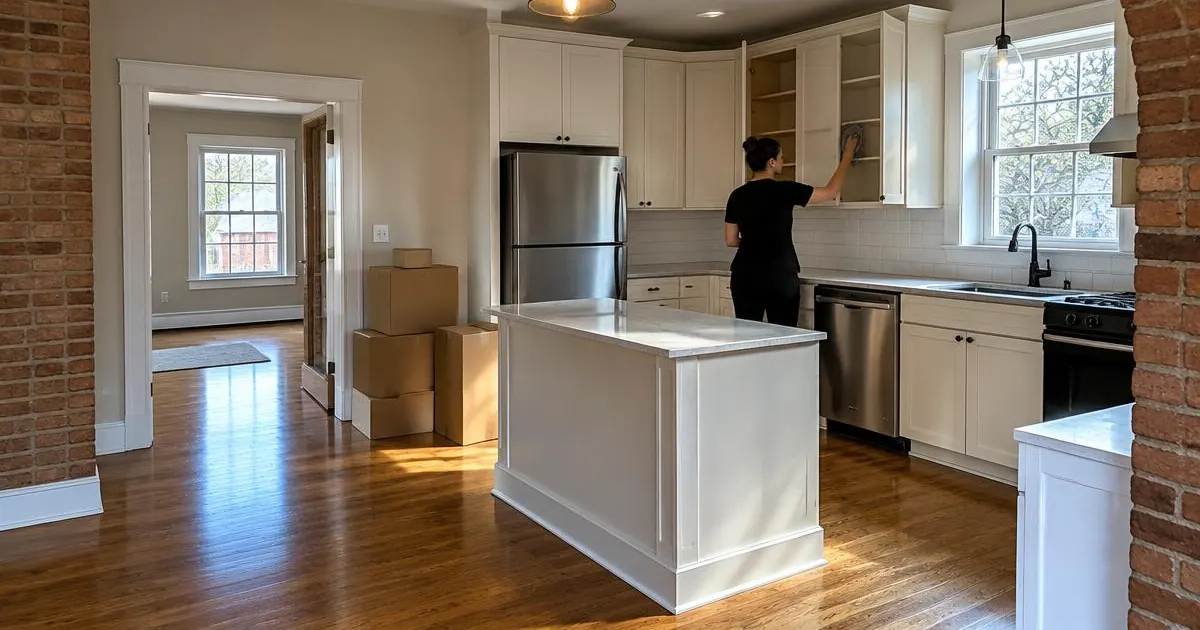
Start by removing food, shelf liners where permitted, and loose crumbs. Vacuum or wipe cabinet and drawer interiors, then clean doors, handles, edges, and exposed tops. Use a manufacturer-safe product and avoid soaking wood, laminate seams, or hinges. Let interiors dry before closing them.
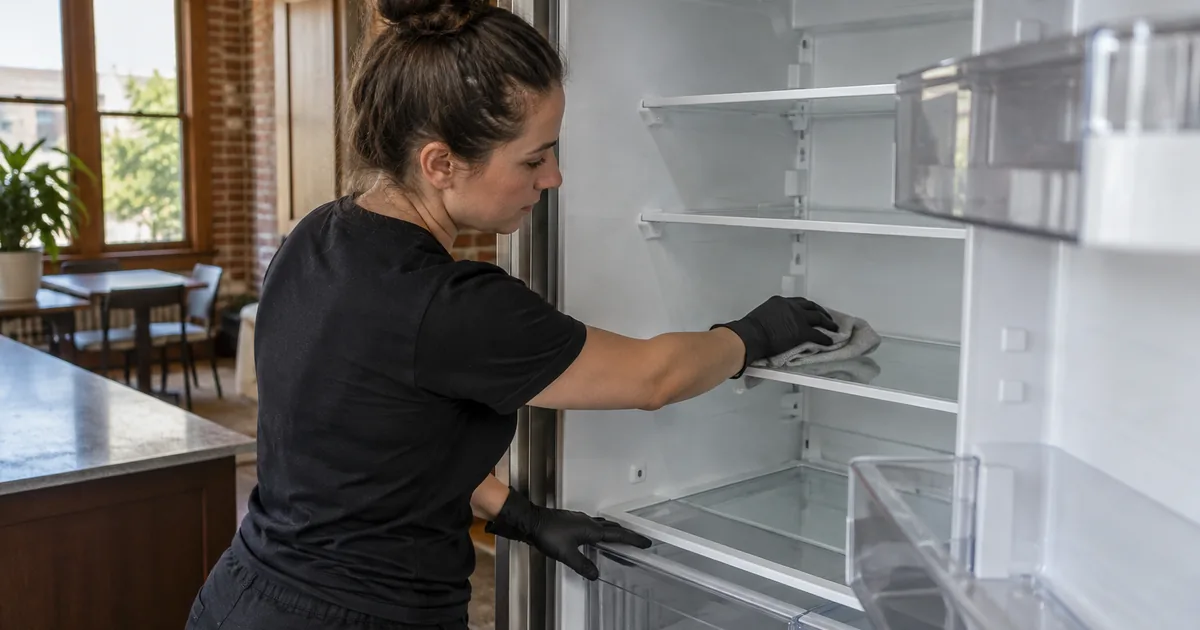
Empty the refrigerator and clean removable parts according to its manual. Some shelves need to warm before washing to avoid temperature shock. Wipe interior surfaces, door seals, handles, and exterior panels. Confirm power and door-position instructions with management rather than unplugging it by default.
Match Appliance Cleaning to the Appliance
For the oven, follow the manufacturer’s cleaning method and product restrictions. Do not combine oven cleaner with a self-clean cycle unless expressly permitted. Clean the cooktop, microwave, and accessible dishwasher surfaces using their care instructions; do not dismantle equipment or move connected appliances without authorization.
Finish With Counters, Sink, and Edges
Remove residue from the backsplash, countertop edges, faucet base, and sink. Avoid acidic cleaners on marble and other acid-sensitive stone. Check beneath the sink for forgotten supplies or leaks, and report moisture damage instead of attempting to conceal it.
Detail Bathrooms Without Damaging Finishes
Remove toiletries, shower curtains you own, and personal storage. Clean vanity interiors and exteriors, mirrors, sinks, faucets, tubs, showers, and toilets. Pay attention to drawer corners, toilet bases, shower-door tracks, and the edges where dust and residue collect. Use separate cloths for toilets and other surfaces.
Choose products for the actual material. A cleaner suitable for ceramic tile may damage natural stone or a coated fixture. Never mix cleaners, including bleach with ammonia or acidic products. Ventilate according to labels and use the specified protective equipment.
CDC guidance distinguishes cleaning from disinfection: clean first, and disinfect when appropriate. For EPA-registered disinfectants, keep the surface visibly wet for the full contact time stated on the label. There is no universal number of minutes that applies to every product.
If discoloration remains in grout or caulk after suitable cleaning, photograph it and notify management. Do not scrape out caulk, repaint stained areas, or attempt significant moisture-related remediation as part of ordinary move-out cleaning.
Finish Living Areas, Windows, and Floors
Dust reachable ledges, doorframes, baseboards, and accessible light-fixture exteriors with the power off where appropriate. Wipe doors and handles using finish-safe methods. Check closet shelves and corners after the room looks finished; empty spaces often reveal dust that furniture previously hid.
For windows, distinguish glass cleaning from tracks, screens, exterior access, and repairs. Follow your lease requirements and confirm the scope of any hired service. Avoid leaning out of windows or removing unfamiliar hardware. In older rentals, report loose or flaking paint rather than scraping or aggressively scrubbing it.
Vacuum floor edges and open areas before damp cleaning. Use the flooring manufacturer’s recommended method, especially on wood or laminate where excess water can cause damage. Do not use vinegar as a universal floor cleaner.
Treat persistent stains as a separate decision. Carpet spotting is not the same as full carpet cleaning, and abrasive scrubbing can worsen a damaged finish. Note unresolved marks for the inspection rather than repeatedly trying stronger products.
Document the Condition Before Returning Keys
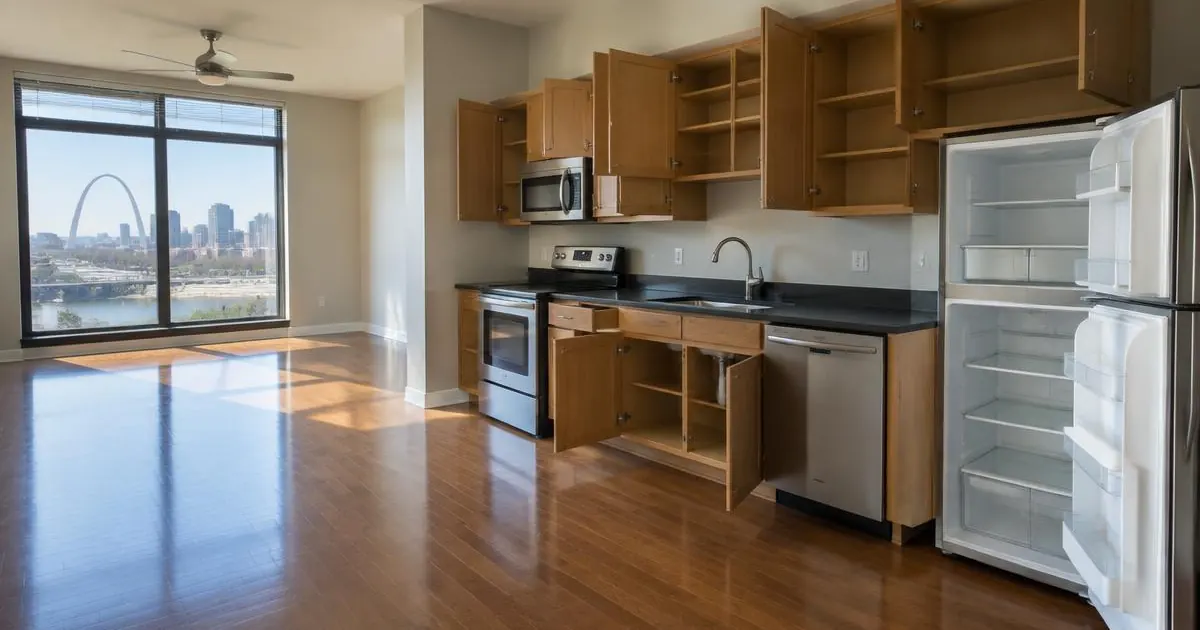
Take photos after cleaning and after all belongings and trash are removed. Capture a wide view of each room, then closer views of cabinet interiors, appliance interiors, bathroom fixtures, closets, and floors. Photograph existing damage separately so the record does not depend on a single distant image.
Use good lighting and retain the original files. A short video can show the overall layout, but clear still photos are often easier to reference when discussing a particular shelf or stain. Save your move-in documentation alongside the move-out set.
If an inspection is offered, ask how observations will be recorded and whether you can attend. Bring the written checklist and clarification messages. Ask for specific locations when an item is described as unclean.
Follow the required process for returning keys, fobs, and permits, and retain any acknowledgment provided. Photos and receipts support communication; they do not establish that every lease obligation has been satisfied or promise a particular deposit decision.
Request a Cleaning Scope That Matches Your Handoff
For a quote from Prime Cleaning MO LLC in the St. Louis metro, share the property’s size, bedroom and bathroom counts, condition, access instructions, desired date or window, and whether it will be empty. Mention heavy buildup, remaining belongings, and any lease-specific tasks. Share relevant photos when requested.
Move-in and move-out cleaning includes the insides and outsides of cabinets and appliances. For deep cleaning, appliance interiors and cabinet interiors are optional add-ons. Interior windows are an add-on for these services, so request them explicitly rather than assuming they are included.
Standard or recurring cleaning is available only after an initial deep clean, not as a one-time service or for first-time clients; the standard or recurring-service quote includes the initial deep clean. For an empty-property handoff, discuss move-out cleaning rather than requesting a lighter recurring visit.