Move-In/Move-Out
Move-Out Cleaning to Get Your Deposit Back in Missouri
Thorough move-out cleaning can help you document a responsible handoff, but it cannot guarantee a full deposit refund. Start with your lease, address visible soil room by room, and keep clear records of the condition you leave behind.
Start with the lease, not a deposit guarantee
Move-out cleaning to get your deposit back in Missouri starts with understanding the condition your lease requires at handoff. Read the move-out instructions, any cleaning checklist, and the original condition report before buying supplies or booking service. Cleaning may address dirt and buildup, but it cannot resolve unpaid obligations, missing property, or damage outside its scope. No cleaner can guarantee what a landlord will decide to deduct.
Compare the current condition with move-in photos and written notes. Separate tasks you can clean from problems that require repair or a conversation with management. A dirty cabinet shelf and a damaged cabinet door are different issues. Avoid improvising repairs, painting over marks, or using aggressive products without permission, because an attempted fix can create another dispute instead of preventing one.
Ask management for unclear instructions in writing. Confirm the final occupancy date, key return procedure, utility arrangements, and whether the unit must be completely empty before inspection. The Move-Out Cleaning page is a useful service starting point, but the lease and actual property condition determine your priorities. Organize the process around a documented handoff rather than a promise that purchasing cleaning automatically entitles you to the entire deposit.
Understand Missouri deposit timing at a high level
Missouri’s security-deposit statute, RSMo 535.300, generally provides a 30-day period after termination of the tenancy for returning the deposit or providing the balance with an itemized list of deductions. The statute addresses other details as well, and individual circumstances can matter. Read the current law and your lease rather than treating a short cleaning article as a complete explanation of your rights.
Keep ordinary wear and cleaning concerns distinct in your records. An aging finish is not the same thing as food residue or accumulated grime, but whether a particular deduction is permitted can depend on facts that a cleaning provider cannot determine. Photograph the condition clearly and save communications instead of making broad claims that every disputed charge is automatically unlawful. If a disagreement develops, consider a qualified Missouri legal resource.
Provide a reliable forwarding address through a documented channel and retain a copy. Save the lease, move-in report, move-out instructions, cleaning records, and key-return confirmation in one place. A receipt can show that service was purchased, but it does not prove the entire unit met every lease condition. This guide offers practical cleaning preparation, not legal advice or a prediction about the outcome of a deposit dispute.
Explore our move-in/move-out service and cleaning in St. Louis, MO for property-specific information.
Schedule cleaning after the moving work is finished
An empty unit is easier to assess and clean thoroughly. Plan the main move first, remove personal belongings and routine trash, and leave enough time for a final inspection after cleaning. Moving furniture through a freshly cleaned room can add footprints, scuffs, and packing debris. If a full move must happen in stages, identify which rooms will remain accessible and which will need another pass.
Confirm that water, electricity, and safe entry remain available for the appointment. Give the provider accurate parking and building access instructions, including elevator reservations or loading rules. A vacant apartment with no power or a locked water supply may prevent agreed tasks from being completed. Do not leave those details until the team arrives, particularly when the lease handoff deadline is close.
Identify any items staying with the property, such as appliances, shelving, or window treatments. Labeling or written instructions can prevent a misunderstanding about what belongs to the landlord. Remove belongings from cabinets, drawers, closets, and under sinks before work begins. Cleaning is not automatically packing, donation sorting, furniture moving, or hauling. A clear empty-space plan gives the team better access and gives you a cleaner basis for checking the finished result.
Give the kitchen enough time and access
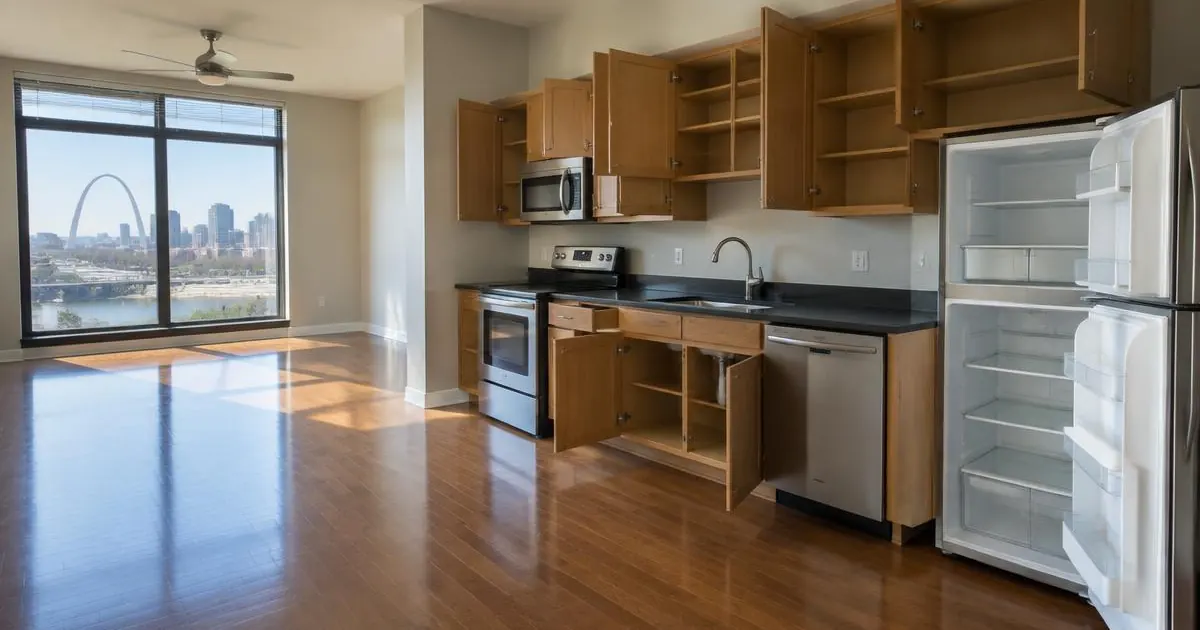
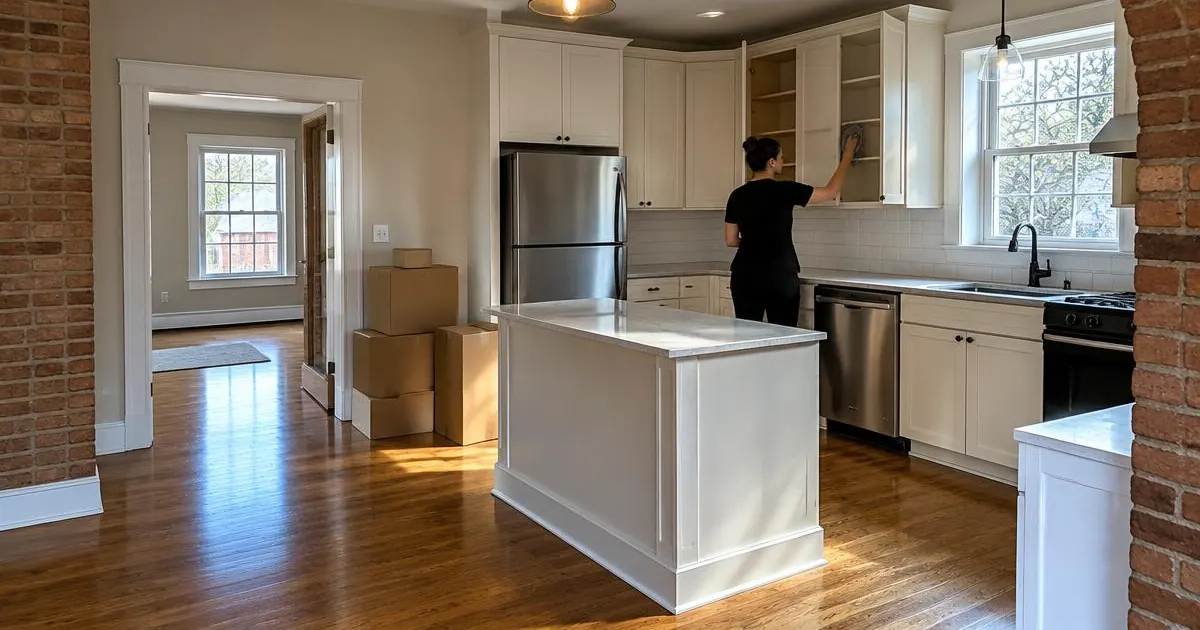
Kitchens often need sustained attention because grease, food residue, and spills collect in several places at once. Start with accessible cabinet and drawer interiors after belongings are removed. Clean shelves, door fronts, handles, counters, and the sink using products suitable for the finish. Look at corners and edges, not only the most visible central surfaces. Allow cleaned interiors to dry before closing everything for the final handoff.
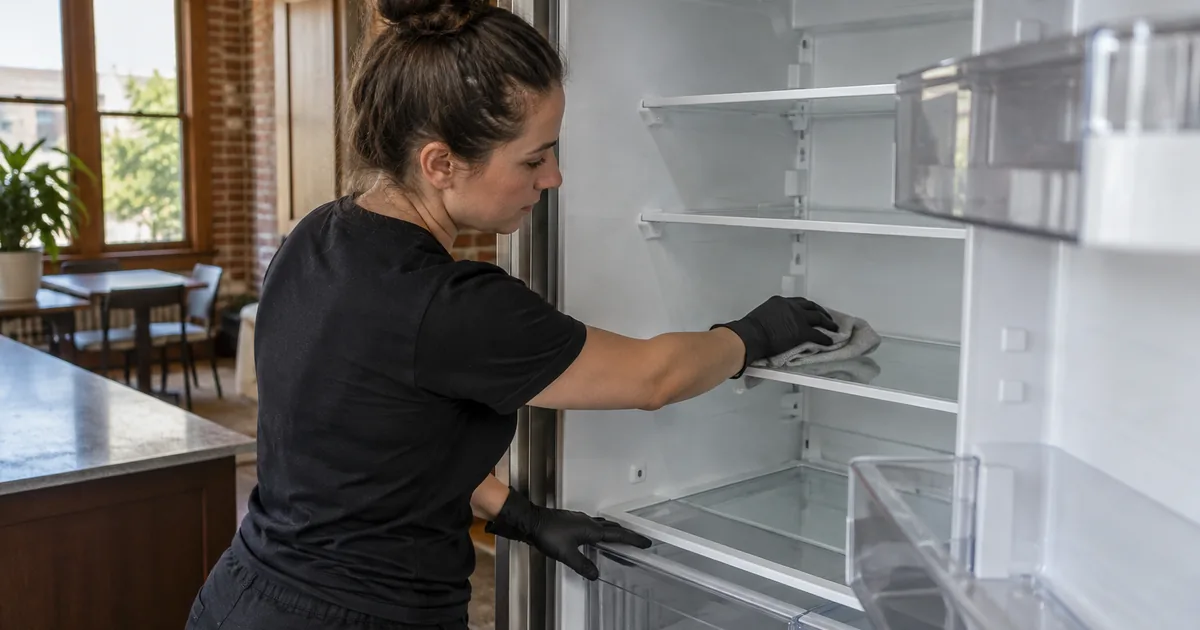
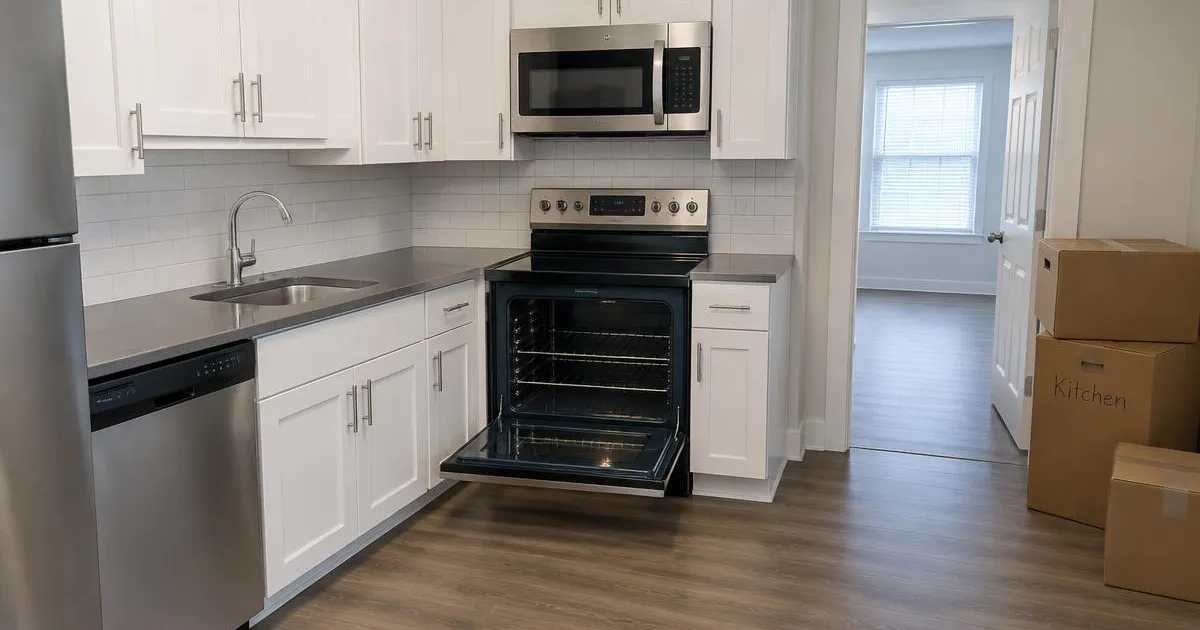
Confirm whether appliance interiors are included in your service scope. Empty the refrigerator, remove food according to your move-out plan, and address spills on accessible shelves and bins. Follow manufacturer instructions rather than prying apart components or using sharp tools on ice. For the oven and stovetop, use methods appropriate to the appliance and disclose heavy buildup before the appointment so the workload is not a surprise.
Check the dishwasher area, the microwave if it remains, and the floor around accessible appliance edges. Do not pull out heavy or connected appliances without permission and an appropriate plan. Gas lines, electrical connections, and vulnerable flooring make that a different task from wiping a visible surface. Report damage or leaks to management. The goal is to remove agreed soil safely, not to create a repair problem during the final hours of your tenancy.
Work through bathrooms without damaging finishes
Remove personal products, shower caddies, and loose accessories before cleaning. Focus on soap residue, visible soil, mirrors, sink surfaces, toilets, and accessible shower or tub surfaces. Choose products compatible with the materials and follow their directions. Mixing chemicals or using a stronger concentration is not a sensible shortcut when the deadline is near; it can create hazards and damage the property.
Pay attention to faucet bases, cabinet fronts, the edges of the toilet, and floor corners. These areas can be overlooked in everyday maintenance but remain visible during a move-out inspection. Clean empty vanity interiors if they are within the scope, and leave them dry. If a stain does not respond to an appropriate method, document it rather than escalating to scraping or abrasives without knowing the surface.
Separate maintenance concerns from cleaning tasks. Persistent leaks, deteriorated seals, loose fixtures, or discoloration within a damaged finish may need management’s attention. Do not describe every mark as removable or try to conceal it with a temporary coating. A service provider should report limits honestly. Once the room is complete, take a final look under normal lighting and check that no cleaning supplies or personal items remain behind the door or inside the vanity.
Finish floors, closets, and easily missed surfaces
After higher surfaces are complete, address floors using methods suited to their material. Vacuum accessible carpet and clean hard floors without excessive water or inappropriate chemicals. Carpet extraction, stain treatment, and floor restoration are separate tasks unless explicitly included. If the lease mentions a particular carpet requirement, ask management what documentation it expects rather than assuming a general move-out appointment satisfies it.
Check empty closets, shelf edges, baseboards, door handles, light switches, and reachable trim within the agreed scope. Dust and fingerprints can be easy to miss after furniture is removed because your attention shifts to larger areas. Keep tools and products appropriate for painted surfaces, and avoid scrubbing away the finish. Dusting an accessible fixture does not mean dismantling it or working at unsafe heights.
Interior window cleaning is an optional add-on for move-out service. Discuss the window count and access before booking, and use the Add-On Services page to frame that conversation. Blinds, tracks, exterior glass, and specialty access should be clarified individually rather than inferred from the word windows. Finish the main floors last so you do not track debris back through completed rooms while carrying out the final boxes and supplies.
Document condition and complete the handoff
Take clear photos once the unit is empty and the agreed cleaning is finished. Capture each room broadly, then record important details such as appliance interiors, bathroom surfaces, floors, and any pre-existing damage you want to compare with move-in records. Use enough light to show the actual condition. Keep original files with their dates rather than relying only on compressed images sent through a message thread.
If management offers a walkthrough, ask how to arrange it and what the process covers. Keep the discussion focused on specific items and take notes about any requested follow-up. Do not assume a casual comment from a staff member settles all deposit questions. Written communications and a clear condition record are more useful than trying to reconstruct a conversation after you have left town.
Return keys, fobs, parking permits, and other property through the agreed procedure, and keep confirmation. Record your forwarding address and save any cleaning invoice with the rest of your move-out file. If a deduction is later disputed, the cleaner’s receipt is one piece of evidence, not a legal conclusion. Review the itemized information and seek appropriate advice if needed instead of expecting a cleaning company to negotiate the deposit on your behalf.
Choose a cleaning scope that fits your actual rental
When requesting help, share the property size, bathroom count, move-out date, and whether the unit will be empty. Mention pets, heavy kitchen buildup, appliance interiors, access restrictions, and optional interior windows. Accurate information helps distinguish a routine vacant-unit clean from a larger project. Photos can help explain conditions, but they should not hide areas that are difficult to reach or likely to need extra time.
Prime Cleaning MO LLC’s Move-Out Cleaning page describes the primary service conversation, while Add-On Services helps you identify optional work. Use the Quote page or call (314) 274-6907 to discuss the actual task list. Ask what is included, what is excluded, and what preparation is expected before the appointment. A one-time move-out clean is its own service; it should not be confused with standard or recurring maintenance, which requires an initial deep clean before starting.
Confirm the next step
The most effective plan combines reasonable cleaning priorities with good documentation and a timely handoff. You may still have lease questions or disputed conditions that cleaning cannot solve. Treat the service as practical help with the unit’s condition, not insurance against every deduction. That approach keeps expectations realistic and leaves you with a clearer record of the work you completed before returning possession.