Move-In/Move-Out
Move In Move Out Cleaning Florissant: Turning Inspection Notes Into Tasks
A moving inspection records what you find. A cleaning plan decides what can be cleaned, what needs permission, and what belongs with maintenance.
move in move out cleaning Florissant: Turning Inspection Notes Into Tasks
Planning move in move out cleaning Florissant starts with two separate lists: what you need to document and what you want cleaned. A stained cabinet shelf, a greasy oven, and a cracked drawer may appear together on an inspection sheet, but they need different responses. Cleaning can address removable residue; it cannot establish responsibility for damage or replace a repair. Before boxes arrive or keys change hands, turn those observations into an agreed scope.
For your Florissant move, Prime Cleaning MO LLC can use that scope to clarify cleaning priorities and access needs. Start with the property’s occupancy status, your key handoff arrangements, and any written landlord or buyer requirements. Keep the inspection record separate from the cleaning instructions so existing damage is not mistaken for unfinished cleaning.
Turn Inspection Notes Into Specific Cleaning Requests
Walk through each room before cleaning begins. Photograph visible conditions with enough surrounding detail to identify the location, then write a neutral description. “Brown mark beneath bathroom sink” is more useful than “dirty plumbing,” because the mark could be residue, water damage, or a maintenance concern. Avoid diagnosing an unknown substance from appearance alone.
Record Conditions Without Assigning a Cause
Your inspection list should include chips, loose hardware, swollen cabinet panels, peeling finishes, and appliances that do not operate normally. Report those conditions to the appropriate property contact. Ask whether anything must remain untouched until reviewed. Save relevant instructions alongside the photographs, particularly when the owner and incoming resident have different expectations.
Translate Removable Soil Into Tasks
Your cleaning list should describe an action and a location: remove crumbs from kitchen drawers, clean accessible refrigerator shelves, or wipe greasy cabinet fronts. If an oven coating is damaged, note that separately and request manufacturer-safe cleaning without scraping the damaged area. This gives the cleaner a usable task without implying that cleaning will correct the defect.
Explore our move-in/move-out service and cleaning in Florissant, MO for property-specific information.
Define Your move in move out cleaning Florissant Scope
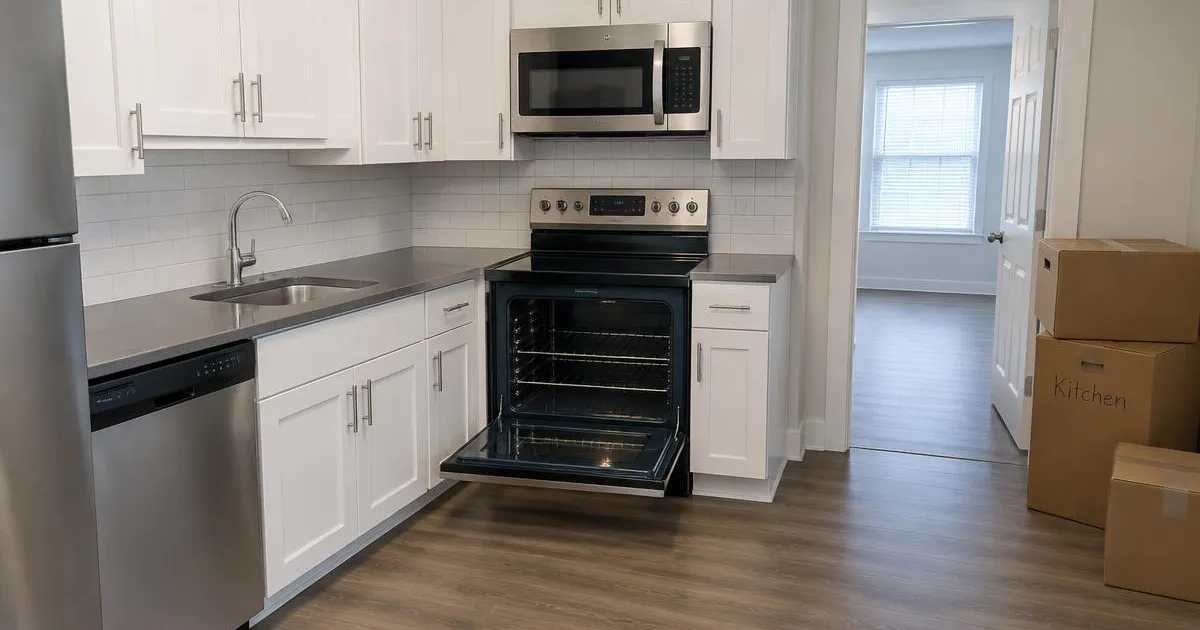
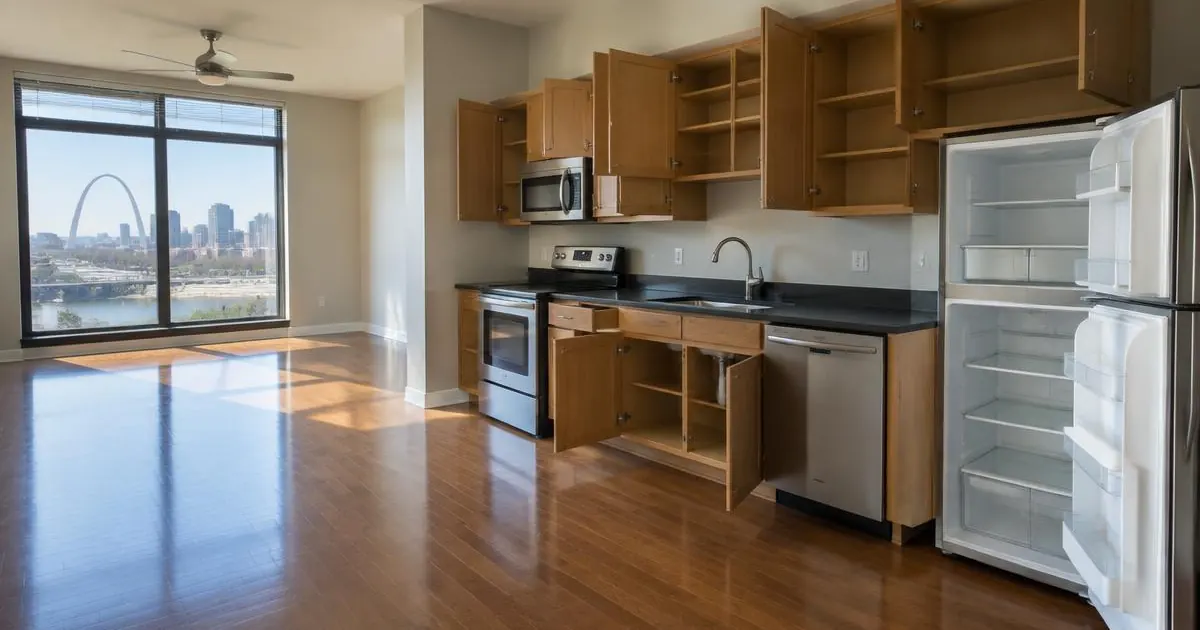
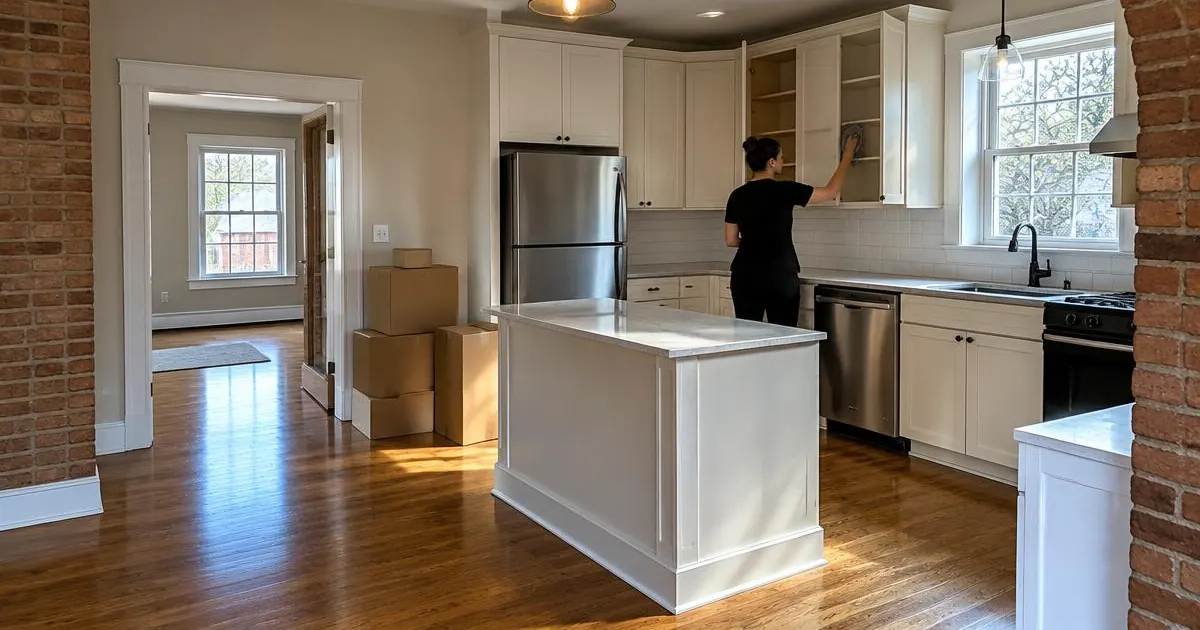
Move-In/Move-Out cleaning includes inside and outside cabinets and appliances. Confirm which appliances are present and identify built-in units, removable shelves, and any operational problems. Inclusion does not mean that equipment will be dismantled, disconnected, or moved without an agreed safe method. Ask specifically about access behind or beneath heavy appliances rather than assuming those spaces are reachable.
Empty cabinets and drawers before the appointment when possible. Decide who will remove food, personal belongings, shelf liners, and leftover packing materials. A sticky liner may conceal a fragile finish, so request a test and discuss whether removal is appropriate. If belongings must remain, identify the affected spaces and agree on what can actually be accessed.
Interior windows are optional for this service and should be requested explicitly. Distinguish the glass from tracks, screens, and difficult-to-reach sections when discussing scope. A lease may mention windows broadly, but that wording alone does not tell a cleaner which components or access conditions you expect.
Coordinate Empty Rooms, Utilities, and Key Access
The most useful appointment is one with workable access. Explain whether the property will be empty, partly occupied, or shared with movers or contractors. For a move-out, plan around the removal of furniture and belongings; for a move-in, aim to clean accessible storage and floors before boxes cover them. If overlap is unavoidable, identify rooms that can remain clear.
Confirm that water and electricity will be available and that someone can authorize entry. Share parking or building-access instructions, lock procedures, pet arrangements, and the name of the person who can answer questions. Avoid placing sensitive entry codes in documents that will circulate among multiple vendors.
Ask what happens if the property’s condition differs materially from the description. Heavy buildup or detailing beyond deep cleaning may take more than one day. Discuss priorities and scope changes before committing to a tightly packed handoff, rather than assuming every task will fit between the movers leaving and the next resident arriving.
Prioritize Cleaning Without Confusing It With Repair
When access is limited, rank tasks by how the space will be used next. Empty kitchen storage and appliance interiors deserve attention before groceries and dishes arrive. Bathroom fixtures and accessible floors also matter early. Explain these priorities when requesting service, but do not treat them as a substitute for confirming the full agreed scope.
Consider three inspection examples. Crumbs in a drawer become a cleaning task. A drawer that will not close becomes a maintenance note. A dark patch on a damp cabinet base calls for reporting and assessment, not a promise that scrubbing will solve it. The same distinction applies to worn grout, etched counters, and scratched flooring.
Ask, “Is this removable buildup, a finish change, or something that needs another professional?” Sometimes that cannot be determined until a gentle cleaning attempt is made. Agree on when work should pause for permission. Do not frame the appointment as restoration, mold removal, or hazardous waste handling; suspected hazards require separate assessment.
Choose Surface Care That Protects Existing Finishes
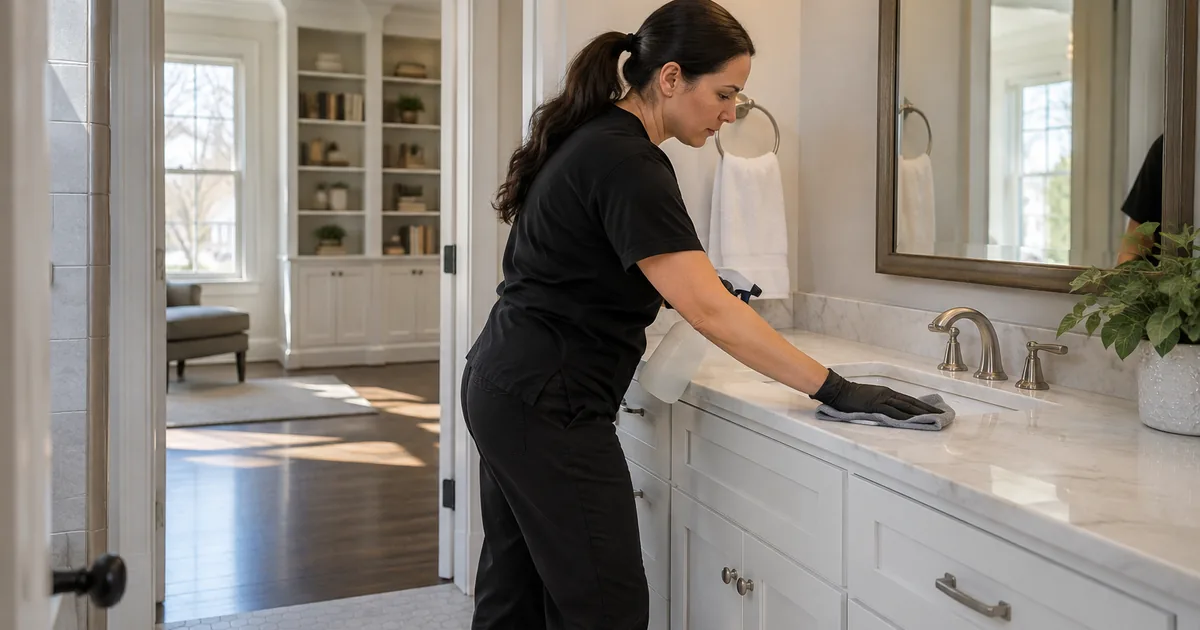
Share known surface materials and appliance care instructions before work starts. Natural stone, coated appliance panels, wood finishes, and specialty flooring can require different methods. Manufacturer-safe surface care matters more than using the strongest available product. Avoid acids on stone, and never mix cleaners, including products already left on a surface.
Disinfect only when appropriate for the surface and situation. Cleaning removes soil; disinfecting requires a suitable product used according to its label, including the full contact time. A quick spray followed by immediate wiping should not be described as disinfection when the label requires the surface to remain wet longer.
Tell the cleaner about recent painting, refinishing, sealants, or repairs, and pass along any curing or care restrictions supplied by the manufacturer or installer. If a finish is unknown, request a cautious approach and a discreet test where appropriate. Residue that resists safe cleaning may need to remain rather than risk permanent surface damage.
Match the Service to the Property and Next Step
Choose the service by the actual situation, not simply the word “moving.” Deep cleaning has a different scope: appliance interiors and inside cabinets are optional add-ons. Move-In/Move-Out includes inside and outside cabinets and appliances. Explain whether you are preparing an empty residence, cleaning an occupied home, or arranging ongoing upkeep so those distinctions remain clear.
Standard/recurring cleaning is available only after an initial deep clean, not as a one-time or first-time service. The first standard/recurring quote includes that deep clean. Interior windows are optional across services except Airbnb turnovers; do not assume they can be added to an Airbnb turnover.
For commercial/industrial properties and commercial post-construction work, a free in-person walkthrough is required before pricing. Provide the business name, approximate square footage, restroom count, preferred date/time window, and onsite contact. Do not apply a residential moving scope to a business premises without that assessment, and never assume hazardous work is included.
Review the Result Against the Agreed Tasks
At the end, compare the cleaning result with the approved task list, not with an expectation that every inspection note will disappear. Check accessible cabinet interiors, appliance interiors, agreed surfaces, and any requested window work. Review these areas before refilling storage where practical, so questions can be discussed while the work remains visible.
Keep the original condition photographs and record anything that still needs maintenance. For example, a cleaned shelf may retain a stain, and a clean faucet may still leak. Note the distinction clearly when communicating with a landlord, buyer, or incoming resident. Cleaning does not determine deposit deductions or establish that a property meets every contractual requirement.
Before returning keys, confirm that belongings and supplies have been removed and that access arrangements are closed out as agreed. A useful handoff contains three things: the completed cleaning scope, unresolved condition notes, and the contact responsible for the next decision. That is more actionable than a single “done” checkbox.