Move-In/Move-Out
Move In Move Out Cleaning Kirkwood: Kitchen Storage Before Unpacking
A useful moving clean starts with empty kitchen storage, not a room full of boxes. Sequence the work so cabinets and appliances are ready before dishes and groceries arrive.
move in move out cleaning Kirkwood: Kitchen Storage Before Unpacking
The most useful way to schedule move in move out cleaning Kirkwood is to work backward from the first box you need to unpack. Kitchen shelves, drawers, and appliance interiors are easiest to clean while empty. For your Kirkwood move, separate the key handoff, cleaning access, and delivery arrangements so dishes and food do not arrive before their storage spaces are ready.
Before requesting service from Prime Cleaning MO LLC, identify who controls access and when the property will actually be vacant. Confirm that water and electricity will be available, whether anyone will still be packing, and whether contractors expect to return. An empty-looking home may still have belongings in drawers or food in the refrigerator.
Ask three scope questions early: Are you preparing the home you are leaving, the home you are entering, or both? Which appliances stay? Who is responsible for removing remaining possessions? These answers help distinguish cleaning work from packing, disposal, and repairs that need separate arrangements.
Make empty kitchen storage the first priority
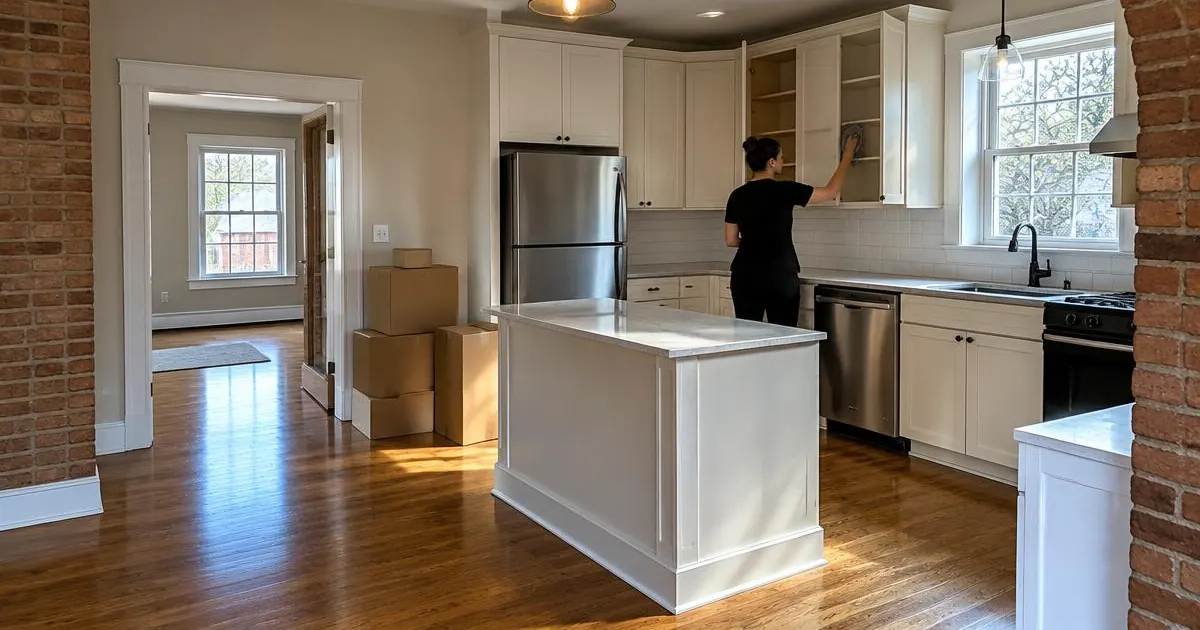
Reserve a clear route into the kitchen and a separate place for incoming boxes. If deliveries must overlap with cleaning, direct boxes to a designated room rather than kitchen counters. Keep cabinet doors and appliance doors accessible. Stacking cartons against the dishwasher or pantry defeats the advantage of cleaning before unpacking.
Prepare cabinets before dishes arrive
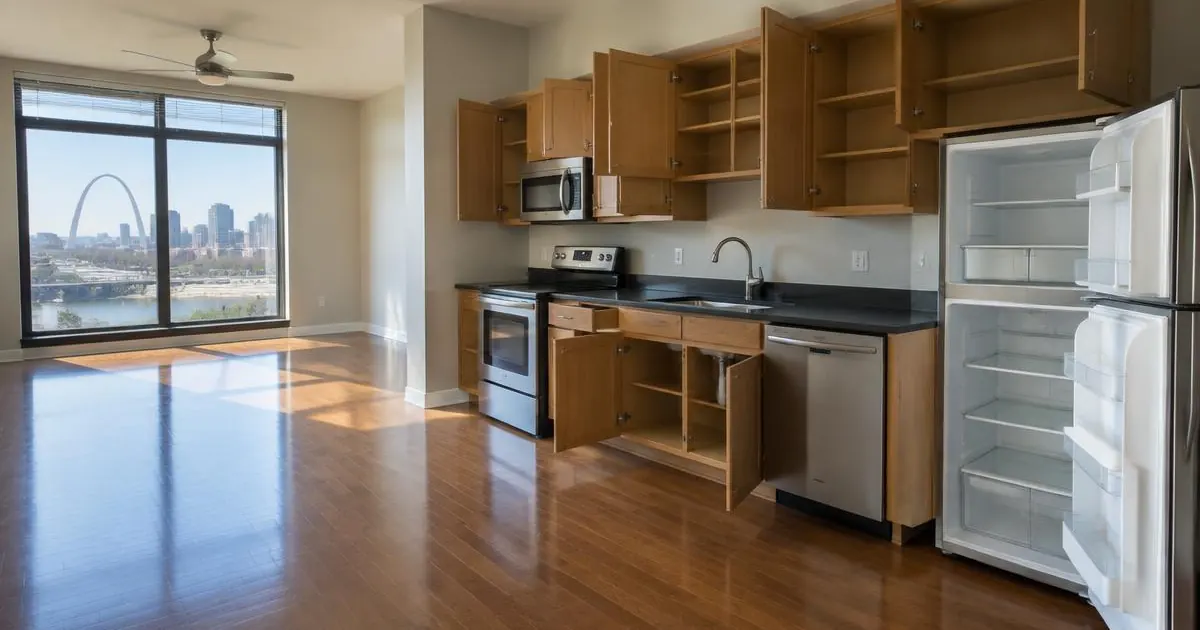
Empty every shelf and drawer, including items left above the refrigerator or under the sink. Remove loose shelf liners if you want the surface beneath them cleaned, and discuss liners that are stuck down. Flag crumbs, residue, moisture, or damaged finishes rather than covering them with new paper. Cleaned interiors should be dry before dishes or replacement liners go in.
Prepare appliances before groceries arrive
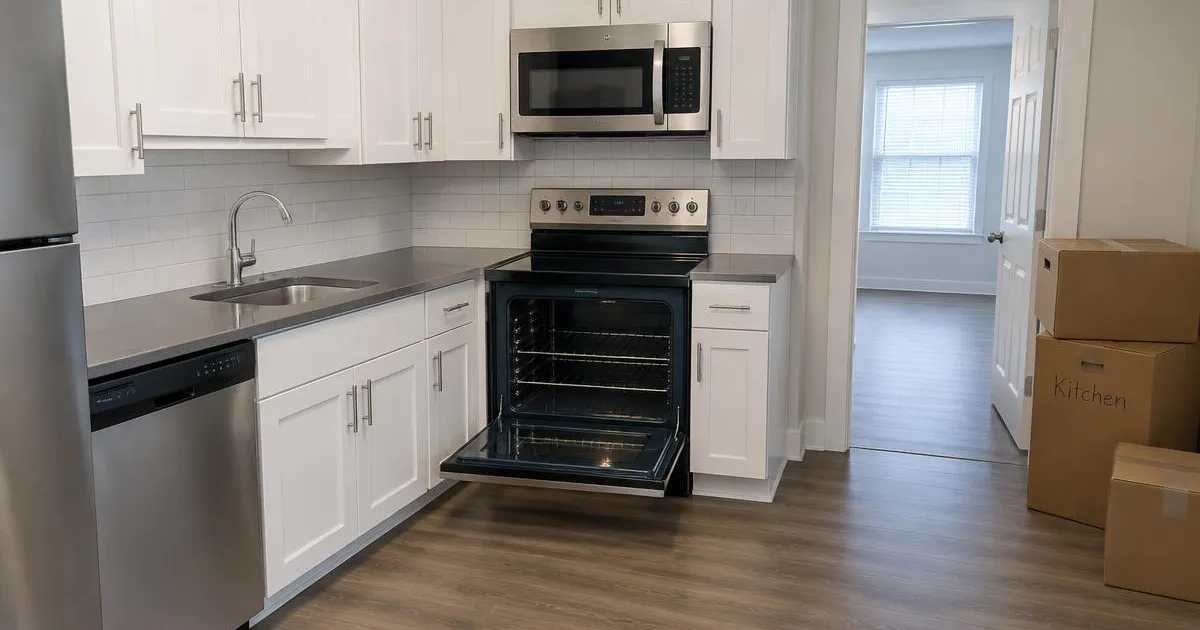
Remove food and personal items from the refrigerator, freezer, oven, and dishwasher. Arrange separate storage for anything temperature-sensitive. Confirm that appliances are operational and share available care instructions. Do not start a self-cleaning oven cycle immediately before service; discuss its condition and cleaning approach first. Load groceries only after cleaned storage surfaces are ready for use.
Explore our move-in/move-out service and cleaning in Kirkwood, MO for property-specific information.
Confirm what belongs in your moving-clean scope
Prime Cleaning MO LLC’s Move-In/Move-Out service includes inside and outside cabinets and appliances. That distinction matters when comparing service types: appliance interiors and inside cabinets are optional add-ons to a deep clean, not automatic deep-clean inclusions. Describe the actual job rather than assuming every service name means the same thing.
For example, an empty home with kitchen cupboards, an oven, and a refrigerator needing attention fits a different scope from an occupied home needing a deep clean around stored belongings. Identify which appliances are present and staying, and discuss access to removable parts. Do not assume a heavy appliance will be disconnected or moved to reach behind it.
Interior windows are optional for Move-In/Move-Out and other eligible services, but not Airbnb turnovers. Request them explicitly rather than treating glass throughout the home as included. Share your priorities for pantry shelves, bathroom storage, and other built-ins, then confirm the agreed scope. A written list of priorities is more useful than expecting a universal checklist to cover every property.
Sequence the rooms without undoing finished work
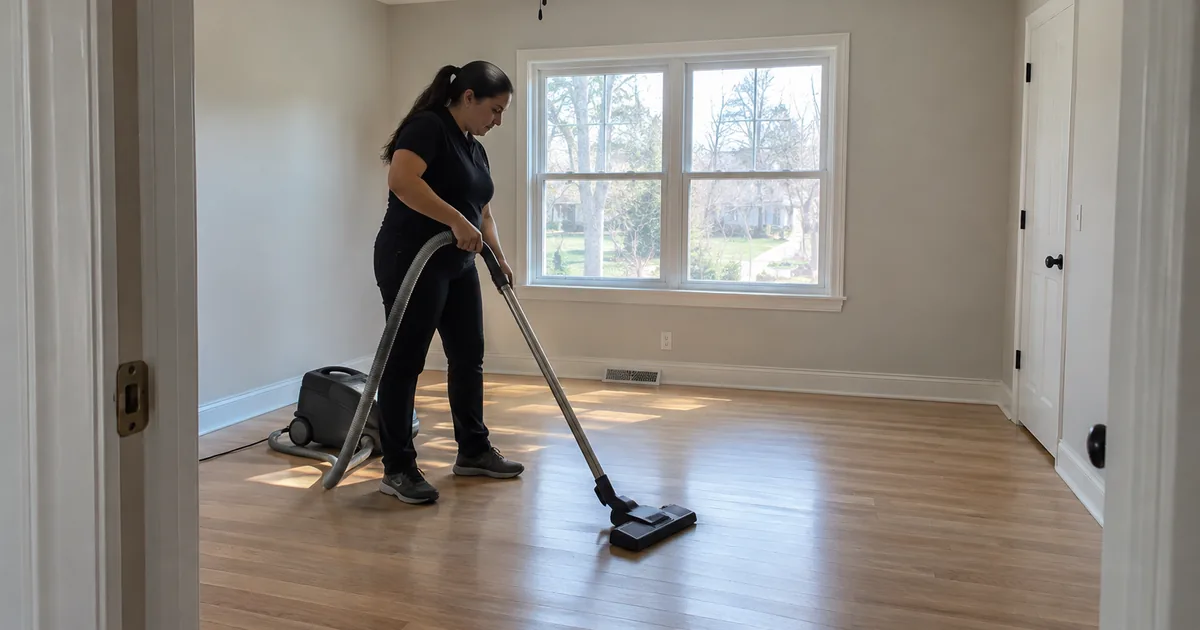
Start with kitchen interiors because they determine when unpacking can begin. Within that work area, address accessible higher surfaces before lower ones, and leave the floor until debris-producing work is finished. Then move to bathroom storage and fixtures, followed by bedrooms and living areas. Keep a clear path so equipment and boxes do not repeatedly cross finished floors.
If movers arrive while cleaning continues, assign one person to direct traffic. Mark rooms as either ready for delivery or still needing access, using removable signs placed where they will not damage finishes. Avoid placing belongings on counters that are being cleaned. An agreed staging area prevents a rushed decision from blocking the next task.
Use practical priorities when access is limited. If only the kitchen and one bathroom are available before delivery, ask whether those spaces can be addressed first without compromising the agreed work. If contractors are still cutting, sanding, or installing nearby, reconsider the sequence. Cleaning a room before more dust-producing work is finished can create avoidable repeat work.
Use surface care that respects the materials
Tell the team about stone counters, wood cabinet finishes, coated appliances, and any surfaces with special care instructions. Manufacturer-safe surface care starts with identifying the material and choosing a compatible method. Avoid acids on stone, and never mix cleaners. If an old bottle or unlabeled product remains under the sink, set it aside for the responsible person to address rather than using it.
Cleaning and disinfecting are different tasks. Remove soil first, and disinfect only when appropriate for the surface and situation. A disinfectant must remain on the surface for its full label contact time, with any required rinsing or other directions followed. Applying more product or wiping it off immediately is not a substitute for correct use.
Point out loose hinges, peeling finishes, damaged seals, or persistent moisture before work begins. Cleaning does not repair those conditions. Suspected mold, unknown residues, and potentially hazardous materials require separate assessment; mold removal and hazardous waste handling should not be treated as part of a moving clean.
Give the quote request enough useful detail
For a residential moving-clean request, provide the property size, bathroom count, vacancy status, preferred access window, and whether it is a move-in or move-out. Describe cabinet and appliance conditions plainly: an empty refrigerator needing a wipe-down differs from one with spills and food left behind. Photos can help explain visible conditions but do not reveal every access or surface issue.
Include pets, parking or entry restrictions, ongoing work, and the person authorized to make scope decisions. If adhesive residue, dense buildup, or detailed work beyond a deep clean is involved, flag it beforehand. Detailing beyond deep cleaning may take more than one day; do not organize the handoff around an unconfirmed completion assumption.
If the move involves commercial or industrial premises, or commercial post-construction cleaning, a free in-person walkthrough is required before pricing. Provide the business name, approximate square footage, restroom count, date/time window, and onsite contact. A residential moving-clean description is not enough to price those environments, and hazardous work is never promised.
Check readiness before opening the first box
Once cleaning is finished, inspect the spaces that will become difficult to see after unpacking. Open cabinets and drawers, look at accessible appliance interiors, and confirm that shelves are dry. Compare the completed work with the agreed scope rather than adding new expectations at the doorway. Raise any questions while access is still clear.
Unpack in a deliberate order: essential dishes and utensils first, pantry goods next, then less-used cookware. Keep cardboard off food-preparation surfaces where possible, and remove packing debris as you go. Wait to install liners until the underlying surfaces are ready. Avoid filling every shelf immediately if you still need to inspect a hinge, leak, or damaged area.
For a move-out, keep a separate record of the property's condition and follow the lease or sale handoff instructions. Cleaning does not establish whether existing wear meets an owner's requirements or guarantee a deposit outcome. Retain access long enough to complete your own final check, collect keys, and address responsibilities outside the cleaning scope.
Choose the next service after the move settles
A moving clean prepares accessible spaces for a transition; maintaining an occupied home is a separate decision. After unpacking, note which rooms need ongoing attention and which tasks you can manage between visits. New cardboard dust or tracked-in dirt does not mean the original moving-clean sequence was wrong; deliveries introduce fresh soil.
Prime Cleaning MO LLC offers standard/recurring cleaning only after an initial deep clean. Standard cleaning is not a one-time or first-time service, and the first standard/recurring quote includes that initial deep clean. If you want ongoing care after moving, ask how that requirement applies rather than assuming the Move-In/Move-Out visit automatically replaces it.
Keep future requests specific. Mention changes in access, household routines, and optional interior-window needs. If you later request a deep clean, remember that appliance interiors and inside cabinets are optional add-ons for that service. Matching the service to the current condition keeps expectations clear after the boxes are gone.