Move-In/Move-Out
Move In Move Out Cleaning Maplewood: Protecting Personal Belongings
An empty drawer is easier to clean, but getting it empty safely takes planning. Coordinate belongings, access, and cleaning scope before boxes arrive.
move in move out cleaning Maplewood: Protecting Personal Belongings
Start with a practical priority: arranging move in move out cleaning Maplewood when drawers, cabinets, and appliances are accessible without putting personal belongings at risk. Whether you are leaving a rental or preparing a purchased home, coordinate the key handoff, removal of belongings, cleaning access, and arrival of boxes before choosing the service window.
Ask who controls access, whether utilities will remain on, and whether anyone else needs the property during cleaning. A cleaner cannot safely work around an appliance being disconnected or a cabinet being repaired. If contractors or movers must overlap, identify separate work areas and explain which rooms are unavailable.
For Prime Cleaning MO LLC, describe the actual condition rather than relying only on bedroom count. Mention occupied drawers, food remaining in appliances, adhesive shelf liners, and any surfaces with special care instructions. These details help define the work without assuming that an apparently empty home is ready everywhere.
Empty drawers without losing what matters
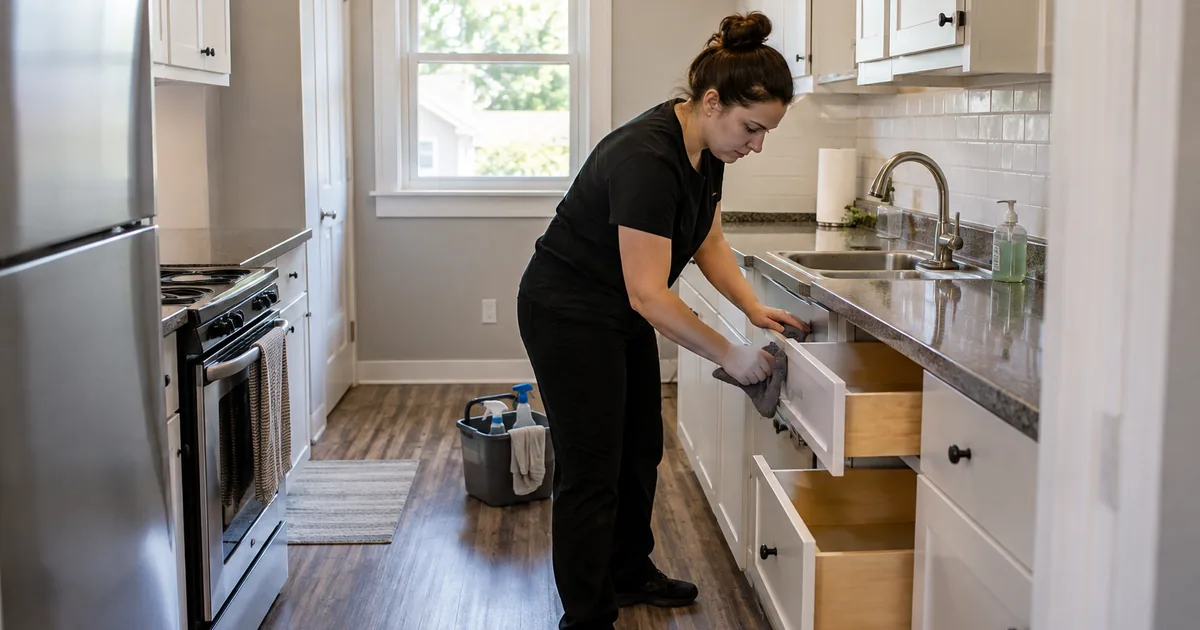
Treat drawer emptying as a separate packing task, not something to improvise while cleaning starts. Work through one room at a time with containers labeled keep, review, and discard. Only the person authorized to make disposal decisions should decide what leaves the home. A loose key, receipt, or small metal fitting may still matter.
Before removing contents, check drawer corners, dividers, and the space beneath removable organizers. Place jewelry, medications, identification, cash, and sensitive documents in a closed container that stays with you. Do not leave that container in the cleaning area.
Use a clear finish point for each drawer
After emptying a drawer, inspect it once more and put its organizer with the corresponding box. Keep hardware in a labeled bag rather than loose on a counter. Record anything intentionally left behind. For example, if appliance instructions stay with the property, place them in a clearly designated handoff folder instead of leaving them inside a drawer scheduled for cleaning.
Explore our move-in/move-out service and cleaning in Maplewood, MO for property-specific information.
Create a protected zone for belongings
If some possessions must remain, establish one agreed storage area before work begins. Choose a dry space outside the cleaning route, close the containers, and identify the area as not included. Avoid using the kitchen counter as temporary storage when counters, cabinets, and appliances all need attention.
Leave access to sinks, outlets, doorways, and the equipment that needs cleaning. Do not stack boxes inside cabinets merely to clear the floor; that transfers the obstruction to another part of the service. If space is limited, ask whether the visit should be divided by accessible rooms or arranged after more belongings leave.
Agree on a stop-and-ask rule
Tell the cleaning team what to do if they find personal property: leave it in place and contact you, or place ordinary loose items in one designated container. Set a different rule for sharp objects, medications, or unidentified materials. Never assume everything remaining in a vacated home is trash. This simple decision protects belongings and prevents avoidable misunderstandings.
Choose the service that matches the handoff
Prime Cleaning MO LLC’s Move-In/Move-Out cleaning includes inside and outside cabinets and appliances. That makes access especially important: empty cabinets and drawers, remove food and personal containers, and explain anything that cannot be moved. Confirm which appliances are present and whether they are connected and available for cleaning.
Deep cleaning has a different scope: appliance interiors and inside cabinets are optional add-ons. Standard/recurring cleaning is available only after an initial deep clean, not as a one-time or first-time service. The first standard/recurring quote includes that initial deep clean. Choosing based on the property’s use avoids comparing services as though their inclusions were identical.
Interior windows are optional for all services except Airbnb turnovers, where that optional-add-on rule does not apply. Ask specifically about windows rather than assuming they accompany a move clean. Also distinguish routine cleaning from unusually intensive detailing; detailing beyond deep-clean scope may take more than one day and needs a separate discussion.
Prepare cabinets and appliances for safe cleaning
Check cabinet shelves for leaks, loose edges, damaged finishes, and liners before the visit. Tell the team about known damage so cleaning does not become an attempt to repair it. Ask before removing adhered liners: pulling them away can lift paint or veneer. Drawer removal also needs agreement, especially where tracks, stops, or soft-close mechanisms are involved.
Empty the refrigerator and freezer according to the agreed plan, and decide where food will go before turning anything off. Follow the appliance manufacturer’s instructions for power, defrosting, and removable parts. Do not assume cleaners will disconnect utilities, pull heavy appliances away from walls, or dismantle components.
Surface care should follow manufacturer guidance. Avoid acids on natural stone, never mix cleaners, and use disinfection only where appropriate. When a disinfectant is used, its full label contact time matters. Report unidentified residue or unusual contamination before work begins; cleaning scope should not imply restoration, mold removal, or hazardous waste handling.
Sequence cleaning between departure and unpacking
For a move-out, remove possessions first, complete agreed repairs, and then make cleaned areas available for inspection. If the refrigerator must remain running, communicate that. Leave required keys and documents in the handoff location rather than scattering them through freshly cleaned drawers. Photograph existing damage separately from cleaning concerns so the two do not become confused.
For a move-in, aim to clean accessible interiors before stocking them. Putting dishes into a cabinet and then asking for its interior to be cleaned creates extra handling and uncertainty about who moves the contents. Keep your first-night essentials together so you can wait to unpack other areas.
When boxes must arrive before cleaning finishes, choose a designated room that is not being worked on. For example, placing sealed boxes in an agreed bedroom may preserve kitchen access better than lining the hallway. Confirm the arrangement beforehand; a room filled with belongings may need to be excluded or revisited under an agreed scope.
Ask scope questions before requesting a quote
Prepare a short property summary: address, property type, approximate size, bathrooms, preferred date and access window, and your contact information. Explain whether this is a departure or arrival clean and whether the home will be empty. Include relevant photos if requested, especially of buildup, occupied cabinets, or surfaces needing special care.
Ask direct questions: Are all appliance interiors accessible? Which drawers still contain belongings? Are interior windows requested? Who approves changes if the condition differs from the description? Who will answer questions while the team is onsite? These answers are more useful than simply asking for everything to be cleaned.
If the move involves commercial or industrial premises, or commercial post-construction cleaning, a free in-person walkthrough is required before pricing. Provide the business name, approximate square footage, restroom count, preferred date/time window, and onsite contact. Do not treat a residential move-clean scope as interchangeable with those settings. Hazardous work is never promised.
Review the result before filling drawers again
Arrange a practical handoff with the person responsible for the property. Review accessible cabinet interiors, drawers, appliance interiors and exteriors, and any specifically agreed additions. Use the confirmed scope rather than expecting a universal checklist to cover every material, fixture, and condition.
Before replacing belongings, check that surfaces are ready for use and sufficiently dry. Return organizers to their correct drawers, then unpack gradually. If you notice a concern, identify the location and describe it clearly. Distinguish removable soil from scratches, staining, worn coatings, or damage that cleaning cannot correct.
Keep the scope confirmation, property notes, and any required handoff photographs together. For rentals, compare your preparation with the lease or management instructions, but remember that cleaning does not guarantee a deposit outcome. For a newly occupied home, the immediate benefit is simpler: you can put belongings into accessible, cleaned storage without repeatedly unpacking and repacking them.