Move-In/Move-Out
Move In Move Out Cleaning Oakville: Kitchen and Bathroom Cleaning Order
A kitchen-and-bath-first cleaning plan helps you use the empty-home window wisely, clarify what is included, and keep moving boxes away from freshly cleaned surfaces.
move in move out cleaning Oakville: Kitchen and Bathroom Cleaning Order
Start with a practical question: when will the home be accessible and clear enough to clean? For move in move out cleaning Oakville, prioritize the kitchen and bathrooms before boxes occupy counters, cupboards, and floors. These rooms contain surfaces you will soon use for food preparation and personal care, so cleaning them before unpacking reduces avoidable rework.
Before requesting service from Prime Cleaning MO LLC, confirm possession, working water and electricity, entry arrangements, and whether belongings will remain. Explain whether this is a departing-home handoff or preparation for your own arrival. Those goals overlap, but access and final inspection requirements can differ.
Ask who will remove unwanted belongings, empty the refrigerator, and dispose of ordinary moving debris before cleaning. Keep the agreed scope separate from repairs or property-condition disputes. If movers and cleaners must share access, designate clear rooms rather than expecting thorough cleaning around continuously shifting boxes.
Set kitchen and bathroom priorities before choosing the route
Start with a short walkthrough, not an immediate floor wash. Check kitchen storage, appliances, bathroom fixtures, and areas concealed by belongings. Identify the bathroom that will be needed first and the kitchen surfaces required for the first meal. Note heavy buildup, delicate finishes, existing damage, and any unresolved plumbing issue.
The priority order is kitchen and bath readiness first, other rooms next, and floors along the exit route last. Within that plan, dusty work should precede final wiping, and cleaner areas should not be recontaminated by tools used around toilets or heavily soiled surfaces.
For example, if a family arrives with groceries, prioritize refrigerator readiness and food-storage cabinets before unpacking. If someone needs immediate bathroom access, finish one bathroom first and reserve it from moving traffic. Ask: which rooms must remain usable, which can stay closed, and where can supplies and boxes wait without blocking cleaning? These answers make the plan more useful than a generic room list.
Explore our move-in/move-out service and cleaning in Oakville, MO for property-specific information.
Clean kitchen storage before food and dishes arrive
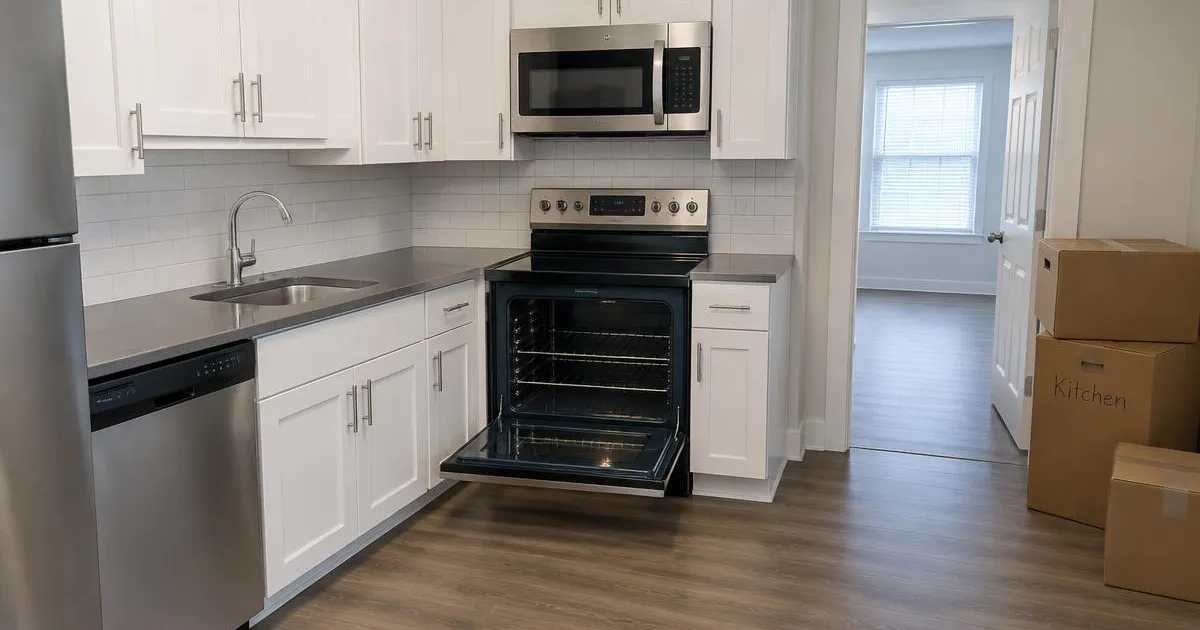
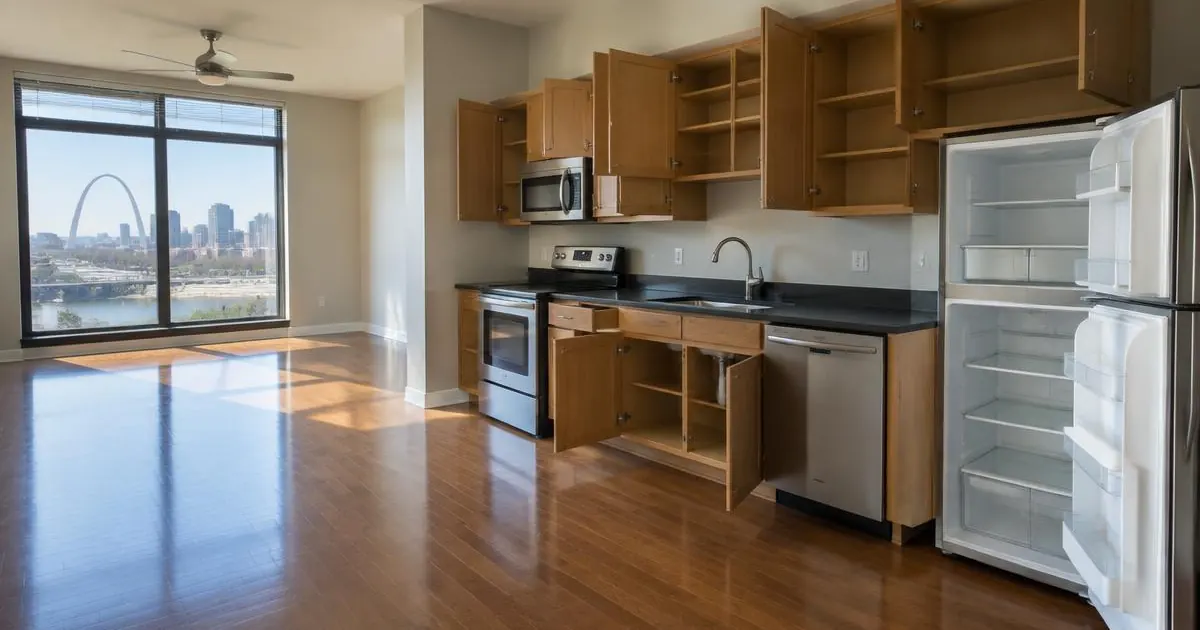
The kitchen deserves an early start because unpacking can quickly hide the very surfaces that need attention. Empty drawers and cabinets provide access to corners, shelves, handles, and door edges. Report loose hinges, damaged shelf liners, or deteriorating finishes rather than treating them as dirt.
Work from upper storage down to counters
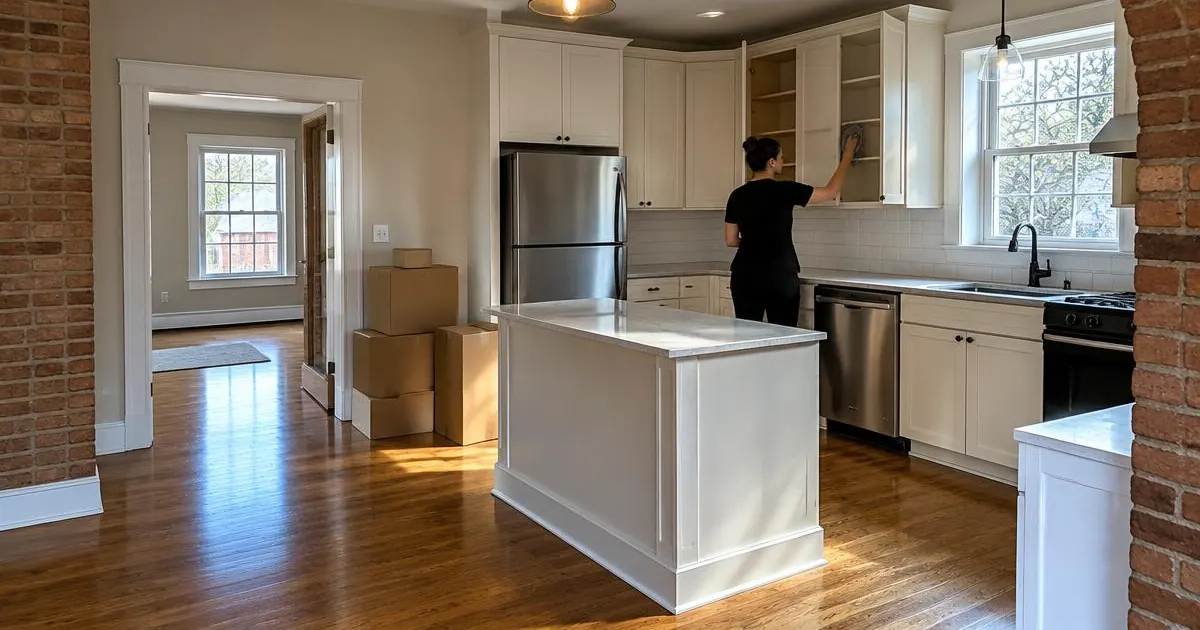
Begin with accessible upper cabinet interiors and exteriors, then move to lower cabinets and drawers. Remove loose crumbs before wiping so debris does not become a gritty paste. Use manufacturer-safe methods for the finish, avoid saturating seams, and let cleaned storage dry before putting dishes or pantry goods inside. Old liners should only be removed when that task is agreed and the underlying surface can tolerate it.
Finish food-contact areas after nearby dirty work
Clean counters, the backsplash, and sink after cabinet and appliance work that could deposit residue nearby. Avoid acids on stone, including vinegar-based approaches. If the material or finish is uncertain, ask for care instructions before proceeding. Keep one clean counter available for essentials, but leave bulk unpacking until surrounding work is complete.
Include appliance interiors without overlooking access limits
Prime Cleaning MO LLC’s Move-In/Move-Out service includes inside and outside cabinets and appliances. That distinction matters when comparing it with a deep clean: appliance interiors and cabinet interiors are optional add-ons for deep cleaning, rather than automatically included. Describe the appliances present and their condition so the request reflects the actual home.
Empty the refrigerator and remove personal items from other appliances before arrival. Share manufacturer instructions when available, especially for specialty finishes, oven coatings, and removable components. Cleaning should follow those instructions; it should not assume every part can be soaked or every oven should receive the same product.
Ask whether access behind or beneath an appliance requires moving it. Do not assume heavy appliances will be shifted or disconnected, particularly where water, gas, flooring, or anti-tip hardware could be affected. If a refrigerator has a leak or an oven has damaged parts, address the fault separately. Cleaning is not an appliance repair or restoration service.
Prepare bathrooms in a clean-to-dirty sequence
Bathrooms benefit from a deliberate route that separates ordinary soil removal from disinfection. First clear personal items and identify the materials on vanities, shower surrounds, tubs, and floors. Natural stone, plated fixtures, and coated glass may need different care, so disclose known surface requirements before products are selected.
Complete storage and washing areas before the toilet
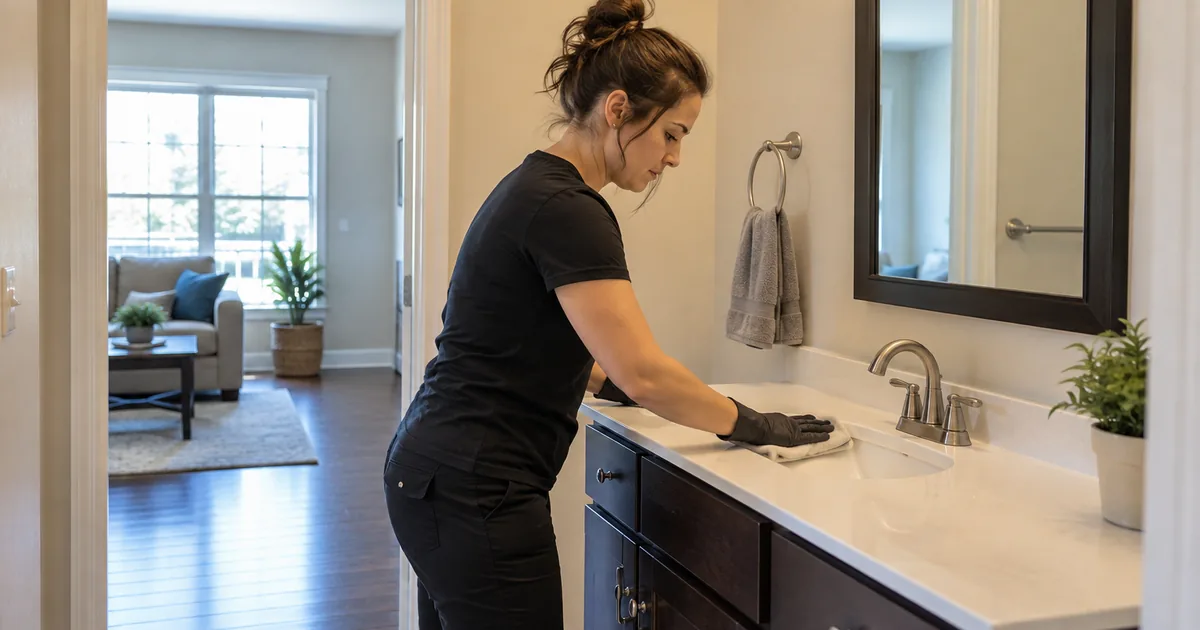
Clean accessible storage interiors and exteriors, then mirrors, vanity surfaces, sinks, and the shower or tub. Work without transferring bathroom debris into cleaned cabinets. Use separate tools for toilet work, which should come after other fixtures. Finish the floor toward the doorway, keeping shoes and moving equipment off it while it dries.
Disinfect only where appropriate
Remove soil first, then use a suitable disinfectant only where appropriate for the surface and purpose. Follow the full label contact time rather than spraying and immediately wiping dry. Never mix cleaners. Persistent staining, failed caulk, suspected mold, or damaged grout should be identified as separate concerns; routine moving service should not be described as mold removal or repair.
Protect finished rooms while completing the rest of the home
Once the kitchen and bathrooms are ready, move through remaining agreed areas from higher surfaces to lower ones. Coordinate accessible ledges, doors, trim, closets, and floors according to the confirmed scope and condition. This is a planning sequence, not a promise that every possible surface or inaccessible space is included.
Interior windows are optional for Move-In/Move-Out cleaning. They are also optional across other services except Airbnb turnovers, where that optional offering does not apply. Mention interior windows during the estimate discussion instead of assuming glass throughout the property is included. Clarify access and which surfaces the request covers.
Stage boxes in a designated area, and keep appliance doors and cabinet openings accessible until their work is finished. If movers arrive midway, decide which rooms can be handed over without undoing cleaning elsewhere. Detailing beyond a deep clean may take more than one day, so disclose unusual buildup or extensive detailing needs before coordinating possession, movers, and unpacking.
Request the right service and provide decision-ready details
For a residential estimate, explain the move direction, property size, bathroom count, occupancy, access constraints, appliance condition, and any requested extras. Photos can help describe visible conditions, but they do not replace clear scope questions. Ask what preparation is required and how any work outside the agreed scope will be discussed.
Choose Move-In/Move-Out when the included cabinet and appliance interiors match your handoff needs. If you instead request a deep clean, explicitly identify those interiors as optional add-ons. Standard/recurring cleaning is available only after an initial deep clean, not as a one-time or first-time service. The first standard/recurring quote includes that initial deep clean.
For a commercial or industrial property, or commercial post-construction work, Prime Cleaning MO LLC requires a free in-person walkthrough before pricing. Provide the business name, approximate square footage, restroom count, preferred date/time window, and onsite contact. Describe potential hazards without assuming they can be handled; hazardous work is never promised.
Inspect the handoff before unpacking hides the results
Walk through the home while cabinets, appliances, and bathroom surfaces remain visible. Review the agreed scope rather than an imagined universal checklist. Check storage corners, appliance compartments, sink edges, and the bathroom you intend to use first. Raise any concern while its location and condition can be clearly identified.
Distinguish remaining soil from permanent wear, scratched finishes, mineral etching, failed sealant, or damage. Cleaning does not guarantee the reversal of these conditions. If you are leaving, compare the agreed cleaning work with your lease or sale requirements; acceptance decisions remain with the relevant parties.
For arrival day, bring a small essentials kit and unpack only into dry, finished storage. Keep packing materials away from the clean sink and reserve a bathroom from box storage. Record any unresolved maintenance items separately so they do not become confused with cleaning requests. A clear handoff makes the next step straightforward: groceries into the refrigerator, dishes into cabinets, and boxes into their assigned rooms.