Move-In/Move-Out
Move In Move Out Cleaning University City: Inherited Furniture and Unknown Finishes
A practical guide to cleaning between occupants without guessing at inherited furniture finishes, appliance requirements, or the scope of your move clean.
move in move out cleaning University City: Inherited Furniture and Unknown Finishes
The most useful starting point for move in move out cleaning University City is not a bottle of cleaner; it is knowing what will remain when the keys change hands. An inherited dining table, a full pantry, or an appliance left with food inside can change the work. Before booking with Prime Cleaning MO LLC, separate what is leaving, what stays, and what nobody has decided about yet.
Plan cleaning around actual access rather than an assumed empty home. Ask when the outgoing occupant will finish, whether utilities will be working, and when boxes or furniture will arrive. If those events overlap, identify rooms that can stay clear. Cleaning an accessible bedroom first may be sensible, but putting unpacked boxes across a kitchen floor can prevent the agreed kitchen work.
Document access instructions, parking or loading restrictions, and who can approve decisions. In a University City apartment or shared building, confirm any entry requirements with the property contact instead of assuming the cleaner can collect keys or enter unattended.
Define what stays before anyone starts cleaning
Make a simple room-by-room inventory of inherited furniture and belongings. Label each item as staying, leaving, or awaiting a decision, using tags that will not damage its finish. Photograph existing scratches, water rings, loose veneer, and broken hardware. Those records help distinguish preexisting conditions from cleaning concerns without implying that cleaning will repair them.
Ask who owns each remaining item and who has authority to approve cleaning it. A dresser included with the property is different from a previous tenant’s abandoned belongings. Do not authorize disposal based on appearance alone. Arrange removal separately when needed, and tell the cleaning team which possessions must remain untouched.
Scope questions should be specific: Are drawers empty? May doors be opened? Is the underside accessible? Will someone move the bookcase before cleaning? If a heavy cabinet stays against the wall, describe the accessible areas rather than expecting cleaning behind it. Do not assume furniture moving, upholstery cleaning, or repairs are included.
Explore our move-in/move-out service and cleaning in University City, MO for property-specific information.
Treat inherited furniture as a separate scope decision
Inherited furniture can be useful, but it should not automatically receive the same treatment as a kitchen counter. Tell the team about pieces that need attention, and establish whether their accessible surfaces fit the agreed scope. Two decisions are especially important.
Separate surface soil from damage
Dust, loose crumbs, and fingerprints are cleaning issues; lifting veneer, cracked leather, and worn varnish are condition issues. If a table has a cloudy patch, avoid assuming that stronger chemistry will remove it. Ask for a cautious assessment and accept that the mark may remain. Cleaning should not become an unapproved attempt at refinishing or restoration.
Set boundaries for fabric and enclosed storage
Check whether inherited furniture contains bedding, papers, or personal items before authorizing drawer or shelf cleaning. For upholstered pieces with unknown odors, staining, or signs of pests, pause and seek an appropriate specialist’s assessment. Do not assume ordinary move cleaning includes fabric extraction or pest treatment. Keep uncertain pieces away from unpacked linens until their condition is understood.
Identify unknown finishes before choosing products
A surface that looks like stone may be composite; a wood-look cabinet may have a thin laminate facing. Gather any product labels, care instructions, or information from the owner before cleaning begins. When the finish remains unknown, explain that uncertainty and request a conservative approach rather than guessing from color or texture.
Use manufacturer-safe surface care wherever instructions are available. Test a suitable product in an inconspicuous area when appropriate, avoid soaking seams, and stop if color transfers or the finish changes. Avoid acids on stone. Abrasive pads can also alter glossy surfaces, so dried residue should not automatically trigger scrubbing.
Never mix cleaners, including products left behind by previous occupants. Keep unlabeled liquids out of use. Disinfect only when appropriate, using a product suitable for the surface and allowing the full label contact time. If a surface cannot tolerate the required treatment, ask about a safer alternative rather than promising disinfection that the method cannot support.
Confirm cabinet and appliance interiors explicitly
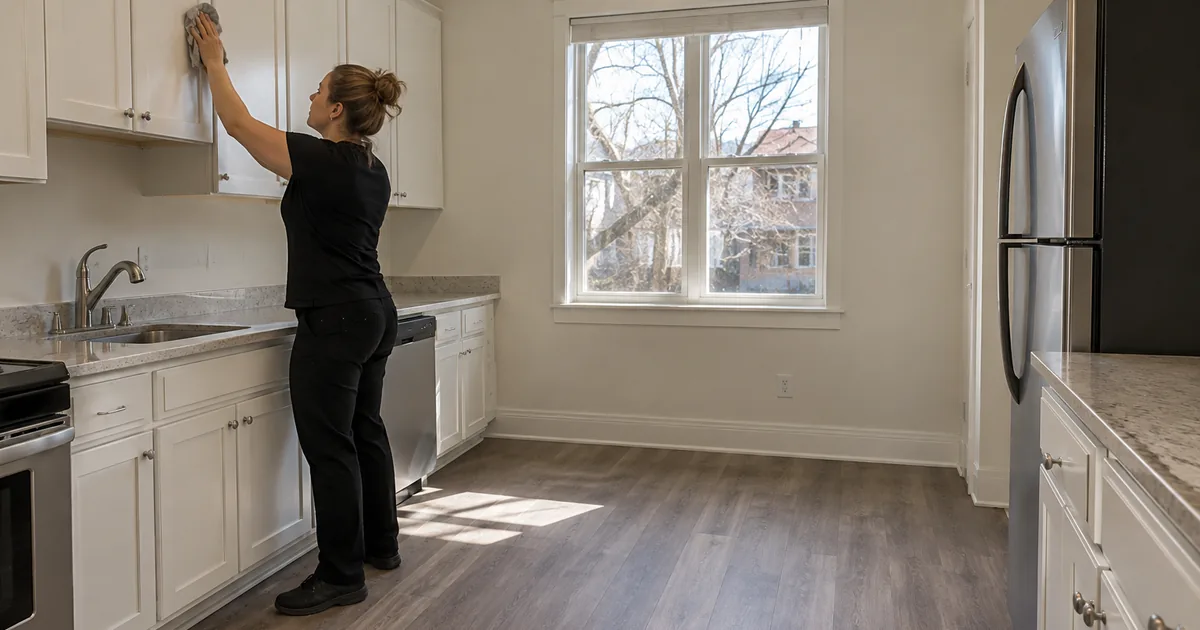
Prime Cleaning MO LLC’s Move-In/Move-Out service includes inside and outside cabinets and appliances. That distinction matters when comparing services: appliance interiors and inside cabinets are optional add-ons for a deep clean. Tell the team you are arranging a move clean, and identify the appliances and storage areas present so the quote reflects the property.
Empty cabinets, drawers, and the refrigerator before the visit unless another arrangement has been confirmed. Ask who will remove leftover food and household goods. Report stuck drawers, damaged shelving, unusual oven liners, and appliances that do not function. Discuss whether an appliance needs to be switched off and follow its manufacturer’s instructions; do not disconnect gas or electrical connections just to create access.
For example, an empty refrigerator with intact shelves presents a different scope from one containing spoiled food and a broken drawer. Explain those conditions before arrival. Confirm access behind or beneath appliances separately, and do not assume the team will move connected or heavy equipment.
Sequence the clean around boxes and handover
Use a practical sequence: remove unwanted possessions, finish disruptive work, complete the agreed cleaning, and then bring in boxes where possible. If everything cannot happen in that order, reserve clear zones and explain the compromise. A kitchen can be cleaned before unpacking only if counters, cabinet interiors, and the floor remain accessible.
At handover, walk through the property with the inventory and scope in mind. Check accessible cabinet shelves, appliance interiors, bathroom surfaces, and floor edges rather than judging the whole visit by a lingering stain on an inherited table. Note areas that were blocked, finishes that required caution, and any work intentionally excluded.
Ask about detailing beyond a deep clean before setting your moving schedule; that level of work may take more than one day. If keys arrive late or movers block access, communicate promptly and discuss priorities. Avoid treating a limited access window as permission to rush surface care or skip required product contact times.
Choose the right service and add-ons
Keep the booking tied to the property’s use and condition. Move-In/Move-Out addresses the transition between occupants, including cabinet and appliance interiors and exteriors. Deep cleaning has different boundaries, with appliance interiors and inside cabinets available as optional add-ons. Interior windows are optional across services except Airbnb turnovers; do not assume they are included in a residential move quote.
Standard or recurring cleaning is available only after an initial deep clean, not as a first-time or one-time service. The first standard or recurring quote includes that initial deep clean. If you want ongoing upkeep after settling in, ask how the required starting service fits your plans rather than assuming a move clean automatically meets that requirement.
For a commercial or industrial relocation, or commercial post-construction cleaning, a free in-person walkthrough is required before pricing. Provide the business name, approximate square footage, restroom count, preferred date/time window, and onsite contact. Disclose unusual residues or hazards; hazardous work is never promised.
Send a booking brief that prevents assumptions
Before requesting your quote, send a concise brief: property type, rooms, bathrooms, expected occupancy during cleaning, key access, and the date/time window you are considering. Add photographs of inherited furniture, unidentified finishes, appliance conditions, and any areas that will remain blocked. Photos help communicate conditions, but they do not replace an assessment when one is required.
Finish with your decisions and open questions. For example: “The dining table stays, its finish is unknown, and its damaged corner should remain untouched. Cabinets will be empty. Please confirm interior-window options and whether the refrigerator shelves can be cleaned safely.” Ask Prime Cleaning MO LLC to confirm inclusions, exclusions, access requirements, and unresolved items. A clear agreement helps you decide what to unpack first and what still needs attention without mistaking cleaning for repairs.