Move-In/Move-Out
Move In Move Out Cleaning Webster Groves: Protecting Older Finishes
A useful moving clean starts with access, an agreed scope, and a plan for delicate surfaces. Here is how to prepare older finishes without creating avoidable damage.
move in move out cleaning Webster Groves: Protecting Older Finishes
Planning move in move out cleaning Webster Groves starts with a practical question: when will the home be accessible, empty enough to clean, and free from moving traffic? In an older home, that window also creates an opportunity to identify delicate finishes before anyone reaches for a scrub pad. The goal is to remove accumulated soil without treating aged wood, stone, or painted surfaces as though they were new.
For Prime Cleaning MO LLC, describe whether you are leaving, arriving, or coordinating both sides of a move. Confirm who authorizes entry, whether utilities will be operating, and which rooms will still contain belongings. Explain any lease or sale-related cleaning requirements without assuming cleaning guarantees acceptance.
Choose an order that limits repeated work: finish dusty repairs, remove belongings, complete the agreed cleaning, then bring in boxes. If that order is impossible, identify rooms that can be released individually and keep a clear route between the entrance and active work areas.
Identify older finishes before choosing cleaning methods
Age alone does not tell you how to clean a surface. A recently refinished wood floor and an older floor with worn coating can look similar but respond differently to moisture. Before the visit, point out peeling paint, loose veneer, damaged grout, cloudy coatings, and any areas that already feel sticky or fragile. Share product instructions or refinishing records when available.
Distinguish removable soil from existing wear
Darkened cabinet edges might be cooking residue, worn stain, or both. A dull patch on stone may be etching rather than dirt. Cleaning should not be described as restoration, and extra scrubbing is not a reliable answer to an uncertain mark. Ask which areas can be cleaned safely and which should be left alone pending specialist advice.
Use the least aggressive suitable approach
Follow manufacturer guidance where available and test an appropriate method in an inconspicuous spot. Avoid acids on stone, limit moisture around vulnerable wood joints, and avoid abrasive tools on uncertain coatings. If finish color transfers or a coating changes, stop rather than escalating the treatment.
Explore our move-in/move-out service and cleaning in Webster Groves, MO for property-specific information.
Define the moving scope before packing the last box
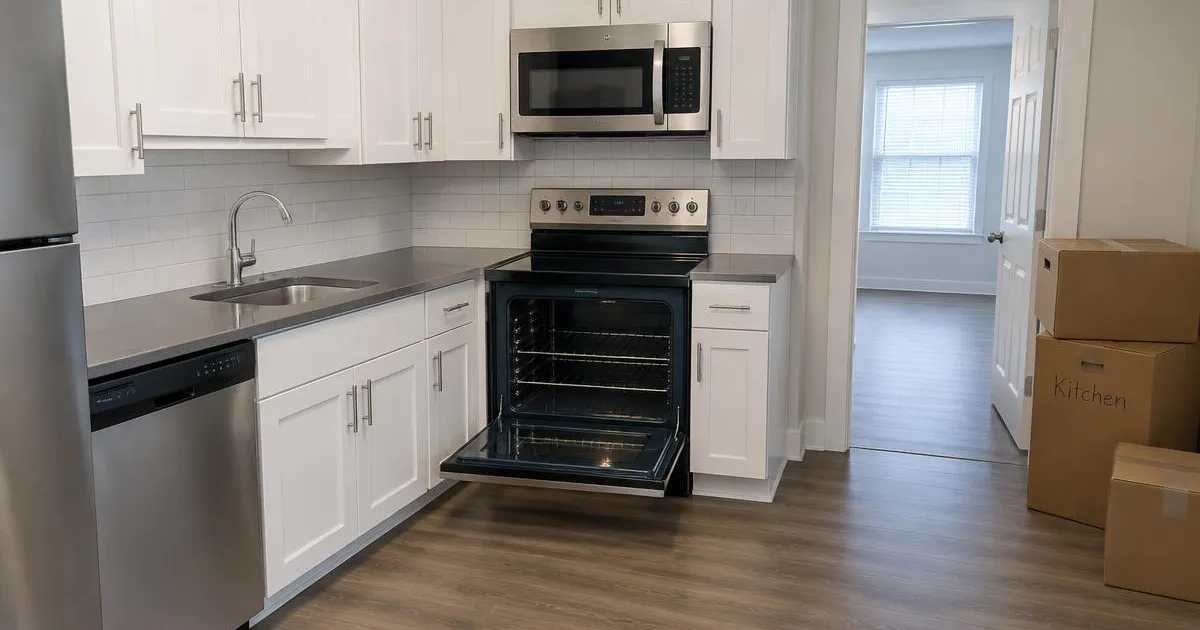
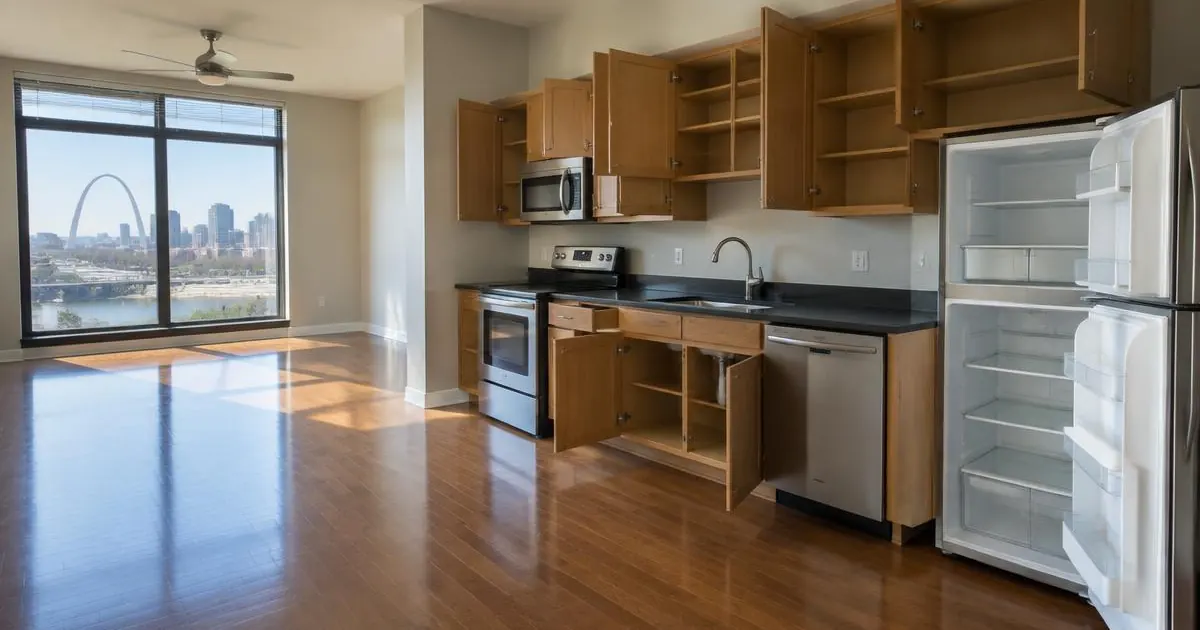
Prime Cleaning MO LLC's Move-In/Move-Out service includes inside and outside cabinets and appliances. Make those interiors accessible: empty cabinet shelves, drawers, refrigerator compartments, and appliance storage areas before the agreed appointment. Discuss any item that cannot be emptied so the quote and access plan reflect the actual situation.
The service category matters. With deep cleaning, appliance interiors and inside cabinets are optional add-ons rather than automatic inclusions. Interior windows are optional across services except Airbnb turnovers, where that optional add-on does not apply. Ask about glass, tracks, screens, and difficult access separately instead of assuming that “windows” includes every component.
Create a short list of priorities and exclusions. Is the oven ready for interior cleaning? Are refrigerator shelves removable under the manufacturer's instructions? Are closet shelves clear? Does a utility room contain belongings that must remain untouched? Confirm the agreed areas rather than relying on a supposed universal checklist. Photograph pre-existing damage and flag fragile fittings before work begins.
Prepare kitchens without damaging cabinetry or appliances
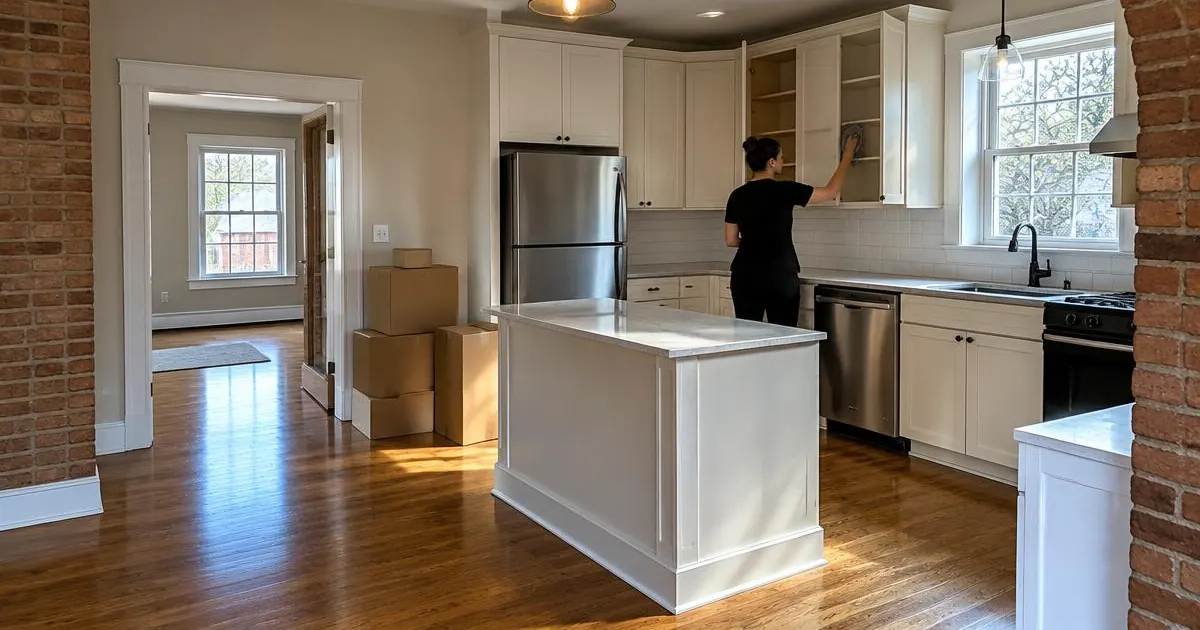
Older kitchens often combine several materials: painted doors, stained frames, metal pulls, laminate shelves, and replacement countertops. Each needs suitable care. Before cleaning, remove shelf paper only if it lifts readily and removal is authorized. Adhesive residue on fragile finishes needs a separate discussion; scraping or saturating it can create damage.
Make appliance access a deliberate decision
Empty the refrigerator and freezer and arrange food storage elsewhere. Share instructions for specialty appliances and identify any loose seals, cracked shelves, or damaged coatings. Do not assume an appliance will be pulled out: moving it may affect flooring, water lines, gas connections, or electrical connections. Confirm safe access and any responsibility for disconnection beforehand.
Protect edges, joints, and hardware
Cabinet interiors should be cleared of crumbs and residue using methods suited to their material, without leaving moisture in seams. Report loose hinges instead of forcing doors. For an older painted cabinet, a remaining stain may be preferable to removing the finish in pursuit of a uniform appearance.
Handle bathrooms, floors, and touchpoints with restraint
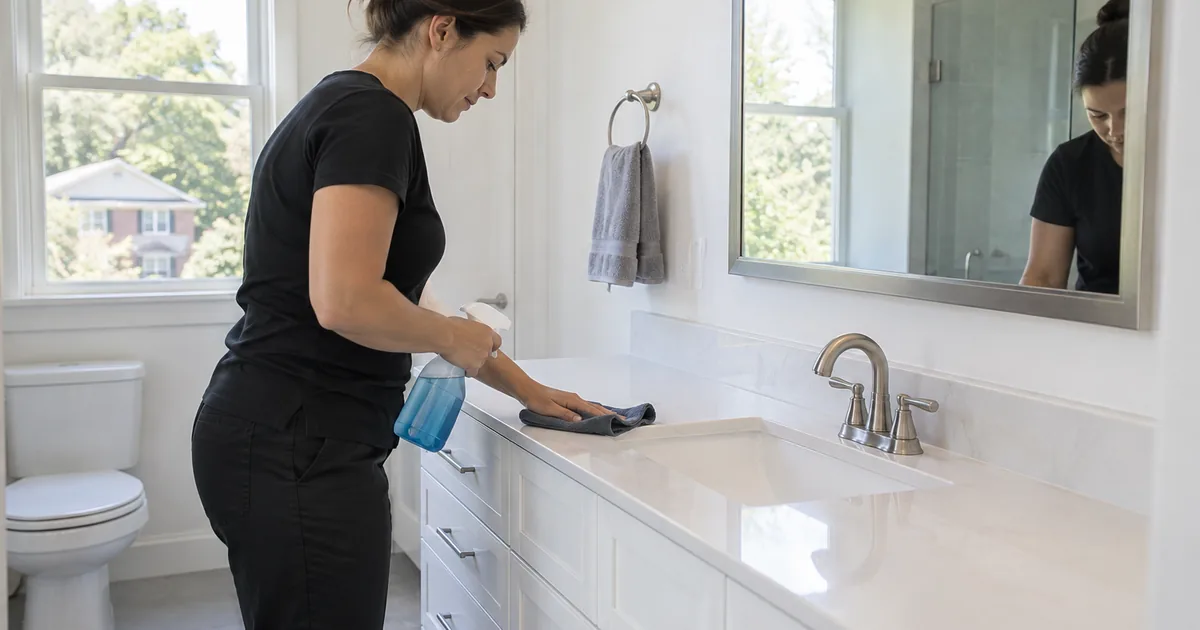
Bathroom buildup can invite aggressive treatment, but natural stone, worn enamel, plated fixtures, and aging grout require different choices. Tell the team about known materials and previous damage. Avoid acids on stone, and do not assume a product suitable for a ceramic basin is suitable for the surrounding counter or metal faucet.
Never mix cleaners. If disinfection is appropriate, the surface and product must be compatible, and the full label contact time must be followed. A quick spray and immediate wipe should not be represented as disinfection. Routine soil removal and targeted disinfection are different tasks, so clarify the objective rather than asking for every surface to be treated alike.
On floors, clear grit before damp cleaning and use manufacturer-safe methods. Limit moisture on vulnerable wood and avoid dragging furniture across the finish. If movers will return afterward, arrange suitable floor protection without attaching tape directly to delicate coatings. Report suspected mold or unknown substances; do not assume ordinary cleaning includes mold removal or hazardous waste handling.
Choose priorities when the move cannot pause
When keys, movers, and deliveries overlap, prioritize by what will become inaccessible first. For example, if kitchen boxes arrive before furniture, empty cabinet interiors and appliance interiors deserve early attention. If beds arrive first, prioritize bedroom floors and accessible baseboards before those areas are blocked. This is sequencing, not a reason to promise the same result under every access condition.
Keep packed boxes out of rooms assigned for cleaning, and label anything that must not be moved. Designate one person to answer scope questions so conflicting instructions do not interrupt the work. Share the moving schedule as a date and time window rather than asking the cleaner to infer access from a delivery estimate.
Heavy buildup, intricate trim, or detailing beyond deep cleaning may take more than one day. Discuss that possibility before committing to a handoff arrangement. If the available window is limited, agree on priorities and deferred work explicitly instead of expecting rushed treatment of fragile surfaces.
Request a quote with information that changes the plan
For a residential moving quote, provide the address, approximate square footage, bathroom count, occupancy status, preferred date window, and access arrangements. Describe condition plainly: grease inside the oven, belongings remaining in cabinets, worn floor coating, or debris left after repairs. Clear photographs can help explain concerns, but they do not establish material compatibility or reveal every access problem.
Ask whether the requested work belongs under Move-In/Move-Out, deep cleaning, or a different scope. Mention interior windows if wanted. If you want ongoing maintenance after settling in, standard/recurring service is available only after an initial deep clean; it is not a one-time or first-time service. The first standard/recurring quote includes that initial deep clean.
Commercial/industrial work and commercial post-construction cleaning require a free in-person walkthrough before pricing. Supply the business name, approximate square footage, restroom count, date/time window, and onsite contact. A business relocation should not be priced as an ordinary residential move, and hazardous work should never be assumed or promised.
Finish with a practical handoff and care notes
Arrange a final review around the agreed scope, not an expectation that every old mark will disappear. Check accessible cabinet and appliance interiors, floors, and the specific concerns raised before cleaning. Compare any questionable area with your earlier photographs. Distinguish missed soil from scratches, worn coatings, discoloration, or damage that cleaning cannot correct.
Record areas intentionally avoided because of unstable finishes, unsafe access, or unresolved material questions. If further detailing is requested, discuss whether it is appropriate and how it affects the scope. Do not press for stronger chemicals merely because a mark remains.
For move-in, unpack only after surfaces are ready for use and any product directions have been satisfied. Keep initial unpacking traffic controlled so grit does not spread across freshly cleaned floors. For move-out, secure the property according to the handoff instructions. Keep your scope confirmation and condition photos with your moving records; cleaning documentation is useful, but it does not guarantee a deposit return or inspection outcome.