Commercial & Janitorial
Office Cleaning Checklist for St. Louis Businesses
A useful office cleaning checklist describes the work, the location, and the frequency. Build a plan that reflects your workplace rather than copying a generic list that overlooks access and responsibility.
Build the checklist around how your office operates
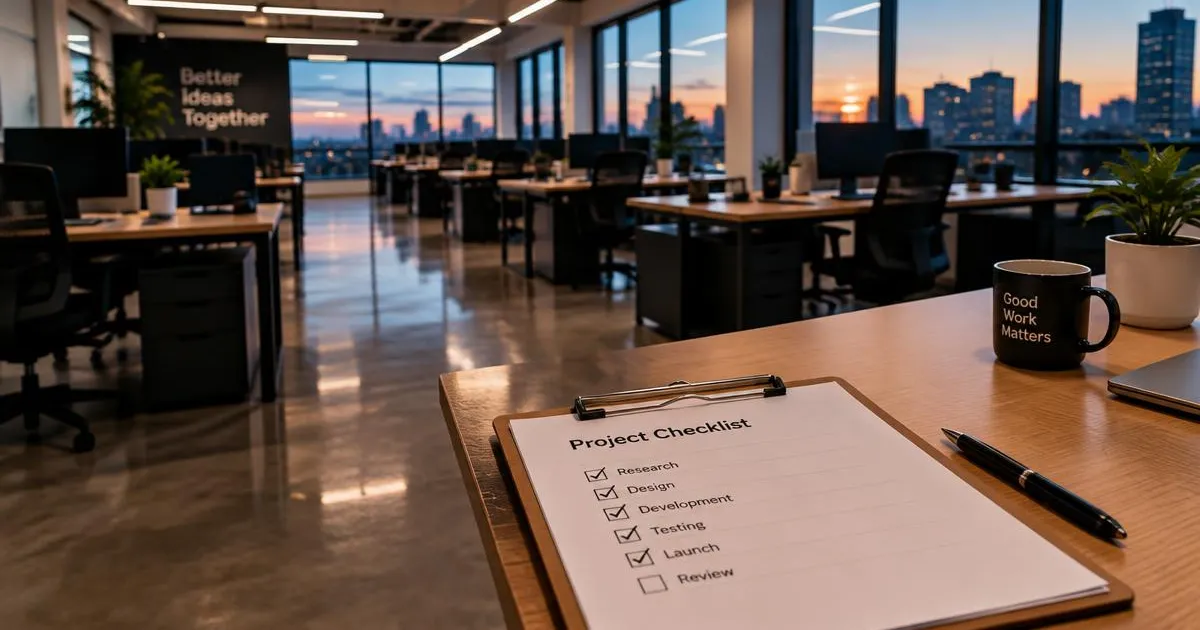
An office cleaning checklist for a St. Louis business should reflect the way people use the space. Start with a room inventory: reception, workstations, meeting rooms, restrooms, breakrooms, corridors, and any restricted areas. Note typical occupancy, visitor traffic, and whether employees attend every day or follow a hybrid schedule. These details help distinguish a continuously used restroom from a conference room that sits empty for much of the week. A checklist becomes useful when it describes the actual workplace, not simply every task someone might perform in an office.
For each area, record the task, frequency, access rule, and responsible party. Keep facilities duties separate from cleaning duties so repairs, supply purchasing, and office administration are not quietly assigned to the cleaning team. Prime Cleaning MO LLC provides commercial pricing after a free in-person walkthrough. Use that visit to review conditions and agree on the starting scope. Standard and recurring service begin only after an initial deep clean. The Commercial Cleaning and Quote pages provide a starting point for discussing the facility and arranging that assessment.
Reception, entrances, and circulation areas
For reception and entrances, list accessible floor care, entry mat attention, reachable surfaces, and waste containers that belong in the scope. Identify the materials involved so the method can be appropriate for the floor and furnishings. In St. Louis, wet weather can bring tracked-in soil to entry areas; adjust the discussion to what your building actually experiences rather than assuming a seasonal schedule will suit every site. Note whether the entrance remains open to visitors during cleaning and how wet areas will be managed without obstructing the required passage.
For corridors and common routes, specify which floors, reachable ledges, and shared touchpoints are included. Do not write simply clean all common areas if that phrase could include stairwells, elevator interiors, or spaces maintained by a landlord. Confirm the boundary between your suite and building-managed areas. Where staff belongings or deliveries tend to accumulate, assign someone internally to clear the route before service. Cleaning personnel should not have to decide which package can be moved, where a delivery belongs, or whether a stack of materials is awaiting disposal or collection.
Explore our commercial & janitorial service and cleaning in St. Louis, MO for property-specific information.
Workstations and meeting rooms
At workstations, define what a cleared desk means and which accessible surfaces may be wiped. State whether employees need to remove papers, personal items, and confidential material before service. Avoid instructions that invite cleaners to sort documents or move sensitive equipment. Computers, monitors, phones, and other electronics may have care requirements; confirm exactly what handling, if any, is authorized. A useful checklist identifies the permitted work rather than relying on an instruction to clean every desk, which can mean very different things to staff and the cleaning team.
For meeting rooms, consider tables, accessible chair surfaces, waste containers, and floors. Ask staff to remove food, cups, meeting materials, and confidential notes according to your internal procedures. Clarify whether writing boards are to remain untouched; erasing a board may remove information someone still needs. Room scheduling and technology setup are separate responsibilities unless specifically agreed. If rooms are frequently occupied after normal hours, include an access sequence or alternative plan. A cleaner should know whether to return later, skip a locked room, or contact the designated representative rather than interrupt a meeting.
Restrooms and shared hygiene areas
Restroom checklists should identify toilets, sinks, fixtures, mirrors, accessible counters, waste containers, and floors according to the agreed service. Include attention to visible soil and appropriate cleaning methods without promising a sterile environment. Cleaning and disinfecting are not interchangeable terms; where disinfection is specified, products must be suitable for the surface and used according to their label directions, including required contact time. Describe the intended tasks accurately rather than adding an unsupported claim that a visit will eliminate every germ or prevent workplace illness.
Assign restocking responsibilities
Decide who supplies and replenishes soap, paper products, liners, and other consumables. Restocking is not the same as purchasing, and a checklist should make that distinction explicit. Include a way to report leaks, empty dispensers, damaged fixtures, or other issues without turning cleaning personnel into the repair team. If the business stays occupied during service, arrange a practical sequence that preserves appropriate restroom access. Frequency should reflect use and observed conditions. A lightly occupied suite and a busy visitor-facing office may need different arrangements even when each contains the same number of fixtures.
Breakrooms and shared kitchen spaces
List the accessible counters, sinks, tables, appliance exteriors, waste containers, and floors included in breakroom care. Confirm any work involving appliance interiors separately rather than assuming it follows from a general kitchen entry. Food storage, employee dishes, and personal lunch containers need an internal policy. The cleaning team should not decide which food is abandoned or whether a container may be discarded. If the sink is regularly full, assign staff responsibilities before service so the fixtures and surrounding surfaces can be reached without an unresolved dishwashing task blocking the planned work.
Pay attention to the boundary between ordinary soil and a maintenance issue. A spill can be cleaned within scope, but a leaking appliance or damaged seal should be reported to the appropriate business contact. Specify waste and recycling streams according to your building’s actual arrangements. Do not assume that every container can be combined or that cleaners will sort mixed waste by hand. Keep instructions visible to employees and consistent with the service agreement. A breakroom checklist works best when daily staff habits support the cleaning plan instead of repeatedly creating uncertainty about food, belongings, and disposal.
Floors, detail work, and optional tasks
Identify flooring by area and agree on suitable routine care for accessible surfaces. Vacuuming carpet and mopping appropriate hard floors are different from deep extraction, refinishing, or specialist restoration. Do not include a broad phrase such as restore floors unless a specific service has been assessed and agreed. Note furniture that remains in place, items that must not be moved, and any surface care instructions from the manufacturer or building manager. If damage or persistent staining is present, document it so expectations distinguish ordinary cleaning from repair or restoration work.
Create a separate line for occasional detail tasks and add-ons. Interior window cleaning is optional for commercial service, not an automatic part of a general office checklist. Identify the intended windows, access conditions, and any restrictions. High-level work, specialist surfaces, and other unusual tasks need assessment rather than a blanket instruction to clean everything overhead. Separating these items makes the routine checklist easier to follow and helps prevent periodic tasks from being overlooked or mistakenly expected at every visit. Discuss the timing and scope during the free in-person walkthrough before commercial pricing is provided.
Access, security, and exceptions
Write access instructions separately from the public task checklist. Identify the authorized contact, approved arrival arrangements, alarm procedure, and method for securing the property after service. Share sensitive codes or key details only through the agreed private channel. State which rooms are restricted and what to do when a scheduled space is locked or occupied. Cleaners should not be expected to infer permission from an open door or to work around confidential material without guidance. A clear exception process is as important as the normal sequence of tasks.
Identify situations that require work to stop and a supervisor or business contact to be notified, such as an unknown spill, damaged equipment, or a condition outside the agreed service. General office cleaning should not be assumed to include hazardous remediation, clinical instrument processing, or specialist industrial cleanup. Keep emergency arrangements consistent with your building procedures. If contractors, deliveries, or late-working employees will be present, tell the cleaning company in advance. The checklist needs to work under real conditions, including the nights when the office is not as empty or accessible as originally expected.
Review completion and update the checklist
Use clear completion notes rather than an undifferentiated box marked office cleaned. Record when an included task could not be completed and why, such as a locked room or a counter covered with documents. Review recurring exceptions with the business contact so the underlying access issue can be resolved. When assessing quality, compare results with the agreed scope and frequency. A task scheduled periodically should not be treated as missing from every routine visit, while a frequently blocked task may need a change in staff preparation or service sequencing.
Revisit the plan when occupancy, room use, furnishings, or building rules change. A new team, expanded breakroom, or different visitor pattern can make an old checklist less useful. To discuss office service with Prime Cleaning MO LLC, prepare the business address, approximate size, restroom count, access needs, and desired schedule, then call (314) 274-6907 or use the Quote page. Commercial pricing follows a free in-person walkthrough. Confirm the initial deep clean and subsequent maintenance scope together so your checklist reflects the service actually approved, not a generic template that no longer matches the workplace.