Airbnb/Vacation Rental
Vacation Rental Cleaning Crestwood: Turnovers Versus Periodic Deep Cleaning
A practical host handoff plan that separates guest-ready cleaning from periodic detail work, so laundry, access and deeper maintenance receive clear decisions.
vacation rental cleaning Crestwood: Turnovers Versus Periodic Deep Cleaning
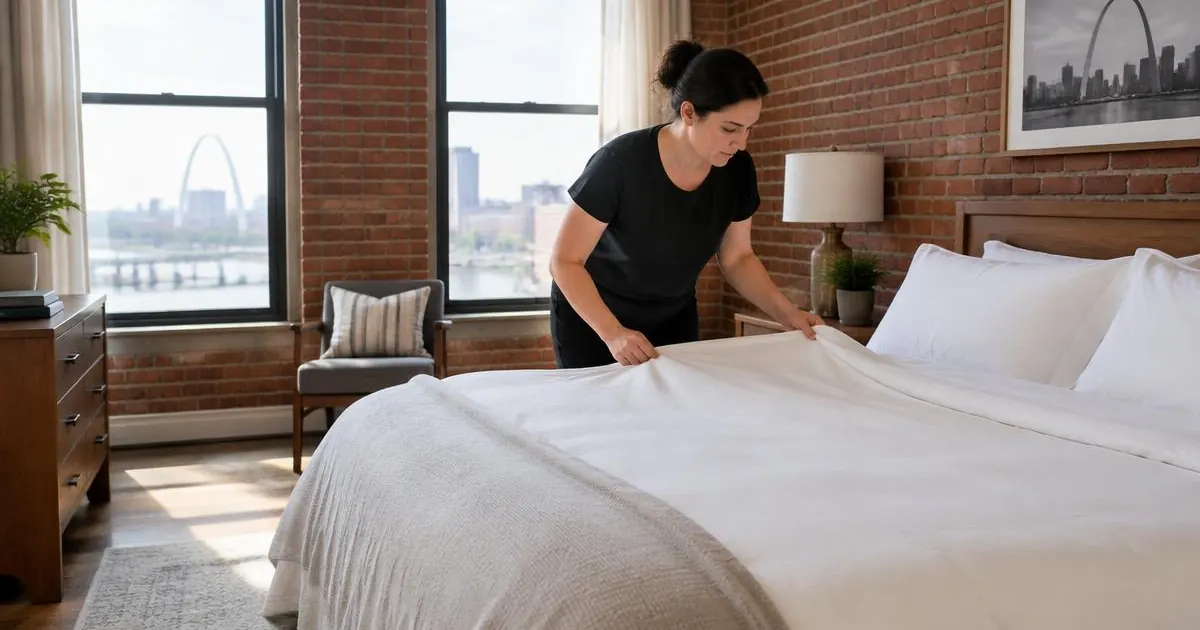
Effective vacation rental cleaning Crestwood starts with separating two different jobs: preparing the property for its next guest and addressing buildup that ordinary turnovers cannot reliably absorb. For a Crestwood host, confusing those jobs creates awkward decisions between checkout and arrival. This guide from Prime Cleaning MO Team explains how to build a handoff plan with Prime Cleaning MO LLC that identifies routine needs, schedules deeper work separately and leaves approvals with the host.
A turnover focuses on the condition needed for the next stay within an agreed scope. Periodic deep cleaning addresses accumulated soil and less frequently reached areas. Neither should silently expand into the other. Deep cleaning is not automatically required before Airbnb turnover service; the property's condition and requested work determine the appropriate scope.
Keep two written task lists rather than one oversized list. Assign each item to a guest turnover, a separately scheduled deep clean or a host-managed maintenance task. This makes omissions and approval needs easier to spot.
Start intake with the information that changes the scope
Begin with bedrooms, bathrooms, square footage, approximate bookings and whether laundry is needed. Add bed configurations, regularly used sleeping spaces and the surfaces that need special care. These details help distinguish a compact property with frequent bed changes from a larger home where less-used rooms still collect dust.
Then ask condition questions: When were baseboards and other detail areas last addressed? Is there persistent grease around the cooking area? Are bathroom deposits accumulating despite routine cleaning? Which areas have been inaccessible during recent turnovers? Describe observable conditions rather than simply requesting a property to be 'extra clean.' Photographs can help explain concerns, but access and scope still need confirmation.
Provide the next checkout and arrival windows, plus any vacant dates suitable for deeper work. If the booking gap only accommodates the agreed turnover, request a separate deep-clean plan rather than assuming the additional work fits. Confirm what needs attention now, what can wait and who approves changes.
Explore our airbnb/vacation rental service and cleaning in Crestwood, MO for property-specific information.
Draw a practical boundary between turnover and deep cleaning
Define the next-guest preparation scope
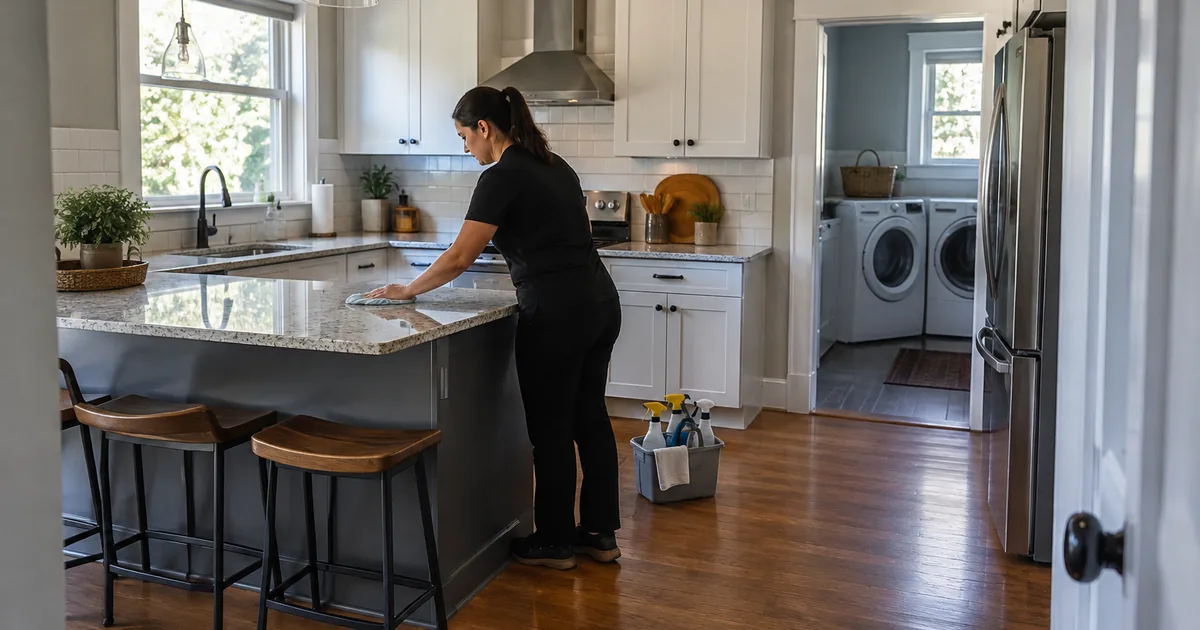
Discuss the kitchen, bathrooms, floors, accessible surfaces, trash and bed preparation needed between guests. Confirm the actual tasks instead of treating a sample list as a universal checklist. A lightly used oven does not automatically require interior cleaning at every departure, while fresh food spills need a specific decision. Tell the cleaner about changed conditions before relying on the original scope.
Include a stopping point: if the property differs materially from its intake description, identify who can authorize extra work. That prevents a turnover from quietly becoming a deep-clean appointment.
Reserve accumulated buildup for a separate visit
Use periodic deep cleaning for agreed detail work beyond ordinary guest preparation, such as accumulated grime along edges or neglected reachable surfaces. Appliance interiors and inside cabinets are optional deep-clean add-ons, so name them when requesting the quote.
For example, routine cooking residue on an accessible counter belongs in the turnover discussion; substantial oven-interior buildup calls for a separately scoped add-on. Detailing beyond deep cleaning may take more than one day, so avoid attaching it to an unverified arrival window.
Set deep-clean triggers instead of guessing a fixed interval
Booking frequency alone cannot determine a useful deep-clean schedule. Consider stay length, cooking activity, occupancy, surface materials and whether turnover visits repeatedly encounter the same buildup. A longer stay with frequent cooking may create different detail needs from several short stays with little kitchen use.
Create a short observation log for the host to review. If reporting is requested and agreed, entries might identify recurring bathroom deposits, dust along accessible edges or grease collecting outside the routine kitchen scope. Record the location, visible condition and proposed next step. Do not treat every observation as authorization to clean it.
Choose a review point based on actual use, then reserve a vacant period when the evidence supports deeper work. For example, repeated grease buildup despite agreed turnover care suggests revisiting the kitchen scope. An isolated spill does not by itself establish a recurring deep-clean need. Reassess after the visit to see whether the chosen scope addressed the observed problem.
Keep laundry and supply work from consuming detail time
Laundry can compete directly with cleaning time, especially when onsite machines limit the number of loads. Confirm whether laundry is requested, where it will happen, which items are included and who handles anything that cannot be finished within the agreed visit. Do not assume washing, drying, folding or bed-making arrangements are automatic inclusions.
Discuss linen inventory separately from laundering. Base spare-linen decisions on the number and sizes of beds, expected changes and actual laundry capacity rather than a fixed spare-set rule. Ask who checks condition, who approves replacement and where usable linens are stored. A deep-clean appointment should not become an unplanned linen-sorting session.
Restocking also needs an explicit agreement: identify products, storage locations, quantities to place and responsibility for purchasing. If a supply shortage or laundry delay threatens the handoff, establish how the host will be notified. These decisions protect the distinction between preparing rooms and completing separately approved detail work.
Schedule deeper work with lawful access and clear limits
Give each appointment its own purpose, date and access window. Confirm checkout, expected arrival, lawful entry instructions and the host's authorization to access the property. Establish what happens if guests remain onsite or access fails; a scheduled visit is not a guarantee of same-day turnaround.
For a periodic deep clean, ask whether rooms will be vacant and whether approved add-on areas will be accessible. Inside-cabinet cleaning may require the host to arrange for contents to be removed. Do not assume cleaners may move guest belongings, open personal storage or discard items. Any handling of guest belongings requires permission.
Separate maintenance and safety concerns from cleaning requests. Suspected pests, mold, biohazards or bodily fluids should be flagged for the host's assessment and appropriate professional help, not treated as promised cleaning work. If a concern affects access or the agreed scope, resolve that question before proceeding with the affected area. Leave scheduling room for those decisions rather than assuming every issue can be absorbed.
Make the handoff distinguish completion from future work
Agree on handoff details before the visit: recipient, communication method and which information is needed. Reports and damage photos must be discussed and confirmed rather than assumed. If photos are authorized, define the areas to document and avoid unnecessary images of personal information or guest possessions.
Keep the handoff concise but actionable. Distinguish completed agreed work, work not completed and observations for a future appointment. For example: the agreed bathroom turnover tasks were completed; a persistent deposit was observed; the host needs to decide whether to include it in a periodic deep-clean request. An observation is not a diagnosis or a promise of removal.
Surface care belongs in the scope discussion too. Identify stone, specialty finishes and manufacturer instructions. Use manufacturer-safe methods, never mix cleaners and avoid acids on stone. Disinfection should occur only when appropriate, with the full product-label contact time. Stronger products are not a substitute for sufficient time or a correctly scoped detail visit.
Request the right service without blending different packages
When contacting Prime Cleaning MO LLC, request the Airbnb turnover scope and periodic deep-clean scope separately. State which appliance interiors or cabinet interiors you want quoted as optional deep-clean add-ons. Keep the distinction visible in the booking discussion so neither appointment depends on unstated extras.
Do not substitute standard/recurring service terminology for an Airbnb turnover request. Standard/recurring cleaning is available only after an initial deep clean, and the first standard/recurring quote includes that deep clean. That policy does not mean an Airbnb property must receive a deep clean before turnover service.
Likewise, a move-in/move-out service has a different scope: it includes inside and outside cabinets and appliances. It should not be used as shorthand for an ordinary guest departure. Finish the host plan by confirming the chosen service, approved extras, access, laundry, supplies, scheduling and handoff arrangements. The result is a usable division of responsibilities rather than an expectation that every booking includes every cleaning task.