Airbnb/Vacation Rental
Vacation Rental Cleaning Fenton: Trash, Bulky Items and Left Belongings
A practical host handoff plan for separating ordinary turnover waste from bulky disposal jobs and belongings that need an ownership decision.
vacation rental cleaning Fenton: Trash, Bulky Items and Left Belongings
A checkout can leave ordinary kitchen trash, a broken chair and a suitcase in the same room, but they need different decisions. For hosts arranging vacation rental cleaning Fenton, the useful starting point is a handoff plan that separates routine waste from bulky junk and potentially abandoned property. That distinction helps prevent unauthorized disposal, blocked cleaning areas and misunderstandings about what a turnover appointment covers.
This guide from the Prime Cleaning MO Team at Prime Cleaning MO LLC focuses on those boundaries. Before work is scheduled, describe the property, its waste arrangements and who can authorize decisions when an unexpected item appears. Cleaning a rental and removing everything left inside it are not interchangeable services.
Build the plan around three categories: ordinary waste approved for the property's bins, oversized items requiring a separate disposal decision, and belongings that must remain untouched until permission is established. Do not classify property by whether it looks valuable.
Give intake details that reveal the disposal workload
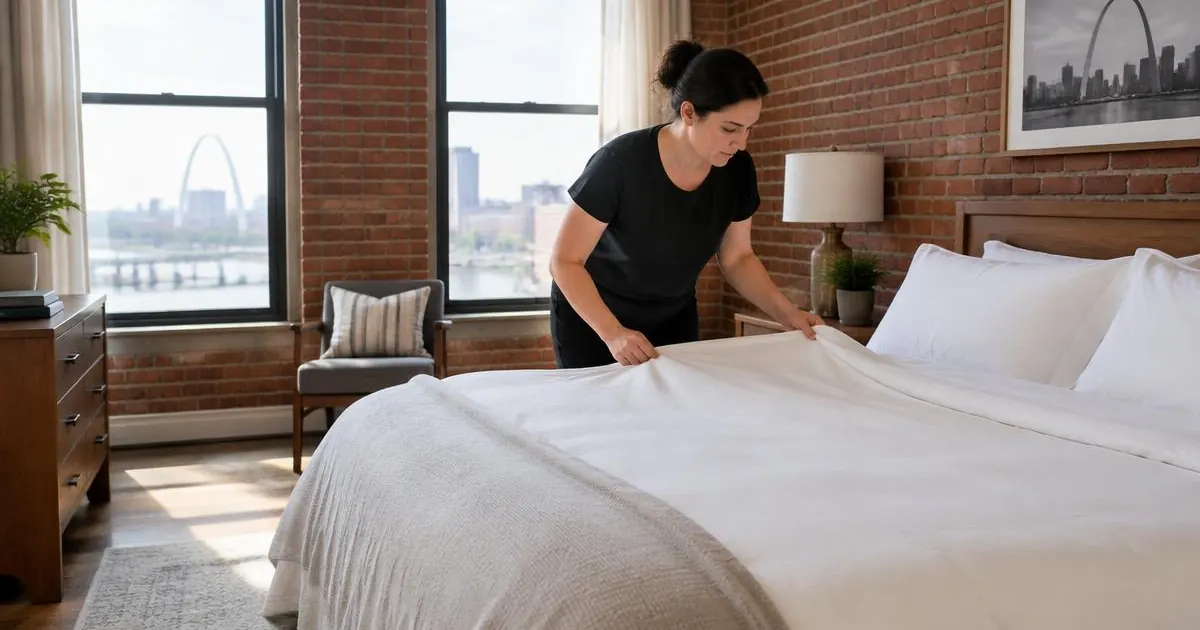
Airbnb intake should include bedrooms, bathrooms, square footage, approximate bookings and whether laundry is needed. Add the number and location of waste containers, collection arrangements and any restrictions on shared bins. These details help distinguish a normal reset from a visit complicated by accumulated waste.
Describe what is present rather than writing only 'extra trash.' For example, say that the kitchen has bagged food waste, the garage contains flattened boxes and a damaged dresser remains upstairs. Those conditions involve different handling questions. Photos can support a scope discussion when they do not expose guest information.
Ask whether routine bag removal to the designated onsite bin is included in the proposed turnover scope. Separately ask about loose rubbish, excess volume, offsite disposal and any coordination with a hauling provider. Do not assume a cleaning quote includes transporting waste. If the amount is unknown before checkout, agree on how the cleaner should request a decision before taking on additional work.
Explore our airbnb/vacation rental service and cleaning in Fenton, MO for property-specific information.
Separate ordinary rubbish from bulky removal work
A reliable boundary depends on the waste type, available capacity and approved disposal route—not simply whether an item can be lifted. Write that boundary into the property instructions so the host and cleaning team use the same definition.
Routine trash needs an approved destination
Ordinary turnover waste might include used packaging, empty food containers and bathroom-bin contents. Confirm bagging expectations, recycling separation and the exact container the team may use. A full bin is not permission to leave bags beside it or use a neighboring property's container. Provide a host-approved fallback that follows the property's collection rules.
Bulky junk needs a separate decision
Furniture, mattresses, large appliances and renovation debris should not be treated as ordinary turnover trash. Ask whether separate removal can be discussed or whether the host must arrange another provider. Identify stairs, tight passages and blocked exits before anyone moves an item. A broken chair may be host property awaiting repair, so obtain authorization rather than assuming damage means disposal.
Treat left-behind belongings as an ownership question
A suitcase, charger or child's toy is not routine rubbish merely because checkout has passed. The host should resolve ownership and permission through the applicable booking terms, platform process and legal requirements. The cleaner should not be expected to decide when an item legally becomes abandoned.
Establish a contact for these decisions and a fallback when that person cannot respond. Without permission, leave guest belongings untouched and notify the host. Do not open bags, search pockets, package possessions or relocate them simply to clear a surface. Cleaning around an item may leave part of the space unfinished.
If the host authorizes handling, confirm what may be moved, where it may be placed and who takes responsibility afterward. Any storage, return shipping or disposal arrangement needs explicit agreement; none should be assumed part of turnover cleaning. Where ownership or authority remains unclear, the host should seek appropriate guidance rather than use a cleaner's judgment as legal approval.
Write a decision path for unexpected checkout conditions
Use a short decision path for exceptions: identify the item without disturbing it, check the agreed category, contact the authorized person and record the decision if reporting has been arranged. Keep factual observations separate from conclusions about who caused the condition.
Example: a full bin and an unwanted sofa
Suppose checkout leaves ordinary bagged waste but the outdoor bin is full, and a sofa blocks access to part of the room. Report both issues separately. The host can identify a lawful waste option and clarify whether the sofa belongs to the rental or a guest. Neither condition authorizes curbside dumping. Agree on which accessible areas can still be cleaned while the host arranges the unresolved work.
Example: a bag with unclear contents
A tied bag beside a wardrobe could contain rubbish, clothing or personal effects. Its location does not establish permission to discard it. Ask the host to resolve the uncertainty. If visible conditions suggest sharps, pests, mold, bodily fluids or other potentially hazardous material, pause affected work and discuss an appropriate specialist; treatment is not promised.
Protect the cleaning scope when rubbish takes over
Waste can conceal spills, block floors or prevent access to beds. Before proceeding, identify which areas are accessible and whether disposal decisions change the agreed scope. Removing a bag does not automatically include treating everything found beneath it.
Keep turnover cleaning distinct from periodic deep cleaning. A turnover addresses the agreed between-stay reset; a periodic deep clean addresses more intensive accumulated buildup. A deep clean is not automatically required before Airbnb turnover service. If a separate deep clean is requested, appliance interiors and inside cabinets are optional add-ons, not assumed inclusions.
A departing long-term occupant does not make a turnover equivalent to Move-In/Move-Out service. That separate service includes inside and outside cabinets and appliances, so clarify which service fits the actual situation. Detailing beyond deep cleaning may take more than one day.
For exposed surfaces, use manufacturer-safe care, never mix cleaners and avoid acids on stone. Disinfect only when appropriate and allow the product's full label contact time; removing visible rubbish alone is not disinfection.
Coordinate laundry, supplies and access around the exceptions
Confirm lawful access before the visit, including the host's authority to admit the team and the agreed entry method. A guest's delayed departure or belongings remaining inside can affect access decisions. Do not assume an unlocked door or working code resolves permission.
Discuss laundry separately: whether it is needed, which items are covered, available equipment and what happens when a bed is blocked by belongings. Set linen inventory according to the beds and actual laundry capacity rather than a fixed spare quantity. Confirm who supplies, inspects and replaces linens.
Restocking also needs agreement on products, quantities, storage locations and authorization to use supplies. A box near the rubbish may contain replacement amenities, so label host stock clearly and keep it separate from waste.
Confirm checkout and arrival schedules, the requested cleaning window and who communicates changes. An unresolved removal job or access problem may require a revised plan. Do not build the next arrival around an assumed same-day completion.
Close the handoff with decisions, not assumptions
Before booking, summarize the waste boundary, approved bin location, exception contact, access authority and any separately arranged removal. Name who will resolve guest belongings and who will check that a bulky item no longer obstructs the rental. This creates accountability without turning a cleaner into a property custodian.
Discuss whether reports or damage photos are wanted, what they should cover and how they should be sent. Neither is an automatic inclusion. If photos are authorized, focus on the relevant condition and avoid capturing personal documents or unrelated possessions. A photo records an observation; it does not establish fault.
Ask for unresolved conditions to be distinguished from completed cleaning when that reporting is agreed. For example, 'bedroom floor inaccessible behind guest suitcase' is more useful than 'bedroom incomplete.' The final host decision is whether the property is ready for arrival after considering cleaning, retained belongings, waste capacity and any separately scheduled removal.