Airbnb/Vacation Rental
Vacation Rental Cleaning O’Fallon: Secure Access and a Fallback Contact
A practical host handoff plan that connects lawful property access, a reachable backup contact and an agreed turnover scope without sharing unnecessary guest information.

vacation rental cleaning O’Fallon: Secure Access and a Fallback Contact
A reliable plan for vacation rental cleaning O’Fallon starts before anyone reaches the door. The host needs to connect three things: permission to enter, a working access method and someone who can resolve a problem without exposing guest information. Share only the property address and approved work instructions needed for the visit; avoid sharing guest reservation history unless there is a specific, authorized need. This guide from Prime Cleaning MO LLC shows how to build that handoff around practical decisions, including what happens when checkout is unclear or a keypad fails.
Keep two separate records: a service brief describing the property and cleaning scope, and a restricted access note containing entry instructions. Neither should become a copy of the booking record. Ask yourself: Who may see this information? What do they actually need? Who can authorize a change? Keeping those answers clear helps prevent a simple entry issue from turning into unnecessary disclosure or unauthorized access.
Build the intake around the home and access route
For an Airbnb turnover inquiry, provide the number of bedrooms, bathrooms, approximate square footage, approximate bookings and whether laundry is needed. These details help define the work without identifying travelers. Also describe the entry route: exterior keypad, shared entrance, lockbox or another host-approved method. If reaching the rental requires separate building access, disclose that dependency before scheduling rather than assuming the front-door code solves everything.
The host must confirm lawful access for the proposed work window. Include the property address and unit identifier, the requested service window and any access restrictions. Use a property nickname in routine coordination if helpful, but never let it replace an unambiguous address in the approved instructions. Ask whether parking, a gate or a locked supply room could prevent the agreed work. Confirm schedules and handoff details directly; a booking estimate alone does not establish an appointment or authorize entry.
Explore our airbnb/vacation rental service and cleaning in O'Fallon, MO for property-specific information.
Share a limited entry code through an agreed channel
Choose an access method that limits exposure while still allowing the scheduled work. Confirm how Prime Cleaning MO LLC should receive sensitive entry instructions, who needs them and when they become valid. Avoid putting codes into broadly shared documents or screenshots that also reveal guest names, phone numbers or messages.
Separate service access from guest access
Where the lock supports it, consider a separate service credential rather than forwarding a guest’s code. Set its access period to the confirmed work window, allowing for the schedule you actually agree to. Test the credential yourself and check the lock’s power status. Do not assume an unused code works simply because it appears in an app.
Keep the access note narrowly useful
Include the correct door, any required keypad sequence and how to secure the door afterward. Keep alarm instructions restricted too. Do not attach a guest itinerary to explain timing; a confirmed access window is enough. Ask how access notes will be retained or removed, and manage credential expiration yourself unless another arrangement is explicitly confirmed.
Name a fallback contact with clear authority
A fallback contact is useful only if that person can make the needed decision. Provide a primary host contact and a backup who has agreed to be reachable during the scheduled window. Share their role, approved contact method and authority: can they verify vacancy, issue replacement access or approve a scope change? A neighbor who knows the address but cannot authorize entry is not an equivalent backup.
Agree on a simple contact sequence before service. For example, if the code fails, the cleaner contacts the host through the agreed channel, then the authorized backup if necessary. Confirm whether waiting or rescheduling is possible; neither should be assumed. Do not ask someone to force a lock, bypass security or borrow access from an arriving guest. Keep the fallback message minimal: property identifier, access problem and requested decision. There is no need to include the departing guest’s contact details or explain their travel plans.
Decide what happens when vacancy is uncertain
A scheduled checkout time is not proof that the property is vacant. Establish how the host will confirm that entry is lawful and appropriate for the turnover. If someone answers the door, luggage remains in an unexpected place or another sign raises doubt, the cleaner should pause and request host direction rather than infer permission from the calendar. An access code working does not settle an occupancy question.
For example, suppose the door opens but a suitcase is beside an unmade bed. The next step is to contact the host, not move the suitcase into a closet to begin cleaning. Guest belongings must not be handled without permission. The host should resolve occupancy or provide specific, authorized instructions for any belongings left behind. If there is an immediate safety concern, prioritize personal safety and appropriate assistance. A turnover arrangement should not be treated as emergency availability or permission to manage a guest dispute.
Connect restricted rooms to the agreed cleaning scope
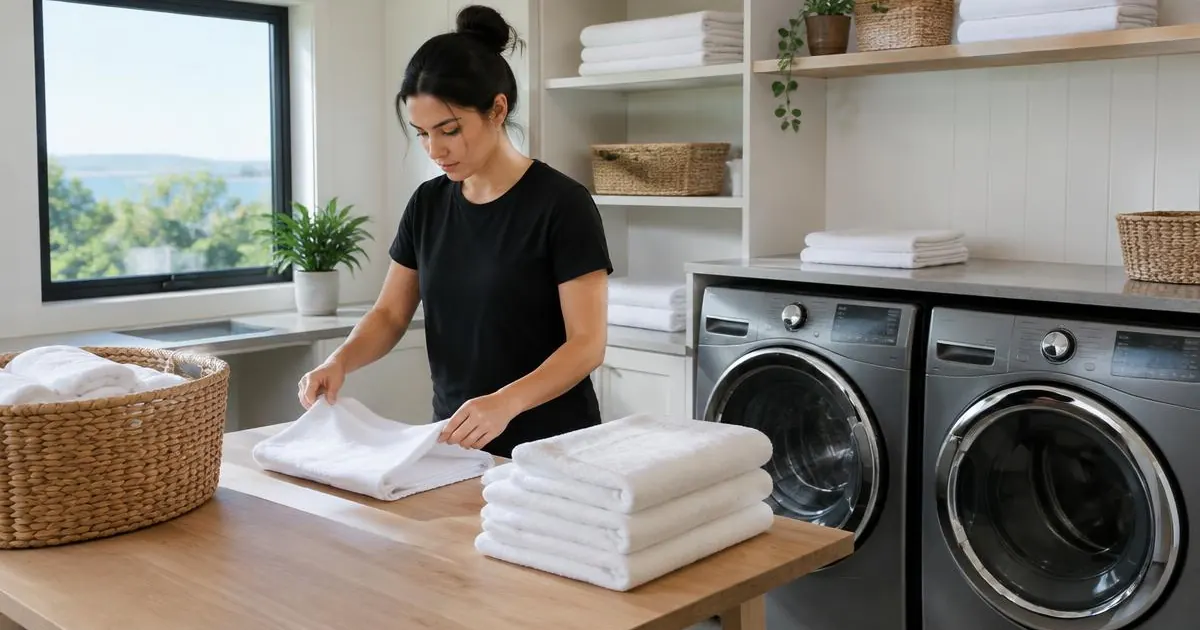
Access planning also determines what can actually be cleaned. Identify locked owner storage, supply cupboards and any rooms excluded from the turnover. Discuss laundry, restocking and linen inventory rather than treating them as automatic inclusions. If laundry is requested, confirm where it happens, available equipment, drying capacity and who makes decisions when items cannot be ready within the agreed window. Suggest spare linens according to the beds and actual laundry capacity, not a universal minimum.
For restocking, identify approved supplies and storage access, then confirm what should happen when stock is low. Distinguish a periodic deep clean from work between guests; a deep clean is not automatically required before an Airbnb turnover. Appliance interiors and inside cabinets are optional deep-clean add-ons, not assumed turnover tasks. Surface instructions matter as well: use manufacturer-safe care, never mix cleaners, avoid acids on stone and disinfect only when appropriate with the full label contact time. Discuss unusual conditions separately; do not assume pest, mold, biohazard or bodily-fluid treatment is available.
Request useful reports without collecting guest details
Agree beforehand whether a completion report, inventory note or damage photos are wanted and what each should contain. These are scope and communication decisions, not automatic inclusions. A useful report answers operational questions: Was the approved work completed? Is a supply missing? Does the host need to address a maintenance issue? It should not retell a guest’s stay or speculate about who caused a problem.
Photograph the issue, not private information
If damage photos are authorized, frame the affected surface or item tightly. Avoid capturing passports, medication labels, reservation printouts, personal screens or other identifying details. Do not move belongings to stage a photograph without permission. Describe what is visible without assigning blame: “chip at sink edge” is more useful than an accusation. Confirm the recipient and delivery channel, and keep lock codes out of captions. A cleaning observation is not a determination of liability, and hosts should handle any guest communication themselves.
Close the handoff by confirming security and next steps
The closing handoff should return control to the host, not merely announce that cleaning has ended. Agree on which exit details need confirmation: the designated door secured, a physical key returned to its approved location and any access problem reported. Clarify who will disable temporary credentials and when. Do not send a photo showing a lockbox combination as proof of completion.
Before requesting a quote from Prime Cleaning MO LLC for an O’Fallon rental, assemble the property measurements and room counts, approximate bookings, laundry request, proposed work window and authorized fallback contact. Then review the unanswered questions together: Are supply areas accessible? Are reports or photos requested? Who decides if occupancy is unclear? Which tasks are outside the agreed scope? Revisit the plan whenever a lock, contact or laundry arrangement changes. A secure handoff is a maintained set of permissions and decisions, not a guest-information packet forwarded from one booking to the next.