Airbnb/Vacation Rental
Vacation Rental Cleaning St. Peters: A Room-by-Room Host Checklist
A practical host handoff plan that turns room-by-room preferences into observable completion standards, with clear boundaries for laundry, supplies, and unresolved issues.
vacation rental cleaning St. Peters: A Room-by-Room Host Checklist
A successful turnover starts with agreement about what ready means. For hosts arranging vacation rental cleaning St. Peters, a room-by-room checklist should translate personal preferences into visible, repeatable standards. A clean bedroom can still be unfinished if the wrong bedding is fitted; a spotless kitchen can still need attention if dishes remain in the dishwasher. This handoff plan helps you define completion before the next booking, rather than resolve competing expectations afterward.
Start your conversation with Prime Cleaning MO LLC by providing the number of bedrooms and bathrooms, approximate square footage, approximate bookings, and whether laundry is needed. Describe sleeping arrangements, including sofa beds, and identify rooms excluded from guest use. These details help establish the requested scope; they do not make every related task an automatic inclusion.
Give each room four checklist fields: cleaning tasks, placement standards, supplies, and exceptions. Ask: What must be cleaned? What must be reset? What should be reported instead of handled? Keep property-specific answers with the checklist.
Build a checklist that separates completion from exceptions
Avoid broad instructions such as make everything perfect. Write observable outcomes instead: dining table cleared and wiped, chairs returned to the reference arrangement, and floor free of visible debris. Define the surfaces and furnishings covered by the agreed turnover scope, including any areas that should remain untouched.
Use simple status choices: complete, not applicable, or needs host decision. A locked cupboard is not a missed cleaning task if access was excluded; a stained sheet is not ready merely because the bed was made. The checklist should preserve those distinctions rather than encourage someone to mark everything complete.
Choose reference photos carefully. A wide bedroom image can show furniture placement, while a close-up can clarify towel presentation. Avoid images containing guest information. Discuss whether completion reports or photos are requested, which rooms they cover, how they will be delivered, and who reviews them. Neither reporting nor photography should be assumed to come automatically with cleaning.
Explore our airbnb/vacation rental service and cleaning in St. Peters, MO for property-specific information.
Set bedroom standards that match the linen workflow
For each sleeping space, record the bed size, approved bedding arrangement, surfaces included, and floor-care expectations. Clarify whether an unused-looking bed must still be stripped between bookings. Identify who decides whether a marked or damaged linen item can return to service.
Define the finished bed
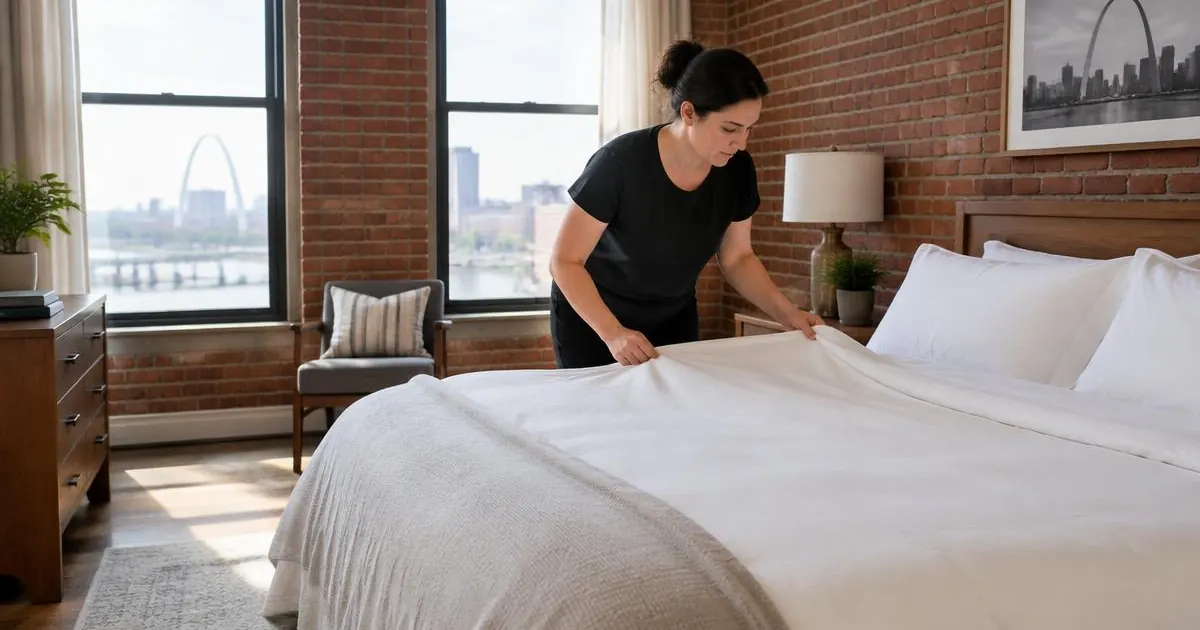
Describe the finished arrangement in plain terms: fitted sheet secured, approved top bedding positioned correctly, and pillows placed according to the reference image. Include accessible bedside surfaces and agreed under-bed reach. Do not treat moving heavy furniture as an assumed turnover task. If a sofa bed is offered, specify whether it should be opened, checked, and reset.
Confirm laundry and linen inventory
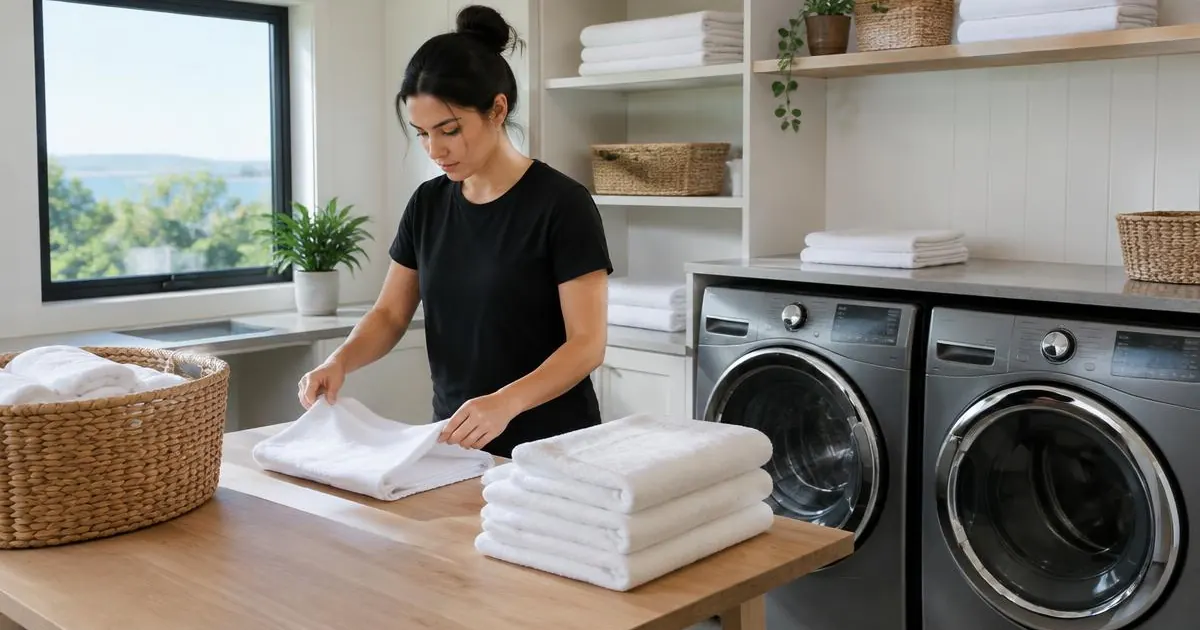
Ask whether laundry will be performed onsite, taken elsewhere by arrangement, or handled by the host. Confirm what is included, where used linens go, and how clean items are stored. Plan spare linens around bed sizes, actual washer and dryer capacity, and booking patterns rather than a fixed minimum. Discuss linen inventory checks separately, including how shortages or unusable pieces should be reported.
Make bathroom completion more precise than looks clean
List the fixtures and accessible surfaces covered in each bathroom: toilet, basin, shower or tub, mirrors, counters, and floors as agreed. Identify finishes needing particular care. Use manufacturer-safe methods, avoid acids on stone, and never mix cleaners. Where disinfection is appropriate, the product must be compatible with the surface and remain wet for its full label contact time.
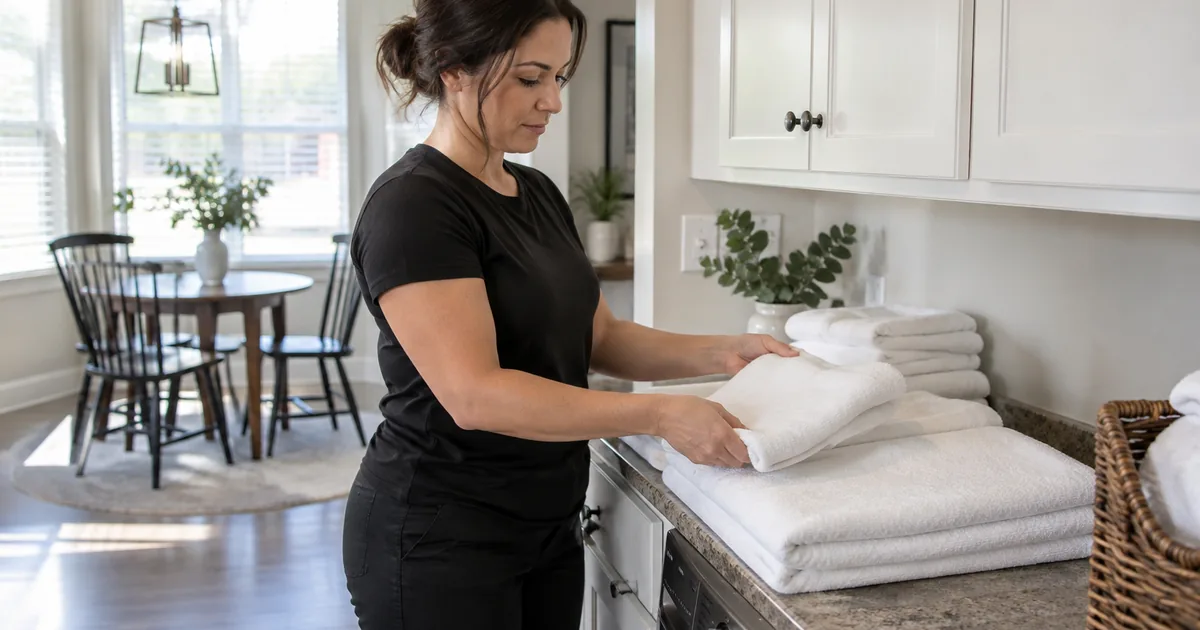
Separate cleaning from presentation. The host should define towel placement, whether bathmats are replaced, and which dispensers or guest supplies need attention. If restocking is requested, confirm who provides supplies, where backups are kept, and what counts as a shortage. Do not leave the cleaner guessing whether an almost-empty bottle should stay.
Add an exception rule for leaks, drainage problems, persistent odors, or suspected mold. These observations should be flagged for the host, not treated as permission to undertake repairs or specialized remediation. Pests, biohazards, and bodily-fluid concerns require separate assessment; ordinary turnover instructions should not promise their treatment.
Give the kitchen its own cleaning and reset decisions
Kitchen disagreements often concern items that appear ready but have not been checked. Define expectations for counters, sink, cooktop, accessible appliance exteriors, table surfaces, and floors. Specify whether dish handling is requested and how it fits the available access window. A running dishwasher does not necessarily mean the kitchen reset is complete.
Agree on food and dish handling
State what may be discarded and what must remain. Do not assume food or belongings left behind are abandoned; establish permission and a host-contact rule. Decide how to handle dirty dishes, items left in the dishwasher, and cookware returned to the wrong cupboard. Any dish or cupboard organization work should be discussed as part of scope.
Keep intensive cleaning separate
Flag baked-on oven residue, refrigerator spills, or accumulated cabinet grime for a scope decision rather than silently expanding the turnover. Intensive appliance-interior and inside-cabinet cleaning are optional add-ons to deep cleaning, not automatic tasks. Host-approved kitchen standards should distinguish a booking reset from separately arranged intensive work.
Check living areas, entry points, and guest-use zones
Walk the same route a guest will take: entry, living area, dining space, and any other agreed guest-use rooms. For each zone, define accessible dusting and wiping, floor care, furniture placement, and removal of ordinary rubbish. Note delicate finishes and furnishings that should not be moved. Establish whether cushions and throws are reset or sent through an agreed laundry process.
Small objects need explicit instructions. Should remotes sit on the coffee table or in a labeled holder? Are games checked for obvious disorder, or is a full inventory requested? Are entry mats vacuumed, shaken out where appropriate, or excluded? These decisions make the checklist useful without pretending it covers every possible property feature.
Separate visual observations from technical inspections. A cleaner may report an obvious broken lamp or loose handle if reporting is agreed, but cleaning completion should not be presented as certification that appliances, alarms, locks, or other equipment are safe and operational. The host retains responsibility for appropriate checks.
Resolve scope conflicts before they derail the turnover
A checklist needs rules for exceptions as much as instructions for routine work. Ask which tasks take priority if the property's condition differs from the agreed scope. Set a contact person authorized to approve changes, and identify a fallback when that person cannot be reached. Any revised work and scheduling must be confirmed rather than assumed.
For example, if laundry capacity cannot accommodate all used bedding within the available window, the host might authorize suitable stored linens and arrange remaining laundry separately. If no usable replacements exist, report the room as unresolved instead of presenting an unfinished bed as complete.
Periodic deep cleaning addresses buildup and less frequently reached areas beyond an ordinary turnover. It can be scheduled according to condition and use; it is not automatically required before Airbnb cleaning. Discuss optional appliance interiors and inside cabinets when arranging deep cleaning. Detail work beyond deep-clean scope may take more than one day, so do not rely on a short booking gap.
Close the handoff with a host review of open items
Before service, the host must confirm lawful access and provide the agreed entry method, permitted rooms, and lockup instructions. Confirm checkout and arrival information, the actual service window, and whom to contact about access problems. Do not assume same-day completion or that a booking change automatically updates the cleaning schedule.
At handoff, use the room statuses to distinguish completed work from decisions still needed. If agreed, a concise report can identify a linen shortage, an inaccessible room, or a maintenance concern. Damage photos should be discussed in advance, limited to relevant conditions, and handled without unnecessary guest information. Photography does not establish who caused damage.
The host should review unresolved items before considering the property ready. Confirm who replenishes missing supplies and handles maintenance or forgotten possessions; guest belongings must not be moved or handled without permission. Share these room-by-room standards with Prime Cleaning MO LLC when requesting scope and scheduling confirmation, then update the checklist when property arrangements change.