Post-Construction
Cleaning After Renovation in Kirkwood
A practical guide to preparing a renovated Kirkwood home for cleaning, protecting older finishes, and knowing when dust or debris needs specialist assessment.

Start cleaning after renovation in Kirkwood with a scope check
Cleaning after renovation in Kirkwood should begin with a contractor handoff, not a broom. Confirm that dust-producing work is finished, identify the materials disturbed, and check when new finishes can safely be cleaned. If suspected lead, asbestos, silica, or biohazards are involved, stop ordinary cleaning and request contractor assessment and appropriate specialists. Routine post-construction cleaning is not hazardous-material remediation.
For an ordinary residential project, first clear approved construction waste, then remove settled dust from high surfaces downward, clean finish-safe details, and tackle floors last. Keep unfinished rooms separate from cleaned spaces. This sequence limits repeated work and helps protect older trim, flooring, and fixtures that may sit beside brand-new materials.
Before requesting a quote, gather bedroom and bathroom counts and specify whether the remaining work involves dust, debris, or both. Add photographs and identify rooms that were untouched but collected tracked dust. Those details make the cleaning scope more useful than simply describing the project as a renovation.
Decide whether the space is ready for ordinary cleaning
A room can look finished while still being unsuitable for routine cleaning. Ask the contractor what was cut, sanded, demolished, or removed, and whether any material concerns remain unresolved. Appearance alone cannot establish what fine dust contains. Do not sweep, vacuum, or wipe suspicious residue just to make the room look ready.
Older paint and concealed materials
If work disturbed older painted trim, flooring layers, insulation, or concealed building materials, ask what assessment was completed before disturbance. Suspected lead or asbestos requires appropriate specialist involvement and contractor assessment, not a standard cleaning appointment. Avoid scraping leftover paint spots or lifting fragments to investigate them yourself.
Concrete, masonry, and tile dust
Cutting or grinding masonry, concrete, mortar, or some tile materials can create silica concerns. If you see unexplained powder after that work, have the contractor identify it and determine the appropriate response. Do not treat a household vacuum, dust mask, or open window as a substitute for assessment.
For example, ordinary tracked soil near an entry and dust left by indoor concrete grinding should not receive the same cleaning plan. Unresolved hazards must be addressed before routine cleaning proceeds.
Explore our post-construction service and cleaning in Kirkwood, MO for property-specific information.
Build a finish map before choosing products
Walk each affected room and note the surfaces that need different care: original woodwork, new cabinet fronts, natural stone, painted walls, metal fixtures, and newly installed flooring. Gather manufacturer instructions and the contractor’s finish-care notes. Record any restrictions on moisture, detergents, rubbing, or covering the surface.
New paint, grout, sealants, and floor finishes may need curing before washing or scrubbing. Ask for product-specific guidance rather than assuming that dry to the touch means ready for cleaning. Flag older surfaces with flaking coatings, loose veneer, or open wood joints so they are not treated like intact modern finishes.
Test an approved cleaner in an inconspicuous location before wider use. Avoid acids on marble; generic vinegar advice is especially unsuitable here. Abrasive pads and razor blades can damage coatings, glass, or decorative finishes. A paint speck on older trim may need contractor attention rather than increasingly aggressive scrubbing.
Get a clear contractor handoff and protect clean rooms
First, ask the contractor to remove tools, unused materials, and construction waste assigned to their scope. Clarify who handles sharp scraps, fasteners, adhesive residue, protective films, and heavy debris. Do not assume every item left after renovation belongs in the cleaner’s waste bags.
Next, make an unfinished-work record. Photograph cracked tiles, scratched fixtures, paint drips, and damaged trim before cleaning begins. Distinguishing damage from dirt prevents repeated attempts to scrub away a defect. Leave installed protective coverings in place until the contractor confirms they can be removed safely.
Finally, choose a clear route for people and equipment. Keep belongings out of affected rooms and preserve the contractor’s containment arrangements until they authorize removal. If workers must return to sand a wall, postpone detailed cleaning in that room. Cleaning around active dust-producing work usually means repeating the same surfaces.
Follow a top-down dust-removal sequence
Once material concerns are resolved and the space is approved for routine cleaning, begin with accessible high surfaces. Address shelf tops, door casings, upper trim, and other dust-catching ledges before lower furniture and floors. Avoid dry sweeping or vigorous dusting that sends settled material back into the room.
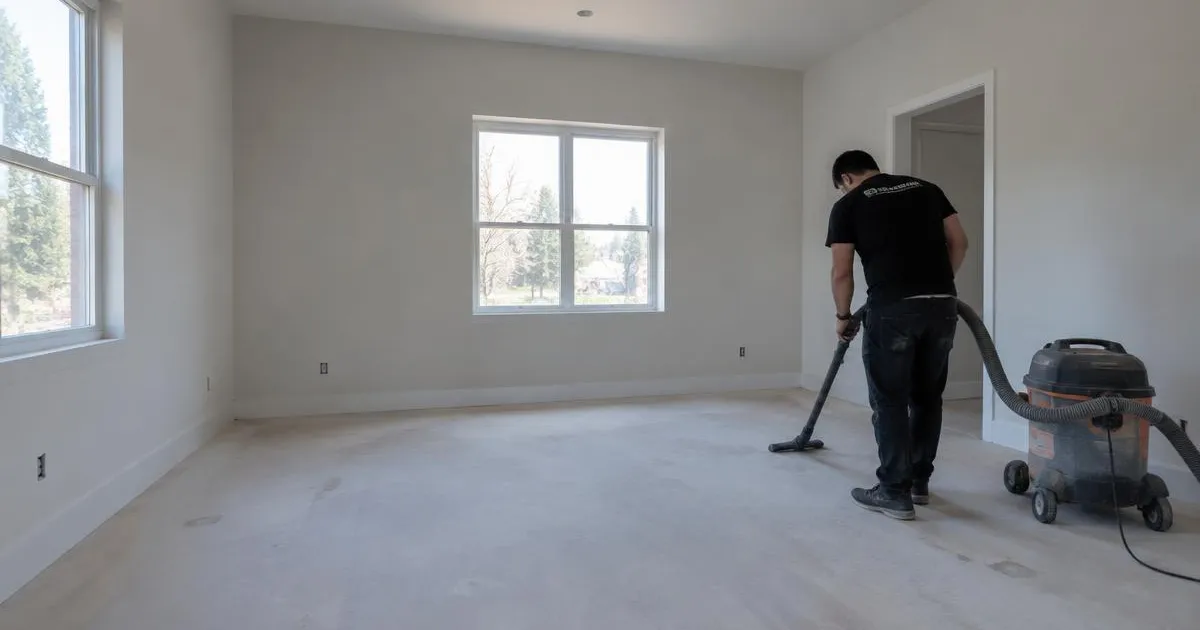
Use surface-appropriate equipment and controlled methods. Where vacuuming is suitable, use a properly maintained HEPA-filtered unit suited to the material and task, with attachments that will not scratch finishes. That equipment does not make hazardous dust an ordinary cleaning assignment. Never improvise with a household vacuum on unidentified construction residue.
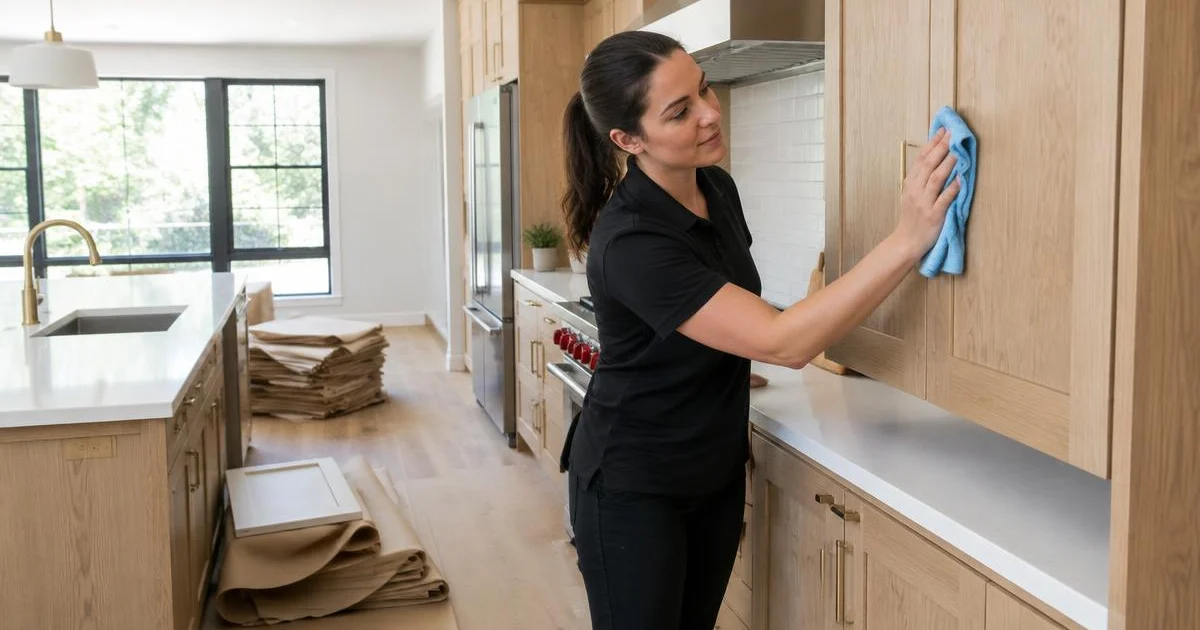
Follow dust removal with a lightly dampened cloth where the finish permits it. Fold cloths to expose clean faces and change them when loaded; dragging a gritty cloth across a cabinet can leave scratches. Clean fixtures only when safe to handle, and do not open electrical components.
Finish with floor edges, corners, and the main walking area, using the flooring manufacturer’s care instructions. Reinspect horizontal surfaces afterward. Persistent dust returning from a vent or unfinished opening calls for contractor investigation, not endless wiping or an assumption that ordinary cleaning includes duct work.
Give kitchens, bathrooms, and glass separate attention
In kitchens, check cabinet edges, drawer tracks, backsplashes, and appliance exteriors for settled dust. Confirm whether cabinet and appliance interiors are included in the quoted post-construction scope. If debris entered an appliance opening or mechanical compartment, ask the installer or manufacturer how it should be addressed instead of spraying cleaner inside.
In bathrooms, distinguish loose dust from grout haze, sealant residue, or adhesive. Those residues may require installer guidance and material-specific treatment. Do not apply an acidic haze remover indiscriminately across stone, metal, and grout. Protect new caulk from rubbing until its care instructions allow cleaning.
For glass, remove loose grit before wiping and avoid scraping construction deposits without appropriate guidance. Interior windows are an add-on for Prime Cleaning MO LLC services except Airbnb turnovers. Describe window residue when requesting the add-on, especially if paint or adhesive is present.
Never mix cleaners. CDC guidance is to clean before disinfecting and disinfect when appropriate. For an EPA-registered disinfectant, keep the surface visibly wet for the full label contact time; there is no universal number of minutes.
Request the right service with useful project details
For a Kirkwood post-construction inquiry with Prime Cleaning MO LLC, provide bedroom and bathroom counts and say whether the project left dust, debris, or both. Explain what was renovated, identify affected rooms, and share contractor findings about any material concerns. Include surface-care instructions and unfinished tasks.
Ask for explicit boundaries around residue removal, interiors, waste handling, and window cleaning. If the work is complete and the remaining need is ordinary accumulated household soil rather than construction residue, discuss whether deep cleaning is the better fit. For deep cleaning, appliance interiors and inside cabinets are optional add-ons.
Standard or recurring cleaning is available only after an initial deep clean, not as a one-time service or for first-time clients; the standard or recurring-service quote includes that initial deep clean. For a renovated commercial space, pricing follows a FREE IN-PERSON walkthrough. Provide the business name, approximate area, restroom count, preferred date or window, and onsite contact.
Inspect the result before putting everything back
Check ledges in daylight, look along floor edges, and inspect the rooms adjacent to the work. Use a clean cloth on a small, approved surface to check for remaining loose residue. Separate missed cleaning from damage, stubborn installation residue, and renewed dust from ongoing work.
Detailing may take more than one day, depending on the project and remaining conditions. Avoid scheduling deliveries or unpacking every cupboard before the scope is complete. Return belongings in stages so unresolved areas stay accessible.
By Prime Cleaning MO Team. Prime Cleaning MO LLC serves the St. Louis metro, including Kirkwood.