Post-Construction
Post-Construction Cleaning in St. Charles
Renovation cleanup starts with identifying what remains: fine dust, construction debris, or both. Learn what to document, when to involve your contractor, and how to prepare a useful cleaning request.

Post-construction cleaning in St. Charles: dust or debris?
For post-construction cleaning in St. Charles, first identify whether your project left fine dust, construction debris, or a mixture of both. Then provide bedroom and bathroom counts, describe the affected rooms, and ask your contractor to assess any uncertain materials before cleaning begins. These details help Prime Cleaning MO LLC evaluate the cleanup rather than treating renovation residue like ordinary household dirt.
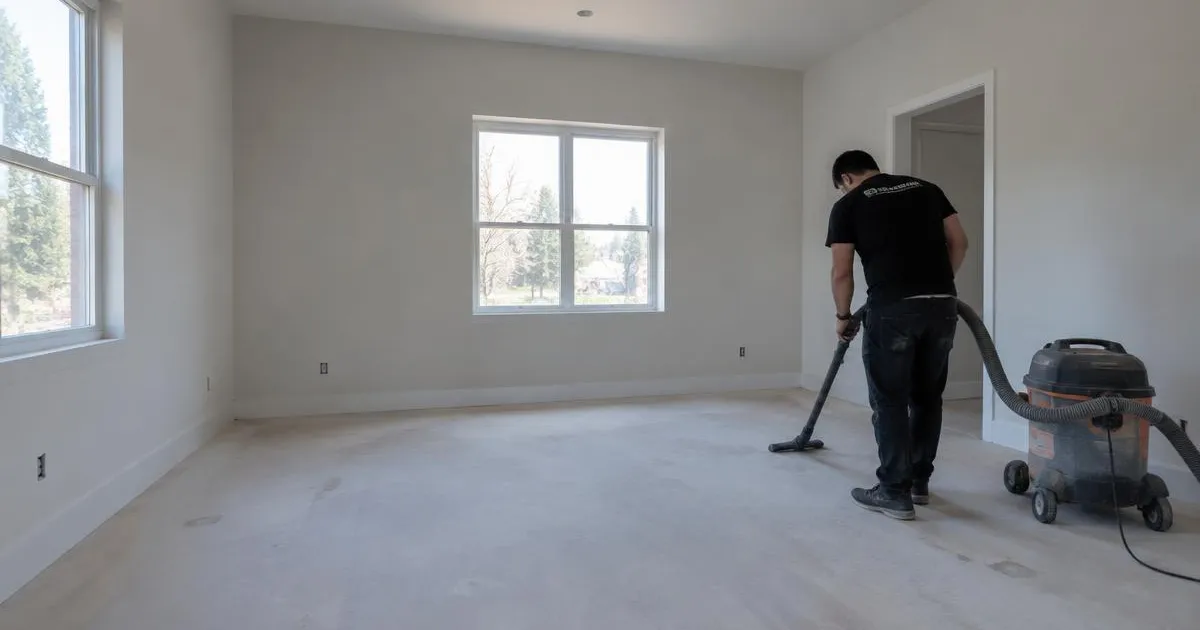
Dust-only conditions might mean powder on shelves, trim, and floors after the contractor has removed project waste. Debris means remaining material such as packaging, offcuts, broken tile, or fasteners. Mixed conditions need both removal planning and detailed dust cleaning; do not assume a cleaning quote includes hauling construction waste.
If you see unidentified powder, suspect hazardous material, or cannot tell whether unfinished work will create more dust, pause. Ask the contractor what remains and who is responsible for addressing it. A clear handoff protects the scope of the cleaning visit.
By Prime Cleaning MO Team, serving the St. Louis metro.
Match the cleaning plan to the actual conditions
Take wide photos of each affected room and close-ups of residue. Describe what you see without guessing its composition. “White powder on the bathroom vanity and hallway floor” is more useful than “just a little mess.”
When the problem is mostly settled dust
Check more than the floor. Look at door tops, window tracks, closet shelves, baseboards, light fixtures that can be safely reached, and exposed cabinet surfaces. Dust can collect beyond the remodeled room, so note adjoining spaces even if they were not part of construction.
For example, a bathroom remodel may leave the bedroom relatively clean but coat the connecting hallway. Include that hallway in your request instead of assuming the bathroom count describes the entire affected area.
When debris remains or conditions are mixed
Ask the contractor to identify and remove sharp pieces, leftover building materials, and project waste before detailed cleaning. Confirm separately whether any remaining nonhazardous debris removal is available and included.
Do not hide sharp fragments in ordinary trash bags or ask cleaners to sort unknown scraps. Once removal responsibilities are settled, the cleaning plan can focus on the accessible surfaces underneath.
Explore our post-construction service and cleaning in St. Charles, MO for property-specific information.
Get contractor assessment before disturbing uncertain residue
The most important readiness question is not whether the renovation looks finished. It is whether the remaining material is appropriate for routine cleaning. Suspected lead, asbestos, silica, or biohazards require appropriate specialists and contractor assessment, not ordinary post-construction cleanup.
Tell your contractor exactly where you found questionable residue and ask what work generated it. Request clarification about materials, remaining hazards, and any specialist assessment or remediation needed. Appearance alone cannot establish that dust is safe to disturb.
If a concern remains unresolved, keep the area undisturbed. Do not sweep, vacuum, sand, or wipe it while waiting for an answer. A household vacuum or damp cloth is not a substitute for identifying the material and arranging the right help.
Share relevant assessment information with the cleaning provider before scheduling. Contractor clarification helps define the next step, but it does not turn hazardous-material work into a routine cleaning service or replace specialist involvement where needed.
Build a useful post-construction cleaning request
Start your request with the St. Charles property location, bedroom count, bathroom count, and whether the remaining condition is dust, debris, or both. Add approximate square footage if known and distinguish the whole property from the rooms actually affected.
Next, explain the project: for example, “Kitchen cabinet installation and flooring replacement; dust extends into the dining room; contractor is removing packaging.” Mention whether the property is occupied, whether furnishings remain, and whether workers still need access.
Include photos, your preferred date or scheduling window, entry arrangements, and any surfaces requiring special care. Identify unfinished tasks such as sanding, drilling, touch-up work, or fixture installation. Those tasks may affect when detailed cleaning makes sense.
For commercial or industrial space, Prime Cleaning MO LLC pricing follows a FREE IN-PERSON walkthrough. Provide the business name, approximate area, restroom count, requested date or window, and onsite contact. Industrial inquiries also need information about hazardous waste; disclosing it does not mean hazardous work is accepted.
Sequence cleaning around the contractor’s remaining work
Ask the contractor to separate dust-producing tasks from final checks that will not disturb surfaces. Schedule detailed cleaning around the actual work status, not simply the date shown on the original renovation calendar.
Once the area is assessed as appropriate for routine cleaning, a sensible sequence is removal of agreed nonhazardous debris, controlled dust removal from higher accessible surfaces, detailed surface wiping, and floor care. Working downward reduces the chance of depositing dust onto already-cleaned lower surfaces.
If a carpenter still needs to drill cabinet hardware holes, cleaning those cabinets first may create avoidable repeat work. If only a quiet inspection remains, ask whether it can occur without disrupting the cleaned areas.
Allow for the condition of the property rather than expecting a fixed duration. Detailed post-construction cleaning may take more than one day. Before work begins, discuss how inaccessible areas, newly generated dust, or residue needing a different treatment would be handled.
Protect new finishes while removing residue
Collect care instructions for new flooring, countertops, cabinetry, fixtures, and glass. Share them with the cleaning provider, including any contractor or manufacturer restrictions for recently installed finishes. A surface that looks ready to use may still have specific care requirements.
For confirmed ordinary dust, use a surface-appropriate method that captures particles instead of scattering them. Remove loose grit before wiping so it is not dragged across the finish. Test an appropriate cleaner in an inconspicuous location when the manufacturer permits it.
Avoid acids on marble, and do not use vinegar as a universal renovation cleaner. Adhesive marks, paint specks, and grout residue need material-specific decisions; aggressive scrubbing or improvised scraping can damage a new surface.
Never mix cleaners. CDC guidance is to clean before disinfection and disinfect when appropriate; renovation dust alone does not call for indiscriminate disinfectant use. When disinfecting, follow the EPA-registered product label and keep the surface visibly wet for the full label contact time. There is no universal number of minutes.
Confirm details that are easy to overlook
Before approving the scope, name the areas you expect to be addressed: closet shelving, door frames, baseboards, reachable fixtures, window tracks, and cabinet surfaces. Ask how construction residue on each will be evaluated. Naming an item does not automatically make it included.
Interior windows are an add-on for post-construction cleaning. Specify whether your concern is ordinary dust or adhered paint, caulk, or adhesive; those conditions are not interchangeable. Ask about access limitations rather than assuming every pane or elevated surface can be reached.
If the project instead calls for a residential deep clean, appliance interiors and inside cabinets are optional add-ons. Discuss that distinction before choosing a service. Standard or recurring cleaning is available only after an initial deep clean, not as a one-time service or a first visit; the standard or recurring-service quote includes that initial deep clean.
Empty any agreed interior spaces and remove personal items from surfaces to be cleaned. Keep contractor paperwork and care instructions somewhere accessible.
Use a room-by-room handoff instead of a quick glance
Before cleaning, walk through the property with your scope in hand. Photograph preexisting scratches, chipped finishes, and stubborn residue so cleaning concerns are not confused with installation defects. Note blocked areas and identify who will move remaining materials.
Afterward, review the agreed areas in good light. Check representative horizontal surfaces, corners, trim, and floor edges. If you find residue, describe its location and appearance rather than immediately applying a stronger product.
For example, dust on an accessible shelf is a different issue from a hardened adhesive spot on new flooring. One may call for further cleaning; the other may require contractor guidance about safe removal. Share any concerns with Prime Cleaning MO LLC and distinguish new dust from later contractor work. A specific handoff makes follow-up decisions clearer.