Commercial & Janitorial
Janitorial Cleaning in Kirkwood: Buyer’s Checklist
A useful janitorial proposal explains what gets cleaned, how often, who supplies materials, and who resolves exceptions. Use this checklist to turn a free walkthrough into comparable bids.
Start with a walkthrough, then compare written responsibilities
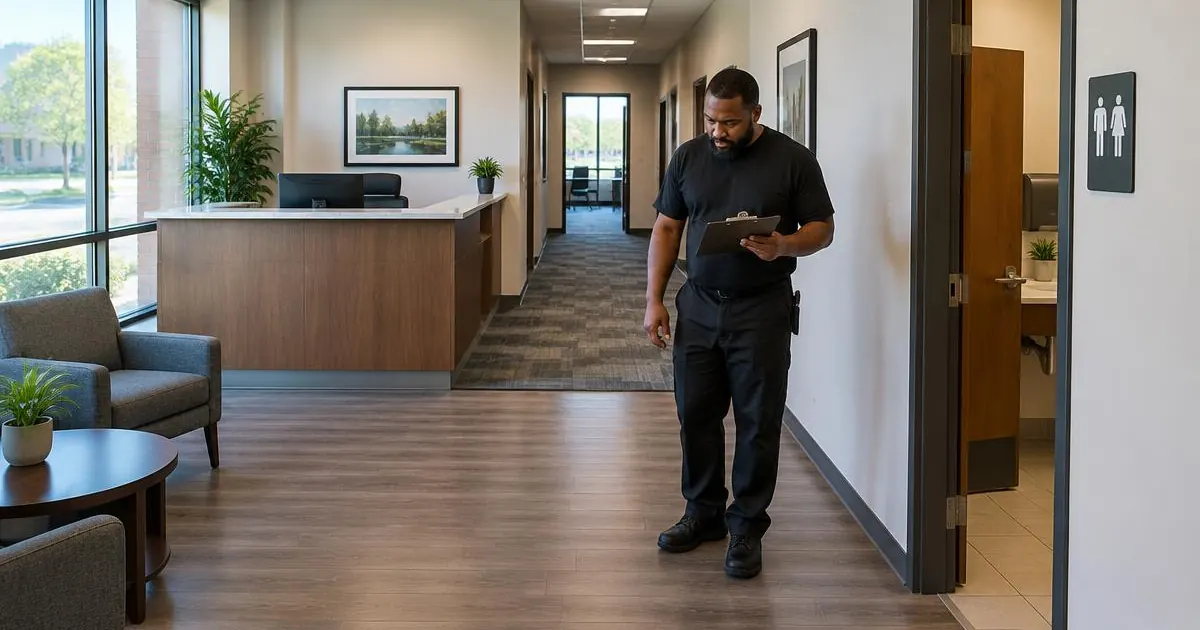
When buying janitorial cleaning in Kirkwood, compare written scopes after an onsite walkthrough—not just quoted totals. The useful proposal identifies each space, the tasks included, their frequency, supply ownership, access arrangements, and exclusions. If two proposals describe different work, their prices cannot tell you which is the better fit.
Prime Cleaning MO LLC serves the St. Louis metro, and commercial and industrial pricing follows a FREE IN-PERSON walkthrough. To request one, provide your business name, approximate area, restroom count, preferred date or service window, and onsite contact. Note any restricted rooms or access instructions so the right person can guide the visit.
Your goal is a shared responsibility matrix: a plain-language record of what the cleaning provider handles, what your staff handles, and what requires separate approval. Build that record before choosing a proposal.
Prepare a space-by-space brief before anyone quotes
Start with a simple floor plan or room list. Separate reception, workstations, conference rooms, kitchens, restrooms, storage, and circulation areas. Approximate square footage helps, but it does not explain the difference between an open office and the same area divided into rooms with furniture and multiple restrooms.
Next, record how each area is used. Mention shared desks, frequent visitors, food preparation, tracked-in soil, and spaces that remain locked. Identify flooring and sensitive finishes where possible. If a stone counter might be marble, flag the uncertainty rather than inviting a cleaner to guess at suitable products.
Finally, define your operating constraints. State when employees or visitors are present, whether alarms need disarming, where equipment can be stored, and whether cleaning can interrupt meetings. For a downtown Kirkwood office, confirm the actual parking, loading, and entry arrangements at your building rather than assuming nearby public parking solves access.
Send the same brief to every bidder. This reduces scope differences caused by one provider receiving information another never saw.
Explore our commercial & janitorial service and cleaning in Kirkwood, MO for property-specific information.
Use the walkthrough to expose scope gaps
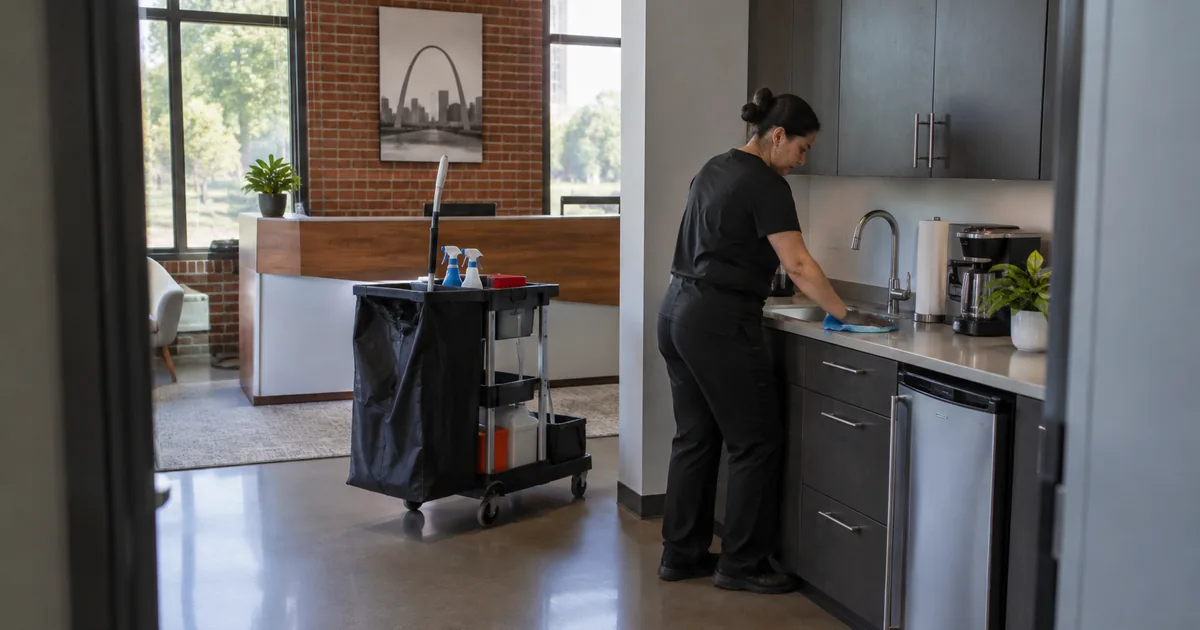
Walk the actual cleaning route with the person who knows the building. Open authorized storage areas, show water access and waste collection points, and identify rooms that are excluded. Ask the provider to distinguish ordinary upkeep from accumulated buildup or work needing separate assessment.
Inspect surfaces, not just room names
In a restroom, discuss toilets, sinks, mirrors, partitions, dispensers, floors, and reachable touchpoints separately. In a kitchenette, clarify whether the scope covers counters and appliance exteriors, dishes, refrigerator interiors, or food disposal. “Clean kitchen” is too broad to support a fair comparison.
For floors, separate routine vacuuming or damp mopping from specialized treatment. Point out worn finishes, damaged grout, and stains without assuming cleaning can reverse them. Photograph existing concerns only with site permission and without capturing confidential material.
Separate construction residue from routine upkeep
If remodeling has recently occurred, disclose whether the issue is dust, debris, or both. For a residential post-construction inquiry, provide bedroom and bathroom counts as well. Construction cleanup should not silently become part of an ordinary janitorial proposal.
Suspected lead, asbestos, silica dust, or biohazards require appropriate specialists and contractor assessment, not routine cleaning. For industrial inquiries, also disclose whether hazardous waste is present; asking about it does not mean the cleaning provider accepts hazardous work. Detailed cleanup may take more than one day, so avoid assuming a fixed completion window.
Build a responsibility matrix both sides can use
After the walkthrough, create one shared document with a row for each task and fields for location, frequency, provider responsibility, customer responsibility, supplies, and exceptions. Plain sentences work if you do not want a spreadsheet. Assign one owner to each action instead of leaving it to “whoever notices.”
For example: “The provider empties designated office bins on agreed service visits; office staff separate confidential documents; the customer identifies the approved disposal location; liner supply is confirmed in the proposal.” This makes clear that ordinary trash handling is not authorization to dispose of sensitive records.
A restroom entry might state: “The provider cleans listed fixtures and checks dispensers; the customer purchases compatible paper and soap unless another arrangement is approved; the designated contact receives shortage reports.” Checking a dispenser, refilling it, and purchasing supplies are three different responsibilities.
Include tasks the provider does not own. Employees may need to clear desktops, secure valuables, remove dishes, and identify items that must not be moved. Name a backup contact for access problems. Otherwise, a locked room can become a recurring dispute about incomplete cleaning.
Make proposals for janitorial cleaning in Kirkwood comparable
Place proposals beside the same room list and responsibility matrix. First compare included tasks and frequencies. Then compare supply arrangements, access assumptions, exclusions, and how additional work is approved. Only after those items align should you evaluate the quoted totals.
Consider two proposals for an office with a shared kitchenette. One includes appliance exteriors and floor care; another says only “breakroom cleaning.” Ask the second provider to specify surfaces and exclusions. Do not assume refrigerator interiors or dishwashing are included in either proposal without explicit confirmation.
Interior windows are an add-on for commercial cleaning, so request that scope separately if needed. Identify the panes, interior glass partitions, accessibility, and any obstructions. Keep window work distinct from routine mirror cleaning so you can compare equivalent work.
Ask each provider to explain what would trigger a revised scope: newly occupied rooms, increased restroom use, a construction project, or a change in access. A comparable proposal makes assumptions visible rather than hiding them behind broad phrases such as “complete cleaning.”
Agree on safe methods and realistic frequencies
Set frequencies by room use and observed soil, not by making every task identical across the building. An active reception entrance may need different attention from a rarely used meeting room. Ask which tasks belong on each visit and which should be scheduled periodically, then record the decision.
Cleaning and disinfection are not interchangeable. CDC guidance supports cleaning before disinfection and using disinfection when appropriate. If disinfection is part of the scope, identify the relevant surfaces and product compatibility. EPA guidance calls for keeping the surface visibly wet for the full label contact time; there is no universal number of minutes.
Never mix cleaners. Require manufacturer-safe care for flooring, furniture, and fixtures, and avoid acids on marble. A general promise to use vinegar everywhere is not a suitable surface-care plan. Discuss ventilation, occupied areas, wet-floor precautions, and secure product storage during the walkthrough.
Define inspection and reporting before service begins
Translate expectations into observable results. Instead of “the office should look perfect,” specify that agreed bins are emptied, listed restroom fixtures are cleaned, and accessible floor areas receive the agreed treatment. Distinguish removable soil from wear, damage, or areas blocked by belongings.
Choose a contact method for missed tasks, access failures, damage concerns, and supply shortages. Ask what information helps resolve an issue: room name, date noticed, task involved, and a privacy-safe photograph where appropriate. Confirm who receives the report and who can authorize a scope change.
Discuss how concerns will be reviewed without assuming a response deadline or remedy that has not been agreed. If the same issue repeats, check the responsibility matrix first. The cause may be an unclear task, unavailable supplies, an inaccessible room, or a frequency that no longer matches use.
Make the final decision with a short scope review
Before approving a proposal, read it as though a new office manager will inherit it tomorrow. Could that person identify the included rooms, service window, task frequencies, supply owner, exclusions, and reporting contact without relying on a sales conversation? If not, request clarification in writing.
For Prime Cleaning MO LLC, begin with the commercial service inquiry and request the free in-person walkthrough. Share your business name, approximate area, restroom count, date or window, and onsite contact. Mention renovation residue or industrial conditions upfront so the discussion starts with the appropriate scope.
Choose the proposal that best matches your documented needs, not the one with the broadest adjectives. Clear responsibilities give both sides a practical reference when conditions change.
By Prime Cleaning MO Team.