Commercial & Janitorial
Office Janitorial Cleaning Kirkwood: Breakroom Cleaning and Appliance Permissions
Build an office cleaning scope around shared spaces, food residue and clear permissions—not a room list alone. Learn what to confirm before pricing.
office janitorial cleaning Kirkwood: Breakroom Cleaning and Appliance Permissions
Planning office janitorial cleaning Kirkwood starts with how people use each room, not simply how many rooms appear on a floor plan. A shared breakroom with reheated lunches needs different attention from a conference room used twice a week. For Prime Cleaning MO LLC, a useful scope identifies food residue, touchpoints, floor conditions and access restrictions before assigning frequencies. The goal is a workable agreement that makes responsibilities clear, especially around refrigerators, microwaves and employee belongings.
Start with the work your office actually needs
Begin with a room inventory and a few scope questions: How many people use the office on its busiest day? Are meals prepared or only reheated? Who clears desks and washes dishes? Which doors remain locked? Record exceptions alongside routine tasks. This prevents a broad instruction such as “clean the kitchen” from being interpreted as permission to discard food, empty cabinets or clean every appliance interior.
Map Rooms by Activity, Access and Cleaning Need
Walk through the office in the order occupants move: entrance, reception, work areas, meeting rooms, breakroom, restrooms and any storage spaces included in the request. For each room, note the surfaces present, typical activity and anything that limits safe access. A floor crowded with boxes presents a different task from an open corridor, even when both cover the same area.
Separate visible soil removal from tasks involving personal property or operational equipment. For example, wiping an accessible reception counter does not imply moving a monitor or sorting paperwork. Ask whether cleaners may move lightweight chairs, whether desk surfaces must be cleared beforehand and whether cables or equipment create restricted zones.
Use a simple room record containing the task, proposed frequency, responsible party and permission needed. “Breakroom counter: remove food residue after occupied lunch periods; staff clear containers first” is more actionable than “kitchen as needed.” Keep staff duties visible rather than assuming the cleaning visit will absorb them. Identify rooms that are unused on certain days so effort follows actual occupancy.
Explore our commercial & janitorial service and cleaning in Kirkwood, MO for property-specific information.
Give Shared Breakroom Food Residue Its Own Plan
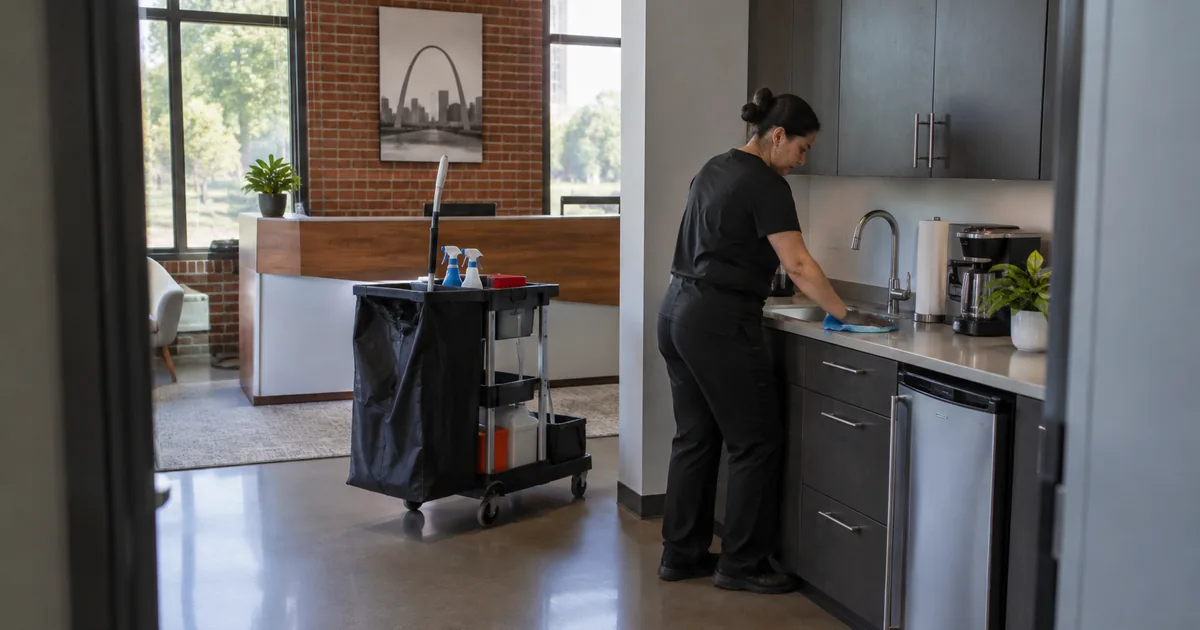
Breakrooms deserve a separate discussion because crumbs, splashes, sticky handles and forgotten food have different owners and cleaning needs. Start by distinguishing accessible surface cleaning from dishes, food disposal and appliance interiors. Ask who removes lunch containers, whether staff share condiments and where food waste should go. Cleaning around abandoned items leaves some surfaces inaccessible.
Separate residue removal from food decisions
Define the surfaces to address: tables, counters, sink, backsplash, cabinet fronts and agreed appliance exteriors. Note where residue collects, including microwave handles and the counter beside a coffee maker. Staff should remove personal items before scheduled service. Establish a written food-disposal policy with an authorized office contact; do not treat an unlabeled container as automatic permission to throw it away.
Plan for busy lunch periods
If many employees eat together, arrange an internal check after lunch for spills, overflowing waste and blocked sinks. If the office is occupied intermittently, align service with occupied days rather than an arbitrary calendar pattern. A spill requiring immediate attention should not wait for the next scheduled visit.
Set Appliance and Cabinet Permissions Before Service
List each appliance separately and specify exterior surfaces, interior work and exclusions. A microwave interior, refrigerator shelving and a coffee machine's internal components are not interchangeable tasks. Ask who empties the appliance, whether it can be unplugged and who approves moving removable parts. Manufacturer instructions should guide care; cleaning does not include equipment repair or descaling unless that work is specifically reviewed and agreed.
For a shared refrigerator, name the person responsible for food decisions. Confirm whether shelves will be empty, how retained food will be handled and who returns it afterward. Do not assume cleaners may unplug refrigeration or leave temperature-sensitive food outside it. For cabinets, distinguish wiping fronts from opening doors, removing contents and cleaning shelves.
Service labels also matter. In a Deep Clean, appliance interiors and inside cabinets are optional add-ons. Move-In/Move-Out includes inside and outside cabinets and appliances. Neither label should silently define an occupied office agreement. Document the office's approved interior tasks individually so employees know what must be cleared and what will remain untouched.
Choose Frequencies from Conditions, Not Guesswork
Assign frequency to individual tasks rather than giving every room the same schedule. Restroom use, visitor traffic, food handling and waste volume can justify different attention levels within one office. Ask what condition each space should reach between visits and what employees can reasonably maintain. This exposes gaps that a room count alone will miss.
For example, an office with frequent client meetings may prioritize reception floors and meeting-table surfaces on occupied days, while a rarely used training room needs attention around bookings. A breakroom used for full lunches may need more frequent residue and waste checks than one used only for sealed drinks. These are planning examples, not fixed schedules for every Kirkwood business.
Review the plan after changes in occupancy, events or meal habits. Ask staff where residue persists and whether agreed areas are accessible when service begins. Adjust the relevant task rather than automatically expanding every visit. Record who authorizes changes so extra requests do not become unclear expectations or unapproved work.
Match Surface Care and Disinfection to the Task
Identify surface materials during the walkthrough, particularly stone counters, coated flooring, stainless steel and finished wood. Use manufacturer-safe methods and products suited to the material. Avoid acids on stone, never mix cleaners and do not assume a stronger product is a better choice. Report uncertain finishes or existing damage before proceeding with a method that could worsen them.
Food residue generally requires cleaning before any appropriate disinfection step. Disinfect only when appropriate, using a suitable labeled product and keeping the surface wet for the full label contact time. Follow any required rinsing instructions for food-contact surfaces. A quick wipe that dries too soon should not be described as completed disinfection.
Confirm where electrical equipment, sensitive documents or restricted materials limit access. An unusual stain or odor may require investigation by the office rather than a more aggressive cleaning method. Hazardous work is never promised. Suspected hazardous materials or conditions outside the agreed scope should be reported to the designated contact, not treated as routine janitorial tasks.
Prepare for the Free In-Person Commercial Walkthrough
Commercial and industrial cleaning, including commercial post-construction requests, require a free in-person walkthrough before pricing from Prime Cleaning MO LLC. Prepare the business name, approximate square footage, restroom count, preferred date/time window and onsite contact. Provide the exact Kirkwood office address and practical entry instructions so the visit can focus on conditions and scope.
Have someone present who can approve access and explain breakroom rules. Point out appliance interiors being requested, locked cabinets, storage restrictions, waste routes and areas that cannot be interrupted. For commercial post-construction, explain what work remains active and identify debris or materials needing separate assessment. Do not assume all construction-related residue or hazardous work can be accepted.
Ask how initial buildup will be distinguished from ongoing maintenance. Detailing beyond a deep clean may take more than one day; the walkthrough helps establish the appropriate scope without promising a completion timeline. Interior windows are optional for office service and should be requested explicitly. They are optional across services except Airbnb turnovers, where that optional-service rule does not apply.
Turn the Walkthrough into a Clear Working Agreement
Before approving service, review the room-by-room tasks, frequencies, access arrangements and exclusions together. Include appliance permissions, food-disposal authority and who clears counters or desks. Identify a backup contact for locked rooms or unexpected conditions. Keep the scope specific to this office rather than treating it as a universal checklist.
Distinguish commercial planning from other service categories. Standard/recurring service is available only after an initial deep clean, not as a first-time or one-time cleaning. The first standard/recurring quote includes that deep clean. Ask which service structure fits the request instead of assuming an office maintenance proposal follows a residential service label.
Finally, agree on a simple way to report missed access, recurring residue or changing needs. A note such as “refrigerator shelves unavailable because food remained inside” explains a limitation without blaming staff. Revisit permissions when office managers change or new appliances arrive. Clear decisions about shared food areas make the plan easier for both occupants and the cleaning team to follow.