Commercial & Janitorial
Office Cleaning in St. Louis: Build a Scope
Turn a vague office cleaning request into a measurable scope that defines rooms, surfaces, access, supplies, and responsibility before pricing.
Start with a scope that someone can verify
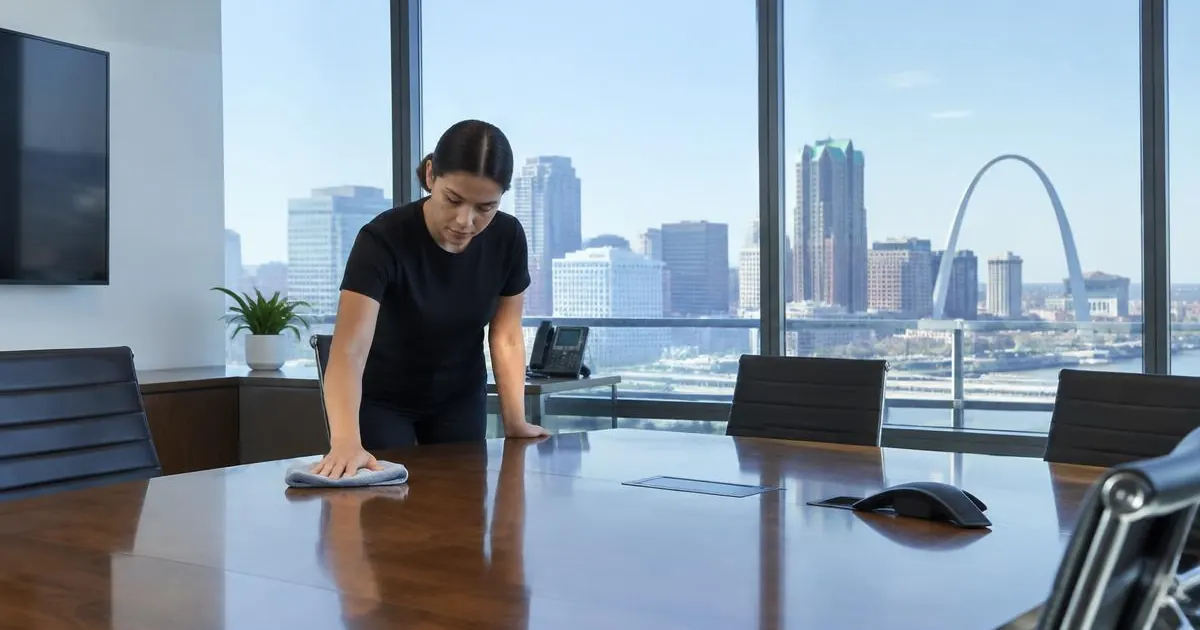
To scope office cleaning in St. Louis, list every service zone, name the tasks within it, assign responsibility, and define what completion looks like. Bring that outline to a walkthrough rather than requesting a price for “the whole office.” Prime Cleaning MO LLC provides commercial pricing after a free in-person walkthrough, where access, surfaces, occupancy, and exclusions can be assessed.
A usable scope might say: “Reception: remove accessible surface dust, clean entry glass, vacuum the mat, and clean the exposed floor using finish-compatible methods.” That is more useful than “keep reception presentable.” It tells both parties what is included without implying that every object, drawer, or hidden surface will be handled.
Start your inquiry with the business name, approximate area, restroom count, requested date or service window, and onsite contact. Share the office location in the St. Louis metro and any known access restrictions. These details help organize the visit; they do not replace it.
Map office cleaning in St. Louis by zone
Walk the premises in a consistent order: entrance, reception, workstations, meeting rooms, kitchen, restrooms, corridors, and storage. Give each area a recognizable name. “Second-floor meeting room” is better than “conference space” if the building has several. Note rooms that are locked, shared with other tenants, or outside your responsibility.
For each zone, record the floor material, cleanable surfaces, waste points, and obstacles. An approximate area helps with planning, but two similarly sized offices can have very different needs. Open flooring is different from rows of closely spaced desks with cables and personal belongings underneath.
Then mark boundaries. Does the landlord handle the shared lobby? Is the stairwell included? Who cleans the glass beside the suite entrance? In a multi-tenant building, these questions prevent gaps and duplicated work. Use a simple annotated floor plan or a room-by-room document that can be revised after the walkthrough.
Explore our commercial & janitorial service and cleaning in St. Louis, MO for property-specific information.
Decide what staff own and what cleaners own
Cleaning quality depends partly on preparation and permission. Define what employees must clear, what cleaners may move, and what must remain untouched. This is especially important around confidential records, electronics, and individual desks.
Set a clear-desk rule that staff can follow
Specify whether desk cleaning means exposed surfaces only. Ask staff to put away paperwork, mugs, and personal items before the agreed service window. Do not make cleaners decide whether a document can be relocated or discarded. Identify any desks or rooms that are excluded.
Separate workstation surfaces from equipment care. Monitors, keyboards, phones, and specialist devices need explicit permission and manufacturer-safe methods. If staff handle their own electronics, record that ownership rather than leaving it implied.
Assign supplies, waste, and access
Name who purchases and stores bin liners, soap, paper towels, and toilet tissue. Distinguish replenishing dispensers from supplying consumables. Identify the authorized waste destination and any recycling separation rules used by the building.
Assign an onsite contact for locked doors, alarms, leaks, or unexpected conditions. Confirm key or access-code handling directly. If a room cannot be entered, the reporting process should identify the missed area rather than silently treating it as completed.
Make restroom requirements specific
Restroom count alone does not describe the work. During the walkthrough, identify toilets, urinals, sinks, mirrors, partitions, dispensers, bins, and floor types. Note whether restrooms serve only employees or also receive visitors. Occupancy and use should inform the proposed task frequency without relying on a universal schedule.
Write tasks by surface: clean fixtures, remove visible soil from accessible partitions, clean mirrors, empty designated bins, and clean floors using compatible products. State whether touchpoints are included and whether replenishment is part of the scope. A stocked dispenser and a clean dispenser are separate responsibilities.
For acceptance, use observations that can be checked: mirrors without visible residue, fixtures free of visible soil, bins emptied as agreed, and no cleaning residue left on the floor. Persistent odors, leaking fixtures, damaged grout, or overflowing drains may need building maintenance rather than additional routine wiping.
Agree on how shortages or defects will be reported. For example, a locked supply cabinet should trigger a message to the contact, not an assumption that replenishment was unnecessary.
Identify floors before choosing the method
Record actual flooring materials rather than labeling everything “hard floor.” Carpet tile, sealed concrete, vinyl, ceramic tile, wood, and natural stone can require different care. Ask the building manager for maintenance instructions and details of any applied finish. Appearance alone is not a reliable guide to compatibility.
Separate routine soil removal from restorative work. Vacuuming and compatible damp cleaning do not automatically include carpet extraction, finish removal, refinishing, or stain correction. If a corridor has dull traffic lanes, request an assessment instead of assuming ordinary mopping will restore its appearance.
For example, a marble reception floor should not receive an acidic cleaner. A coated floor may also require specific chemistry or equipment. Use manufacturer-safe care, and avoid the idea that vinegar is suitable everywhere. Unknown materials or finishes should be clarified before a method is selected.
Include entry mats and edges in the discussion. In wet St. Louis weather, tracked-in moisture and grit can change entrance needs. Confirm safe work sequencing and warning-sign placement so floor cleaning does not leave an unmarked wet route through an occupied office.
Separate cleaning, disinfection, and excluded hazards
Cleaning removes dirt and residue; disinfection is a separate step used when appropriate. CDC guidance recommends cleaning before disinfection. If disinfection is included, identify the relevant surfaces and use a product suitable for those surfaces and the intended application.
Follow label directions. EPA guidance calls for keeping a disinfected surface visibly wet for the full label contact time; there is no universal number of minutes for every product. Never mix cleaners. Do not improvise chemical combinations to address a stubborn mark or odor.
Flag unusual conditions before work is scoped. Suspected lead, asbestos, silica, or biohazards call for appropriate specialists and contractor assessment, not routine office cleaning. If an office adjoins industrial operations, disclose hazardous waste and process-related residues for assessment; disclosure does not mean that hazardous work is accepted.
Use the walkthrough to distinguish routine work from projects
Bring your zone document to the free in-person walkthrough and inspect representative surfaces together. Point out existing damage, inaccessible corners, congested rooms, and areas that matter most to your business. Confirm whether service can occur while people are present and which spaces must remain available.
Treat interior windows as an add-on rather than silently including them in routine office tasks. Identify the panes, access limitations, and intended extent of the work. Similarly, ask explicitly about refrigerator interiors, cupboards, or other tasks that might otherwise be confused with ordinary breakroom surface cleaning.
Renovation residue belongs in a separate conversation. For a post-construction inquiry, provide bedroom and bathroom counts where applicable, and explain whether the issue is dust, debris, or both. For an office, clarify the room layout rather than forcing residential labels onto it. Contractor assessment is essential when hazardous dust is suspected.
Detailing may take more than one day. Avoid building a reopening plan around an assumed cleaning duration before the condition and scope have been assessed.
Approve measurable outcomes and a change process
Before approving the proposed scope, read it room by room. Each entry should identify the task, agreed frequency, access conditions, exclusions, and responsible party. Replace vague phrases such as “as needed” with an observable trigger or a named person authorized to request extra work.
Inspect against that document, not against an unstated expectation. Useful checks include visible debris removed from accessible flooring, designated bins emptied, and agreed glass surfaces free of obvious smears. Distinguish missed work from permanent wear, damage, or a surface blocked by belongings.
Choose one business contact to consolidate feedback and request scope changes when staffing, occupancy, or room use changes. For a Prime Cleaning MO LLC inquiry, send your basic property details and request the commercial walkthrough before expecting pricing.
Written by the Prime Cleaning MO Team.