Commercial & Janitorial
Office Janitorial Cleaning Brentwood: Reception Areas Beyond First Impressions
Build an office janitorial plan that gives reception more than a polished appearance, assigns sensible room frequencies and separates routine work from extra detailing.
office janitorial cleaning Brentwood: Reception Areas Beyond First Impressions
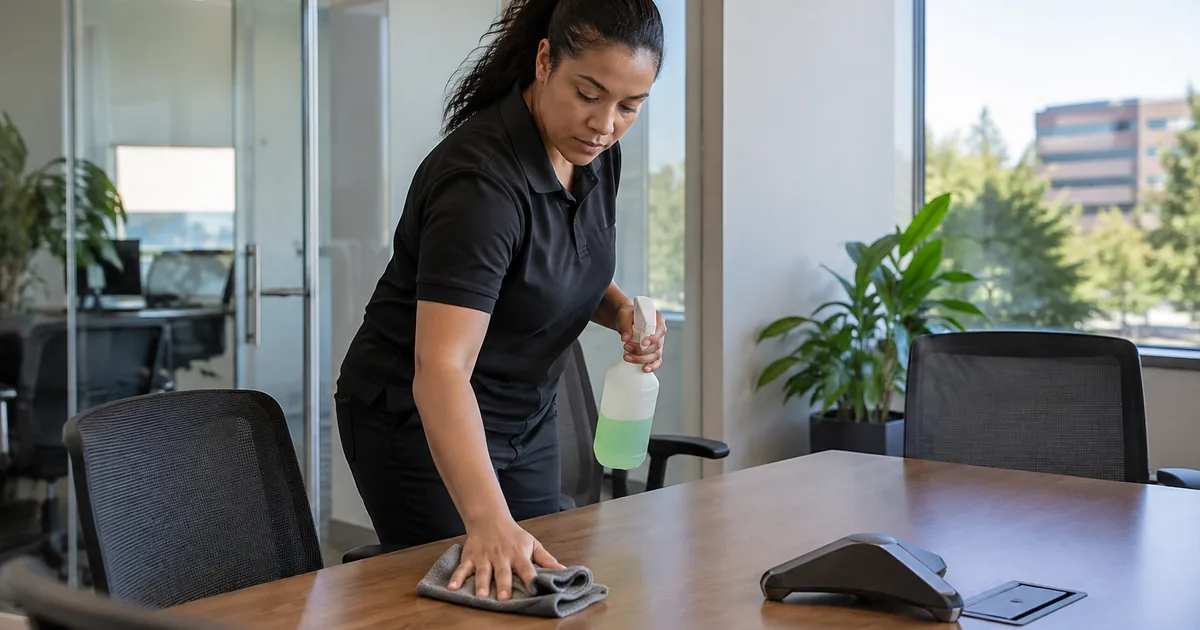
A useful plan for office janitorial cleaning Brentwood starts with how people use the office, not simply how it looks at closing. Reception deserves particular attention because visitors, deliveries and employees share its surfaces. Prime Cleaning MO LLC can discuss those priorities during the required free in-person walkthrough before commercial pricing. Bring a floor plan if available, or make a simple room list that includes entrances, reception, workstations, meeting rooms, restrooms, break areas and storage spaces.
For each room, record who uses it, when it is busiest and what cleaning access is possible. A reception desk staffed throughout business hours needs a different service window from an unused conference room. Ask whether cleaners may move visitor chairs, reach beneath desks or enter locked rooms. Mark confidential areas separately rather than assuming every accessible room is authorized.
Then distinguish visible soil from less obvious needs. Fingerprints on an entry door matter, but so do crumbs beneath seating, residue on shared controls and debris along walking routes. This distinction keeps reception priorities from becoming appearance-only cleaning.
Give reception a functional cleaning sequence
Plan reception from the entrance inward. First identify loose debris, wet-weather tracking and obstacles that could interfere with cleaning. Then address accessible surfaces, shared touchpoints and seating according to their materials. Clean floors after nearby dusting and surface work so loosened debris does not land on a freshly finished floor. Coordinate wet-floor work with the office contact to limit access while the surface dries.
Make the reception desk boundary explicit. Its public-facing counter may be available for cleaning while the employee side contains paperwork, payment equipment or personal items that should remain untouched. Specify whether staff will clear the counter before service. The same rule applies to brochure holders, visitor sign-in equipment and package shelves: identify what may be moved and who is responsible for electronics.
Choose priorities by use, not decoration. If visitors share chair arms and a door handle throughout the day, those surfaces deserve a defined cleaning frequency even when they look clean. Decorative shelving may need less frequent attention, provided dust and soil are still monitored.
Explore our commercial & janitorial service and cleaning in Brentwood, MO for property-specific information.
Assign frequencies by activity, not room labels
Frequency should respond to occupancy, traffic and observed soil. Avoid assuming every room needs the same work on every visit. Build a schedule with separate entries for routine tasks, condition-based tasks and periodic detailing. The following examples are planning options, not a promised service checklist.
Busy reception and shared spaces
Consider cleaning reception floors and accessible shared touchpoints each service visit when daily use warrants it. Ask staff to report spills promptly rather than leave them until the next scheduled cleaning. If midday attention is needed, decide whether employees will handle it or whether a separate service arrangement should be discussed. Repeated tracking near the entrance may justify changing that area’s frequency without increasing every room’s schedule.
Quiet rooms and variable occupancy
A meeting room used twice during a workweek may need attention after use rather than the same schedule as reception. An unused private office may need periodic dusting and floor care. Review actual conditions after schedule changes, staff moves or events. Increase or reduce specific tasks based on what the room needs, keeping restroom sanitation and waste concerns separate from cosmetic preferences.
Plan restrooms and break areas separately
Restrooms require their own scope because fixtures, touchpoints, waste and supplies create different needs from desk areas. Count the restrooms before requesting the walkthrough, then discuss fixture access, floor materials and any dispenser arrangements. Clarify who purchases and stores consumables and whether replenishment is included. A cleaning visit cannot substitute for an employee response to an overflowing fixture or a newly reported maintenance problem.
In break areas, distinguish shared surface cleaning from responsibility for food and dishes. Decide who empties the sink, removes expired food and clears tables before service. Appliance exteriors and appliance interiors are separate tasks unless the agreed service explicitly combines them. Ask about refrigerator shelves, microwave interiors and cabinet interiors rather than relying on the phrase “kitchen cleaning.”
Use manufacturer-safe methods for every surface. Never mix cleaners, and avoid acids on natural stone. Disinfect only when appropriate, after any required cleaning, and maintain the product label’s full contact time. A quick wipe that dries too soon should not be treated as completed disinfection.
Set workstation and meeting-room boundaries
Workstations combine ordinary cleaning needs with privacy and equipment concerns. Establish a clear-desk expectation if accessible desktop cleaning is requested. Cleaners should not have to decide whether a paper stack is rubbish, an active project or a confidential record. Identify bins intended for regular waste and keep document disposal procedures separate, particularly where shredding containers or restricted records are present.
Discuss electronics individually. Keyboards, monitors, telephones and conference controls may require manufacturer-specific care or employee handling. Do not assume a general surface-cleaning instruction authorizes spraying equipment or disconnecting cables. Ask which devices may be cleaned, which products or methods are approved and whether equipment must be powered down by office staff.
Meeting rooms also need a reset boundary. Returning chairs to agreed positions is different from organizing presentation materials or checking technology. If food is routinely served, include table residue, crumbs beneath seating and waste in the room’s priorities. Record whether cleaners may move lightweight furniture and flag heavy or fixed items for a separate access discussion.
Match floors, glass and detailing to conditions
Identify floor materials during the walkthrough instead of assigning one method throughout the office. Carpet, resilient flooring, tile and stone have different care requirements. Discuss routine soil removal separately from specialized floor treatments or stain concerns. No cleaning plan should imply restoration, and an unfamiliar finish or damaged surface should be assessed before products or methods are selected.
Interior windows are optional for commercial office cleaning, not an automatic part of the routine scope. Identify the exact panes requested, along with accessible interior partitions if relevant. Clarify whether frames, sills or tracks are included. A request to address entry-door fingerprints should not silently become an agreement to clean every interior window.
Periodic detailing can cover agreed areas that routine visits do not adequately address, such as accessible ledges or buildup around furniture edges. Detailing beyond a deep clean may take more than one day, depending on scope and conditions. Ask which rooms can be released in stages and what furniture or stored materials must be cleared before work can proceed.
Separate office scope from other service packages
Service names are not interchangeable. For an office janitorial agreement, request a written scope specifying rooms, tasks, frequency and exclusions. If the space has recently been renovated, say so before pricing: commercial post-construction cleaning requires a free in-person walkthrough, just as commercial and industrial cleaning do. Construction residue, occupancy restrictions and contractor activity need assessment rather than assumptions based on square footage alone.
For separate property-cleaning requests, Prime Cleaning MO LLC’s package distinctions matter. Deep-clean appliance interiors and inside cabinets are optional add-ons. Move-In/Move-Out cleaning includes both the inside and outside of cabinets and appliances. Standard/recurring cleaning is available only after an initial deep clean, not as a one-time or first-time standard service; the first standard/recurring quote includes that deep clean.
Interior windows are optional across services except Airbnb turnovers, where that optional offering does not apply. Do not transfer residential package inclusions to an office contract without confirmation. Describe unusual residue or suspected hazardous materials before assessment; hazardous work is never promised, and mold removal or hazardous waste handling should not be assumed.
Prepare the walkthrough and document the plan
Before contacting Prime Cleaning MO LLC, gather the business name, approximate square footage, restroom count, preferred date and time window, and onsite contact. Add the Brentwood office address and access instructions. Commercial, industrial and commercial post-construction pricing requires the free in-person walkthrough first; these details help organize that visit, rather than replace it with an unsupported remote price.
During the walkthrough, ask practical scope questions: Which reception surfaces receive the most handling? Who clears desks and break-area counters? Are any rooms restricted? Where can cleaning supplies be stored, if storage is arranged? Who manages alarms, keys and locking up? Confirm whether the proposed service window conflicts with meetings, deliveries or employees working late.
Afterward, review a room-by-room scope with task frequencies and optional work clearly separated. Name one office contact for changes and concerns. If reception looks tidy but chair arms, shared counters or entry-floor soil are repeatedly missed, revisit those tasks specifically. Adjustments should solve the observed problem rather than merely add polishing or broaden the whole contract.