Commercial & Janitorial
Office Janitorial Cleaning Crestwood: Updating Scope as Your Team Changes
Build an office cleaning scope around actual room use, then keep it accurate as headcounts, layouts and cleaning needs change.
office janitorial cleaning Crestwood: Updating Scope as Your Team Changes
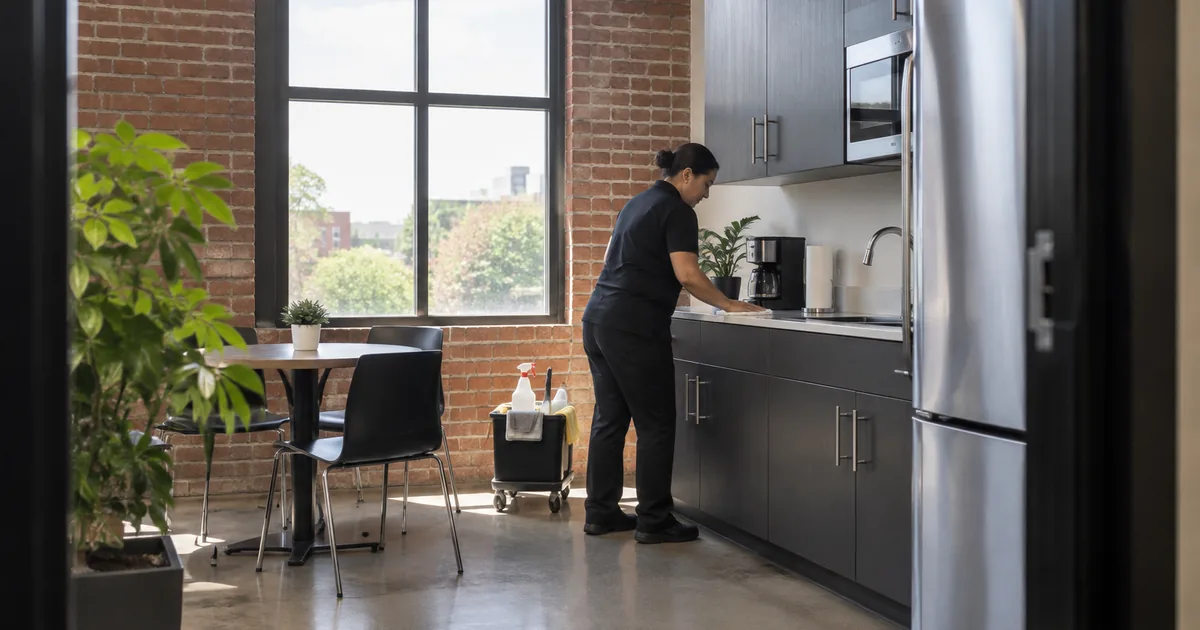
Planning office janitorial cleaning Crestwood starts with how your office actually operates, not simply how many rooms appear on a floor plan. A reception area with steady visitor traffic needs a different approach from a conference room used occasionally. Prime Cleaning MO LLC uses a free in-person walkthrough before commercial pricing so the proposed scope can reflect the space, access conditions and requested work.
Begin with a room list and identify who uses each area, when it is occupied and what makes it dirty. Note shared desks, food consumption, deliveries and visitor access. Then name one person authorized to approve the cleaning scope and request changes. That ownership matters when staffing grows or a storage room becomes an active workspace: cleaning requirements should change deliberately rather than through informal instructions left for the crew.
Map office janitorial cleaning Crestwood by room
Walk through the office in the same order a cleaner would encounter it. Separate entrances, reception, corridors, workstations, private offices, meeting rooms, restrooms, breakrooms and storage areas. Record floor materials and any access restrictions. A locked records room should not silently become part of an otherwise accessible office scope.
For each room, ask four questions: What tasks are needed? Which surfaces may be touched? How often does actual use justify service? What preparation must staff complete? For example, desk-surface cleaning may depend on employees clearing papers and personal items. Moving confidential documents should not be assumed.
Define boundaries around shared building areas as well. If the property manager handles common corridors or lobby floors, identify where your office responsibility begins. Otherwise, a proposal can duplicate building services while missing an internal corridor everyone thought someone else maintained. Keep the resulting room inventory available when comparing the walkthrough notes with the proposed scope.
Explore our commercial & janitorial service and cleaning in Crestwood, MO for property-specific information.
Set frequencies around use, not room labels
Assign frequency to individual tasks rather than giving every room the same schedule. Occupied-day, selected-day and periodic work can coexist in one office. These are planning options to confirm during the walkthrough, not a universal service checklist.
High-use rooms and shared touchpoints
Restrooms, breakrooms and busy entrances deserve close attention because use can change quickly. Ask whether waste accumulates between visits, whether floor debris travels into adjacent rooms and who replenishes supplies. A restroom serving both employees and visitors may need a different schedule from an employee-only restroom, even when the fixtures are similar.
Distinguish cleaning from disinfecting. Where disinfection is appropriate, select a product suitable for the surface and allow its full label contact time. A quick wipe should not be described as equivalent.
Low-use rooms and periodic tasks
An infrequently used meeting room may need attention after events rather than the same task frequency as reception. Higher ledges and accessible vents can be discussed separately from routine floor and waste tasks. Confirm safe access and equipment needs instead of assuming every elevated surface is included.
Make staffing and space changes formal requests
The most useful schedule is one that can be updated. Establish a change-request process before service begins. Ask staff to route requests through the authorized contact, then describe the affected room, the old use, the new use and the requested start date. Include whether the change is temporary or ongoing.
A headcount increase does not automatically mean every task needs more frequent service. If new employees share existing workstations on alternating days, restroom and breakroom demand may grow more than desk-cleaning demand. Conversely, converting a quiet office into a training room can create additional chair movement, food waste and floor debris without changing the permanent staff count.
Have Prime Cleaning MO LLC review the operational effect before treating new work as included. Changes affecting labor, access or equipment should receive written scope and pricing approval. Keep the previous scope until the replacement is confirmed, so neither side relies on a hallway conversation to define the work.
Use decision examples to prevent scope drift
Consider a conference room that becomes a daily lunch area. The request should identify food use, waste volume, table materials and any new appliances. Ask whether staff will remove leftovers and clear tables before service. The decision is not merely to clean the room more often; it is to add the appropriate tasks and clarify employee responsibilities.
If a storage room becomes occupied desk space, confirm which shelving remains, whether outlets and cords limit floor access, and whether stored files may be moved. Update the room inventory and agree on accessible work surfaces. Do not assume cleaners will reorganize supplies to reach previously excluded areas.
For a temporary training event, specify the rooms involved, attendance expectations and the event window. Ask whether cleaning is needed before, afterward or both, and who will remove catering items. Once the event ends, confirm whether the usual scope resumes. Temporary requests should not become permanent additions by accident.
Prepare for the required in-person walkthrough
Commercial and industrial work, including commercial post-construction cleaning, requires a free in-person walkthrough before pricing from Prime Cleaning MO LLC. To arrange it, provide the business name, approximate square footage, restroom count, preferred date and time window, and an onsite contact. Identify any restrictions on entry so the visit can be planned appropriately.
Bring the room inventory, current cleaning concerns and anticipated staffing or layout changes. Point out unusual flooring, heavy buildup, restricted rooms and items that require manufacturer-specific care. Explain whether cleaners can work in an empty office or must navigate occupied areas. Discuss keys, alarm procedures and where equipment or supplies may be stored.
Post-construction requests need particular attention to debris, residues and remaining contractor activity. Do not assume hazardous work is available or included. If conditions suggest potentially hazardous materials, disclose them before work is discussed. Detailed work beyond a deep clean may take more than one day; the walkthrough helps establish scope rather than supporting an unsupported completion promise.
Confirm add-ons and surface-care boundaries
Separate routine office tasks from specialty requests. For deep cleaning, appliance interiors and inside cabinets are optional add-ons. Move-In/Move-Out cleaning includes inside and outside cabinets and appliances. Interior windows are optional for all services except Airbnb turnovers. Specify which windows are requested and confirm accessibility during scope review.
If you are comparing other service categories, standard/recurring cleaning is available only after an initial deep clean, not as a one-time or first-time standard service. The first standard/recurring quote includes that deep clean. Do not substitute a residential package description for the written commercial scope developed after the walkthrough.
Document material-sensitive areas, including stone counters, finished wood and specialty flooring. Surface care should follow manufacturer guidance; avoid acids on stone and never mix cleaners. Flag damaged finishes before cleaning, since cleaning is not restoration. Ask employees to identify equipment that requires specialist handling, and clarify whether monitors, keyboards or other electronics are excluded or subject to specific care instructions.
Review results and keep the scope current
Use the agreed room-and-task list to review service rather than relying on a general impression that the office looks clean. Record concerns by location and task: debris under an accessible meeting table is more actionable than a broad complaint. Distinguish missed work from areas blocked by furniture, stored boxes or uncleared desks.
Review frequencies when conditions change. Increased waste between visits, persistent entrance debris or a newly active room can signal that the original plan no longer fits. Ask whether a task adjustment, staff preparation change or additional service frequency would address the problem most directly.
Maintain one current scope document with room names, tasks, frequencies, exclusions, approved add-ons and the authorized contact. Record approvals when staffing or space use changes. This gives your Crestwood office a practical basis for requesting service from Prime Cleaning MO LLC: the work reflects current operations, and additional requests are evaluated before they become expectations.