Commercial & Janitorial
Office Janitorial Cleaning Fenton: Routine Waste, Junk and Hazardous Materials
A useful office janitorial plan connects room use with cleaning frequency and clearly separates everyday trash from bulky items and hazardous materials.
office janitorial cleaning Fenton: Routine Waste, Junk and Hazardous Materials
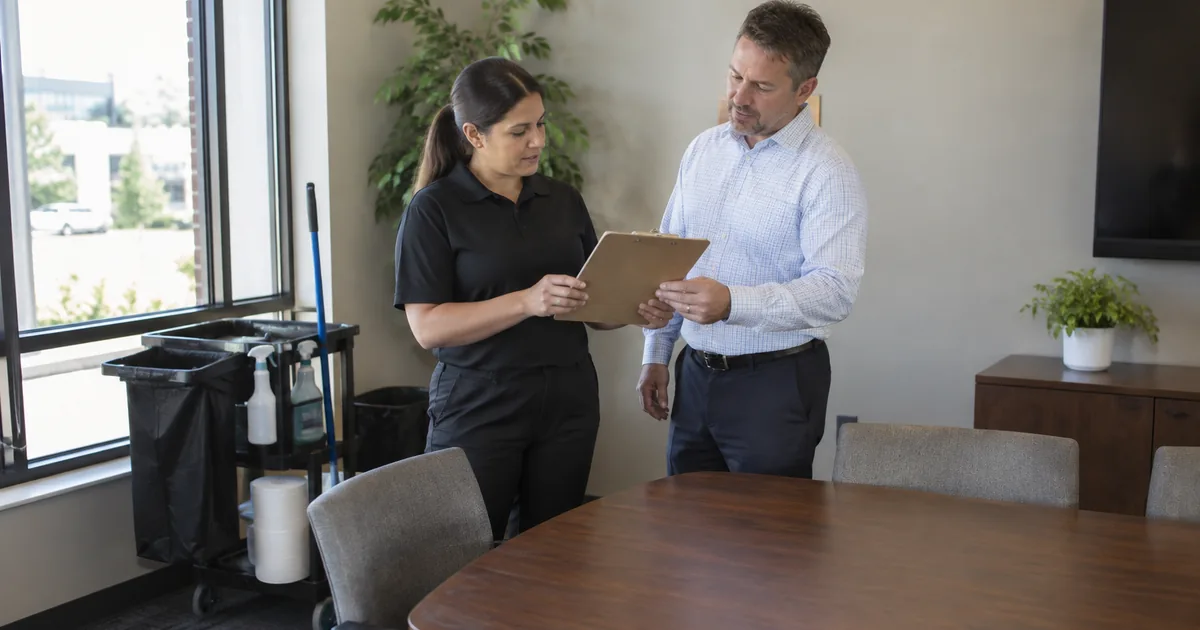
Planning office janitorial cleaning Fenton starts with what your office actually needs, not a generic list of tasks. Prime Cleaning MO LLC requires a free in-person walkthrough before pricing commercial, industrial or commercial post-construction cleaning. That visit establishes which rooms are included, what conditions affect access and where routine janitorial work ends. Bring questions about waste handling, shared surfaces and areas that must remain undisturbed.
To arrange the walkthrough, provide the business name, approximate square footage, restroom count, preferred date and time window, and an onsite contact. Identify the exact Fenton office address and suite so the discussion concerns your space rather than assumptions about a typical building. Mention shared entrances, tenant-only areas and any building rules governing service access.
Ask who controls each space. A tenant may manage its own desks and breakroom while a property manager handles corridors or shared restrooms. Confirm those boundaries before requesting a quote; otherwise, the same area may be assigned twice or overlooked.
Map rooms before choosing cleaning frequencies
Create a room-by-room inventory with three details: how each room is used, how often people occupy it and which tasks matter there. Reception areas collect tracked-in soil; conference rooms accumulate cups after meetings; storage rooms may need less frequent attention. Room names alone do not determine an appropriate schedule.
Use attendance patterns to make decisions. An office with regular visitors may need entrance and restroom attention on each service visit. A meeting room used only occasionally might follow a lower-frequency floor and dusting schedule, with staff removing food waste immediately after use. These are planning examples, not fixed service commitments.
Separate the frequency of a visit from the frequency of an individual task. Waste collection may be needed more often than high dusting, while a spill needs prompt attention rather than waiting for the next scheduled visit. Record who handles between-visit needs and what conditions should trigger a schedule review.
Explore our commercial & janitorial service and cleaning in Fenton, MO for property-specific information.
Define routine waste before anyone empties a bin
Waste instructions deserve their own written scope. Label collection points, identify approved disposal destinations and explain whether liners should be replaced when soiled or damaged. Ask whether the building has rules for sorting, bagging, container weight or access to a shared waste enclosure.
Ordinary office trash and recycling
Define routine waste as agreed everyday contents of designated office bins, such as snack wrappers and ordinary non-confidential paper. Food waste should have a clear collection arrangement based on occupancy and disposal access. Recycling belongs in the plan only when the accepted materials and destination are known. Do not assume every labeled container accepts the same items.
Bulky items, confidential waste and hazards
A broken desk, stacked furniture, obsolete equipment or a pile of renovation debris is not simply a larger wastebasket. Identify bulky junk separately and arrange an appropriate removal option rather than assuming janitorial collection covers it. Confidential records need the business’s approved secure process. Sharps, unknown liquids, chemical containers and potentially contaminated materials require separate assessment; hazardous handling is never promised. Staff should flag these items without opening, sorting or combining them.
Give restrooms a task-based schedule
Plan restroom service around use, fixture count and observed condition. Discuss toilets, urinals where present, sinks, faucets, mirrors, touchpoints and floors as separate tasks. Clarify whether consumable replenishment is requested, who supplies the products and where stock is stored. A cleaning visit cannot resolve a supply shortage if responsibility is undefined.
Distinguish cleaning from disinfecting. Cleaning removes soil; disinfecting is appropriate for selected surfaces and circumstances, using a compatible product according to its label. The full label contact time must be achievable. A quick wipe should not be described as effective disinfection when the required conditions have not been met.
Ask what happens if a restroom needs attention between visits. The office should identify a person to report leaks, blocked fixtures or unexpected contamination and restrict access when necessary. Janitorial scope should not imply plumbing repair, mold removal or hazardous cleanup. Persistent moisture or damaged finishes should be reported for the responsible party to assess.
Set breakroom rules for food, cabinets and appliances
Breakrooms need clear boundaries because personal food and shared equipment occupy the same space. Agree on accessible counter cleaning, sink care, table wiping, floor attention and routine waste collection. Establish a staff policy for removing dishes and food from work surfaces. Ask whether cleaners may move small items or should clean only cleared areas.
Appliance interiors and cabinet interiors are optional add-ons to deep cleaning, not automatic inclusions. If an office refrigerator interior needs attention, request it explicitly and decide who removes food, handles expired items and restores contents. Discuss access and manufacturer instructions before requesting cleaning inside an appliance.
Scope differs by service: Move-In/Move-Out includes inside and outside cabinets and appliances. That does not make those tasks part of every office visit. Interior windows are optional for all services except Airbnb turnovers. For an office request, identify the particular glass, accessibility and desired frequency rather than assuming interior windows are included.
Protect workstations, meeting rooms and finishes
Workstations require permission rules as much as cleaning instructions. Identify papers, devices, samples and personal belongings that must not be disturbed. Agree whether desktop cleaning applies only to cleared surfaces. Keep confidential documents secured and discuss how cleaners should report an inaccessible area without photographing or exposing sensitive information.
Specify manufacturer-safe surface care for flooring, counters, furniture and equipment. Avoid acids on stone, never mix cleaners and check compatibility before applying a product. Electronics should not be treated like washable countertops. If a finish or device lacks clear care guidance, pause that task until suitable instructions are available.
For meeting rooms, separate resetting from cleaning. Moving chairs, arranging supplies and clearing abandoned materials should be discussed rather than inferred. A room used for meals may need table and floor attention after those events, while an infrequently used room may need a different schedule. Agree who reports unusual use so service planning can respond to actual conditions.
Match the starting condition to the service scope
A maintenance schedule works best when the starting condition is understood. Standard/recurring service is available only after an initial deep clean; it is not a one-time or first-time standard cleaning option. The first standard/recurring quote includes that initial deep clean. Discuss the starting condition during the commercial walkthrough so ongoing maintenance is not confused with accumulated-detail work.
Point out buildup along edges, neglected accessible surfaces and rooms that have been out of use. Ask which tasks belong in the initial scope and which need separate consideration. Detailing beyond deep cleaning may take more than one day. Do not build an occupancy or reopening plan around an unconfirmed completion assumption.
Renovation changes the conversation. Commercial post-construction work also requires a free in-person walkthrough before pricing. Describe the work performed and identify remaining debris or restricted areas. Janitorial planning does not establish that unknown construction residue is safe to handle, nor does it promise restoration or hazardous waste removal.
Document responsibilities and review the plan
Turn the walkthrough discussion into a written room-and-task scope with agreed frequencies, exclusions and optional additions. Include access instructions, alarm responsibilities, approved storage and disposal locations, and the person authorized to request changes. Keep sensitive access details in an appropriate secure channel rather than on a publicly visible checklist.
Use practical review questions: Are food bins overflowing between visits? Are staff clearing desks as agreed? Is a low-use room receiving attention while a busy entrance needs more? Adjust the relevant task or frequency instead of assuming every concern requires a larger package.
When reporting an issue to Prime Cleaning MO LLC, identify the room, observed condition and requested outcome. State whether it involves routine waste, bulky junk or a potentially hazardous item. Clear categories help keep ordinary office cleaning separate from work requiring another assessment or provider.