Commercial & Janitorial
Office Janitorial Cleaning Ladue: Detailed Work Beyond Routine Maintenance
Build an office cleaning plan that distinguishes routine janitorial maintenance from deep cleaning and specialty detailing, with room-specific frequencies and clear scope questions.
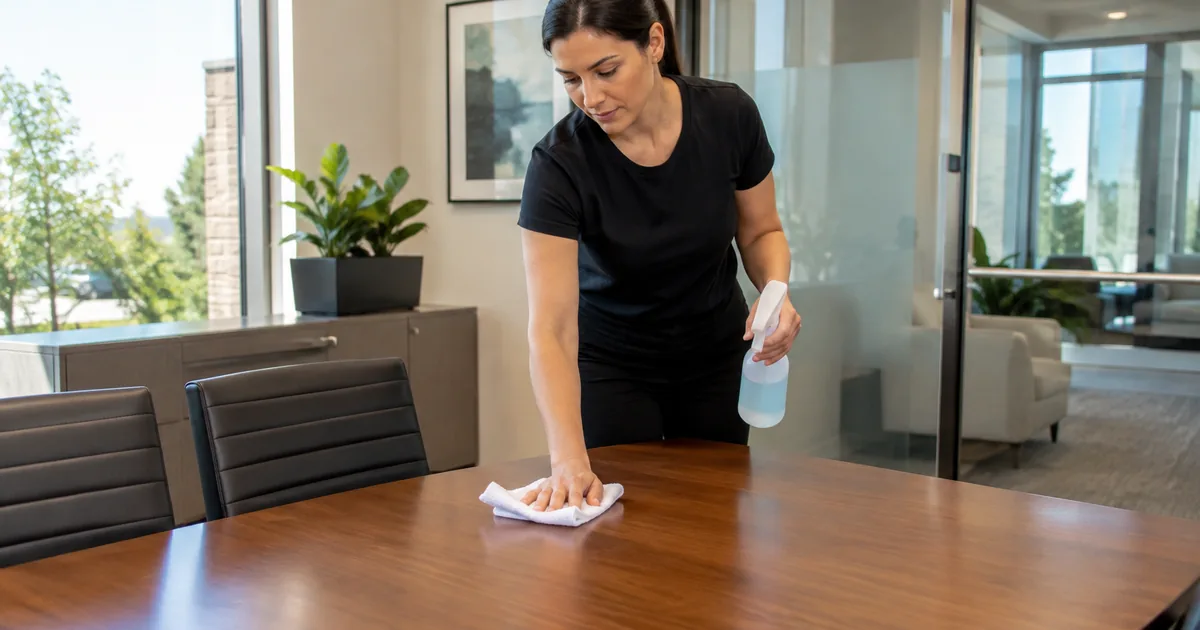
office janitorial cleaning Ladue: Detailed Work Beyond Routine Maintenance
Planning office janitorial cleaning Ladue starts with identifying how each room is used, not choosing one frequency for the entire building. For your Ladue office, list reception, workstations, meeting rooms, restrooms, breakrooms, storage areas and connecting corridors. Note which spaces receive visitors, which contain sensitive materials and which have surfaces needing special care.
Give each area a practical priority: sanitation needs, visible presentation or periodic detail. A lightly used conference room may need inspection before meetings rather than the same attention as a restroom used throughout the day. Mark rooms that cleaners cannot enter without an escort and desks that must remain untouched.
Prime Cleaning MO LLC needs a free in-person walkthrough before pricing commercial, industrial or commercial post-construction work. Prepare the business name, approximate square footage, restroom count, requested date and time window, and onsite contact. These details support the walkthrough; they do not replace it or establish a price.
Separate Ordinary Maintenance From Specialty Detailing
Ordinary janitorial maintenance addresses recurring soil and daily use: accessible surface wiping, agreed waste collection, restroom upkeep and suitable floor cleaning. Deep cleaning addresses accumulated buildup and less frequently maintained areas within an agreed scope. Specialty detailing goes beyond that baseline when access, residue, material sensitivity or equipment complexity requires additional planning.
Do not use “clean everything” as a scope description. Identify the object, condition, access method and desired result. “Remove ordinary fingerprints from accessible glass partitions” is more useful than “detail all glass.” Adhesive residue on the same partitions is a separate question because removal depends on the film, substrate and product compatibility.
Ask whether the issue is ordinary soil, a maintenance defect or damage. A marked floor may need cleaning, but worn finish is not necessarily removable dirt. Cleaning should not be presented as restoration. Detailing beyond deep cleaning may take more than one day, depending on the assessed scope and access.
Explore our commercial & janitorial service and cleaning in Ladue, MO for property-specific information.
Set Frequencies Around Use, Not Room Names
Build a draft frequency matrix with five fields: room, task, proposed interval, trigger for extra attention and responsible party. Treat intervals as planning decisions to confirm during the walkthrough, not universal requirements. Adjust them when attendance, visitor volume or operating patterns change.
Restrooms and Shared Breakrooms
Start with occupancy and actual use. Frequently used restrooms may need daily service and staff checks between visits, while a seldom-used restroom may support a different arrangement. Separate cleaning from supply replenishment: identify who provides soap, tissue and liners, and who reports shortages.
In breakrooms, distinguish counters, sinks and appliance exteriors from interiors. Ask who removes food, washes dishes and empties shared containers. A spill or food residue should trigger attention rather than waiting for the next scheduled visit.
Desks, Meeting Rooms and Circulation Areas
For desks, define a clear-surface policy so papers and personal belongings are not rearranged. Schedule meeting-room attention around bookings. Entry areas and corridors may need more frequent floor checks when tracked-in moisture or grit increases; quieter offices can be assessed separately.
Document Access, Security and Occupied-Office Constraints
A workable scope explains how cleaning happens without disrupting the office. Confirm whether service occurs during occupied hours or after access is restricted. Record entry instructions through an approved secure process, alarm responsibilities, approved rooms, locking procedures and the person to call if access fails. Avoid leaving credentials in an openly shared checklist.
Ask managers which tasks must pause during calls, meetings or confidential work. Decide whether waste bins near sensitive documents are ordinary trash, recycling or confidential disposal. Cleaning staff should not have to guess whether loose papers can be discarded or whether a sealed container may be opened.
Define limits around computers, cables, server rooms and specialist equipment. An accessible desk surface is different from an electronic device or equipment interior. Identify available water, power, storage and waste collection points. If moving furniture is requested, discuss what may be moved and what must remain in place before including the task.
Inspect Materials Before Choosing Cleaning Methods
During the walkthrough, identify flooring, countertops, fixtures, glass treatments and furniture finishes. Request manufacturer care instructions where available, particularly for stone, coated surfaces and specialty flooring. Manufacturer-safe surface care means matching the method to the material instead of treating every visible mark with a stronger product.
Never mix cleaners. Avoid acids on stone, and do not assume a product suitable for ceramic tile is suitable for adjacent stone or metal. Where compatibility is uncertain, follow manufacturer guidance and consider an approved inconspicuous test before broader use. Discuss damaged finishes or loose flooring before cleaning proceeds.
Disinfect only when appropriate for the surface and situation. Cleaning removes soil; disinfection requires a suitable product used according to its label, including the full contact time. Agree on targeted areas rather than promising indiscriminate treatment of every surface. Include ventilation, product storage and keeping people away from wet floors in the operating plan.
Write Specialty Tasks as Separate Scope Decisions
Specialty requests need their own descriptions because they can change access requirements, methods and scheduling. Examples include detailed edge cleaning, accumulated residue around fixtures, interior glass and difficult-to-access surfaces. Ask what is present, how extensive it is, whether equipment must be disconnected and whether the office can provide safe access.
Do not fold construction residue into routine janitorial maintenance. Commercial post-construction cleaning requires a free in-person walkthrough before pricing, just like commercial and industrial cleaning. Identify active work areas, remaining trades, debris responsibilities and surfaces awaiting approval. Hazardous work is never promised; suspected hazardous materials require separate evaluation and an appropriate specialist.
Interior windows are optional for office service, not an automatic inclusion. Appliance interiors and inside cabinets are optional add-ons to deep cleaning. Specify individual appliances, cabinet contents, emptying responsibilities and access. For example, wiping a microwave exterior during maintenance does not mean removing old food from its interior is included.
Turn Walkthrough Notes Into a Usable Proposal
Before requesting the proposal, resolve the questions that change the work: How many people use each restroom? Which floors require material-specific methods? Are desks cleared? Are cabinet interiors requested? Who supplies consumables? Which rooms need escorted access? What happens when a scheduled visit overlaps a meeting or building closure?
Ask for room-specific inclusions, exclusions, frequencies and optional work to be stated clearly. A proposal should distinguish the initial condition from the ongoing maintenance scope. Standard or recurring service is available only after an initial deep clean, and the first standard or recurring quote includes that deep clean; it is not a first-time or one-time standard service.
Compare proposals against the same room map rather than against broad labels. One scope might cover breakroom appliance exteriors while another lists interior cleaning separately. Neither description should be expanded by assumption. Resolve differences before approval, and record any requested specialty work as an explicit item rather than an informal expectation.
Review Results and Adjust the Plan Deliberately
Use an agreed review process focused on observable conditions: missed waste collection, visible residue on a scoped surface or an area becoming dirty before the next visit. Separate a missed task from a frequency problem. Repeated restroom supply shortages, for example, may call for replenishment responsibility changes rather than additional deep cleaning.
Keep a simple issue log with the room, date, observation and requested follow-up. Avoid recording confidential documents or people in reference photos. When the office adds staff, changes layouts or increases visitor activity, revisit the frequency matrix and identify whether the approved scope needs adjustment.
Prime Cleaning MO Team recommends bringing the room map and unresolved questions to the walkthrough so decisions reflect the actual office. Start with a documented baseline, keep specialty detailing separate and review the plan when use changes. That approach creates clearer expectations without implying that one checklist covers every building or condition.