Commercial & Janitorial
Office Janitorial Cleaning Lake Saint Louis: Reviewing Scope After Initial Visits
Build a room-by-room office cleaning scope, choose frequencies around actual use, and review early visits before adjusting the plan.
office janitorial cleaning Lake Saint Louis: Reviewing Scope After Initial Visits
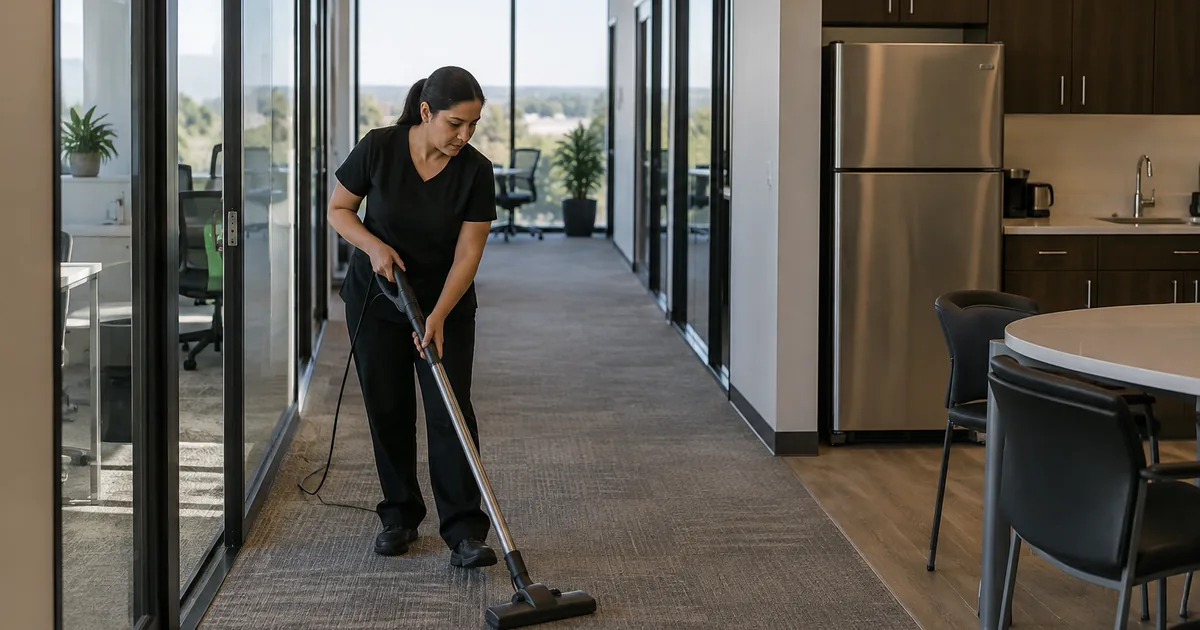
A useful plan for office janitorial cleaning Lake Saint Louis starts with how your workplace actually operates. For an office manager contacting Prime Cleaning MO LLC, the first task is identifying occupied rooms, shared facilities, access restrictions and recurring trouble spots. A reception area used throughout the day needs different attention from a meeting room occupied occasionally. Describe those differences before choosing a frequency.
Commercial and industrial cleaning require a free in-person walkthrough before pricing. Commercial post-construction cleaning does too. When requesting the walkthrough, provide your business name, approximate square footage, restroom count, preferred date and time window, and onsite contact. Include the exact Lake Saint Louis office address and any entry instructions so the discussion concerns your actual workspace.
During the visit, ask what is included, what remains the responsibility of employees or building management, and what requires separate approval. Record the agreed boundaries in writing. Pricing should follow that assessment rather than assumptions based solely on floor area.
Map rooms by use, not just by square footage
Create a simple room inventory before deciding how often each space needs service. List reception, corridors, private offices, open workstations, conference rooms, break areas, restrooms and storage rooms. Next to each, note occupancy, visitor traffic, flooring and whether food is handled there. Flag rooms that are locked or unavailable during the proposed cleaning window.
Shared rooms and customer-facing areas
Shared spaces often deserve closer review because many people affect their condition. Ask whether reception includes glass partitions, whether conference tables must remain set up, and whether breakroom waste contains food. If meetings run into the evening, establish how cleaners should handle occupied rooms: skip and report, return if access becomes available, or follow another agreed instruction.
Individual workspaces and restricted rooms
For desks, distinguish exposed surfaces from papers, personal belongings and equipment. Decide whether staff must clear desks beforehand. Server rooms, records storage and sensitive work areas need explicit access rules; they should not be assumed included. A closed door or badge requirement belongs in the scope, not as a surprise during service.
Explore our commercial & janitorial service and cleaning in Lake Saint Louis, MO for property-specific information.
Choose frequencies around observed demand
Assign frequencies by task and room rather than applying one schedule everywhere. Food waste and heavily used restrooms may justify attention on each service visit, while a lightly occupied storage room may need less frequent floor and dusting work. These are planning examples, not a universal checklist or a promise that one frequency fits every office.
Use operational questions to test the schedule. How many days are employees onsite? Are visitors concentrated on certain days? Does the office host training sessions with food? Who responds to spills between visits? An office with hybrid attendance might concentrate service after its busiest days, while another needs more consistent coverage because its shared facilities stay active.
Separate routine tasks from periodic ones in the written plan. For example, agreed entry-floor care may occur each visit, while accessible high dusting follows a separately approved schedule. Identify who can request extra attention after an event and require approval before expanding billable scope.
Establish the initial deep clean and add-on boundaries
Prime Cleaning MO LLC offers standard or recurring service only after an initial deep clean; standard service is not a first-time or one-time option. The first standard or recurring quote includes that deep clean. For an ongoing office arrangement, clarify the starting scope during the walkthrough so existing buildup is not confused with ordinary maintenance needs.
Deep-clean appliance interiors and inside cabinets are optional add-ons, not automatically included. In an office kitchen, ask separately about the microwave interior, refrigerator shelves and cabinet interiors. Decide who removes food and supplies before any approved interior work. Interior windows are also optional for office cleaning; they should be identified and priced within the agreed scope rather than assumed included.
Move-In/Move-Out service includes inside and outside cabinets and appliances, which is a different scope from deep cleaning. Interior windows are optional across services except Airbnb turnovers. If office detailing goes beyond a deep clean, it may take more than one day; discuss access and scheduling without treating a single visit as a guaranteed finish.
Define restroom and breakroom responsibilities clearly
Restroom planning needs more than a room count. Identify fixtures, floor materials, dispensers and any access limitations. Ask whether replenishing supplies is included, who purchases them and where stock is kept. If employees report an empty dispenser, distinguish a cleaning omission from unavailable supplies. That distinction helps resolve the problem without changing the wrong part of the plan.
In breakrooms, separate surface cleaning from food management. Agree who clears sinks, handles personal dishes and removes expired food. A refrigerator cannot be treated as an approved interior-cleaning task merely because it sits in a shared room. If appliance-interior cleaning is selected, define preparation and access requirements.
Also clarify waste handling: which ordinary office bins are included, where collected waste goes and whether the building has disposal rules. Do not assume unknown chemicals, sharps or other potentially hazardous materials can be handled. Flag anything unusual during the walkthrough and leave hazardous work outside any promise of service.
Match surface care and access to the workplace
List sensitive materials before cleaning begins, including natural stone, finished wood, coated glass, specialty flooring and electronics. Surface care should follow manufacturer-safe methods and product instructions. Avoid acidic cleaners on stone, never mix cleaning products, and do not treat a stronger solution as an automatic improvement. Unknown finishes call for clarification before a method is selected.
Disinfect only when appropriate to the agreed task and surface. The product must be suitable for that use, and its full label contact time must be followed. A quick wipe should not be described as disinfection if the required conditions are not met. Keep routine soil removal and any agreed disinfecting tasks distinct in the scope.
Access planning matters just as much as product selection. Establish key or badge procedures, alarm instructions, lighting availability and an onsite escalation contact. Explain which equipment must remain powered, what may be moved and where cleaning supplies may be stored. Keep confidential documents and personal belongings outside assumed handling permission.
Review the scope after the first visits
Treat the initial plan as a documented starting point, then review it after the first visits using observations rather than arbitrary guaranteed results. Choose a review point together based on the office schedule and enough representative use to see patterns. A quiet holiday week or an unusually busy event may not reflect normal conditions.
Separate missed work from changing conditions
Keep a short issue log with the room, task, observation time and relevant circumstances. For example, a breakroom floor noted as dirty after lunch is different from an agreed floor task missed before opening. Ask whether access was blocked, the task was omitted, or new soil appeared after cleaning. These explanations lead to different corrections.
Adjust only what the evidence supports
If reception repeatedly needs more attention while a spare office remains lightly used, discuss reallocating approved effort instead of automatically increasing every task. Confirm any revised frequency, add-on or pricing change in writing. Preserve useful boundaries, especially around desk clutter, appliance interiors and restricted areas, so a review does not become an unapproved expansion of work.
Keep an accountable plan as the office changes
Maintain one current scope document with rooms, tasks, frequencies, exclusions, access instructions and approval contacts. Give both the office representative and cleaning provider the same version. Changes in staffing, tenant occupancy or working hours should trigger a discussion about whether the existing plan still matches demand.
For commercial post-construction needs, request a separate free in-person walkthrough before pricing rather than adding construction debris to an ordinary janitorial visit. Explain what work occurred and disclose known concerns. Industrial requests also require that walkthrough; neither setting should carry an assumption that hazardous work is available.
Before approving a proposal, check that it answers three practical questions: what happens on each visit, what is optional or periodic, and how will concerns be reviewed? A clear office cleaning plan does not promise identical conditions at every moment. It establishes agreed work, usable communication and a sensible way to revise scope when actual use changes.