Commercial & Janitorial
Office Janitorial Cleaning University City: Working With Property Managers
Build a practical office janitorial plan around room use, tenant boundaries and clear communication with your University City property manager.
office janitorial cleaning University City: Working With Property Managers
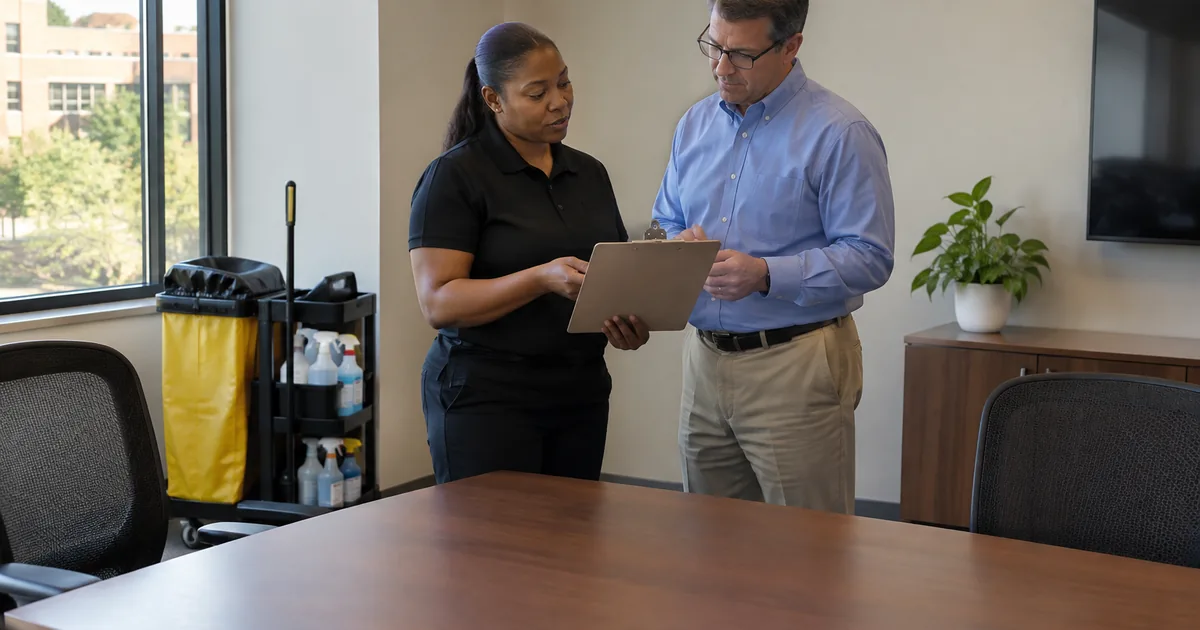
A search for office janitorial cleaning University City should lead to a plan for your actual building, not just a list of cleaning tasks. In a multi-tenant office, the first question is who controls each space. A tenant may authorize work inside its suite while the property manager controls corridors, shared restrooms and building access. Prime Cleaning MO LLC can discuss these boundaries before a commercial walkthrough.
Start with a floor plan or room list marked as tenant space, shared space or excluded space. Identify the person who can approve each area and any restrictions on entering it. Ask whether the lease assigns cleaning responsibilities, whether existing building services overlap with the requested work, and who resolves a missed task. This prevents two providers from servicing the same lobby while another area goes unassigned. Keep the approved scope accessible to both the tenant representative and property manager.
Arrange the Walkthrough Before Requesting Pricing
Commercial and industrial cleaning, including commercial post-construction work, requires a free in-person walkthrough before pricing. Send Prime Cleaning MO LLC the business name, approximate square footage, restroom count, preferred date and time window, and onsite contact. Clarify whether that contact represents the tenant, building owner or property management company. These details help organize the visit; they do not replace seeing the property.
During the walkthrough, show occupied rooms, storage areas, shared amenities and any access-controlled spaces included in the request. Point out flooring changes, sensitive equipment, existing damage and areas that cannot be disturbed. If the office is part of a larger building, explain which loading entrance, elevator or service route is authorized.
Ask how approvals should be recorded when several tenants share costs. A useful decision example: if only one suite requests service, keep the adjacent common corridor outside its scope unless the property manager authorizes otherwise. Pricing should follow that agreed boundary.
Explore our commercial & janitorial service and cleaning in University City, MO for property-specific information.
Assign Room Frequencies According to Actual Use
Frequency should reflect occupancy, traffic, soil and room function rather than room size alone. Record when each room is used, what accumulates there and what level of service the manager expects. A meeting room used occasionally needs a different plan from a reception area handling visitors throughout the workweek.
Reception, Corridors and Meeting Rooms
Consider occupied-day attention for entrance debris, visible spills and heavily used shared surfaces, with broader floor care scheduled around traffic. Check meeting rooms after booked events when refreshments or rearranged furniture create extra work. Ask the property manager whether entry mats belong to another provider and where responsibility changes between the public entrance and tenant reception.
Workstations and Private Offices
Base workstation cleaning on attendance and permission to touch surfaces. An occupied desk with confidential papers is not an invitation to reorganize it. Establish a clear-desk expectation, identify accessible surfaces and exclude personal belongings or electronics unless specifically approved. For hybrid offices, review actual usage before retaining or reducing visit frequency.
Give Restrooms and Breakrooms Separate Instructions
Restrooms and breakrooms deserve their own room-level instructions because their needs differ from ordinary office dusting. Record the number of fixtures, flooring type, waste arrangements and dispenser responsibilities. Ask who supplies paper products and soap, who monitors shortages between cleaning visits, and whether shared restrooms serve visitors from multiple suites. Cleaning and restocking should not be treated as the same authorization.
For breakrooms, distinguish counters, sinks and appliance exteriors from interior cleaning. Decide who removes employee food and whether cleaners may move items left on counters. Deep-clean appliance interiors and inside cabinets are optional add-ons, so specify them rather than assuming they are included.
For a separately booked Move-In/Move-Out service, inside and outside cabinets and appliances are included. Interior windows are optional for services other than Airbnb turnovers. Keep those service distinctions visible when an office changes occupants; routine janitorial work, deep cleaning and move-related cleaning should not be treated as interchangeable scopes.
Set a Baseline Before Starting Recurring Service
Standard or recurring service is available only after an initial deep clean; it is not a first-time or one-time standard-clean option. The first standard or recurring quote includes that initial deep clean. For an office manager, the practical purpose is to separate accumulated buildup from the work needed to maintain the agreed condition. Discuss the baseline during the commercial walkthrough, before pricing.
Identify areas needing closer attention, such as floor edges, accessible ledges or neglected corners. Do not assume deep cleaning includes every concealed space or optional interior task. Ask what is accessible, what furniture may be moved and which areas require separate permission. Detailing beyond deep cleaning may take more than one day, so avoid tying an opening or tenant handover to an unconfirmed completion assumption.
After the baseline service, use room usage to establish recurring priorities. If reception stays busy but a training room remains empty, allocate attention accordingly instead of applying identical tasks everywhere.
Create One Communication Route for Multiple Tenants
A multi-tenant building needs a clear approval route as much as a cleaning schedule. Name one property-management contact for common areas and one authorized representative for each participating suite. Decide who can request additional work, approve scope changes and report access problems. A casual request from an employee should not silently alter the building's service agreement.
Use a shared issue log with the room, observed condition, date, requested action and responsible decision-maker. Keep personal information and confidential office details out of that log. Distinguish a missed agreed task from a new request: a missed restroom waste bin and an unapproved storage-room cleanout require different responses.
Set a reporting process for locked rooms, unavailable keys and blocked surfaces. For example, if a tenant changes its alarm code without notifying management, document the access failure and contact the authorized person rather than improvising entry. Agree on how notices about meetings, closures or tenant moves reach the cleaning contact.
Protect Surfaces and Define Safety Boundaries
Record surface materials before choosing products or methods. Manufacturer-safe surface care matters for stone counters, coated flooring, finished wood and office equipment. Avoid acids on stone, never mix cleaners, and follow product instructions. Disinfection should be used only when appropriate, with the full label contact time observed; applying a product and immediately wiping it away may not satisfy its directions.
Ask about ventilation requirements, restricted materials and equipment that must remain untouched. Separate cleaning permission from permission to disconnect cables, open equipment or move heavy items. The property manager should also identify how spills and maintenance defects are reported, especially when several tenants use the same space.
Do not include hazardous work by assumption. Suspected mold, unknown residues, sharps or potentially hazardous waste should be flagged for an appropriate response, not promised as routine janitorial tasks. Commercial post-construction requests also need the free in-person walkthrough before pricing, with site conditions and exclusions reviewed directly.
Review Results and Adjust the Written Plan
Once the service plan is operating, review specific rooms and outcomes rather than asking only whether the office looks clean. Check whether entrance debris returns before the next visit, restroom supplies run short, or meeting-room use has changed. Separate cleaning frequency problems from occupant behavior, maintenance defects and supply shortages. Each issue has a different owner and remedy.
Use a short review with the property manager and tenant representatives to confirm what changed. If a new tenant increases shared-restroom use, discuss revised frequency and authorization before adding work. If a corridor remains dusty because construction continues nearby, report that condition rather than treating repeated cleaning as a permanent solution.
Keep the current room list, frequencies, add-ons, exclusions and contact information together. Confirm changes in writing so management and tenants share the same expectations. A useful janitorial plan is not a universal checklist; it is an agreed working document that can change when occupancy, access or building responsibilities change.