Commercial & Janitorial
Office Janitorial Cleaning Wentzville: Construction Dust or Routine Office Dirt
Build a practical office cleaning scope around room use, surface care, and access—and know when renovation dust needs a separate assessment.
office janitorial cleaning Wentzville: Construction Dust or Routine Office Dirt
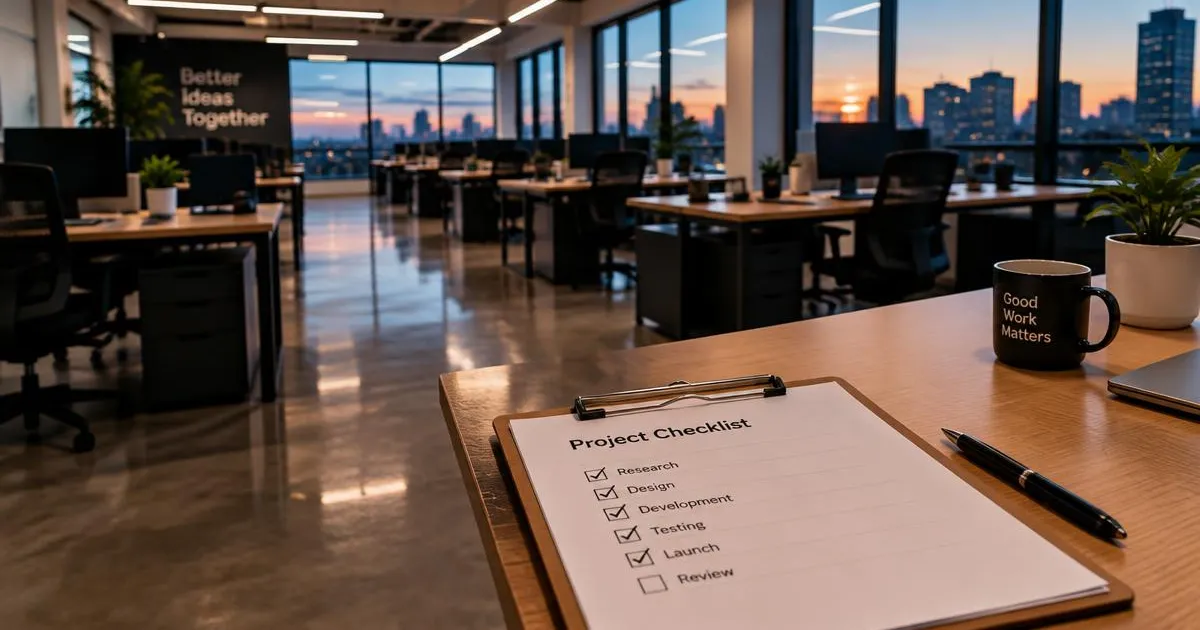
Planning office janitorial cleaning Wentzville begins with understanding how each room functions, not selecting the same frequency for every surface. For Prime Cleaning MO LLC, the useful starting point is a room-by-room conversation: who uses the space, what happens there, and which conditions need attention. A quiet private office and a busy shared restroom should not automatically receive identical schedules.
Walk through the office with a simple room list. Record entrances, workstations, meeting rooms, restrooms, break areas, storage spaces, and any restricted rooms. Beside each, note traffic patterns, floor materials, food use, shared touchpoints, and access restrictions. Identify who can approve service and who can answer questions onsite.
Then define the desired result in observable terms. For example, specify that meeting tables should be free of visible crumbs and entry mats cleared of loose debris. Ask which areas need attention before opening and which can be serviced while employees are present. These answers establish priorities without implying that every possible task is included.
Separate construction dust from ordinary office soil
Before choosing a janitorial schedule, ask whether the office has recently had drywall work, sanding, flooring installation, ceiling repairs, or other construction. Fine residue after renovation is not simply a heavier version of normal tracked-in dirt. It can require a separate commercial post-construction assessment, different sequencing, and a clearly defined boundary between cleaning and unfinished trade work.
Recognize when routine cleaning is the wrong scope
Look for dust returning after surfaces are wiped, residue on upper ledges, packaging left by trades, or debris around newly installed materials. Ask what work produced the dust and whether contractors are finished. These observations do not identify a substance as safe or hazardous; unknown material needs clarification before anyone chooses a cleaning method.
Establish a construction handoff
List unfinished work, affected rooms, and areas still occupied by staff. Discuss whether dust sources remain active and who is responsible for construction debris. Commercial post-construction work requires a free in-person walkthrough before pricing. Suspected hazardous materials are not treated as routine janitorial tasks, and hazardous work is never promised.
Explore our commercial & janitorial service and cleaning in Wentzville, MO for property-specific information.
Set entrance and floor frequencies around actual traffic
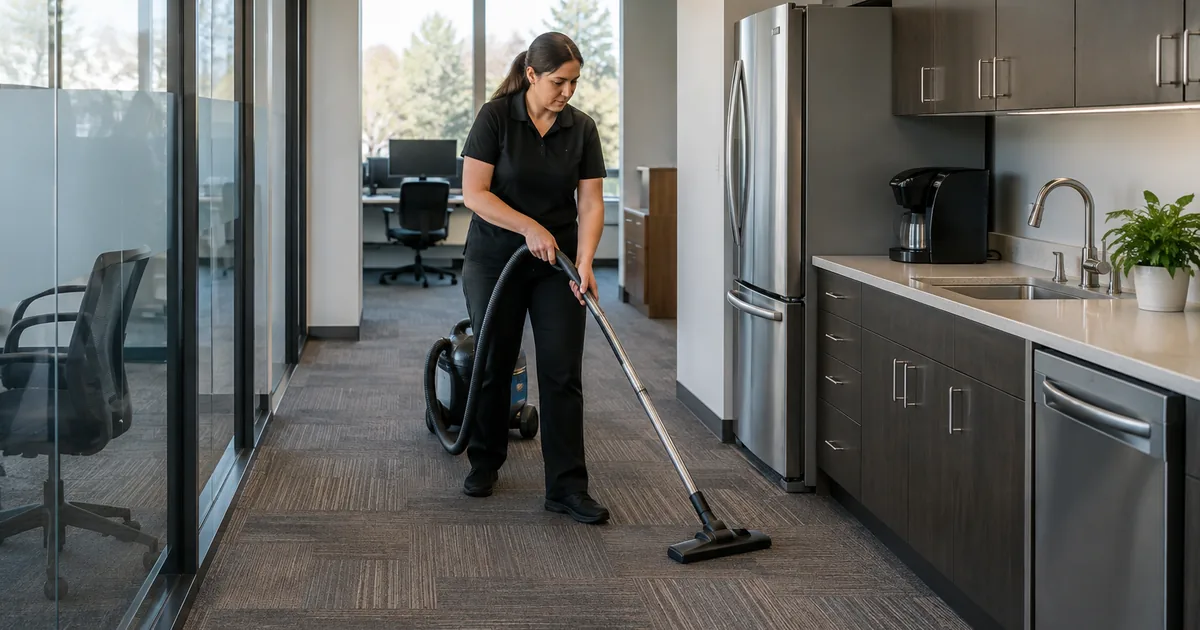
Entrances often reveal how the building is being used. Inspect matting, thresholds, reception seating, and the route from the door to shared rooms. Wet weather can increase tracked-in moisture and grit, while deliveries may create isolated debris. Frequency should respond to those conditions rather than applying an unsupported daily requirement to every office.
For example, a public-facing reception area may need attention each operating day, while a lightly used back office may need less frequent floor care. Treat that as a planning example, not a service prescription. Ask who handles unexpected spills between visits and whether entry mats belong to a separate rental program.
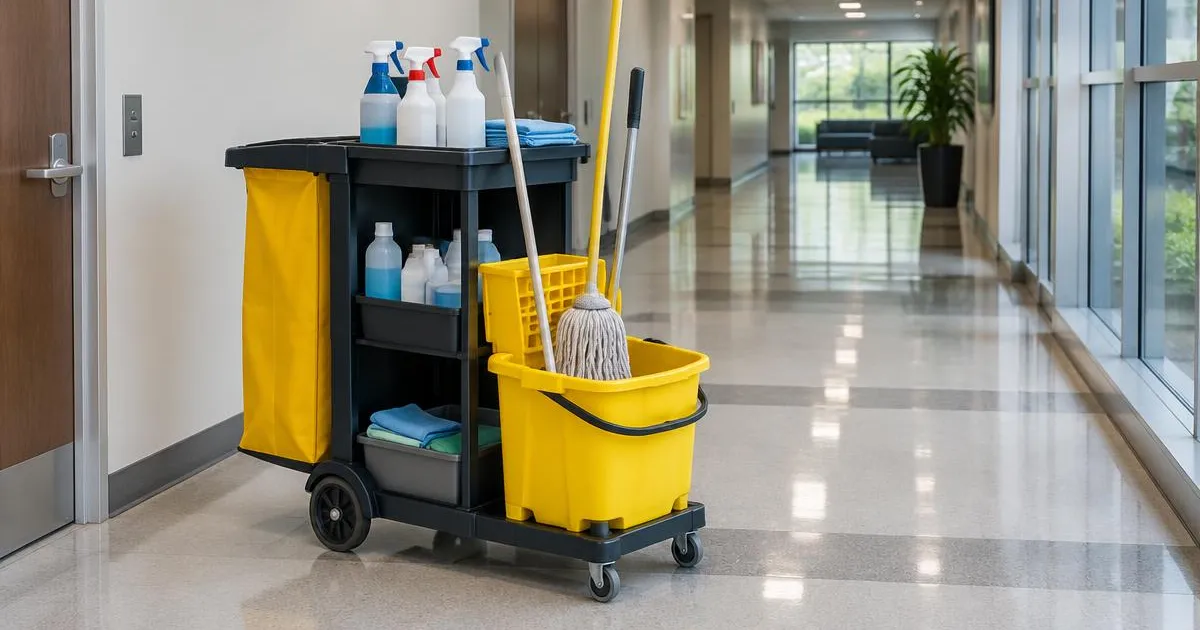
Record each floor material before selecting methods. Manufacturer-safe care matters because excessive moisture or unsuitable chemicals can damage finishes. Move only items authorized in the scope, and identify furniture that should remain undisturbed. Separate routine loose-soil removal from any requested specialty floor treatment; do not assume janitorial cleaning includes restoration or repair.
Give restrooms and break areas separate priorities
Restrooms and food-use spaces deserve individual plans because their needs differ from desk areas. Count restrooms, then note fixtures, dispenser locations, waste containers, and any access limitations. Clarify whether replenishment is included, who supplies consumables, and where authorized backup stock is stored. Frequency decisions should reflect occupancy and actual conditions, with a reporting process for problems between visits.
In the break area, distinguish counters, sinks, tables, and appliance exteriors from appliance interiors and cabinet interiors. Decide who removes employee food and personal containers. A refrigerator containing unlabeled meals cannot be treated as an empty appliance without an agreed process. Likewise, a crowded cabinet requires permission and preparation before interior work can be considered.
Cleaning and disinfection are not interchangeable. Use manufacturer-safe products and disinfect only when appropriate for the surface and purpose. Any disinfectant must remain in contact for its full label-specified time. Never mix cleaners, and avoid acidic products on stone. Plumbing faults, leaks, or damaged fixtures should be reported rather than described as cleaning problems.
Protect workstations, meeting rooms, and private information
Shared desks and meeting rooms combine visible soil with sensitive belongings. Establish whether cleaning covers only cleared surfaces or also specified shared equipment. Employees should know what to remove before service. Papers, devices, cables, and personal items should not be rearranged based on assumptions about what looks untidy.
Use a decision example: a conference table used for meals may need cleaning after those events, while a seldom-used interview room may follow a lighter schedule. Shared handles and switches can warrant attention based on use, but that does not justify spraying every electronic device. Confirm manufacturer instructions and authorized methods before including screens, keyboards, or control panels.
Ask about locked offices, alarm procedures, confidential records, and rooms requiring an escort. Identify whether cleaners may disconnect anything; the default should not be to unplug equipment for convenience. Include a way to report inaccessible areas so the office manager can distinguish a missed task from a room that could not safely or appropriately be entered.
Define baseline cleaning, add-ons, and detailed work
A useful scope separates baseline needs from repeating maintenance. Prime Cleaning MO LLC offers standard/recurring cleaning only after an initial deep clean, not as a one-time or first-time standard service. The first standard/recurring quote includes that deep clean. Commercial janitorial pricing still requires the free in-person walkthrough, where the office’s starting condition and proposed ongoing scope can be discussed.
Keep service inclusions distinct. Appliance interiors and inside cabinets are optional add-ons for deep cleaning. Move-In/Move-Out includes inside and outside cabinets and appliances. Interior windows are optional for all services except Airbnb turnovers. If your office request includes these surfaces, name them during assessment rather than assuming a package label settles the commercial scope.
Ask whether the request involves ordinary deep cleaning or additional detailing. Heavy buildup in narrow edges, numerous furnishings, or extensive residue may change the work involved. Detailing beyond deep cleaning may take more than one day. Discuss access and sequencing without treating that possibility as a promised completion schedule.
Prepare the information needed before commercial pricing
Commercial/industrial cleaning and commercial post-construction cleaning require a free in-person walkthrough before pricing. To arrange the assessment with Prime Cleaning MO LLC, provide the business name, approximate square footage, restroom count, requested date/time window, and onsite contact. Include whether the request concerns an occupied office, a newly vacated space, or an area affected by construction.
Prepare a short list of concerns for the visit. Useful questions include: Are all rooms included? Which doors will be unlocked? Is cleaning allowed during business hours? Are there shared tenant areas? Who authorizes changes? Where are approved water access and waste collection points? Mention restrictions rather than leaving them to be discovered during service.
Photos and descriptions can help explain priorities, but they do not replace the required walkthrough. Show the assessor both typical rooms and problem areas. For renovation dust, identify affected surfaces and remaining trade activity. Request written clarification of inclusions, exclusions, optional work, and access responsibilities before comparing proposals or approving a schedule.
Review frequencies using observable results
After agreeing on scope, maintain a room-based plan rather than a vague instruction to clean the office. For each area, record the task, proposed frequency, access requirement, and person responsible for reporting concerns. Keep periodic tasks separate from every-visit tasks so neither party mistakes occasional work for a standing obligation.
Review conditions when occupancy, operating hours, or room use changes. If a storage room becomes a training room, its floor and waste needs may increase. If employees stop eating in a meeting room, that room may need a different emphasis. Adjust based on observed use rather than automatically expanding every task.
Treat new construction as a reassessment trigger, not merely another item on the ordinary cleaning list. Report leaks, unusual residue, surface damage, and unknown substances for appropriate review. A practical plan gives the office manager clear decisions: what stays on the recurring schedule, what needs separate approval, and what falls outside cleaning altogether.