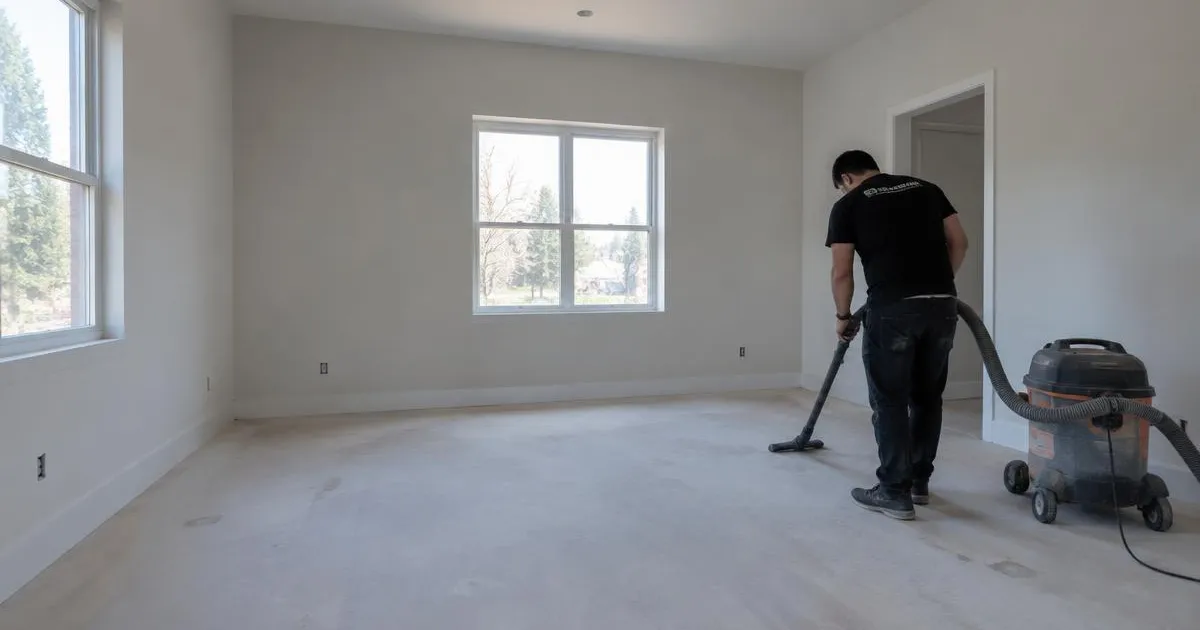
Post-Construction
Post Construction Cleaning Brentwood: Cleaning Records and Construction Acceptance
A cleaning inspection documents the surfaces cleaned and any remaining limitations. It does not approve construction work. Here’s how to keep those responsibilities separate during a Brentwood renovation.

post construction cleaning Brentwood: Cleaning Records and Construction Acceptance
Renovation cleanup can make a room easier to inspect, but a clean-looking room is not proof that the construction work is complete. For homeowners comparing post construction cleaning Brentwood options, the important question is not simply whether dust will be removed. It is how the cleaning scope, access limitations, and inspection findings will be recorded without turning a cleaning sign-off into acceptance of the renovation.
Prime Cleaning MO LLC separates these decisions: cleaning addresses agreed surfaces and ordinary construction residue within scope; construction acceptance remains with the owner and the appropriate construction professionals. A useful record identifies what was accessible, what was cleaned, what remained, and why. It should not state that a property is safe to occupy or that building systems function correctly.
Start with two separate documents or clearly labeled sections: a cleaning inspection record and a contractor punch list. Keep payment approval, warranty questions, workmanship concerns, and permit-related matters out of the cleaning completion acknowledgment.
Build the intake around rooms, condition, and unresolved work
Residential construction intake should ask for bedroom count, bathroom count, and the actual condition: debris, dust, or more. Explain whether the renovation affected the whole home or only selected rooms. A bathroom remodel can leave residue along the access route even when nearby bedrooms were not part of the project.
Useful scope questions include: Are trades still working? Which surfaces are newly installed? Is there loose debris, settled fine dust, adhesive residue, or an unknown powder? Are cabinets empty? Are electricity, water, and lighting available? Who can authorize a change if conditions differ from the description?
Name exclusions before work begins. Heavy debris and hauling require separate scoping; a room described as dusty should not silently become a demolition-disposal assignment. If the renovation involves a business, commercial post-construction requires a free in-person walkthrough before pricing. Provide the business name, approximate square footage, restroom count, preferred date/time window, and onsite contact. Photos can support preparation, but they do not replace that walkthrough.
Explore our post-construction service and cleaning in Brentwood, MO for property-specific information.
Decide who clears debris and when cleaning can begin
Before arranging detailed cleaning, identify the party responsible for leftover materials, tools, packaging, and heavy debris. Do not assume every item on the floor is trash. Spare tile, labeled paint containers, hardware, and installation instructions may belong to the owner or contractor and should have a designated storage location.
For example, if a renovated kitchen contains loose cardboard and several boxes of unused flooring, document which cardboard is approved for disposal and who will move the flooring. Separately confirm any hauling needs. The cleaning record can then state that a floor area was inaccessible rather than implying that it was cleaned beneath stored materials.
Coordinate access with the contractor’s remaining work. Sanding, drilling, and cutting can redeposit dust after cleaning. If those activities continue, decide whether to postpone the affected area or authorize a later cleaning visit with its own scope. Record the condition at each visit instead of treating new dust as evidence that the earlier inspection was inaccurate.
Use a dust assessment before selecting cleaning methods
Dust is a condition to assess, not a material to identify by appearance alone. Ask the contractor what work produced it and whether any material concerns remain unresolved. If dust is unknown or potentially hazardous, stop and request assessment by a qualified contractor before proceeding in that area.
Keep ordinary cleaning within an identified scope
Once the material and conditions are appropriate for ordinary cleaning, agree on accessible surfaces and equipment suitable for the documented dust. Do not use household vacuums for construction dust. Plan work from higher accessible surfaces toward lower ones, using controlled collection methods rather than redistributing residue with dry sweeping. Cleaning does not establish airborne exposure levels.
Write limitations without making safety conclusions
A helpful note says, “Work stopped in the utility room pending contractor assessment of unidentified powder.” It should not say, “Hazard removed” or “Room cleared for occupancy.” Keep any specialist evaluation separate from the cleaning record. Neither a visual check nor a dust wipe can replace a qualified assessment when the material is uncertain.
Protect new finishes and distinguish residue from damage
New surfaces need care instructions before cleaning begins. Ask for the material name, manufacturer guidance, and whether coatings, grout, sealants, or adhesives have completed their required cure. Follow manufacturer cure times rather than assuming a surface is ready because it feels dry. If instructions are missing, seek clarification before treatment.
Choose surface care, not aggressive correction
Use manufacturer-safe methods and test in an inconspicuous area when appropriate. Never mix cleaners, and avoid acids on stone. Disinfect only where appropriate, following the product label and full contact time. A renovation cleanup is not a reason to apply disinfectant indiscriminately across new finishes.
Document marks that require contractor review
If a mark could be a scratch, etching, coating defect, or stubborn installation residue, photograph it with permission and describe its location. Do not repeatedly scrub to prove it is removable. For example, record “visible line on counter beside sink; referred to contractor” rather than diagnosing the cause or promising a finish repair.
Confirm access and optional areas before the appointment
Access determines what an inspection record can honestly cover. Confirm entry arrangements, parking or unloading restrictions, stairs, locked rooms, and who will move stored belongings. Identify surfaces blocked by equipment or furniture. Record those limitations before cleaning, then update them if access changes during the visit.
Interior windows are an optional add-on for post-construction cleaning, not an automatic inclusion. Discuss accessible glass and frames, and flag paint, stickers, or other residue that may require additional evaluation. Do not assume that reaching the glass means every residue can be removed without risking damage.
Cabinet and appliance interiors also need explicit scope discussion. Deep-clean service treats these interiors as optional add-ons, while Move-In/Move-Out includes inside and outside cabinets and appliances. A renovation appointment should specify its own agreed areas rather than borrowing assumptions from another service. If requested detailing goes beyond a deep clean, it may take more than one day; agree on priorities and access rather than assuming a single visit.
Create a cleaning inspection record that stays factual
Use a room-by-room record with the visit date, agreed tasks, observed conditions, and exceptions. Where useful, add permission-based photos showing the location and context. Separate preexisting observations from conditions noticed after cleaning, without claiming that a photo proves who caused a defect.
Each entry should answer three questions: What was included? What was completed or left incomplete? What decision is needed next? For example: “Bedroom floor cleaned in accessible areas; closet blocked by contractor materials; owner to confirm removal before additional service.” This is more useful than a blanket statement that the bedroom passed.
At the review, check accessible surfaces under available lighting and compare findings with the agreed scope. Record remaining cleaning concerns separately from workmanship concerns. If acknowledgment is requested, make its purpose explicit: it confirms review of the cleaning record, not construction acceptance. Note unresolved items and the person responsible for the next decision so they are not lost in a general completion message.
Keep contractor acceptance and follow-up decisions separate
The final handoff should leave the owner with a clear cleaning record and a separate construction punch list. Items such as damaged finishes, incomplete installations, leaks, or electrical concerns belong with the appropriate contractor. Clean surfaces may make these issues easier to see, but cleaning staff should not approve their correction or verify building performance.
If a contractor returns to adjust cabinetry and creates fresh dust, document the new activity and affected areas before arranging follow-up cleaning. Decide whether the need is localized or broader. Do not silently change the original record to suggest the later condition existed at the first inspection.
For ongoing upkeep, standard/recurring service starts only after an initial deep clean, and the first standard/recurring quote includes that deep clean; it is not a one-time or first-time cleaning option. Keep that future service discussion separate from renovation acceptance. The immediate goal is a reliable account of cleaning work, limitations, and next steps—not a substitute construction approval.