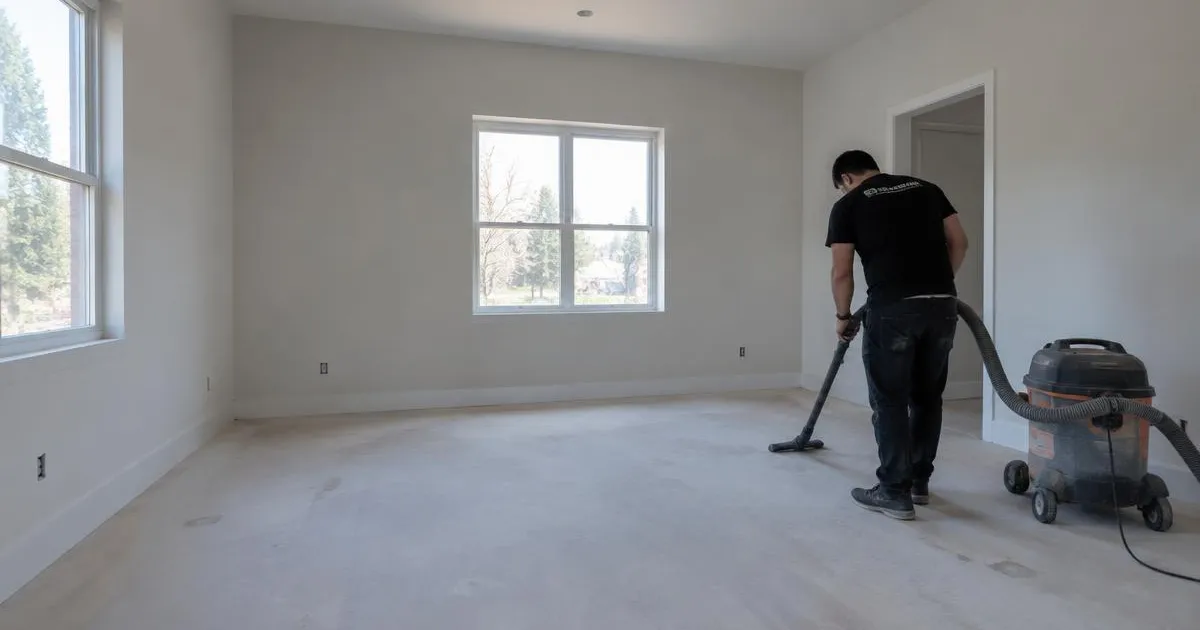
Post-Construction
Post Construction Cleaning Des Peres: Optional Interior Window Cleaning
A useful renovation cleanup plan separates loose dust from heavy debris and treats interior glass as an optional, access-dependent task—not a promise to scrape every construction mark.

post construction cleaning Des Peres: Optional Interior Window Cleaning
Renovation cleanup can stall at a surprisingly ordinary feature: the window. Dust collects on glass and sills, while protective film, fresh trim finishes, and blocked access complicate cleaning. When planning post construction cleaning Des Peres, start by separating routine dust removal from construction residue that needs contractor review. Prime Cleaning MO LLC can use those distinctions to establish what is requested, what is accessible, and what belongs outside the cleaning scope.
Interior windows are an optional add-on, not an automatic part of post-construction cleaning. That matters when a room looks finished but its glass still carries adhesive, paint specks, or an unidentified coating. A useful request describes the renovation, rooms affected, remaining materials, and access to each window. The goal is a clearly bounded cleaning plan—not an assumption that every visible construction mark can be removed by ordinary cleaning.
Describe the rooms, condition, and remaining work
For residential intake, provide the bedroom count, bathroom count, and current condition: debris, dust, or more. Identify whether work affected one room, a connected floor, or areas throughout the home. Include adjacent spaces where workers carried supplies, since a renovated bathroom and its hallway may have very different cleaning needs.
Explain what remains active. Will contractors return to sand trim, drill hardware, or finish flooring? Are tools and materials still stored against windows? Cleaning before dust-producing work ends can mean cleaning the same surfaces again. Agree on readiness rather than choosing a date solely because the renovation appears nearly finished.
Useful scope questions include: Which rooms are released for cleaning? Who removes leftover materials? Are water and electricity available? What parking, entry, or stair constraints affect equipment access? Share photos for context, but identify uncertainties directly; a photograph cannot reliably establish a glass coating, surface cure status, or dust composition.
Explore our post-construction service and cleaning in Des Peres, MO for property-specific information.
Separate loose dust from debris and uncertain materials
A light layer of identified, ordinary renovation dust is a different problem from piles of broken tile, lumber, or packaging. List heavy debris and hauling separately so neither is assumed to be included with surface cleaning. Ask the contractor who owns the remaining materials before anything that could be needed for completion is discarded.
Pause when dust cannot be identified
If dust is unknown or potentially hazardous, stop and request assessment by a qualified contractor before disturbing it. Appearance alone does not establish whether cleaning is appropriate. Do not sweep, blow, or test-clean suspicious material while waiting for guidance. This service should not be treated as asbestos, lead, silica, or mold remediation, or hazardous waste removal.
Choose methods for the confirmed scope
For approved, nonhazardous construction dust, equipment and collection methods must suit the material and work area. Do not substitute a household vacuum for construction-dust collection. Cleaning accessible surfaces also does not include duct cleaning; concerns about dust inside ventilation equipment need separate evaluation.
Scope interior windows without scraping coatings
Request the interior window add-on explicitly and describe the accessible glass: approximate pane count, size, height, and obstructions. Include whether sills or tracks need attention, rather than assuming every component comes with glass cleaning. Exterior glass, screens, and work requiring special access should not be silently folded into the request.
Identify film and residue before cleaning
Ask the installer whether the glass has protective film, an applied coating, or manufacturer-specific care instructions. Do not assume a blade is acceptable because a mark resembles paint. Scraping can damage coatings or glass; abrasive pads and aggressive solvents can also create problems. Unknown residue should be referred back to the contractor or installer before treatment.
Set a practical glass-cleaning boundary
For example, an accessible bedroom pane with ordinary dust may fit the add-on. A stairwell window above an unfinished landing, or a pane covered in stubborn adhesive, needs a different decision. Confirm safe access and an approved cleaning method first. Unresolved construction residue can remain documented rather than being forcibly removed.
Make access a condition, not an afterthought
Window access means more than unlocking a room. A clear path, stable flooring, and adequate working space are needed around the glass. Ask the renovation contractor to remove tools and building materials from the work area. Discuss furniture or other items that need moving instead of assuming cleaners can relocate heavy pieces or unfinished assemblies.
Freshly painted sashes, newly installed trim, and uncured sealants introduce another limit. Follow the product manufacturer's cure and cleaning instructions, with confirmation from the installer where needed. A finish that feels dry may not be ready for wiping, moisture, or contact with cleaning tools.
If a dining-room window is blocked by boxed fixtures, choose between clearing it before service and excluding it for now. If access requires leaning over unfinished cabinetry, postpone that pane. These decisions protect the work and make the agreed scope more realistic than a blanket instruction to clean every window.
Sequence surface cleaning around finished materials
Once the space and materials are ready, plan cleaning to limit recontamination. Address accessible higher surfaces before lower ones, collect appropriate loose dust before damp wiping, and leave final floor care until other agreed tasks are complete. Coordinate optional window cleaning within that sequence so dust from nearby trim does not immediately settle on cleaned sills.
Use manufacturer-safe surface care throughout. Avoid acidic cleaners on stone, never mix cleaning products, and confirm compatibility with newly installed flooring, cabinetry, fixtures, and glass. Disinfection is not a substitute for dust removal; use it only where appropriate and observe the product's full label contact time.
Do not expand wiping into finish repair. Scratches, damaged coatings, paint defects, and etched surfaces belong with the responsible contractor or installer. Detailed work beyond a deep clean may take more than one day, depending on the scope and access. Discuss that possibility without treating a preferred completion date as a guaranteed duration.
Choose the right service and quote information
Describe the actual need rather than relying on the word “deep.” For a deep clean, appliance interiors and inside cabinets are optional add-ons. Move-In/Move-Out includes inside and outside cabinets and appliances. Neither description should be used to assume heavy construction debris, hauling, or specialized residue removal is included.
Standard/recurring cleaning is available only after an initial deep clean, not as a one-time or first-time service. The first standard/recurring quote includes that deep clean. Interior windows remain optional for the services discussed here; Airbnb turnovers are the exception to that optional-add-on rule.
For commercial or industrial cleaning, including commercial post-construction, Prime Cleaning MO LLC requires a free in-person walkthrough before pricing. Provide the business name, approximate square footage, restroom count, requested date/time window, and onsite contact. The walkthrough should clarify window access, remaining trades, materials, and exclusions. Hazardous work must not be assumed or promised as part of the quote.
Confirm boundaries before the final review
Before service, record the rooms, accessible surfaces, approved add-ons, and exclusions in plain language. For windows, note which panes are included and whether sills or tracks are requested. Identify glass awaiting installer guidance, blocked openings, and materials that must be cleared by someone else.
During the final review, compare the result with that agreed scope. Look at accessible glass under available light and distinguish remaining dust from scratches, coating issues, or bonded construction residue. Flag concerns without asking anyone to scrape an unknown finish. Cleaning cannot certify occupancy safety or resolve unfinished construction.
If trades return afterward, decide whether a separate follow-up visit is needed rather than assuming later dust is covered. Keep contractor assessment items separate from cleaning requests. A clear handoff gives you actionable next steps: approve ordinary cleaning, clear access for the window add-on, or return unresolved materials and finish questions to the appropriate professional.