Post-Construction
Post Construction Cleaning Florissant: HVAC Concerns Need Qualified Advice
Renovation dust on a shelf is a cleaning task; dust returning through a register may need licensed HVAC attention. Learn how to separate the work and scope your cleanup.
post construction cleaning Florissant: HVAC Concerns Need Qualified Advice
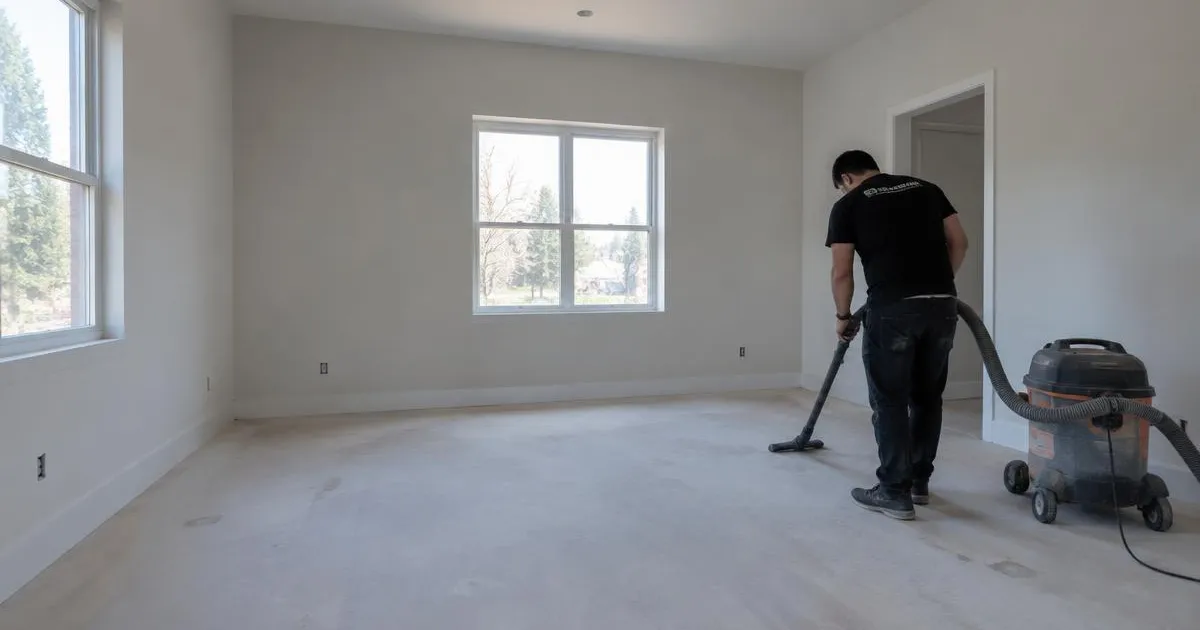
Renovation cleanup can look straightforward until dust returns to a room that was just wiped down. For homeowners arranging post construction cleaning Florissant, the important question is not simply how much dust is visible, but whether construction is finished and where that dust is coming from. Prime Cleaning MO LLC can help define accessible surface-cleaning needs, while suspected contamination inside heating and cooling equipment belongs with licensed HVAC maintenance professionals.
Begin by separating three concerns: loose debris, settled dust, and dust that keeps circulating or appearing. Each creates a different scope. A pile of flooring offcuts is not the same task as wiping shelving, and a dusty register does not establish what is inside the ductwork. The useful starting point is a room-by-room description, not a promise that one cleaning visit will solve every renovation issue.
Before booking, ask whether sanding, cutting, drilling, or contractor touch-ups remain. Cleaning while dust-producing work continues can create avoidable repeat work.
Use bedrooms, bathrooms, and condition to describe the home
Residential construction intake should include the number of bedrooms and bathrooms, which areas were renovated, and the current condition: debris, dust, or more. Explain whether the project affected one closed room or several connected spaces. Mention occupied rooms, stored belongings, stairs, and any rooms that contractors used for access or material storage.
Photos help show conditions, but describe what the pictures cannot establish. Is the residue loose powder, adhesive, grout haze, paint splatter, or an unknown material? Are cabinets installed and empty? Are floors newly finished? Tell the team about manufacturer care instructions and any surfaces awaiting contractor approval for cleaning.
For example, a bathroom remodel may leave tracked dust along the hallway even when the bedroom doors stayed closed. Include that route in the request. If most rooms contain settled dust but one room still holds building materials, identify the unfinished room separately rather than describing the entire home as ready. This gives the cleaning team a more usable scope.
Explore our post-construction service and cleaning in Florissant, MO for property-specific information.
Treat recurring HVAC dust as a maintenance question
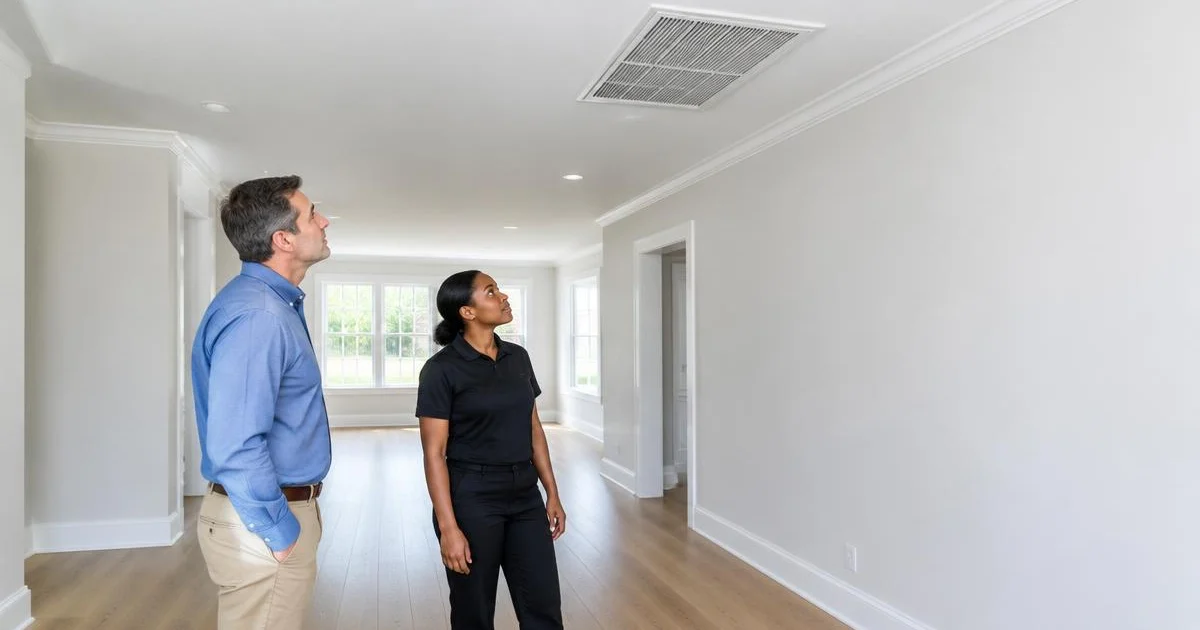
Dust near a vent can be settled renovation residue, but appearance alone cannot confirm its source or composition. Cleaning accessible room surfaces does not diagnose the heating and cooling system. If dust appears to discharge from registers, returns repeatedly when equipment operates, or extends into components beyond ordinary reach, flag the concern before cleanup.
What surface cleaning can address
An agreed scope may include accessible exterior register faces and surrounding finished surfaces where the material and finish permit cleaning. It does not include opening equipment, reaching into ducts, applying products inside vents, or treating the system. Do not use a room-cleaning service as a substitute for mechanical inspection.
What needs licensed HVAC maintenance
Ask a licensed HVAC contractor whether the system needs inspection, filter service, or other maintenance after renovation. Follow that professional's guidance about operation and filter selection rather than improvising duct treatments. If system work is recommended, coordinate it before final surface cleaning when practical so later access does not disturb freshly cleaned areas.
Stop when dust or residue has an unknown risk
Not all renovation residue belongs in a routine cleaning scope. If the source of dust is unknown, materials are suspect, or the contractor has identified a hazardous concern, stop work in the affected area and request assessment from a qualified contractor. Do not sweep, vacuum, or test products on unknown residue to see whether it comes off.
This boundary matters in both older and newer renovations because appearance cannot reliably identify a substance. Prime Cleaning MO LLC does not promise asbestos, lead, silica, or mold remediation, hazardous waste removal, or confirmation that a building is safe to occupy. Cleaning visible surfaces is not a clearance assessment.
Do not use a household vacuum for construction dust. Once the material is established as suitable for ordinary post-construction cleaning, equipment and methods should be selected for that known residue and the surface involved. If the assessment requires specialist work, complete that work and obtain the relevant guidance before arranging ordinary cleaning of the affected area.
Separate debris removal from detailed surface cleaning
List heavy debris and hauling separately from dust cleaning. Broken tile, lumber, drywall pieces, packaging, and leftover fixtures can affect access and disposal arrangements. Do not assume that a surface-cleaning quote includes carrying construction waste downstairs, loading a vehicle, or arranging disposal. Identify what the contractor will remove and what, if anything, you want separately evaluated.
A useful handoff leaves floors accessible and materials sorted out before detailed cleaning starts. Ask who will remove protective coverings and whether they must stay in place until another trade finishes. Moving a covering too early can expose a new surface; leaving a dirty covering indefinitely can also interfere with cleaning.
Consider two requests: one kitchen has clear counters and fine dust; another contains stacked cabinet boxes and demolition rubble. They need different preparation even if their floor areas match. Detail-heavy work beyond a deep clean may take more than one day, so describe buildup and obstructions rather than assuming a single visit will cover everything.
Sequence cleaning around finishes and remaining trades
Confirm that new coatings, grout, sealants, adhesives, and flooring are ready for cleaning under their manufacturers' instructions. Follow the specified cure times and care restrictions; there is no universal waiting period that suits every product. If documentation is missing, ask the installer before introducing moisture, cleaners, or friction.
For known, ordinary residue, plan accessible higher surfaces before lower surfaces so dislodged dust does not settle onto finished work below. Use manufacturer-safe surface care and methods suited to the material. Never mix cleaners, avoid acids on stone, and disinfect only where appropriate while observing the product's full label contact time.
Residue that resists ordinary cleaning may need installer review rather than stronger chemistry or aggressive scraping. Cleaning does not include finish repairs. For example, a cloudy tile surface could involve residue, damage, or a finish issue; describing it accurately is more helpful than requesting that it be scrubbed until clear. Reserve the final pass for after remaining dust-producing trade work whenever possible.
Make access and optional interiors explicit
Agree on entry instructions, parking or unloading access, working utilities, and who can answer questions during the visit. Identify locked rooms, fragile items, pets, and belongings that block baseboards or shelving. Accessible surfaces and an available decision-maker reduce uncertainty when the team encounters a condition that differs from the original description.
For post-construction work, specifically ask whether cabinet interiors, appliance interiors, and other enclosed areas need attention; do not assume every interior is included. Interior windows are an optional add-on, not an automatic part of renovation cleanup. Describe window access and any construction residue separately so suitability can be evaluated.
Service categories have different boundaries. Deep-clean appliance interiors and inside cabinets are optional add-ons, while Move-In/Move-Out includes inside and outside cabinets and appliances. Standard/recurring service is available only after an initial deep clean, and the first standard/recurring quote includes that deep clean. It is not a one-time or first-time cleaning substitute for an unfinished renovation.
Confirm the handoff before requesting pricing
Send a concise handoff summary: bedrooms, bathrooms, affected rooms, debris status, known dust source, remaining trades, finish instructions, access arrangements, and requested add-ons. Highlight any HVAC concern instead of burying it in a general request for extra dusting. Ask which items are included, excluded, or awaiting contractor assessment.
For commercial or industrial spaces, including commercial post-construction cleanup, Prime Cleaning MO LLC requires a free in-person walkthrough before pricing. Provide the business name, approximate square footage, restroom count, preferred date and time window, and onsite contact. Photos and measurements can support preparation but do not replace that walkthrough.
At completion, review the agreed accessible areas and note anything excluded because of material uncertainty, blocked access, unfinished work, or specialist needs. If dust returns near registers, document where it appears and whether equipment operation coincides with it, without opening the system. Take that information to licensed HVAC maintenance rather than attempting DIY duct treatment or assuming another wipe-down will resolve the source.