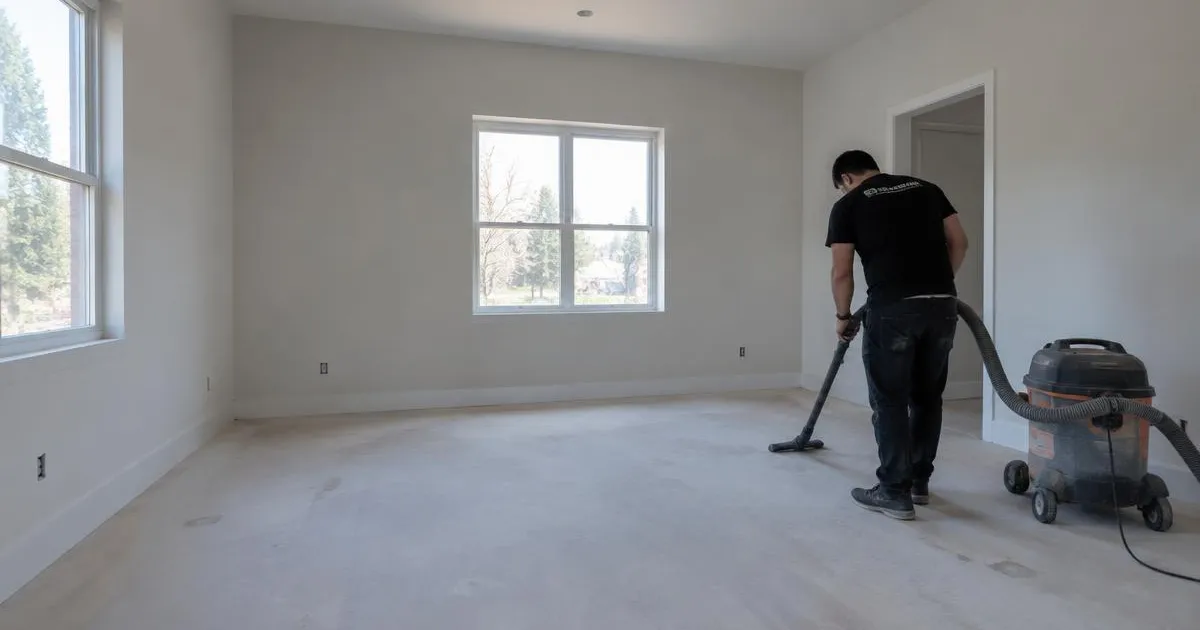
Post-Construction
Post Construction Cleaning Ladue: Detailing Beyond Ordinary Dust
Renovation cleanup becomes more involved when dust settles into tracks, trim, fixtures, and adjoining rooms. Learn how to define extensive detailing, separate hauling from cleaning, and prepare access for an accurate scope.

post construction cleaning Ladue: Detailing Beyond Ordinary Dust
Renovation Cleanup in Ladue: Dust, Debris, and Access starts with a practical distinction: removing visible construction dust is not the same as detailing every affected surface. When arranging post construction cleaning Ladue, homeowners should explain where residue has collected, which materials were installed, and whether contractors still need access. Those details help define a realistic cleaning scope.
Extensive detailing focuses on the small, repeated tasks that ordinary dust removal may not address: cleaning profile edges, accessible hardware, trim recesses, and other agreed areas without damaging new finishes. A room can look mostly finished from the doorway yet need considerable attention where dust has settled around fixtures or across textured surfaces.
Prime Cleaning MO LLC can use this distinction to organize your request around actual conditions rather than room labels alone. A renovated bedroom with simple surfaces presents different questions from a bathroom with intricate fittings and unfamiliar residue. Start by identifying the remaining problem, not by assuming a standard cleaning description covers it.
Build the intake around rooms, condition, and priorities
For residential construction cleaning, provide the bedroom count, bathroom count, and current condition: debris, dust, or more. Explain whether the project affected the entire home or a limited area. Include adjacent rooms used for storage or contractor travel, since the renovated space may not be the only place needing attention.
Next, describe what “more” means. Is there fine dust in decorative trim, residue around cabinet hardware, or protective material still attached to a new fixture? Photos can help show density and access, but they cannot establish whether an unknown substance is safe or whether a finish has cured sufficiently for cleaning.
Choose priorities that support a clear decision. If the kitchen must be usable before an unused guest room receives detailed attention, say so without treating cleaning as an occupancy safety clearance. Ask: Which surfaces need close detailing? Which rooms can remain excluded? What work is still scheduled? These answers help prevent mismatched expectations.
Explore our post-construction service and cleaning in Ladue, MO for property-specific information.
Separate loose debris from residue on new finishes
Debris removal and fine detailing are different tasks. List packaging, offcuts, discarded fixtures, and other substantial material separately from surface dust. Heavy debris and hauling require their own scope; do not assume a cleaning appointment includes lifting bulky items, transporting waste, or clearing a contractor’s staging area.
Resolve obstacles before detailed cleaning
Ask the contractor who will remove remaining materials and when the area will be accessible. For example, tile boxes stacked against a vanity prevent cleaning behind them and may conceal additional debris. Agree on who moves them rather than expecting cleaners to make disposal decisions or handle unfamiliar construction materials.
Identify residue before attempting removal
Paint specks, adhesive marks, grout residue, and protective films need material-specific decisions. Share product information and installer instructions when available. Do not treat scraping or strong chemicals as automatic solutions. If removal risks scratching, discoloration, or finish damage, leave it for contractor assessment; cleaning does not include repairing the finish.
Set boundaries for detailed surfaces and optional interiors
Define extensive detailing by naming surfaces and their access limits. Examples might include reachable door profiles, baseboard edges, switch plates, and fixture exteriors. Ask whether textured finishes, closely spaced slats, or numerous hardware pieces need individual attention. The repetition involved can matter more than the room’s floor area.
Cabinets, appliances, and windows deserve explicit scope questions rather than assumptions. For a construction cleanup, identify which interiors and exteriors you want assessed. Interior windows are an optional add-on, not an automatic inclusion. Distinguish glass cleaning from tracks and frames, and identify any protective film or residue before agreeing on treatment.
Service categories also differ. With a deep clean, appliance interiors and inside cabinets are optional add-ons. Move-In/Move-Out cleaning includes inside and outside cabinets and appliances. Neither label should substitute for discussing construction residue. When a renovation precedes a move, explain both needs so the agreed work reflects the condition, not just the booking category.
Stop for unknown dust and protect newly installed materials
If dust or residue is unknown or potentially hazardous, stop cleaning in the affected area and request assessment by a qualified contractor. Appearance alone cannot identify what a renovation has released. Do not sweep it through occupied rooms or experiment with removal methods. Specialized assessment and any required hazardous work are outside ordinary cleaning.
For identified, nonhazardous construction dust, discuss appropriate collection equipment and controlled cleaning methods with the cleaning provider. Household vacuums are not a suitable recommendation for construction dust. The plan should limit unnecessary redistribution and address surfaces in a sensible order, while recognizing that ongoing construction can deposit new dust after cleaning.
New materials also need manufacturer-safe care. Obtain instructions for flooring, stone, coatings, and fixtures, and follow manufacturer cure times rather than a guessed waiting period. Avoid acids on stone and never mix cleaners. Disinfection should be used only when appropriate, with the full label contact time and compatibility requirements observed; it does not replace dust removal.
Plan access before deciding how much can be detailed
Access affects both scope and sequencing. Identify parking or unloading arrangements, entry instructions, usable water and electricity, and the route to affected rooms. Explain where furnishings, stored possessions, or construction equipment restrict movement. A surface that cannot be reached without moving heavy objects needs a separate decision, not an assumption.
Coordinate with remaining contractor visits
Ask whether cutting, sanding, installation, or punch-list work will continue. Detailed cleaning before those activities finish can create avoidable repeat work. If you need a staged approach, separate an agreed accessible area from rooms still under construction. Do not interpret completion of one cleaning stage as confirmation that the property is ready for occupancy.
Leave room for work beyond a single visit
Extensive detailing beyond a deep clean may take more than one day. Numerous recesses, delicate surfaces, or restricted access can change the work involved. Ask how priorities will be handled if the agreed detail list cannot be completed in one visit, and how any additional work would be discussed before proceeding.
Use different scoping paths for homes and businesses
A residential request should connect bedroom and bathroom counts with the renovation footprint, residue descriptions, detail priorities, and access conditions. For a single remodeled bathroom, for example, explain whether dust also reached the hallway and nearby bedrooms. A small project area does not necessarily mean a small cleaning footprint.
Commercial and industrial cleaning, including commercial post-construction, requires a free in-person walkthrough before pricing. Provide the business name, approximate square footage, restroom count, preferred date and time window, and onsite contact. These details arrange the assessment; they do not replace it or establish a price remotely.
During that walkthrough, point out active work zones, restricted areas, installed equipment, and surfaces requiring unusual attention. Ask who authorizes access and changes to the scope. Neither a commercial setting nor an extensive detail request makes hazardous work part of the service. Uncertain materials or unsafe conditions still require qualified contractor assessment before affected cleaning proceeds.
Confirm a written scope that matches the remaining work
Before booking, summarize included rooms, named detail surfaces, optional add-ons, exclusions, and access arrangements. Record who is responsible for heavy debris and hauling. Note any areas awaiting contractor assessment or manufacturer guidance. This creates a practical reference without suggesting that one universal checklist fits every renovated home.
Review the scope with decision examples: if dust remains behind stored boxes, who clears access? If a mark appears bonded to a new finish, who evaluates it? If contractors return, is another cleaning request needed? Clear answers help distinguish unfinished cleaning from inaccessible areas, new dust, or issues outside cleaning.
For ongoing care after the renovation, standard/recurring service is available only after an initial deep clean; it is not a first-time or one-time service. The first standard/recurring quote includes that deep clean. Tell Prime Cleaning MO LLC about any remaining detailing needs so recurring maintenance is not mistaken for unresolved construction cleanup.