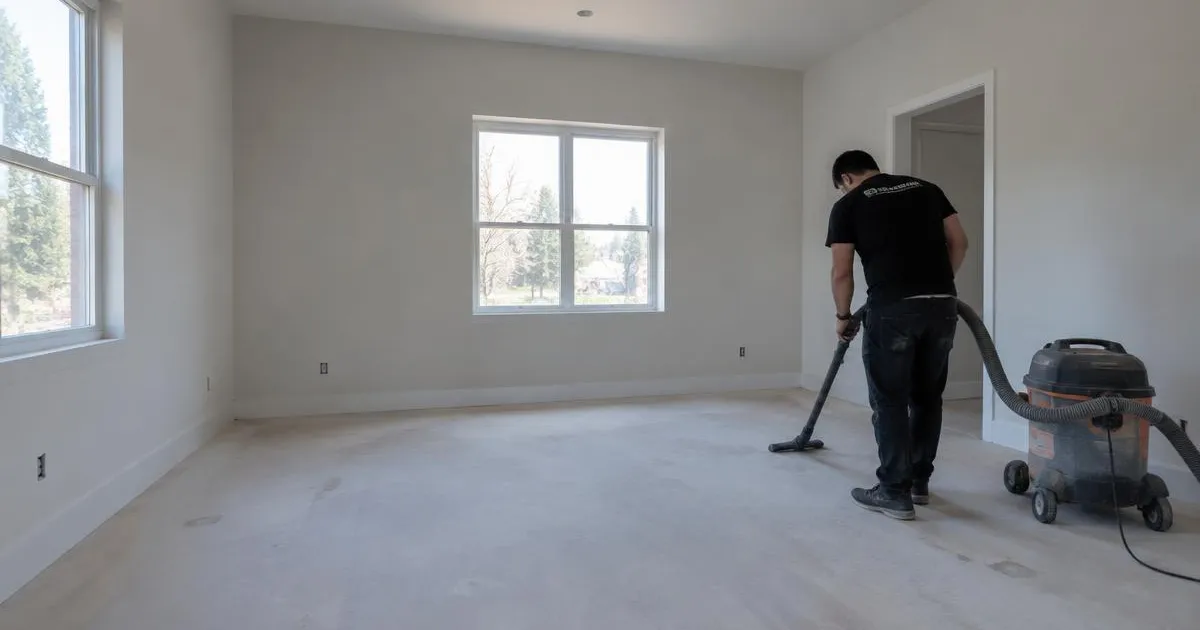
Post-Construction
Post Construction Cleaning Lake Saint Louis: Cleaning After the Punch List
A finished punch list is the right moment to reassess renovation cleanup. Separate remaining trade work from cleaning, identify dust sources, and confirm access before requesting a quote.

post construction cleaning Lake Saint Louis: Cleaning After the Punch List
Renovation Cleanup in Lake Saint Louis: Dust, Debris, and Access begins with a practical distinction: construction completion and cleaning readiness are not the same thing. When arranging post construction cleaning Lake Saint Louis, review the space after the contractor finishes the punch list, not just when the main installation ends. A final adjustment can introduce fresh dust, leave adhesive residue, or change which rooms cleaners can reach.
For Prime Cleaning MO LLC, that review should establish what remains to be cleaned, what belongs to the contractor, and whether the requested service matches the actual condition. A bedroom renovation with settled dust needs a different discussion from a kitchen containing packaging, loose materials, and newly finished surfaces.
Walk through each affected room and compare it with the original cleaning request. Have workers returned? Are protective coverings still down? Has dust spread into rooms outside the renovation? Update the scope before confirming service so the cleaning plan reflects the finished project rather than an earlier snapshot.
Separate unfinished trade work from cleaning tasks
Use the contractor’s completed punch list as a starting point, then check the room itself. Open doors and drawers where permitted, look along trim, and note anything that appears unfinished. Cleaning should not become a substitute for installation corrections, finish repairs, or contractor removal of leftover materials.
For example, a cloudy cabinet door might have removable surface dust, a protective film, or a finish defect. Do not assume stronger cleaning will resolve it. Photograph the area and ask the installer what material is present and what care is allowed. If sanding or touch-up work remains, identify the affected zone before scheduling final cleaning.
Create a short responsibility list
Record each unresolved item, its location, and who will address it. Assign trade corrections to the contractor and proposed cleaning tasks to the cleaning scope. Keep uncertain items pending assessment. This simple list prevents a cleaner from being asked to scrape, dissolve, or repair something that needs an installer’s decision.
Explore our post-construction service and cleaning in Lake Saint Louis, MO for property-specific information.
Describe bedrooms, bathrooms, and the actual condition
Residential construction intake should include the number of bedrooms and bathrooms, the affected rooms, and the condition: debris, dust, or more. Explain whether the renovation was isolated or whether people carried material through the rest of the home. Room counts alone cannot describe the work.
Give concrete observations instead of labels such as “not too bad.” Useful details include dust on closet shelves, packaging beside an island, residue on tile, or powder collecting along baseboards. Mention furnished rooms, occupied areas, and belongings that prevent access to surfaces.
Use a room-by-room scope check
For each room, ask what changed, what remains, and what can be accessed. Two bathrooms with new fixtures may need different care if one still has protective film and the other contains unpacked accessories. State whether cabinets are empty and whether appliance interiors need attention. Those details support a more accurate discussion than simply requesting a whole-house cleanup.
Identify dust before deciding how to clean it
Do not treat every pale powder as ordinary household dust. Ask the contractor which materials were cut, sanded, drilled, or removed, and whether the remaining residue has been identified. If the source is unknown or potentially hazardous, stop and request assessment by a qualified contractor before cleaning proceeds. Do not disturb the material to investigate it yourself.
This service should not be presented as asbestos, lead, silica, or mold remediation, hazardous waste removal, or a determination that a space is safe to occupy. An uncertain dust source is a reason to pause, not to promise a more intensive cleaning method.
For identified, nonhazardous residue within the agreed scope, discuss suitable dust-capture equipment and controlled surface-cleaning methods. Do not use a household vacuum for construction dust. Cleaning accessible room surfaces also does not include duct cleaning; concerns about material inside ventilation systems need a separate qualified assessment.
Scope debris, hauling, and access as separate decisions
Distinguish settled dust and small cleaning-related litter from heavy debris and hauling. Boards, drywall pieces, fixtures, pallets, and leftover building materials require separate scope decisions. Identify who will remove them and where they are located; do not assume their removal is included in surface cleaning.
Access matters just as much as the amount of dust. Confirm entry instructions, parking permissions, stairs or elevator access, working utilities, and a clear route to each included room. Tell the team about fragile installations, locked spaces, pets, and rooms that must remain undisturbed.
If a bathroom is accessible only through a room still being used for contractor storage, resolve that obstruction first. Likewise, a floor covered with materials cannot be fully evaluated or cleaned as an exposed surface. Agree on who removes coverings, confirm that removal is permitted, and update the scope if concealed residue becomes visible afterward.
Confirm surface care and optional interior work
List new flooring, stone, cabinetry, fixtures, and coated surfaces, and obtain the manufacturer’s care instructions. Follow manufacturer cure times before cleaning or exposing surfaces to moisture; do not substitute a guessed waiting period. Where instructions are missing or conflicting, ask the installer to clarify before work begins.
Use manufacturer-safe surface care, avoid acids on stone, and never mix cleaners. Disinfection is a separate decision from dust removal: use it only when appropriate for the surface and purpose, and observe the product’s full label contact time. Adhesive, grout, or paint residue should be reviewed rather than automatically scraped away.
Confirm interior work explicitly. Interior windows are an optional add-on for post-construction cleaning, not an automatic inclusion. If considering deep cleaning instead, appliance interiors and inside cabinets are optional add-ons. Move-In/Move-Out cleaning includes inside and outside cabinets and appliances, but construction residue and debris still need their own scope review.
Match the quote to the property and remaining detail
Residential and commercial construction requests need different intake paths. For a home, provide bedroom and bathroom counts, current condition, access details, and the revised room list. Photos can help communicate visible conditions, but they should not replace disclosure of unknown residue or unfinished contractor work.
Commercial post-construction cleaning requires a free in-person walkthrough before pricing. Provide the business name, approximate square footage, restroom count, preferred date/time window, and onsite contact. The walkthrough should address work zones, access restrictions, remaining materials, and surface requirements. Commercial or industrial cleaning likewise requires that walkthrough before pricing; hazardous work is not promised.
Be realistic about detail. Work beyond the depth of a deep clean may take more than one day, depending on the reviewed condition and access. If ongoing home maintenance is the next goal, standard/recurring service begins only after an initial deep clean, and the first standard/recurring quote includes that deep clean.
Close the review with a shared cleaning plan
Before service, consolidate the decisions into one written plan: included rooms, identified residue, accessible surfaces, optional add-ons, debris responsibilities, and any exclusions. Note surfaces awaiting cure or installer instructions. Share changes promptly if contractors return or the condition differs from the reviewed scope.
For example, if the last punch-list visit involved sanding a door frame, reassess that room and the adjoining route rather than assuming the earlier plan still applies. If only a hardware adjustment occurred, confirm whether it left any residue or packaging. The decision should follow the actual change.
After cleaning, review accessible areas against the agreed scope. Distinguish remaining construction defects from cleaning concerns, and flag anything that requires contractor attention without attempting repairs. Prime Cleaning MO LLC can use this scope-first approach to discuss the request without promising dust-free results, universal checklist coverage, or guaranteed occupancy safety.