Post-Construction
Post Construction Cleaning Manchester: Paint, Adhesives and Safe Methods
Fresh finishes need more than a wipe-down. Learn how to scope renovation cleanup, protect curing paint, evaluate adhesive residue, and arrange practical access.
post construction cleaning Manchester: Paint, Adhesives and Safe Methods
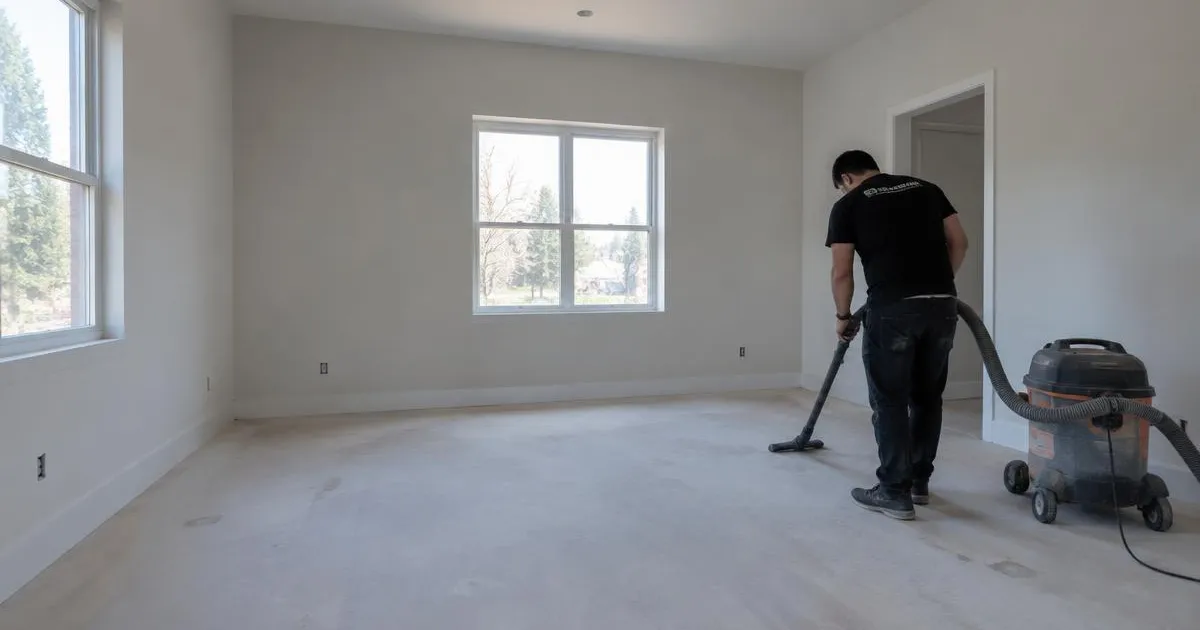
Renovation cleanup can stall when a room looks finished but its paint, sealants, or adhesives are not ready for cleaning. Planning post construction cleaning Manchester means separating removable dust from residue that needs product-specific instructions, while making room for remaining contractor work. Prime Cleaning MO LLC starts with those distinctions so the requested cleaning matches the condition of the property rather than treating every mark as ordinary dirt.
The central question is not simply whether a surface needs attention. It is whether that surface can tolerate cleaning now, and which method its manufacturer permits. A painted door, a stone counter, and an adhesive-backed floor may need different treatment even when all three carry the same fine dust. Before requesting service, identify unfinished work, gather available finish information, and decide which rooms can be released for cleaning. This makes it easier to define a useful scope without risking newly installed materials.
Build the intake around rooms, condition, and remaining work
For residential construction cleanup, provide the bedroom count, bathroom count, and current condition: debris, dust, or more. Explain which rooms were renovated and whether nearby rooms received tracked dust. Photos can help show overall conditions, but close-ups alone may hide access problems or the quantity of leftover material. Include wide views of floors, counters, stairs, and entry routes.
Then describe what “more” means. Are there paint specks on finished flooring, tape residue on trim, labels on fixtures, or unidentified powder near demolition areas? List each issue separately. Ordinary dust collection and adhesive removal require different decisions, and neither automatically includes removing construction leftovers.
Ask who still needs access, what work remains, and whether installed surfaces have been approved for cleaning. For example, a completed bathroom beside a hallway awaiting sanding may not be ready for final detailing. The answer may be limited cleaning in an isolated area, followed by separately scoped work once the contractor finishes.
Explore our post-construction service and cleaning in Manchester, MO for property-specific information.
Check paint readiness before wiping or removing specks
Dry-looking paint is not necessarily ready for washing, pressure, tape removal, or chemical exposure. Ask the painter for the coating name, application information, and manufacturer cleaning and cure instructions. Follow those instructions rather than assuming that every painted surface becomes washable after the same interval.
Distinguish loose dust from paint damage
On a confirmed cleanable finish, begin with the least aggressive manufacturer-approved method and test an inconspicuous area. Inspect the result before expanding treatment. Rubbing harder is not a reliable solution: it can change sheen, transfer color, or expose an underlying coat. If wiping produces those effects, stop and refer the concern to the painter.
Treat paint specks as a separate decision
A speck on glass does not justify using the same tool on coated metal, flooring, or stone. Identify both the paint and the receiving surface before selecting a method. Do not default to blades, abrasive pads, or solvents. If removal cannot be confirmed as compatible, leave the mark documented for contractor assessment; cleaning does not include finish repair.
Identify adhesive residue before choosing a removal method
Tape, protective film, labels, and installation adhesives can leave similar-looking residue while behaving differently. Record where the residue appears, what product likely caused it, and what lies underneath. Ask the installer whether protective material must stay in place until other work is finished. Premature removal can expose a surface that still needs protection.
Use the surface manufacturer’s guidance together with the adhesive product instructions. A remover suitable for one material may dull another, soften a coating, or affect a nearby seam. Test only an approved method in a concealed location and assess it before proceeding. Avoid improvised solvent mixtures or assuming that household remedies are universally gentle.
For example, sticker residue on a fixture may be cleanable with an approved product, while hardened installation adhesive on a newly finished floor may require installer evaluation. Set that boundary before work begins. Never mix cleaners, and keep acids away from stone. Disinfection is a separate task, appropriate only where needed and with the full label contact time.
Separate construction dust from debris and unknown material
Describe dust and debris independently. Loose packaging, offcuts, broken materials, and heavy piles are not the same task as detailing settled dust from accessible surfaces. Heavy debris removal and hauling must be scoped separately, including who supplies removal arrangements and where material may be placed. Do not assume a cleaning visit includes loading construction waste.
If dust or residue is unknown, potentially hazardous, or connected to suspect materials, stop and request assessment by a qualified contractor before cleaning proceeds. Appearance alone cannot establish what a powder contains. This cleaning scope does not promise hazardous-material work.
Once the material and conditions are suitable for ordinary construction cleanup, plan a controlled sequence: address approved loose material, collect accessible elevated dust with suitable equipment, and work toward lower surfaces and floors. Do not use household vacuums for construction dust. Avoid dry sweeping that redistributes fine material, and keep newly cleaned areas separated from active cutting, sanding, or drilling.
Arrange access that protects finished rooms
A workable access plan covers more than an unlocked front door. Identify parking or unloading arrangements, stairs, elevator restrictions where applicable, available water and electricity, and a clear route through the property. Explain which entrances contractors use and where approved equipment can be staged without blocking their work.
Ask who may move stored materials and whether floor protection is meant to remain. Cleaners should not have to guess whether a stack of trim is discarded debris or material awaiting installation. Likewise, removing protection without permission can put a newly cleaned floor back into an active traffic path.
Choose a cleaning window based on actual project readiness rather than the appearance of completion. If a painter returns for touch-ups, confirm what can be cleaned beforehand and what should wait. Keep pets, belongings, and unnecessary foot traffic out of the working area. Detailed work beyond a deep clean may take more than one day, so discuss priorities rather than assuming every room will be finished in one visit.
Define inclusions, add-ons, and commercial pricing requirements
For renovation cleanup, confirm the agreed rooms, accessible surfaces, dust collection, residue evaluation, and floor care in writing. Interior windows are an optional add-on, not an automatic inclusion. Ask whether cabinet or appliance interiors contain construction dust, and request explicit scope confirmation rather than assuming a service label covers them.
Service types have different boundaries. With a deep clean, appliance interiors and inside cabinets are optional add-ons. Move-In/Move-Out cleaning includes inside and outside cabinets and appliances, but construction residue still needs disclosure. Standard/recurring service begins only after an initial deep clean; the first standard/recurring quote includes that deep clean, and standard service is not a one-time or first-time substitute for renovation cleanup.
For commercial or industrial premises, including commercial post-construction, Prime Cleaning MO LLC requires a free in-person walkthrough before pricing. Provide the business name, approximate square footage, restroom count, requested date/time window, and onsite contact. The walkthrough helps establish access, finish conditions, and scope; it does not authorize hazardous work.
Close with a condition review and clear next steps
Before cleaning starts, agree on how unresolved items will be recorded. Separate removable soil from scratches, coating defects, adhesive damage, and unfinished installation work. This avoids treating a contractor correction as a missed cleaning task. Where finish information is unavailable, the next step may be obtaining instructions rather than experimenting.
At the closing review, examine the agreed areas under available lighting and compare observations with the scope. Note residue left untouched because compatibility was uncertain, surfaces awaiting cure, and rooms affected by subsequent contractor activity. Review optional work separately so an unrequested interior window cleaning is not mistaken for an omission.
A practical handoff identifies who handles each remaining item: the cleaner for agreed cleaning, the installer for material questions, or the painter for finish concerns. Keep manufacturer care instructions for future maintenance. The goal is an orderly, well-defined cleanup that respects new finishes—not a promise of dust-free conditions or a determination that the property is safe for occupancy.