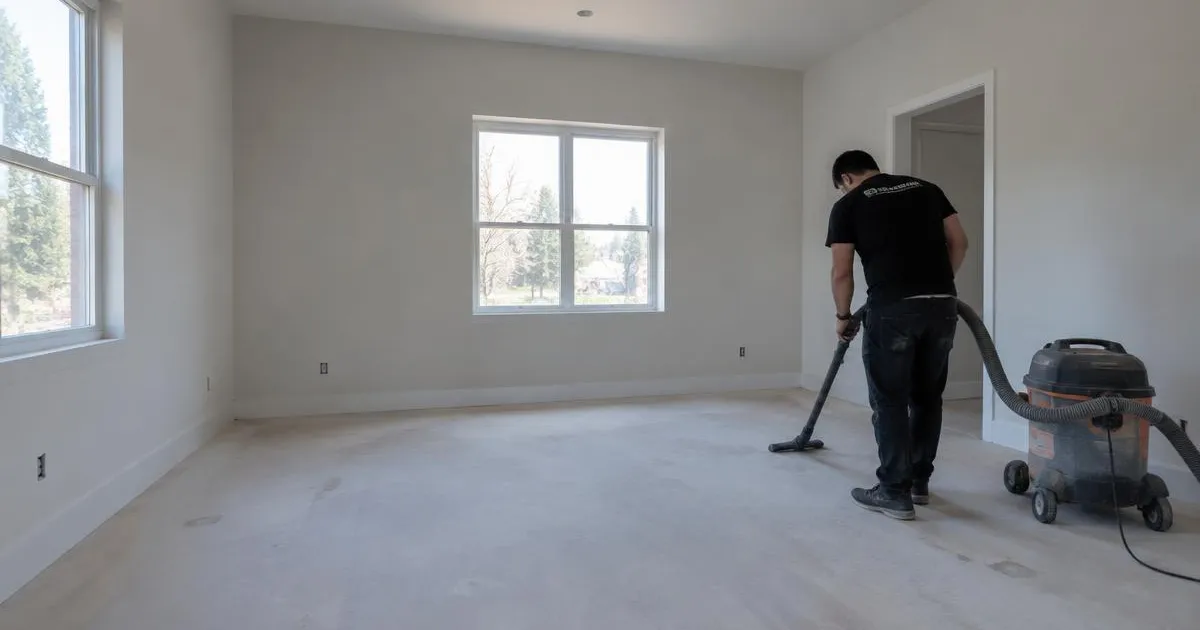
Post-Construction
Post Construction Cleaning Mehlville: Separating Occupied Renovation Zones
Living at home during a renovation changes the cleanup plan. Learn how to separate work zones, protect usable rooms, and define dust, debris, and access needs.
post construction cleaning Mehlville: Separating Occupied Renovation Zones
A renovation can leave one part of a home unfinished while meals, homework, and everyday routines continue nearby. For residents comparing post construction cleaning Mehlville options, the central question is not simply how much dust needs removing. It is how to clean the renovated area without carrying residue into rooms still in use. A useful plan identifies the work boundary, the household’s essential routes, and the point when construction activity will stop producing fresh dust.
Prime Cleaning MO LLC needs that context before defining residential cleanup. Start with the number of bedrooms and bathrooms, then describe the condition: debris, dust, or more. Explain whether the project affected a single room, connected spaces, or several floors. Identify who still uses the home and which rooms must remain accessible. These details help distinguish the cleaning area from the occupied area rather than treating every room as equally available.
Draw the boundary between renovation and daily life
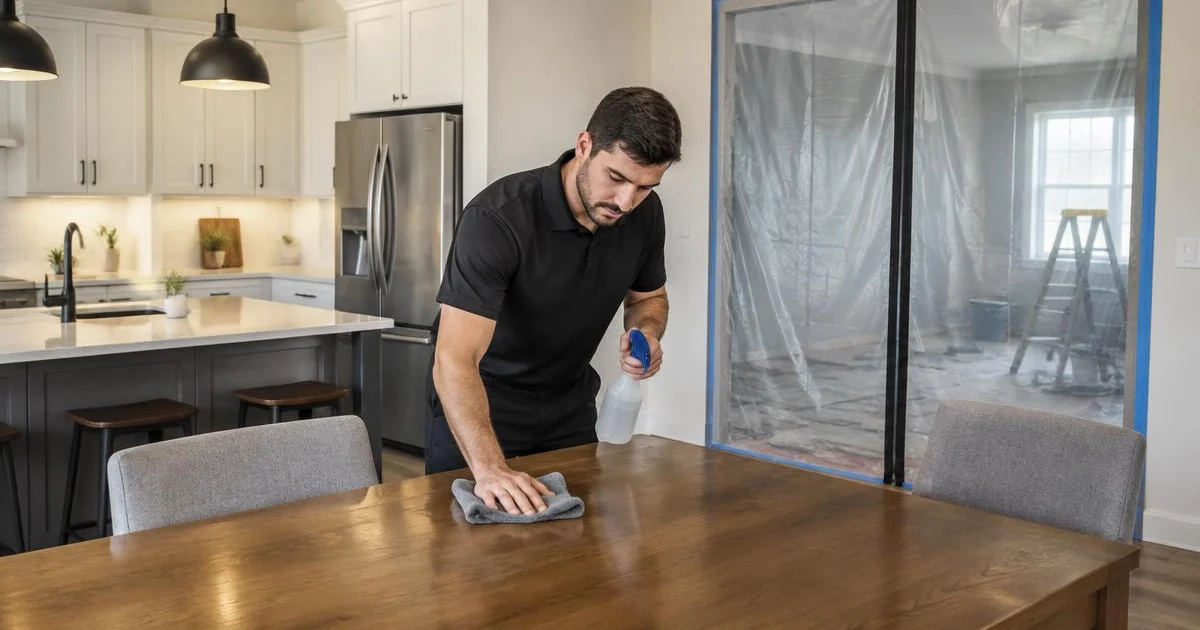
Mark three areas on a simple floor plan: the construction zone, the occupied rooms, and the route connecting the work area to an exterior door. Include stairs and shared hallways. A kitchen renovation, for example, may require passage through a family room even when that room is not part of the project. That passage needs its own cleaning and access plan; it should not disappear between the contractor’s scope and the cleaner’s scope.
Protect the rooms that remain usable
Ask the renovation contractor which barriers must stay in place and who is responsible for removing them. Do not dismantle dust containment simply to make cleaning easier. Keep household belongings out of the work route, close suitable doors, and arrange another place for children and pets during cleaning. If the only usable bathroom sits beyond the renovation zone, resolve that access conflict before booking. Cleaning cannot compensate for a layout that requires repeated traffic through active work.
Explore our post-construction service and cleaning in Mehlville, MO for property-specific information.
Confirm what the residue is before disturbing it
Describe the work that produced the residue, not just its appearance. Sawdust from documented woodwork, packaging fragments, and an unidentified powder near old wall material present different questions. Ask the contractor what materials were cut, sanded, or removed and whether any assessment is needed. Photographs help show quantity and distribution, but they cannot establish that an unknown dust is appropriate for routine cleaning.
Stop when the material is uncertain
If dust is unknown or potentially hazardous, stop and request assessment by a qualified contractor before anyone sweeps, vacuums, or wipes it. Do not use a household vacuum for construction dust. Prime Cleaning MO LLC does not promise hazardous-material remediation or hazardous waste handling. Once the residue is identified as suitable for the agreed cleaning scope, confirm the appropriate equipment and collection method. A visible layer disappearing does not establish occupancy safety, and cleaning should never be presented as that assurance.
Separate debris removal from detailed dust cleaning
Ask what will remain when the trades leave. Empty boxes, protective coverings, loose fasteners, broken tile, scrap lumber, and fine residue should not be grouped under a vague request to “clean everything.” Heavy debris and hauling must be scoped separately, including who collects it, where it goes, and whether removal is required before cleaning can begin. Confirm responsibility for sharp scraps and bulky materials rather than assuming they belong in ordinary household trash.
Consider two different handoffs. In one, the contractor removes offcuts and packaging, leaving accessible surfaces with settled dust. In another, a room contains rubble, stacked materials, and tools. The second situation needs more than additional wiping; it needs a debris and access decision first. Ask whether protective floor coverings must remain for later deliveries. Removing them too early can expose cleaned floors to further traffic, while leaving them indefinitely may conceal residue that still needs attention.
Schedule cleaning around the last dust-producing task
Ask the contractor which tasks remain and whether they generate dust or require entry into cleaned rooms. Sanding after a detailed cleanup can undo much of that work. A practical handoff identifies finished areas, unfinished areas, and any planned return visits. When a household needs one room back before the entire project ends, discuss a staged scope instead of describing a partial cleanup as the final clean.
New coatings, sealants, grout, flooring, and cabinetry may have restrictions on moisture, chemicals, friction, or coverings. Obtain product information and follow manufacturer cure times; do not substitute a guessed waiting period. If a finish is not ready for cleaning, leave it outside the current scope and arrange a later decision. Detailing beyond a deep clean may take more than one day, particularly where access is limited or residue requires careful repeated work. Discuss that possibility without assuming a fixed completion time before assessment.
Use a room-by-room sequence with surface limits
For identified, nonhazardous residue, plan controlled collection before damp cleaning so loose material is not simply smeared across new finishes. Work from accessible higher surfaces toward lower ones, with floors addressed after overhead residue. Within each room, specify the surfaces being handled: ledges, trim, doors, reachable fixtures, shelving, or flooring. This is a project-specific scope, not a promise that every concealed recess or building system will be cleaned.
Use manufacturer-safe surface care and confirm instructions for unfamiliar materials. Avoid acids on stone, never mix cleaners, and disinfect only when appropriate, allowing the full label contact time. Do not soak joints or scrub aggressively to remove something that may actually be a finish defect. Paint marks, adhesive residue, scratches, and damaged coatings need separate evaluation; cleaning does not include finish repairs. If discoloration remains, report its location rather than escalating to harsher products. Ventilation-system or duct cleaning is not part of this room-cleaning plan.
Define cabinets, appliances, windows, and shared routes
Construction cleanup should name the specific interiors and surfaces requested rather than borrow assumptions from another service. Are cabinet interiors exposed to dust, or are they filled with dishes? Is an appliance accessible without moving or disconnecting it? Are window tracks dusty, and is interior glass cleaning wanted? Interior windows are an optional add-on for post-construction cleaning, not an automatic inclusion. Agree on who empties storage areas and moves belongings before the visit.
Service distinctions matter if the household is also considering broader cleaning. With a deep clean, appliance interiors and inside cabinets are optional add-ons. Move-In/Move-Out cleaning includes inside and outside cabinets and appliances. Standard/recurring service begins only after an initial deep clean, and the first standard/recurring quote includes that deep clean; it is not a first-time or one-time alternative. For an occupied renovation, focus first on the affected rooms and shared routes, then discuss unrelated household cleaning as a clearly defined additional need.
Prepare the handoff and review the occupied-room boundary
Before requesting residential scope details from Prime Cleaning MO LLC, gather bedroom and bathroom counts, the project description, current condition, photographs, and access constraints. Identify available water and electricity, entry arrangements, stairs, parking or carrying restrictions, and rooms that must remain closed. Ask who will answer questions about newly installed materials. If the work is commercial or industrial, including commercial post-construction, pricing requires a free in-person walkthrough first. Provide the business name, approximate square footage, restroom count, preferred date/time window, and onsite contact.
At handoff, review the agreed rooms and the route through occupied spaces. Note any inaccessible surfaces, uncured finishes, unresolved debris, or material awaiting qualified assessment. Keep those items visible in the scope rather than treating them as completed. After cleaning, avoid routing further construction traffic through usable rooms where possible. The goal is a defined cleanup that supports daily life alongside the renovation, with clear limits and responsibilities—not a dust-free claim or a guarantee of occupancy safety.