Post-Construction
Post Construction Cleaning O’Fallon: Debris Removal and Safety Limits
A practical guide to deciding what belongs in a renovation cleaning scope, what needs separate hauling, and when unknown dust or dangerous debris requires contractor assessment.

post construction cleaning O’Fallon: Debris Removal and Safety Limits
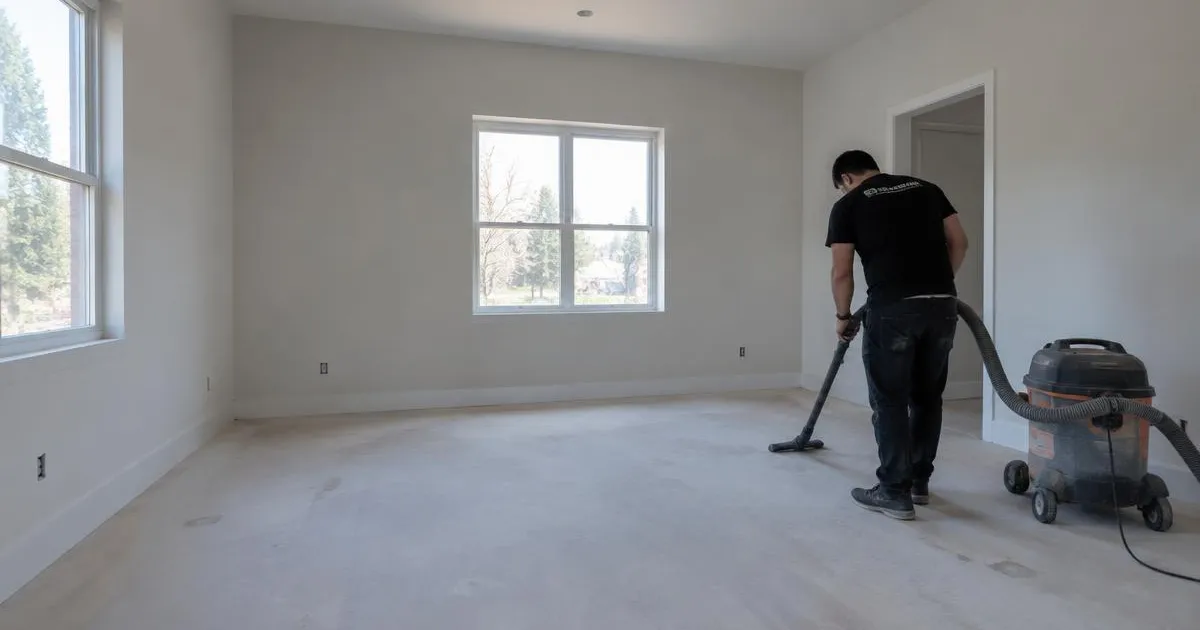
Planning post construction cleaning O’Fallon starts with identifying what the renovation left behind, not choosing cleaning products. A room with settled surface dust needs a different scope from one containing broken tile, exposed nails, or unidentified powder. Before requesting service from Prime Cleaning MO LLC, separate the discussion into three categories: ordinary surface cleaning, debris requiring separately arranged removal, and material that needs qualified contractor assessment before anyone proceeds.
This distinction prevents a common scheduling mistake: booking cleaners while the site still needs construction work or hauling. Cleaning around piles leaves surfaces inaccessible, while moving unidentified materials can create avoidable exposure or injury. The useful question is not simply whether the room looks dirty, but whether it is ready for cleaning.
Walk through the renovation area from the entrance without disturbing piles. Note what is visible, which routes are blocked, and whether contractors still have equipment onsite. Use those observations to describe the job rather than trying to clear uncertain material yourself.
Distinguish haulable debris from material that needs assessment
Debris is not one service category. Empty packaging and identifiable offcuts may be candidates for separately scoped hauling; that does not mean a cleaning visit includes their removal. Heavy bags, leftover fixtures, and demolition piles need a specific removal agreement before they become part of any plan.
Ordinary debris still needs a defined hauling scope
Describe the material, approximate quantity, location, and removal route. Is cardboard stacked near an exterior door, or are bulky cabinet pieces upstairs? Ask who will supply containers, move the material, and arrange disposal. Do not assume an onsite dumpster is available for cleaner use; confirm permission with the responsible contractor.
Sharp or unknown material is a stop point
Broken glass mixed into dust, protruding fasteners, uncapped blades, and unidentified residues are not ordinary tidying tasks. Keep people away and ask the responsible contractor to assess and address them before cleaning proceeds. For unknown or potentially hazardous dust, stop and request qualified contractor assessment. A photograph can help explain the concern, but cannot establish that material is safe.
Explore our post-construction service and cleaning in O'Fallon, MO for property-specific information.
Give residential intake enough detail to separate tasks
For residential construction cleanup, provide the bedroom count, bathroom count, and current condition: debris, dust, or more. Room counts establish the basic layout, while condition explains the actual work. Identify which rooms were renovated, which adjacent rooms accumulated dust, and which spaces should remain excluded.
Replace vague descriptions with observable details. For example: two bathrooms were remodeled, packaging remains in the hallway, and visible dust covers bedroom furniture. That description supports separate questions about hauling, furniture access, and surface cleaning. If a pile cannot be identified without opening bags or disturbing it, leave it alone and report that limitation.
Useful scope questions include: Are floors uncovered and accessible? Are tools and leftover materials removed? Are closets empty? Is water available? Have all leaks and active construction tasks been addressed? Mention occupied rooms, pets, and belongings that cannot be moved. These facts help Prime Cleaning MO LLC discuss a workable scope without treating every renovation as the same job.
Arrange access before cleaners reach the work area
Access planning should cover the entire route, not just the front door. Confirm parking or unloading permission, building entry instructions, stairs, elevator restrictions where applicable, and who can authorize entry. Keep the route clear of cords, protruding fasteners, and unstable stacks before the cleaning appointment.
Identify where separately arranged debris removal will occur. If a hauling crew must carry demolition material through a room, cleaning that room first creates unnecessary rework. A better sequence is contractor assessment where needed, removal of agreed debris, completion of dust-producing work, and then cleaning of accessible surfaces. Confirm the sequence with everyone using the space.
For an occupied home, decide which areas residents and pets will use during the visit. Tell the team about locked rooms, alarm instructions, and any surface or fixture that should not be touched. Keys and access codes belong in a secure booking channel, not in photographs shared casually. Clear access instructions reduce confusion without implying that cleaning establishes occupancy safety.
Plan dust cleaning around its source and surface
Known, nonhazardous construction dust still requires a deliberate approach. First confirm that dust-producing tasks have ended and that the source has been identified. If new dust is appearing while contractors sand, cut, or drill, discuss rescheduling or dividing the work into clearly separated phases. Repeated deposition cannot be solved by promising dust-free results.
For accessible surfaces within the agreed scope, discuss controlled dust collection and manufacturer-compatible wiping rather than dry sweeping or blowing dust between rooms. Equipment and methods should suit the identified material; household vacuums are not an appropriate recommendation for construction dust. Work generally proceeds from higher accessible surfaces toward floors so settled material is not repeatedly redistributed.
Name surfaces that need special attention, such as cabinet faces, baseboards, doors, and reachable ledges. Ask separately about elevated areas and delicate fixtures. Dust inside ventilation equipment is not ordinary surface cleaning, and duct cleaning is outside this scope. If an unexpected residue appears during work, stop that area and request assessment instead of experimenting.
Protect new finishes and choose add-ons explicitly
New paint, grout, sealant, flooring, and cabinetry may look finished before they are ready for cleaning. Obtain product information and follow the manufacturer's cure times and care instructions. Do not substitute an assumed waiting period. Tell the team which finishes are new and whether the installer has supplied restrictions.
Use care instructions rather than stronger chemistry
Avoid acids on stone, never mix cleaners, and use manufacturer-safe products and methods. Disinfection is appropriate only where needed and compatible with the surface; the product's full label contact time must be followed. Cleaning does not include finish repairs, and persistent marks may need installer evaluation rather than harder scrubbing.
Separate construction scope from other service packages
Interior windows are an optional add-on for construction cleanup, not an automatic inclusion. Inside cabinets and appliance interiors are optional add-ons for deep cleaning. Move-In/Move-Out service includes inside and outside cabinets and appliances, but that inclusion should not be assumed for a construction quote. Describe the service needed and confirm each interior area explicitly.
Use a walkthrough for commercial construction pricing
Commercial post-construction work requires a free in-person walkthrough before pricing. Photos can introduce the project, but they do not replace reviewing access, surface types, debris boundaries, and usable work areas onsite. The same walkthrough requirement applies to commercial and industrial cleaning requests.
Provide the business name, approximate square footage, restroom count, preferred date and time window, and onsite contact. Explain whether the building is operational, whether trades still occupy any rooms, and who controls loading access. Identify tenant spaces or secured areas that the cleaning team may not enter.
During the walkthrough, distinguish cleaning from hauling and contractor responsibilities. For example, a finished office suite with accessible floors is different from a suite whose corridor contains sharp demolition debris. The latter needs those obstructions addressed before the cleaning route can be finalized. Hazardous work is never promised. Have the onsite decision-maker confirm exclusions and access arrangements so the eventual quote reflects the space actually available for service.
Confirm readiness and document the agreed boundaries
Before approving the visit, review a short scope summary: rooms included, visible condition, separately arranged hauling, unresolved hazards, access instructions, surface restrictions, and selected add-ons. This is a project-specific agreement, not a universal checklist. Ask who will confirm that contractor-controlled issues are resolved before cleaners arrive.
At handoff, distinguish remaining dirt from construction defects. A paint drip, damaged finish, or grout problem may need installer attention rather than more cleaning. Record concerns without promising that cleaning will correct them. Detailing beyond a deep clean may take more than one day; discuss complexity rather than assuming a fixed completion window.
If you want ongoing upkeep afterward, standard or recurring service begins only after an initial deep clean, and the first standard or recurring quote includes that deep clean. It is not a first-time or one-time alternative. Ask Prime Cleaning MO LLC how the construction scope and any later maintenance plan should be coordinated without assuming they are interchangeable.