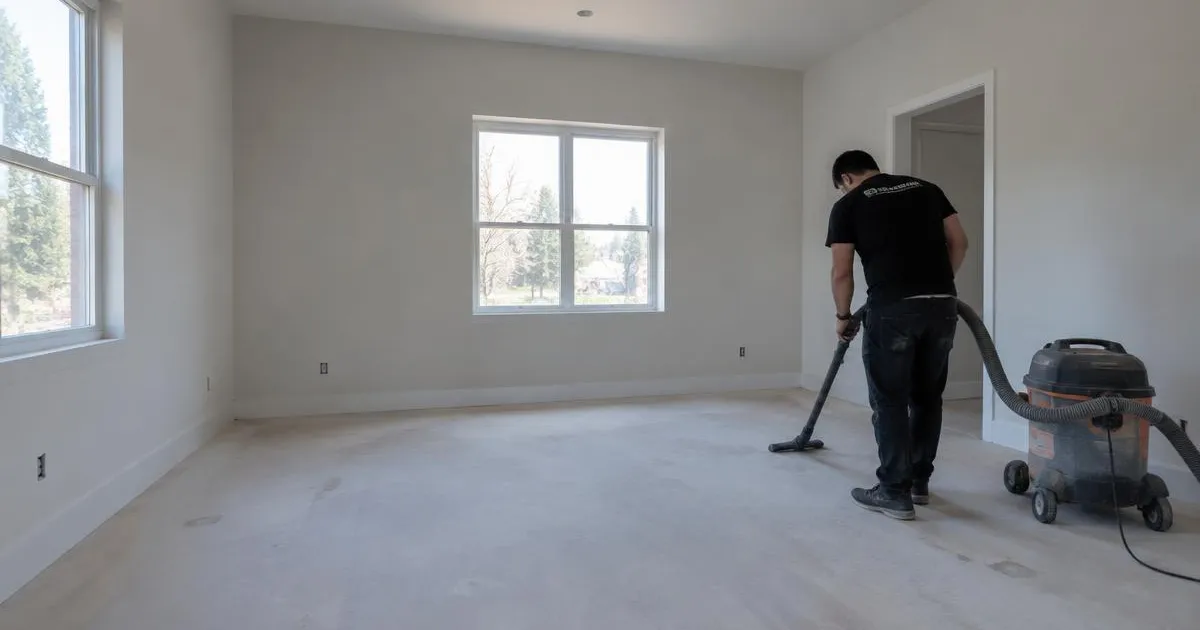
Post-Construction
Post Construction Cleaning Rock Hill: Contractor Waste Responsibilities
A renovation cleanup works best when contractor waste removal happens before detail cleaning. Learn what to clear, what to assess, and how to prepare access.
post construction cleaning Rock Hill: Contractor Waste Responsibilities
When comparing options for post construction cleaning Rock Hill, start with one practical question: who is removing the contractor’s waste? A newly renovated room may contain packaging, offcuts, leftover supplies, and settled dust, but those materials do not all belong in the same cleaning scope. Prime Cleaning MO LLC can help clarify the cleaning request; contractor waste removal should be resolved before detail cleaning begins.
For your Rock Hill property, separate the handoff into three decisions: what the contractor must remove, what conditions need assessment, and which exposed surfaces need cleaning. This prevents a detail-cleaning visit from being treated as an unplanned hauling service. It also makes access easier to evaluate.
Use a room-by-room conversation rather than asking only for a whole-house cleanup. A bathroom renovation with a clear route through the home presents different needs from a kitchen project whose packaging and unused materials still cover the floor. Describe the actual condition, not just the renovation type.
Assign contractor waste before booking detail work
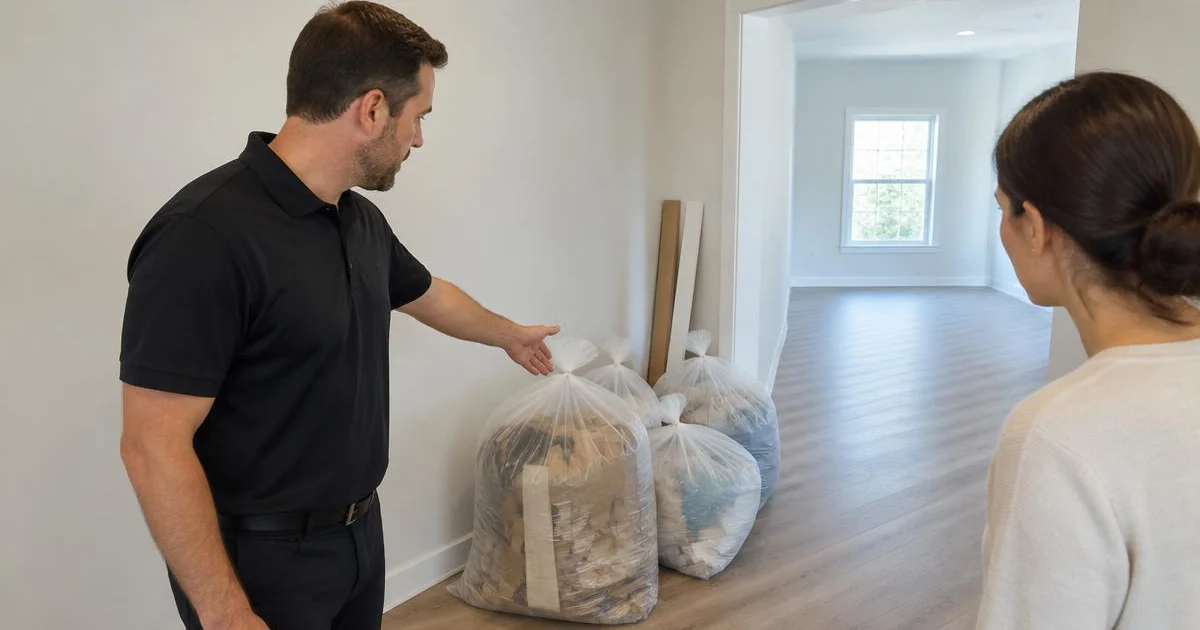
Review the construction agreement and ask the contractor to identify their remaining removal responsibilities. Do not assume the cleaning team will take over anything left behind. Heavy debris and hauling must be scoped separately, including who will provide transportation and an approved disposal destination.
Ask the contractor to distinguish discarded materials from items you intend to keep. Spare tile, labeled paint, hardware, and warranty packaging can resemble rubbish when they are scattered together. Have the contractor or owner move retained items to an agreed storage location.
Use a written removal handoff
Record who will remove each waste category and where it currently sits. For example, the contractor might remove cabinet offcuts and demolition bags while the homeowner stores unopened flooring. The cleaning scope can then address accessible floors, trim, and other agreed surfaces rather than deciding which building materials to discard.
Before confirming readiness, request confirmation that the agreed waste is gone. Photographs can help explain the condition, but they do not replace assessment when materials or dust are uncertain.
Explore our post-construction service and cleaning in Rock Hill, MO for property-specific information.
Treat unknown dust as an assessment issue
Construction dust is not automatically ordinary household dust. Its source matters, especially after cutting, sanding, demolition, or work involving older materials. Ask the contractor what generated the residue and whether any material-specific precautions or professional assessment are needed.
If dust is unknown or potentially hazardous, stop and request assessment from a qualified contractor before cleaning proceeds. Do not sweep it around, test different cleaning products on it, or use a household vacuum. An ordinary cleaning booking is not a substitute for identifying the material.
Describe what you see without diagnosing it: powder near a cut surface, residue spreading beyond the work area, or an unidentified substance under removed flooring. Share the location and the work performed there. Do not assume color alone establishes what the material is.
This service scope does not promise asbestos, lead, silica, or mold remediation, hazardous waste removal, or duct cleaning. Those concerns require separate qualified evaluation. Cleaning visible surfaces also cannot establish that a property is safe for occupancy.
Give intake the rooms, condition, and remaining work
For residential construction cleanup, provide the number of bedrooms and bathrooms and describe the condition: debris, dust, or more. Include which rooms were renovated, which adjacent areas were affected, and whether furnishings remain. A bedroom count alone cannot explain how far the work extended.
Be specific about the distinction between loose construction waste and residue on surfaces. If bathroom fixtures are installed but protective wrapping remains, say so. If a kitchen floor is clear but cabinet shelves contain sanding residue, identify that separately.
Also disclose unfinished tasks. A contractor returning to cut trim or sand a wall can create new residue after cleaning. Ask whether the requested visit should follow that work rather than precede it.
Useful scope questions include: Who removes protective coverings? Which rooms are excluded? Are stored materials blocking walls or floors? Is there residue that needs assessment? Clear answers let the cleaning request reflect the property’s present condition instead of assuming every room is ready.
Make access part of the contractor handoff
Waste removal is incomplete if bags or equipment have simply been moved into the cleaning route. Ask for clear paths from the entry to each included room, plus access to the surfaces being quoted. Materials stacked against trim or fixtures prevent those areas from being reached.
Agree on entry instructions, available utilities, parking or loading restrictions, and an onsite contact. Identify any building access rules before arrival. Keep children and pets outside the active work area, and explain how occupied rooms will remain separate from the cleaning route.
Decide what happens to blocked areas
If a new vanity is accessible but spare tile blocks the shower, choose whether the contractor will relocate the tile or the shower will remain excluded until access is available. Do not leave that decision to the cleaner at the door.
Ask the contractor to address exposed sharp objects, unstable stacks, and unfinished electrical conditions before the cleaning handoff. The cleaning team should not be expected to make construction conditions ready for access.
Define detail cleaning without adding unrelated services
Once waste, dust concerns, and access are resolved, define the surfaces to be cleaned. Depending on the agreed scope and condition, discussion may cover accessible trim, doors, fixtures, cabinet exteriors, and floors. This is a scope conversation, not a promise that every surface or residue is automatically included.
Interior windows are an optional add-on for post-construction cleaning, not an automatic inclusion. Ask about glass, frames, tracks, and access separately. Paint, adhesive, grout residue, or protective film may require contractor guidance rather than scraping or stronger chemicals.
Do not assume that booking a different service makes construction waste part of the package. Deep-clean appliance interiors and inside cabinets are optional add-ons. Move-In/Move-Out cleaning includes inside and outside cabinets and appliances, but construction debris still needs separate consideration.
Standard/recurring cleaning is available only after an initial deep clean; the first standard/recurring quote includes that deep clean. It is not a one-time or first-time substitute for renovation cleanup. Detailing beyond a deep clean may take more than one day, depending on the assessed scope.
Protect new finishes and verify the handoff
New surfaces may look ready before their coatings, sealants, or installation materials have fully cured. Obtain the manufacturer’s care instructions and cure times from the contractor. Follow those requirements rather than assuming a newly installed surface can tolerate moisture, friction, or a cleaning product.
Use manufacturer-safe surface care, never mix cleaners, and avoid acids on stone. Disinfect only when appropriate for the surface and purpose, following the product’s full label contact time. Disinfection is not a replacement for removing ordinary surface soil.
Before work begins, point out scratches, chips, unfinished edges, or visible installation defects. Cleaning does not include finish repairs, and aggressive attempts to remove a mark can worsen a new surface.
At the handoff, review the agreed accessible areas and note exclusions or contractor follow-up items. If fresh cutting or sanding occurs afterward, reassess the resulting condition rather than assuming the original cleaning scope still applies. The goal is a clearly documented result, not a dust-free or occupancy-safety guarantee.
Use an in-person walkthrough for commercial renovations
Commercial construction cleanup requires a free in-person walkthrough before pricing. For a Rock Hill business, send Prime Cleaning MO LLC the business name, approximate square footage, restroom count, requested date and time window, and onsite contact. Commercial/industrial cleaning also requires this walkthrough before pricing.
During the visit, identify who controls contractor waste removal, which areas remain active, and whether staff or customers will occupy adjoining spaces. Discuss loading access, building restrictions, storage, and any equipment that must not be touched.
For example, a shop with cleared customer areas but a stockroom full of renovation offcuts should not be described as fully ready. Decide whether the contractor will empty the stockroom or whether it remains outside the proposed cleaning scope.
Finish with a written division of responsibilities: contractor removal, owner preparation, cleaning inclusions, optional additions, and unresolved assessment needs. Hazardous work is never promised. This same division helps residential owners avoid the central mistake of renovation cleanup: expecting surface detailing to solve an unfinished construction handoff.