Post-Construction
Post Construction Cleaning University City: Access Plans for Multiple Units
A practical guide to coordinating dust cleanup across units, shared corridors, and locked rooms without leaving access or debris responsibilities unclear.
post construction cleaning University City: Access Plans for Multiple Units
Renovation cleanup is not just a question of how much dust remains. In a multi-unit building, a locked apartment, an occupied hallway, or an unclear entry permission can change the entire cleaning plan. When arranging post construction cleaning University City with Prime Cleaning MO LLC, begin with two essentials: a usable access map and one authorized site contact. Together, they establish where cleaning may happen, how crews can reach those spaces, and who can resolve questions without guessing.
Think of the building as connected work areas rather than one address. Dust can travel from a renovated unit into a shared corridor while materials are still being carried through it. The cleanup scope should distinguish private interiors, common areas, active construction zones, and excluded rooms. This guide focuses on coordinating those boundaries so the requested cleaning matches the actual site conditions and permissions.
Build an access map that someone else can follow
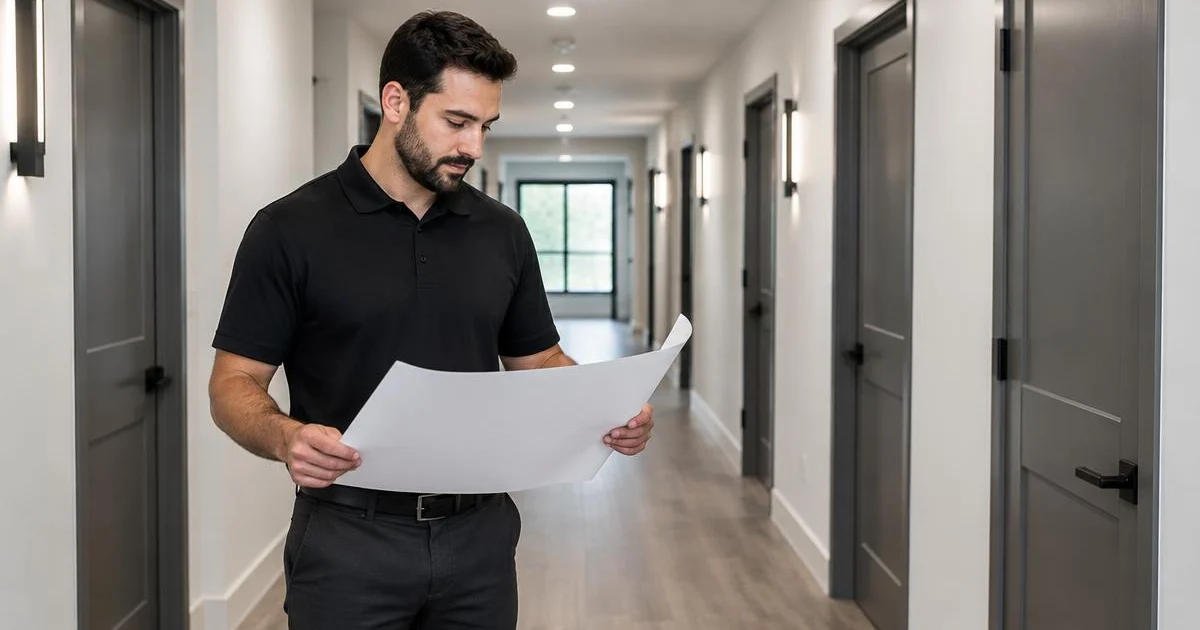
A useful access map can be a marked floor plan or a clearly written room-by-room list. Label each unit, floor, stairwell, elevator, and permitted entrance consistently. Identify where cleaners may unload, which route they should use, and where supplies may be staged without blocking residents or exits. Do not assume the front entrance is the approved working entrance.
Include doors requiring keys, fobs, codes, or an escort, but share credentials securely rather than posting them on a public diagram. Mark occupied units and rooms that require separate permission. Ask whether elevator reservations, building entry procedures, or resident notices must be arranged by management.
Mark status as well as location
Give each area a simple status: ready for cleaning, still under construction, occupied with approved access, or excluded. For example, if Unit A is ready but Unit B is still being sanded, mark them separately. A shared hallway should not be treated as ready for final cleaning while it remains an active material route.
Explore our post-construction service and cleaning in University City, MO for property-specific information.
Name one authorized contact and define their decisions
The authorized site contact should be able to confirm entry permissions, identify excluded spaces, and approve changes within the agreed scope. A person who can unlock the building but cannot authorize access to individual apartments is not enough. Record the contact’s name, phone number, availability, and relationship to the property, along with an authorized backup.
Before the visit, clarify who can approve additional work, who answers questions about new finishes, and who verifies that contractors have released an area for cleaning. These may be different people, but the primary contact should know how to reach them. Avoid relying on instructions passed informally through residents or unrelated trades.
Set a simple pause rule: when access, surface readiness, or scope is uncertain, stop work in the affected area and ask the authorized contact. For example, a tenant’s request to clean a locked storage room should not override the owner’s exclusion without documented authorization.
Describe the property and separate dust from debris
Residential construction intake should include the number of bedrooms and bathrooms, the areas renovated, and their current condition: debris, dust, or more. Describe whether the request concerns a single residence, several units, or shared spaces. Photos can help explain visible conditions, but they do not establish what an unknown material contains.
Separate ordinary cleaning needs from material removal. Ask who is responsible for leftover flooring, packaging, broken fixtures, and other heavy debris. Heavy debris removal and hauling must be scoped separately; neither should be assumed from the phrase post-construction cleaning. Identify any approved waste location and confirm who has permission to use it.
Use condition examples to define the request
A finished bedroom with settled dust needs a different plan from a bathroom containing offcuts and adhesive residue. List each condition by room instead of saying everything needs cleaning. If dust is unknown or potentially hazardous, stop and request assessment by a qualified contractor before cleaning proceeds.
Match cleaning order to construction and resident movement
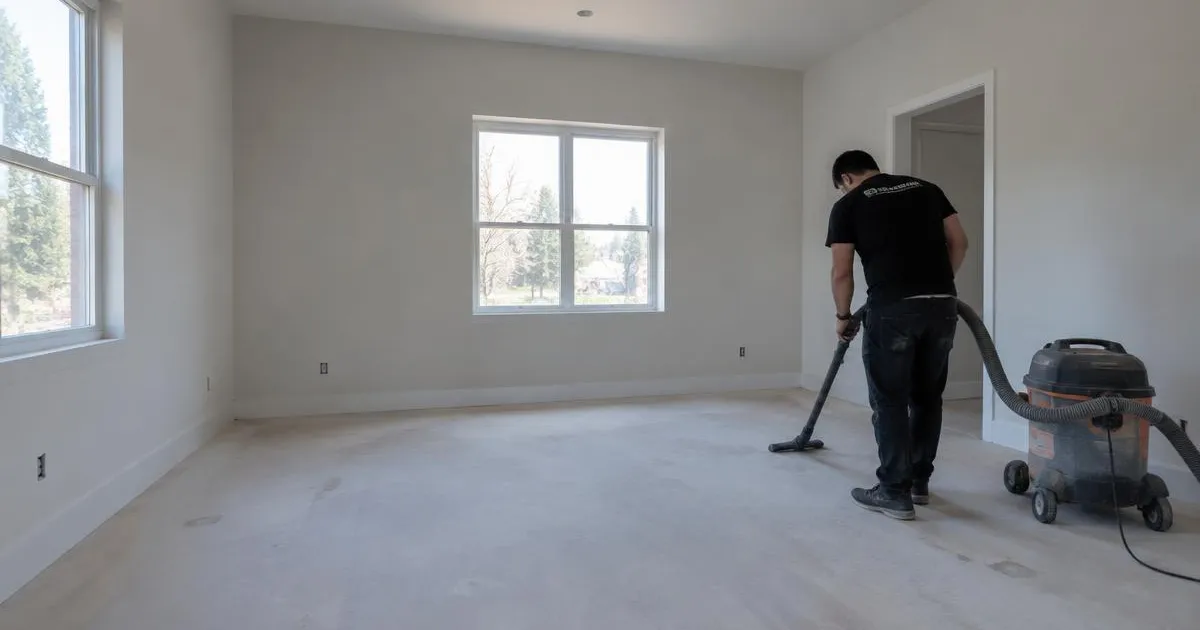
Cleaning order should follow both the access map and the remaining work. Start planning with areas that contractors have released and that can remain undisturbed. Coordinate high-level dust removal before lower surfaces and floors, while selecting methods appropriate to the known material and finish. Do not recommend or use a household vacuum for construction dust; suitable equipment and methods depend on the assessed conditions.
Keep resident travel paths separate from cleaning work wherever the building allows. Ask when residents need entry, whether a shared stair must remain available, and who will communicate temporary access arrangements. Never use cleaning supplies or collected debris to obstruct exits.
For example, if two apartments share a corridor that contractors still use, their interiors may be ready while the corridor is not. Agree whether the corridor receives a separately scoped interim clean or waits until traffic ends. Later dust settling or renewed trade activity may create additional work, so define any return visit rather than assuming it is included.
Protect new finishes and identify optional detailing
Provide the cleaning team with available manufacturer instructions for new flooring, cabinetry, counters, coatings, and fixtures. Cleaning must follow manufacturer cure times and approved care methods, not a guessed waiting period. If a finish is not ready, mark it as deferred on the access map. Cleaning cannot substitute for finish repairs, and stubborn residue should not trigger unapproved scraping or stronger chemicals.
Use manufacturer-safe surface care, never mix cleaners, and avoid acids on stone. Disinfection should be used only when appropriate, with the product’s full label contact time and surface compatibility respected. Visible dust removal and disinfection are different tasks; one should not be presented as the other.
Interior windows are an optional add-on for renovation cleanup, not an automatic inclusion. Specify panes, tracks, reachable surfaces, and access limitations when requesting them. Ask separately about detailed residue work and cabinet or appliance interiors. Detailing beyond deep cleaning may take more than one day, depending on assessed scope and access.
Get the right estimate for the property’s use
For residential requests, provide bedroom and bathroom counts alongside the condition notes and access map. Explain whether units are occupied, whether utilities are available, and whether work is still underway. A residential unit and a building’s commercial or shared operational areas may need different scoping conversations; do not assume one room count describes the whole assignment.
Commercial and industrial cleaning, including commercial post-construction cleaning, requires a free in-person walkthrough before pricing. Supply the business name, approximate square footage, restroom count, preferred date and time window, and onsite contact. The walkthrough should review access restrictions, active work zones, surface types, and debris responsibilities. Hazardous work is not promised.
Keep service categories clear if the request expands. Deep-clean appliance interiors and inside cabinets are optional add-ons. Move-In/Move-Out cleaning includes inside and outside cabinets and appliances. Standard/recurring service begins only after an initial deep clean; it is not a first-time or one-time service, and the first standard/recurring quote includes that deep clean.
Confirm handoff boundaries before the cleaning visit
Before the visit, send one consolidated scope to the authorized contact. It should identify included units and common areas, approved access routes, excluded rooms, optional add-ons, and separately scoped heavy debris or hauling. Ask the contact to confirm that keys or escorts will be available and that the listed spaces are released for cleaning.
During handoff, review the agreed areas against that same map. Record anything deferred because of locked doors, ongoing trade work, uncured finishes, or unresolved material concerns. This makes a follow-up decision specific: obtain access, wait for manufacturer clearance, request contractor assessment, or discuss additional cleaning.
The goal is a clearly defined cleanup, not a promise of dust-free results or guaranteed occupancy safety. Prime Cleaning MO LLC can discuss the requested cleaning scope, while qualified contractors must assess unknown or hazardous dust. Building access approval and construction-related clearance remain separate responsibilities that the authorized site contact should coordinate.